Artwork
The Roman Theatre, Arles: moonlight
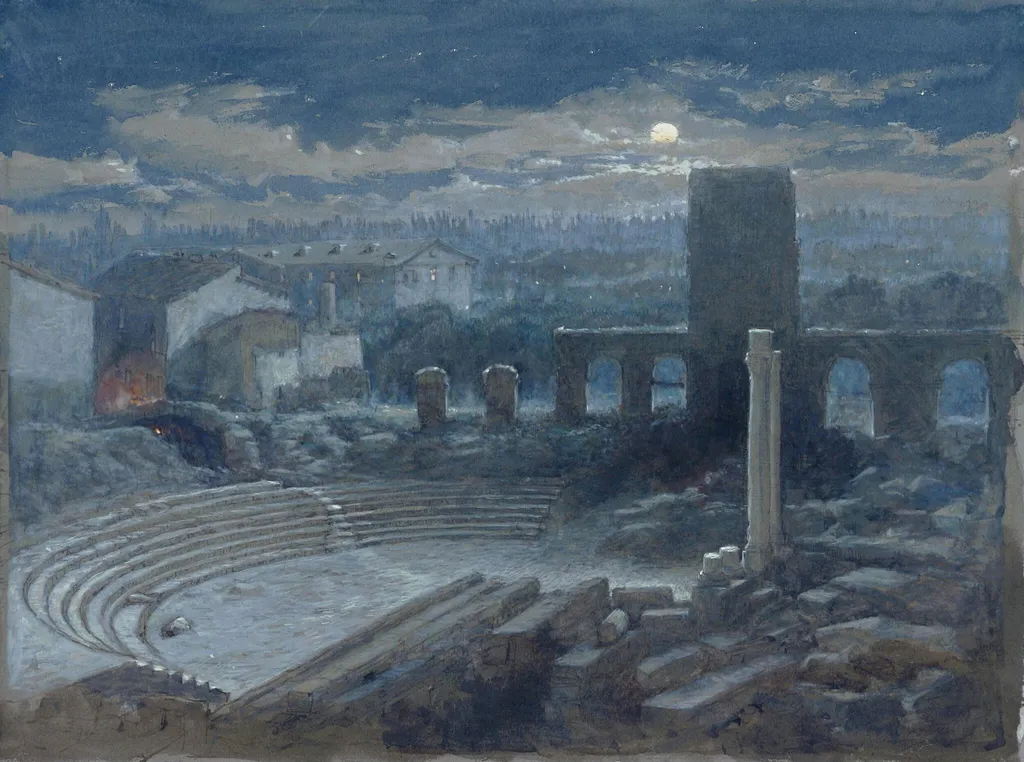
The Roman Theatre, Arles: moonlight is a watercolor work on paper by the Romanticist artist George Henry Andrews. It dates from 1840 and is held in the collection of the Victoria and Albert Museum. This watercolour captures the Roman Theatre in Arles under nightfall, rendered in delicate, fluid washes.
About this work
Overview
This watercolour captures the Roman Theatre in Arles under nightfall, rendered in delicate, fluid washes. The composition emphasizes stillness and decay, with the ancient structure silhouetted against a pale sky. The artist avoids sharp detail, instead suggesting form through subtle gradations of light and shadow, creating an atmosphere of quiet contemplation.
Subject & Meaning
The scene portrays the theatre not as a functioning space but as a silent relic, stripped of its audience and performers. The empty stone seats and fractured stage evoke time’s erosion, while the moon’s glow transforms ruin into something meditative. There is no human presence—only the enduring architecture and the calm of night.
Technique & Style
Loose, transparent watercolour strokes convey the diffused quality of moonlight. The artist employs minimal detail, allowing the paper’s white to suggest highlights and washes to define form. The sky is rendered in cool, muted blues, contrasting with the warmer tones of the stone, enhancing the sense of nocturnal stillness.
History & Provenance
The work is part of the Victoria and Albert Museum’s collection, likely produced during the 19th century when antiquarian interest in Roman ruins flourished. It reflects a trend among artists to document classical sites in their weathered, atmospheric states, often as studies for larger works or personal reflections.
Context
In the 1800s, artists frequently traveled to southern France to sketch ancient remains, drawn to their romantic decay. Arles, with its well-preserved Roman monuments, was a favored subject. This watercolour aligns with a broader movement that valued emotional resonance over topographical accuracy in depicting heritage sites.
Legacy
The painting contributes to a visual record of Roman ruins as they appeared in the 19th century, before modern restoration. Its quiet tone and emphasis on atmosphere influenced later artists who sought to convey historical memory through light and mood rather than architectural precision.
Artist & collection

Artist
George Henry Andrews was a Liberian sports journalist and later minister of Tourism and Cultural Affairs of Liberia. He presided over a pivotal election in the 1990s.

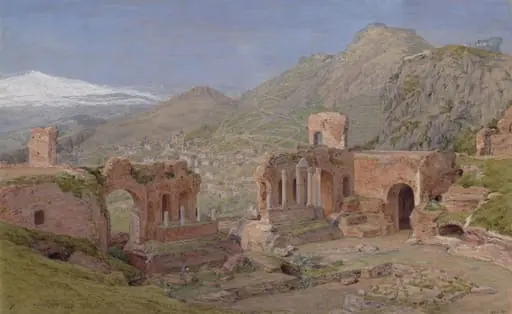 Taormina, near Messina, Sicily
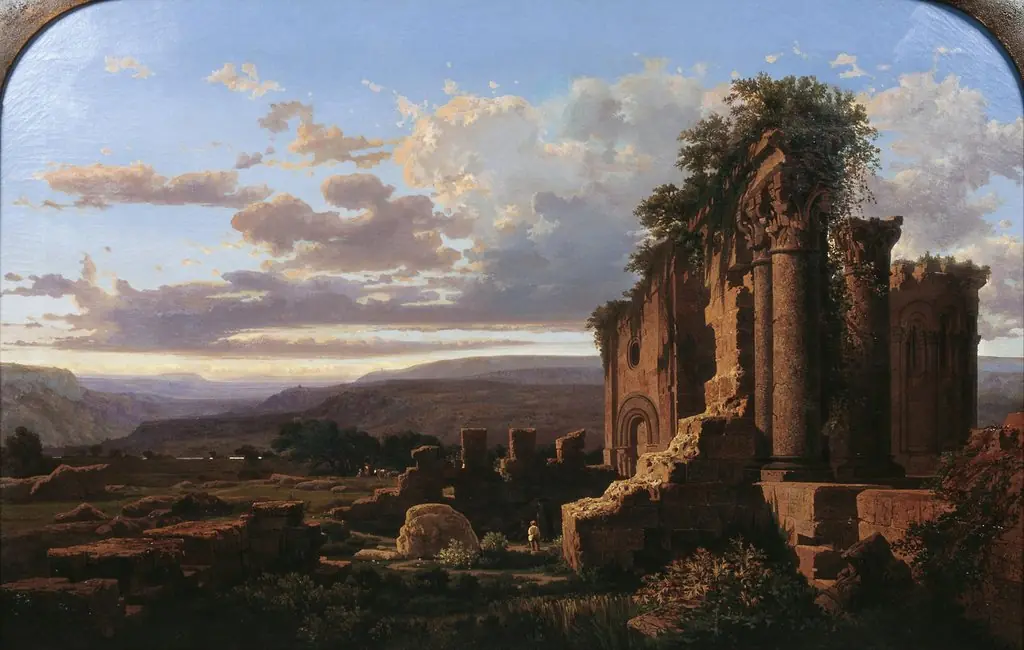 Ruins
Ruins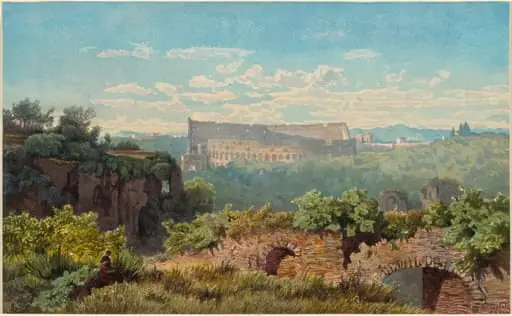 The Colosseum Seen from the Palatine Hill
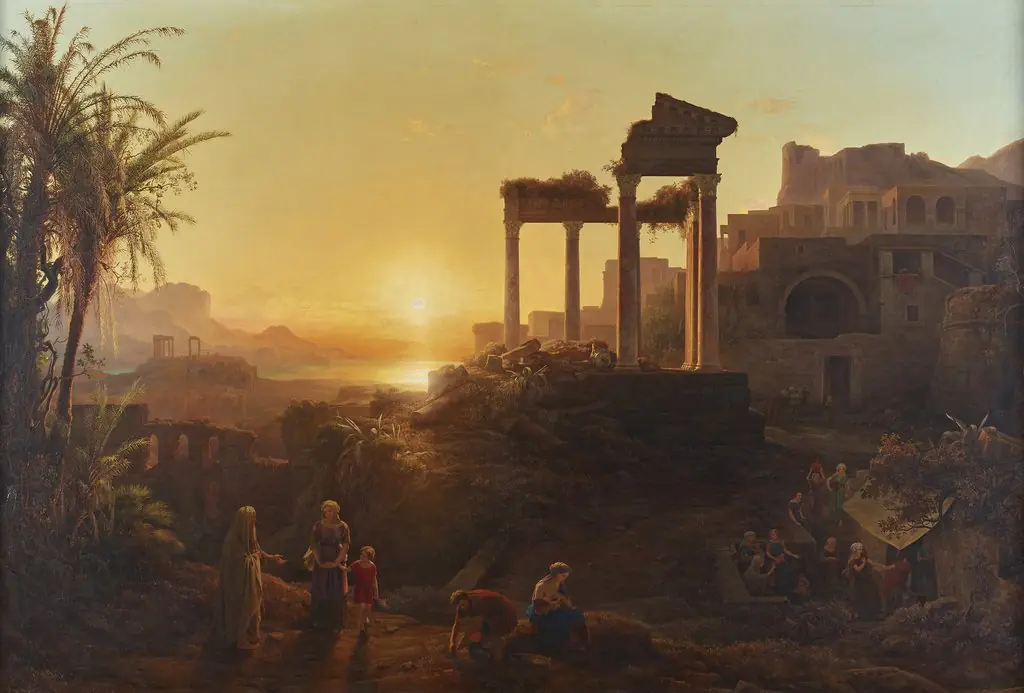 Landschaft mit Sonnenuntergang
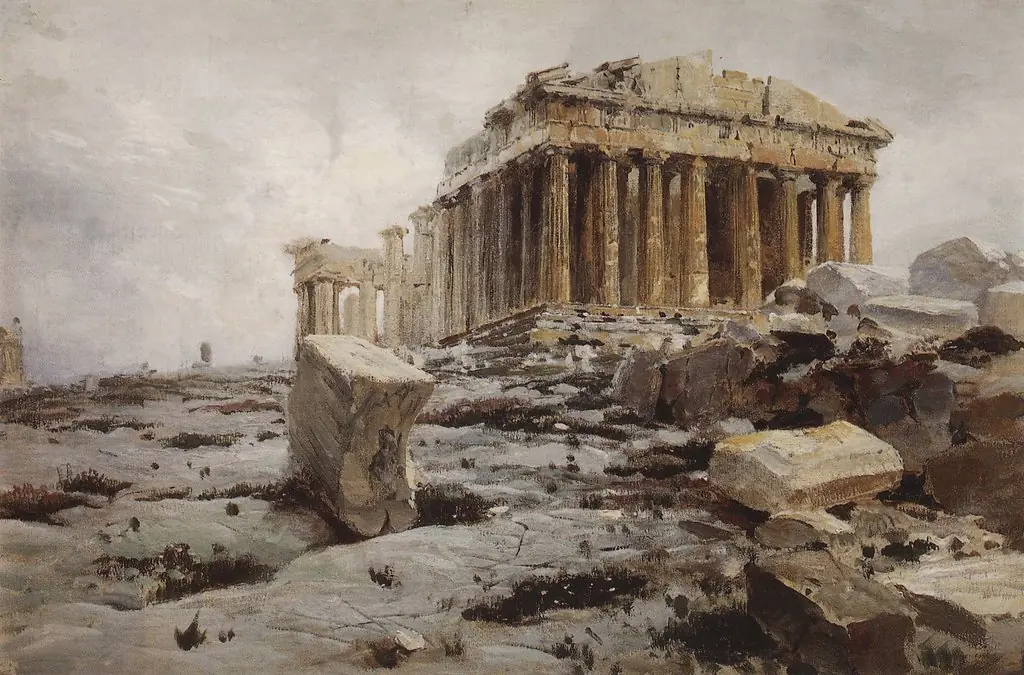 Parthenon
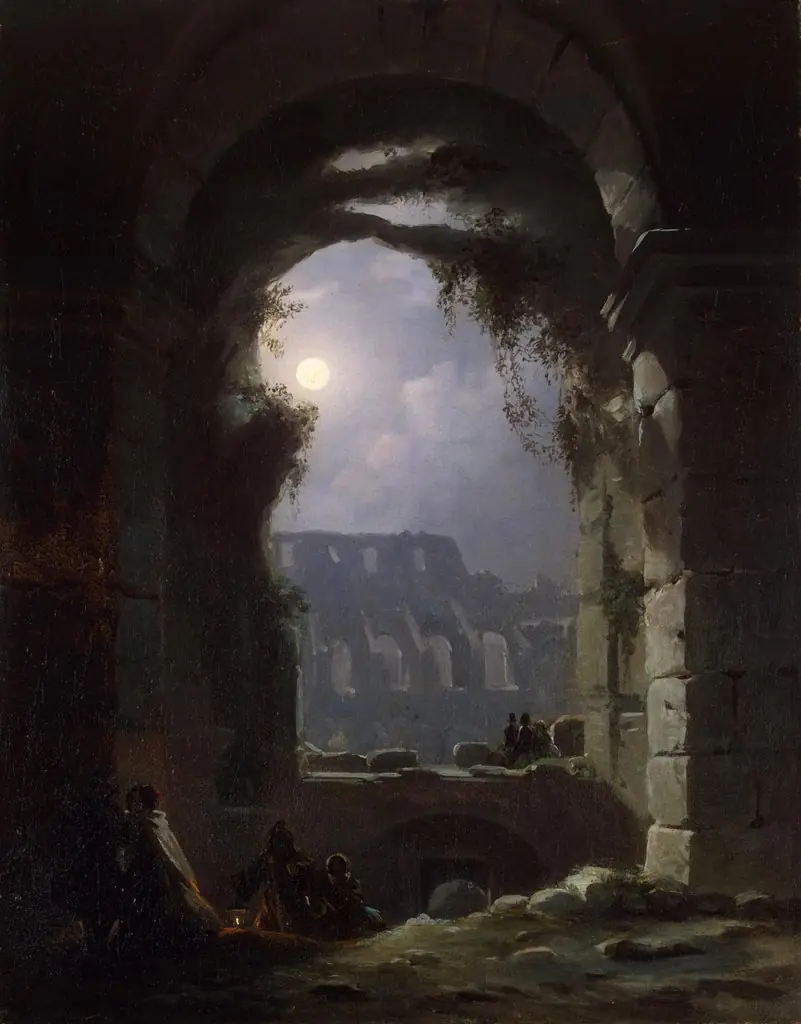 View of the Colosseum by Night
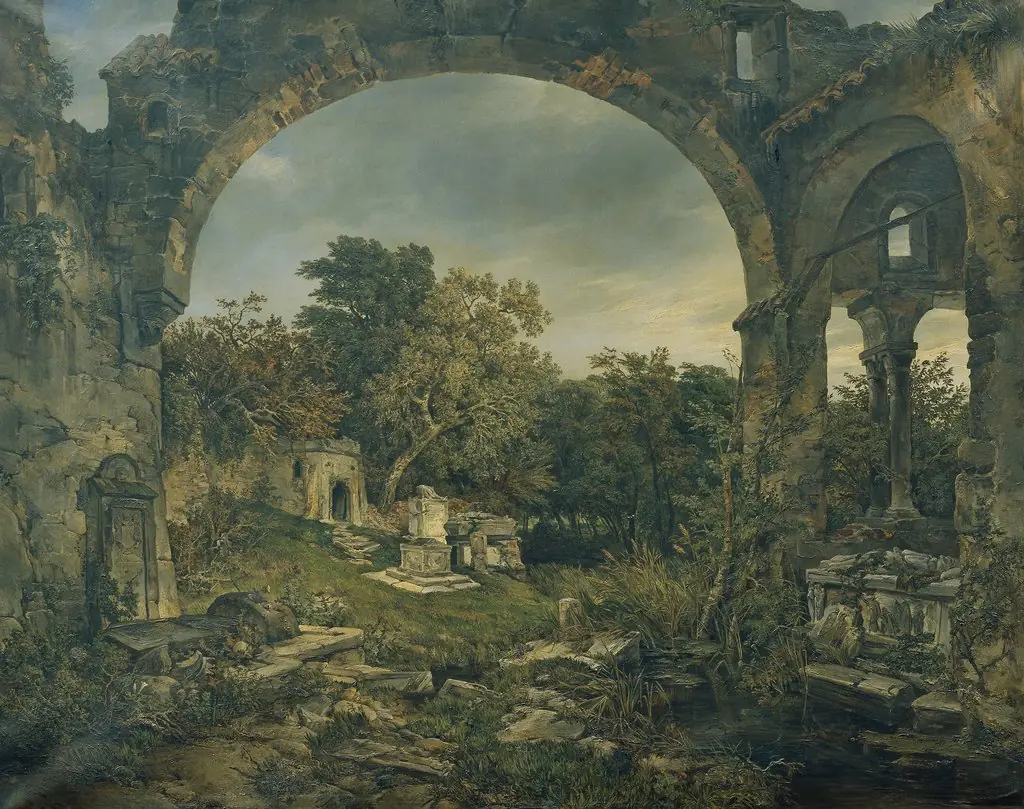 Verödeter Friedhof
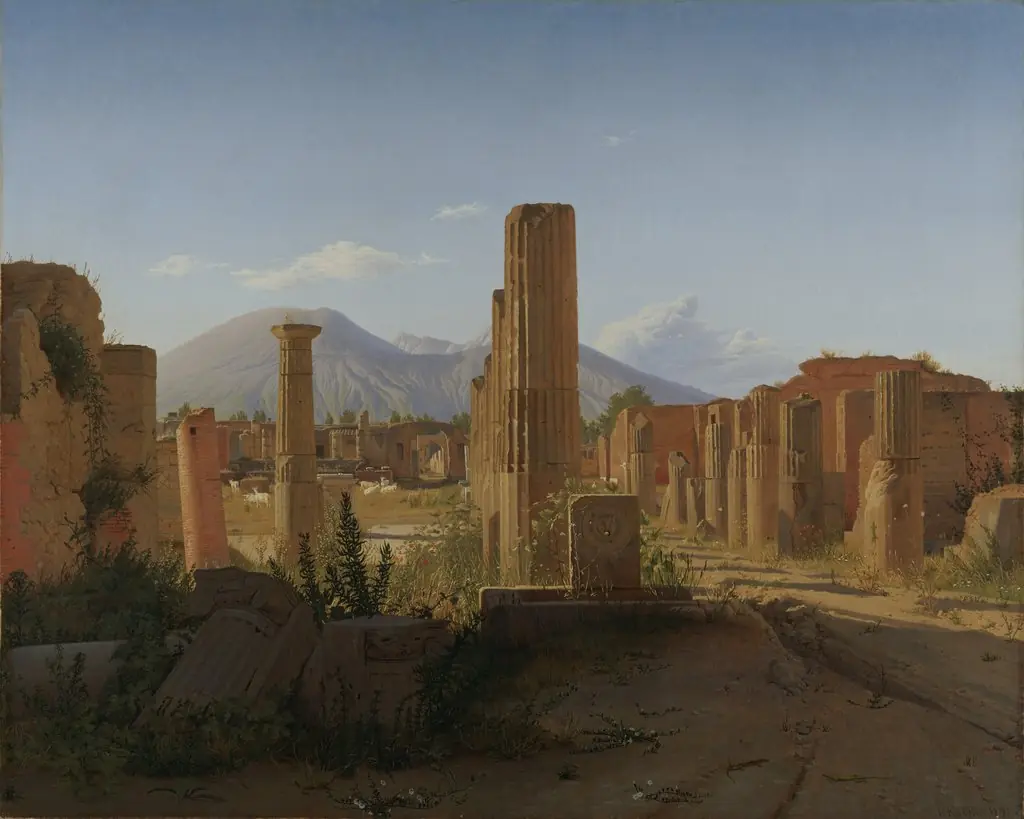 The Forum at Pompeii with Vesuvius in the Background
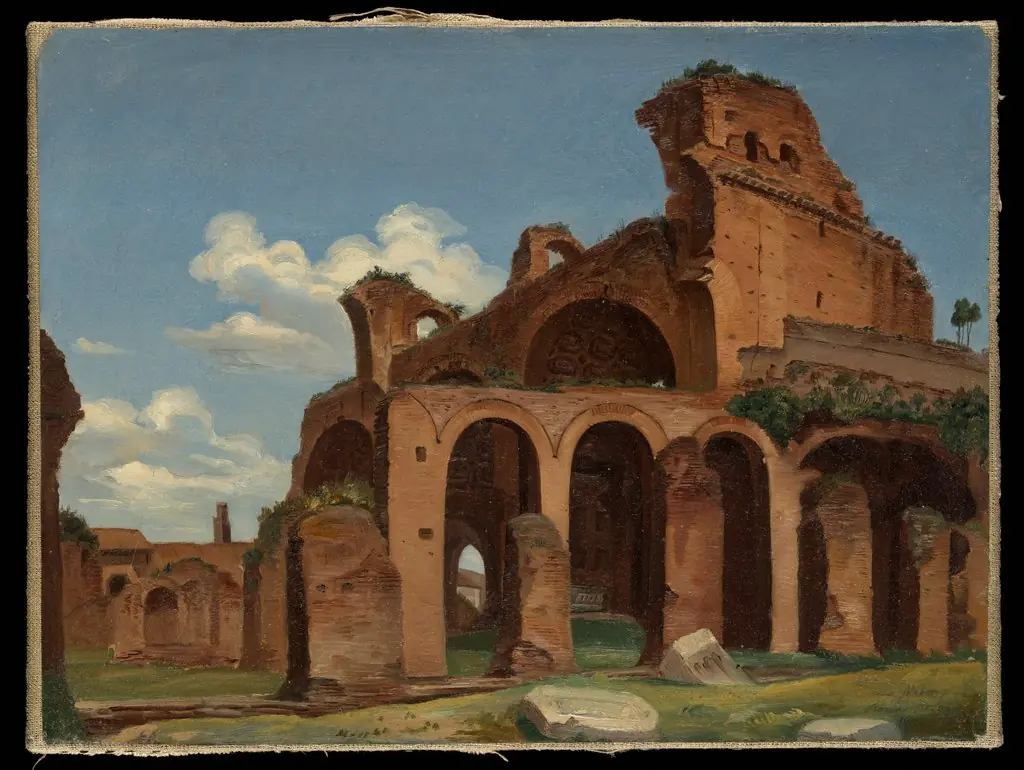 The Basilica of Constantine, Rome
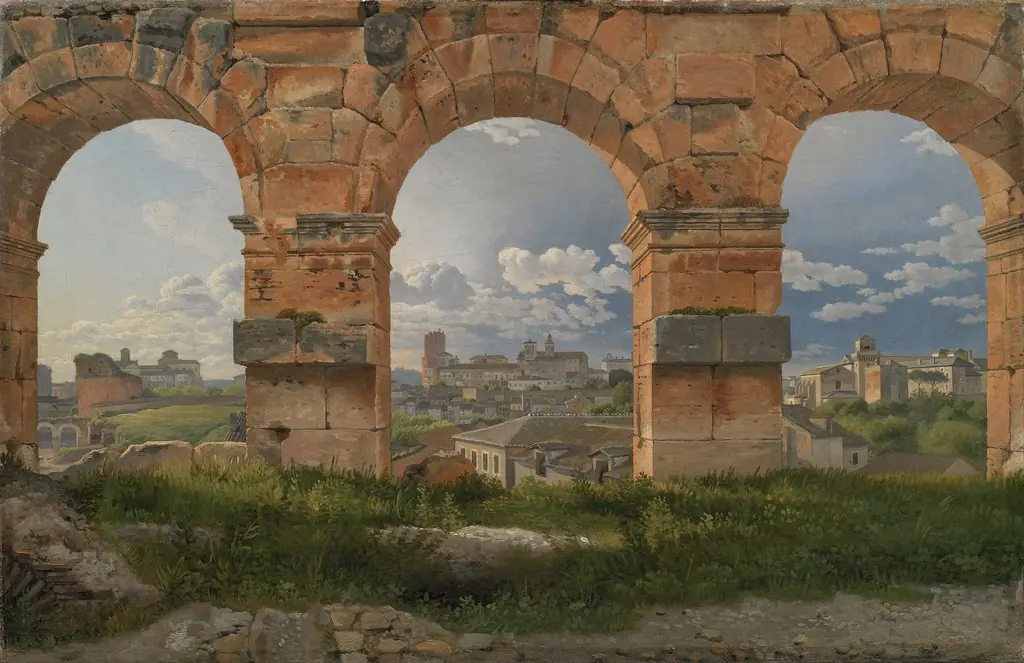 A View through Three of the North-Western Arches of the Third Storey of the Coliseum