Artwork
The Colosseum Seen from the Palatine Hill
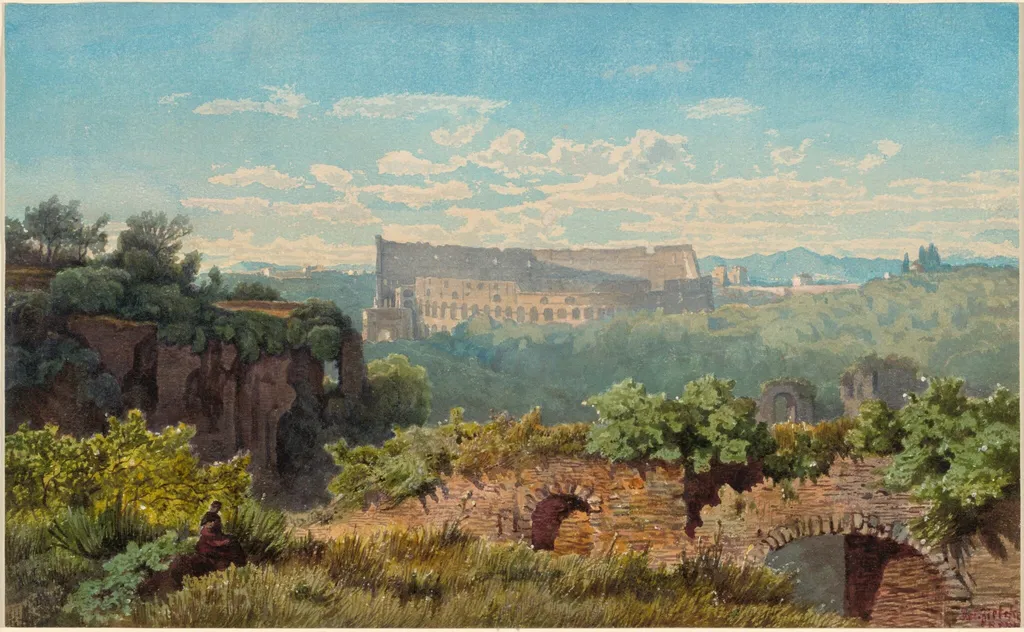
The Colosseum Seen from the Palatine Hill is a gouache drawing by the Impressionist artist Julius Zielke. It dates from 1864 and is held in the collection of the National Gallery of Art.
About this work
Overview
Created around 1864, this drawing by Julius Zielke depicts the Colosseum as viewed from the Palatine Hill. Executed in watercolor and gouache over faint graphite lines, with subtle gum arabic highlights, it is rendered on wove paper. The work belongs to the category of topographical drawings, capturing a specific Roman landmark with attention to architectural detail and atmospheric light.
Subject & Meaning
The composition frames the Colosseum against the elevated terrain of the Palatine, emphasizing its scale and ruinous grandeur. The surrounding vegetation and distant hills suggest the layered history of Rome’s landscape. Rather than idealizing the monument, the artist presents it as an enduring structure reclaimed by nature, reflecting 19th-century romantic interest in antiquity’s quiet decay.
Technique & Style
Zielke employed watercolor and gouache to build layered tones, using graphite for initial structure and gum arabic to enhance luminosity in highlights. The brushwork is precise yet loose, balancing architectural accuracy with atmospheric softness. The paper’s texture subtly influences the washes, contributing to a sense of weathered permanence that mirrors the subject itself.
History & Provenance
The drawing was produced during Zielke’s time in Rome, likely as part of a broader study of classical ruins. It remained in private hands until entering a public collection in the 20th century. No record of public exhibition exists from the 19th century, suggesting it was made for personal or academic use rather than commercial display.
Context
In the mid-1800s, artists and travelers frequently documented Roman ruins as part of a broader cultural fascination with antiquity. Zielke’s work aligns with this trend, though his focus on the Palatine’s perspective—rather than the more common frontal views—offers a less conventional, more intimate vantage point on the Colosseum’s presence within the city’s topography.
Legacy
Though not widely known outside specialized collections, the drawing contributes to a body of 19th-century topographical studies that document Rome’s monuments before modern restoration. Its quiet realism distinguishes it from more dramatic romanticized depictions, preserving a momentary, unembellished encounter with ancient architecture.
Artist & collection


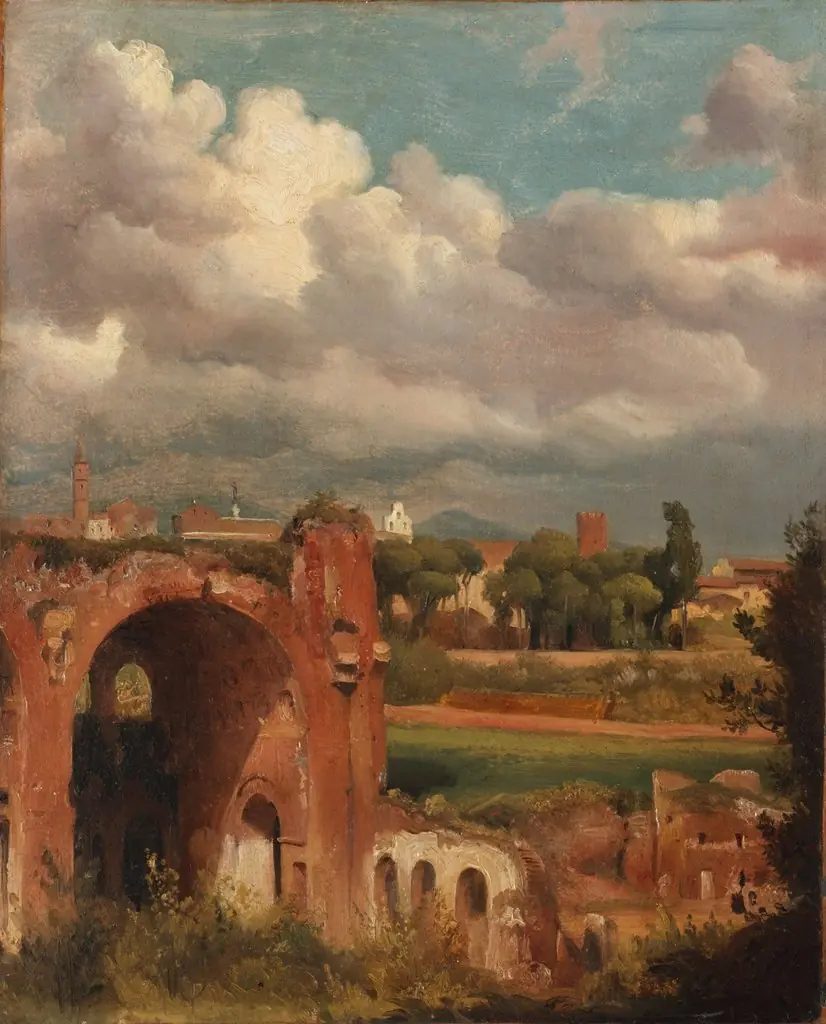 View of the Basilica of Constantine from the Palatine, Rome
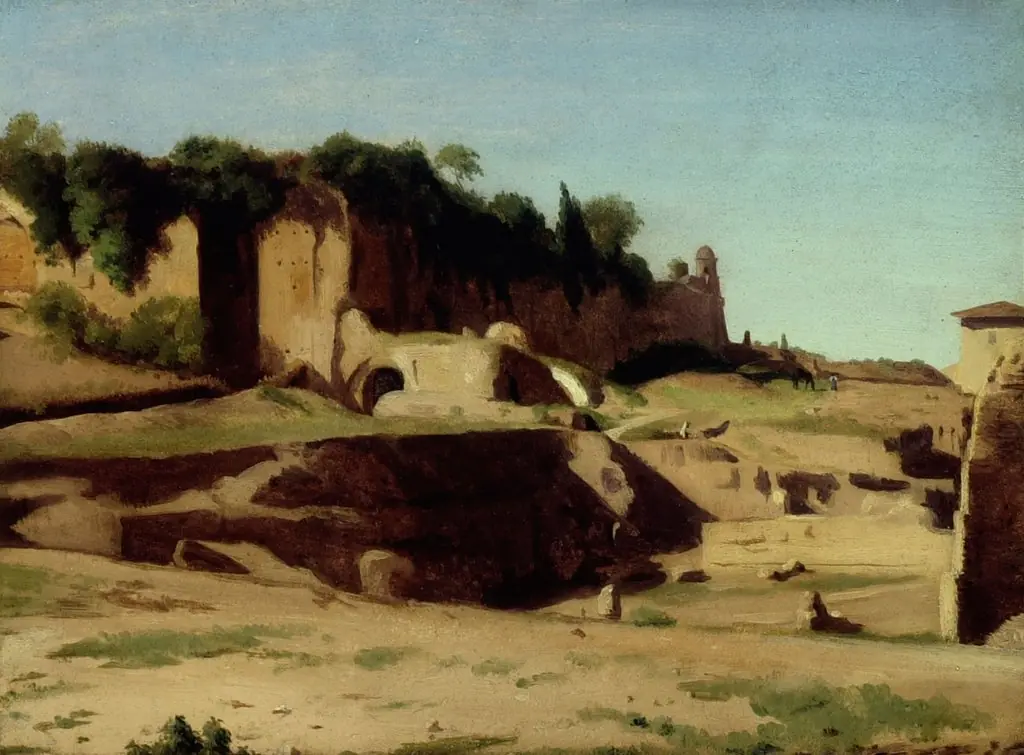 The Imperial Palace on the Palatine, Rome
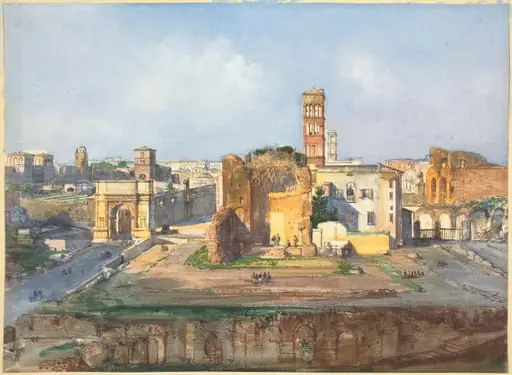 The Arch of Titus and the Temple of Venus and Rome near the Roman Forum
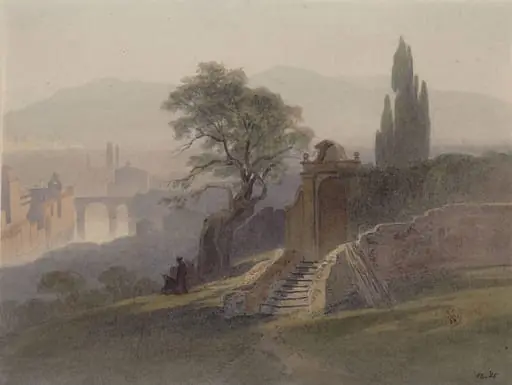 Tasso's Oak in the monastery garden of San Onofrio, Rome
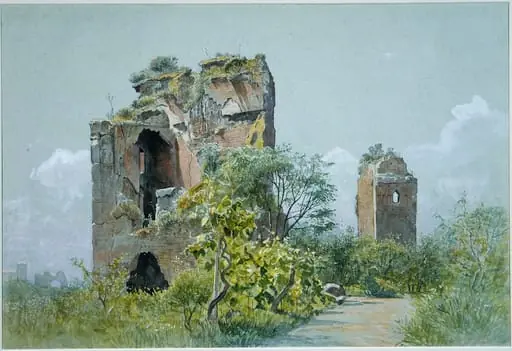 Baths of Trajan (Sette Sale, Villa Brancaccio, Rome)
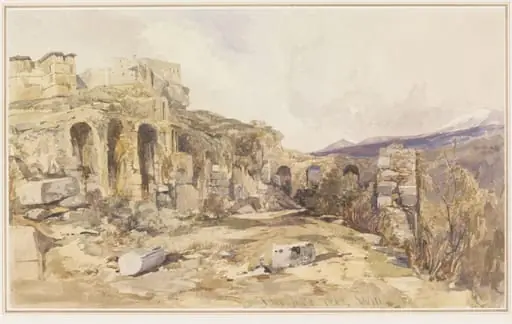 Tlos
Tlos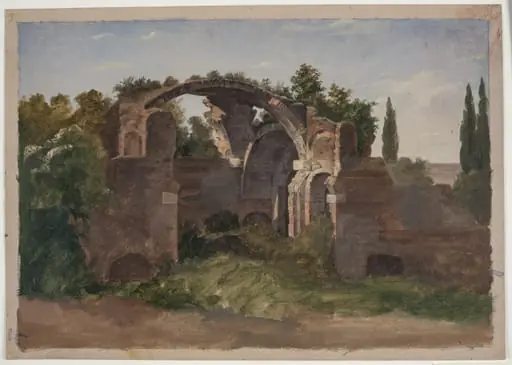 Ruiner. Caracallas termer i Rom?
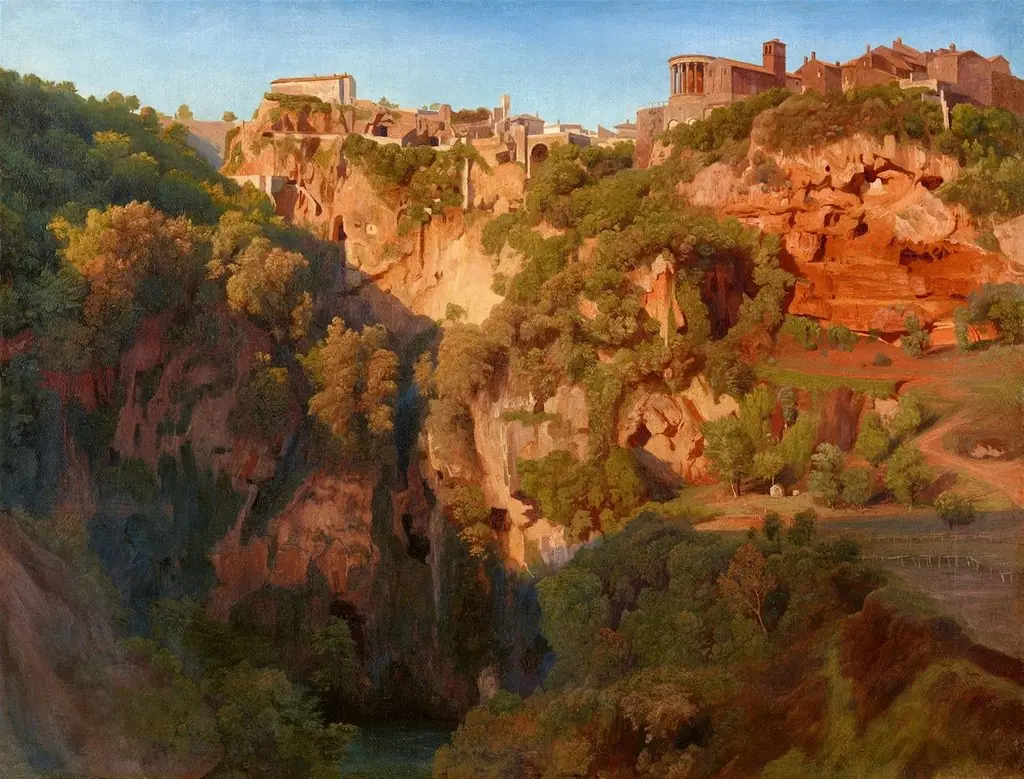 The Waterfalls at Tivoli with the Ponte Lupo, Temple of Vesta, and Temple of Sibyl The Waterfalls at Tivoli with the Ponte Lupo, Temple of Vesta, and Temple of Sibyl
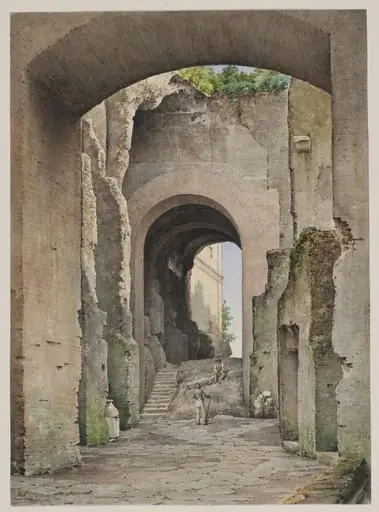 Fra udgravning i Kejserpaladset, Rom 1864
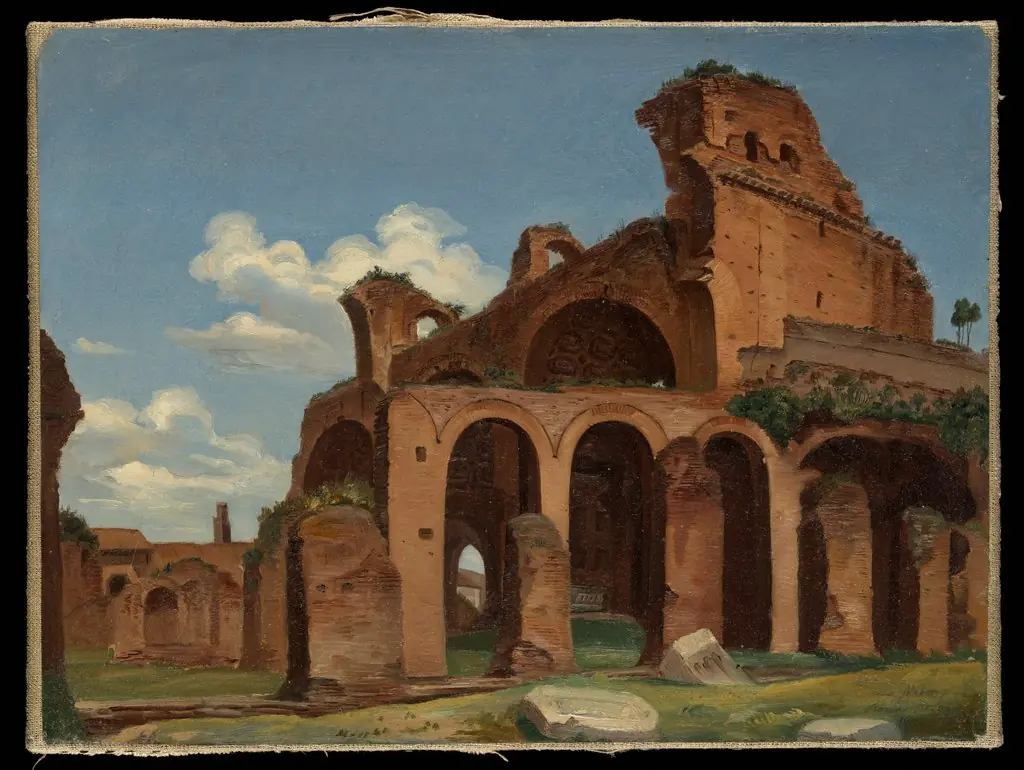 The Basilica of Constantine, Rome