Artwork
A Wooded Path at Treslong, near Hillegom
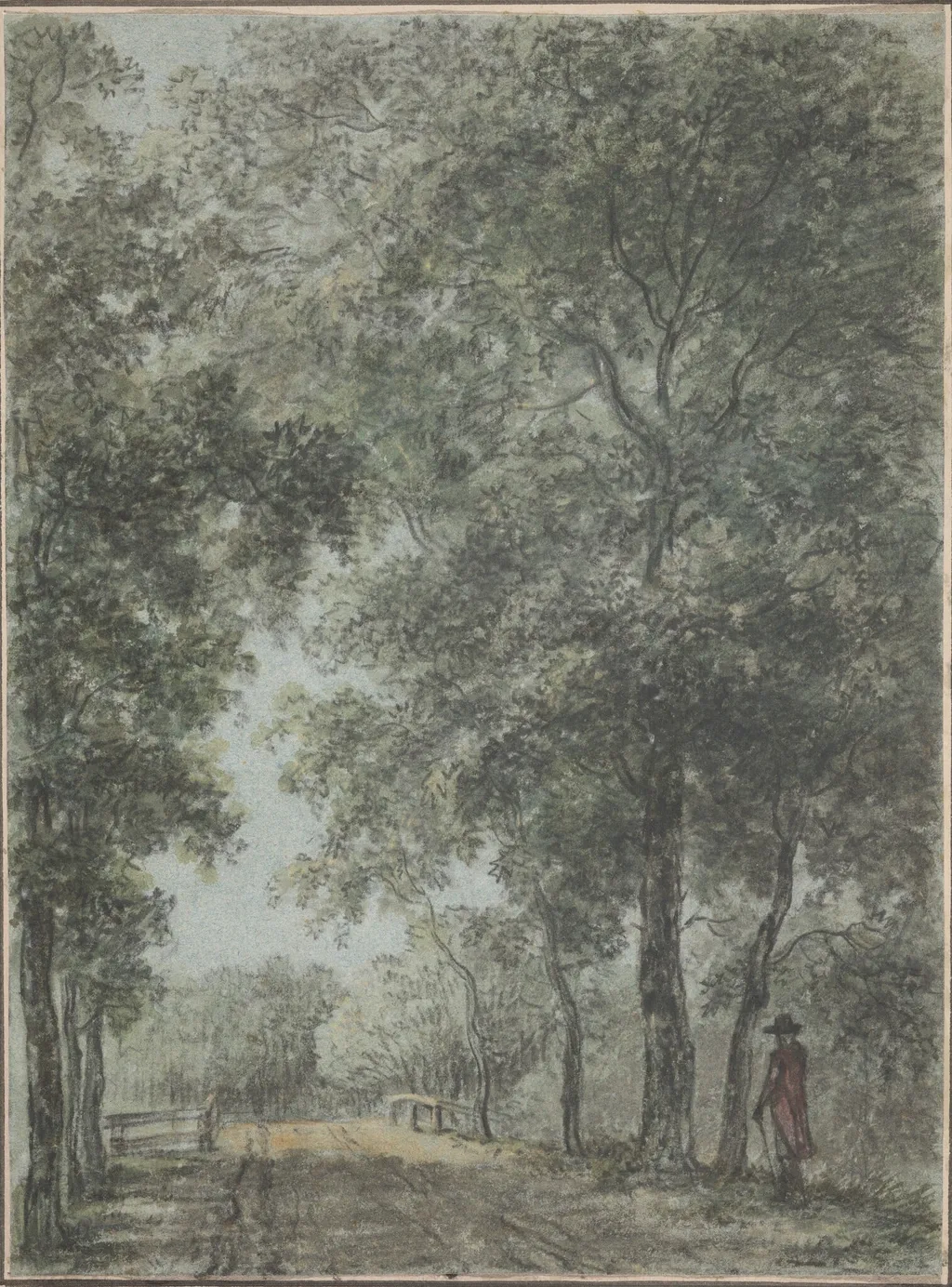
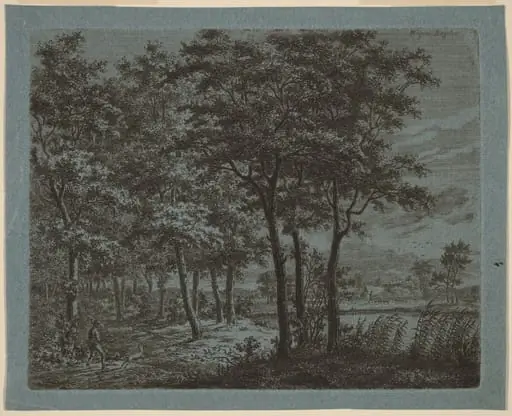
A Wooded Path at Treslong, near Hillegom is a watercolor drawing by the Romanticist artist Jurriaan Andriessen. It dates from 1789 and is held in the collection of the National Gallery of Art.
About this work
Overview
Created in 1789, this drawing by Jurriaan Andriessen depicts a quiet woodland trail near Hillegom, rendered in black chalk and watercolor on blue laid paper.
Created in 1789, this drawing by Jurriaan Andriessen depicts a quiet woodland trail near Hillegom, rendered in black chalk and watercolor on blue laid paper. The work belongs to the collection of the National Gallery of Art in Washington, D.C. Its small scale and delicate medium reflect a personal, observational approach typical of 18th-century Dutch landscape studies, capturing a moment of stillness rather than a grand vista.
Subject & Meaning
A solitary figure in a red coat advances along a narrow, leaf-strewn path, flanked by dense, interwoven trees. The bench, partially obscured by foliage, suggests a place for pause, reinforcing the theme of quiet contemplation. The figure’s small scale emphasizes nature’s dominance, while the red garment acts as a subtle focal point—neither dramatic nor symbolic, but quietly anchoring the viewer’s gaze within the tranquil scene.
Technique & Style
Andriessen employed black chalk for crisp linear definition of branches and roots, layered with translucent watercolor washes to suggest depth and atmosphere. The blue paper underpinning enhances the cool, muted tones of the forest, while glazing techniques build subtle variations in green and gray. The texture of the laid paper adds a tactile softness, reinforcing the misty, damp quality of the woodland environment.
History & Provenance
The drawing entered the National Gallery of Art’s collection through the Chester Dale bequest in 1963. Its prior ownership history before that is not well documented, but its intimate scale and medium suggest it was likely a private study rather than a commissioned work. The date 1789 aligns with Andriessen’s active period in the Netherlands, where landscape observation was gaining artistic prominence.
Context
In late 18th-century Holland, landscape drawing flourished as a means of recording natural scenery with scientific and aesthetic precision. Artists like Andriessen moved away from idealized compositions toward direct observation. This work reflects that shift, capturing a specific local site with attention to light, texture, and atmospheric nuance, consistent with broader European trends in topographical drawing.
Legacy
Though not widely exhibited, the drawing remains a representative example of Dutch topographical watercolor from the period. It contributes to the understanding of how artists engaged with everyday natural environments, valuing quiet observation over grandeur. Its preservation in a major institution underscores its role in documenting the evolution of landscape as a subject worthy of intimate artistic study.
Artist & collection


 Godinton, near Ashford, Kent
 Brook in the Val Mondois
 Landscape with horsemen
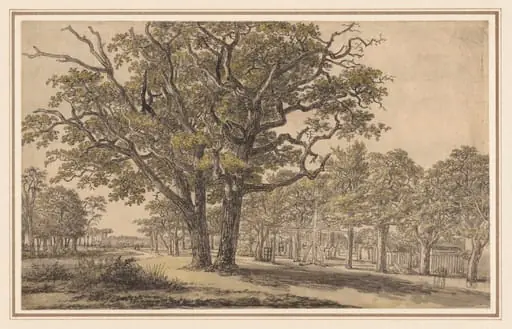 Landscape (recto)
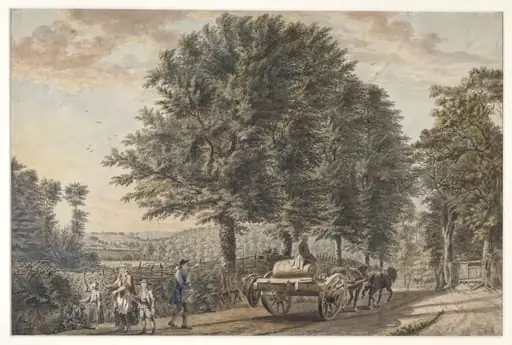 Landscape with Dray and Figures
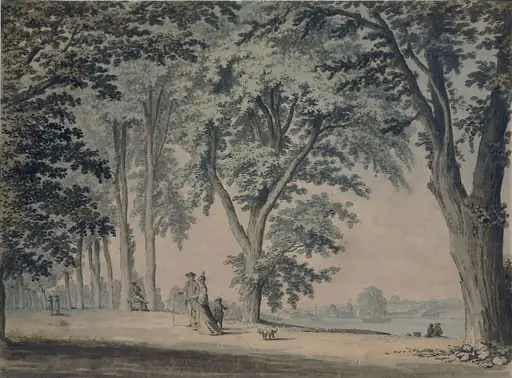 Trees by the Thames, opposite Hammersmith
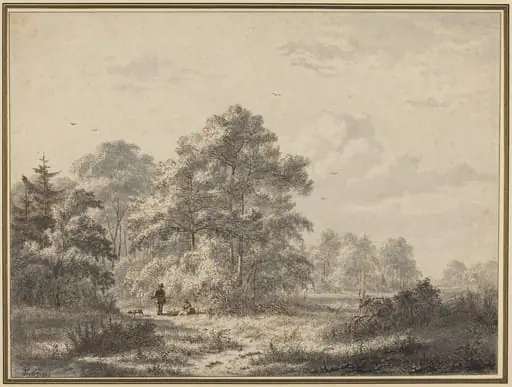 Hunters at the Edge of the Woods
 Lady Oak, near Cressidge,
 Le Petit Parc
 Scene in Windsor Forest
 Woodland Road with Ox-waggon
 Landscape with a Peasant Carrying Firewood