Artwork
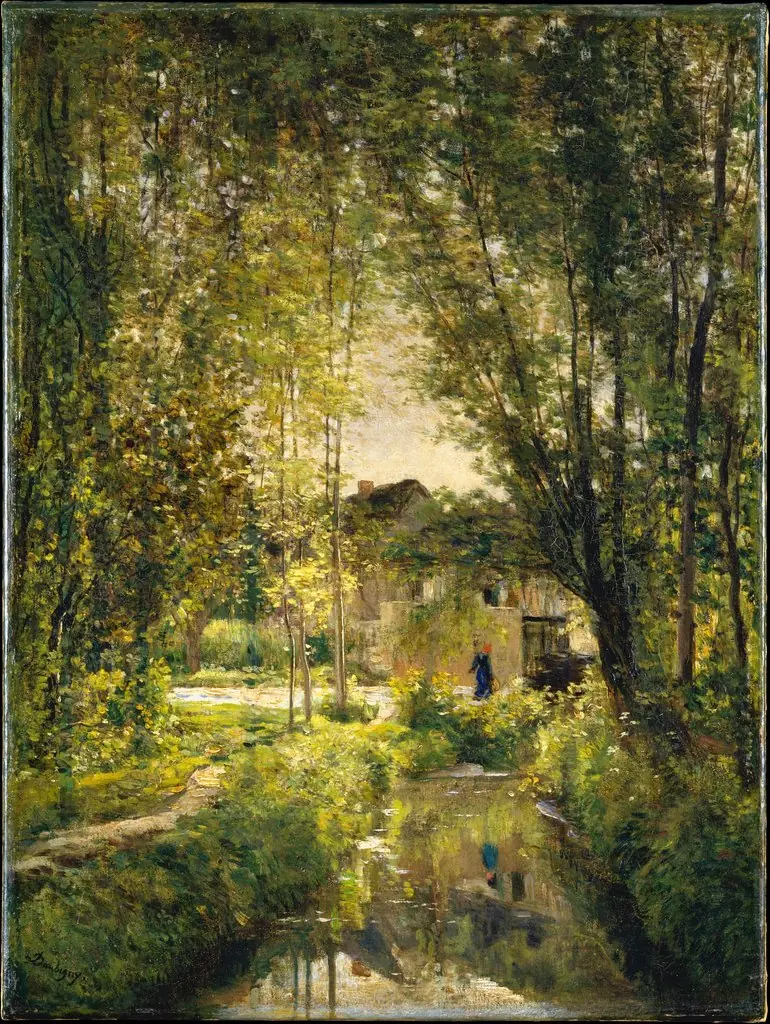
Brook in the Val Mondois
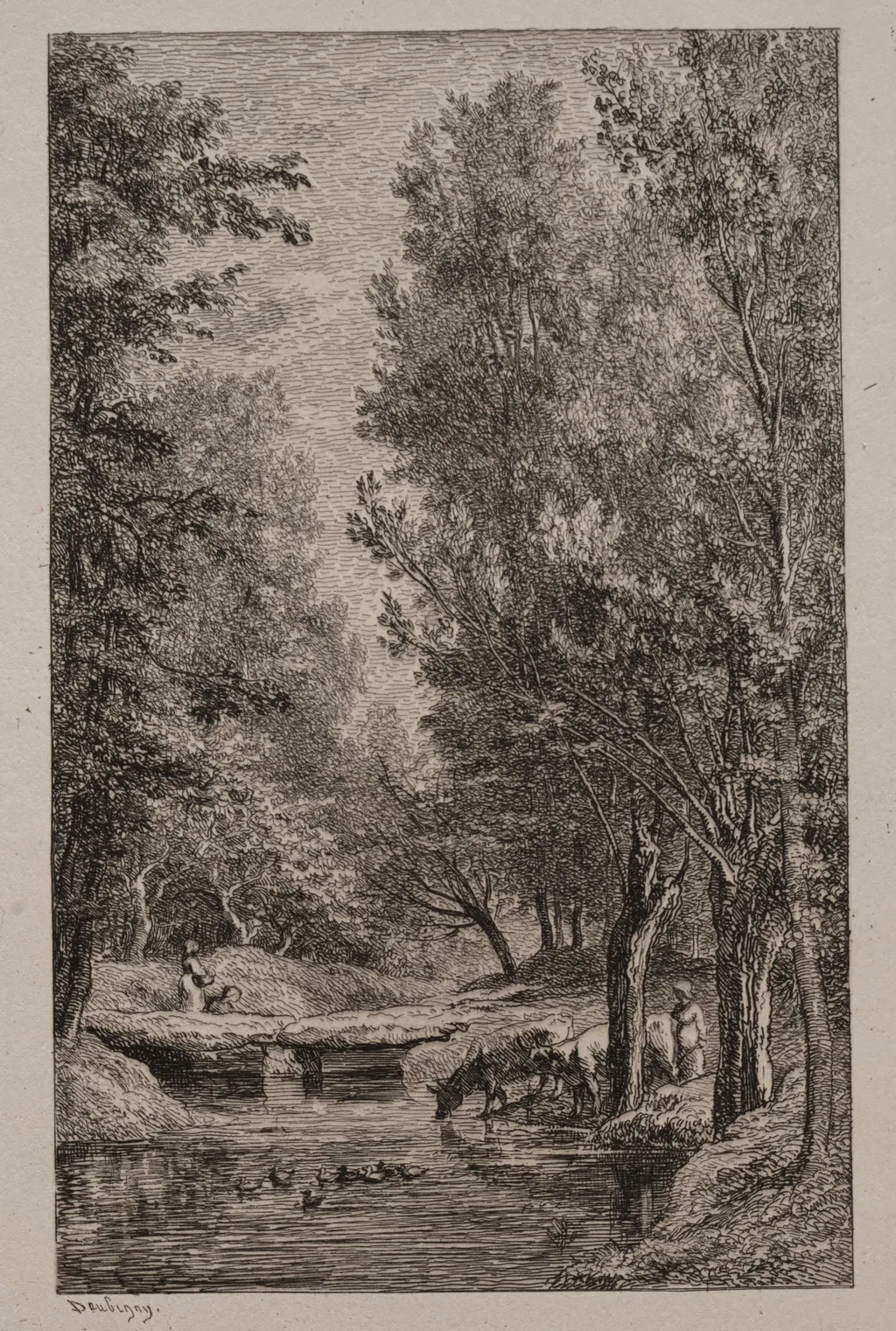
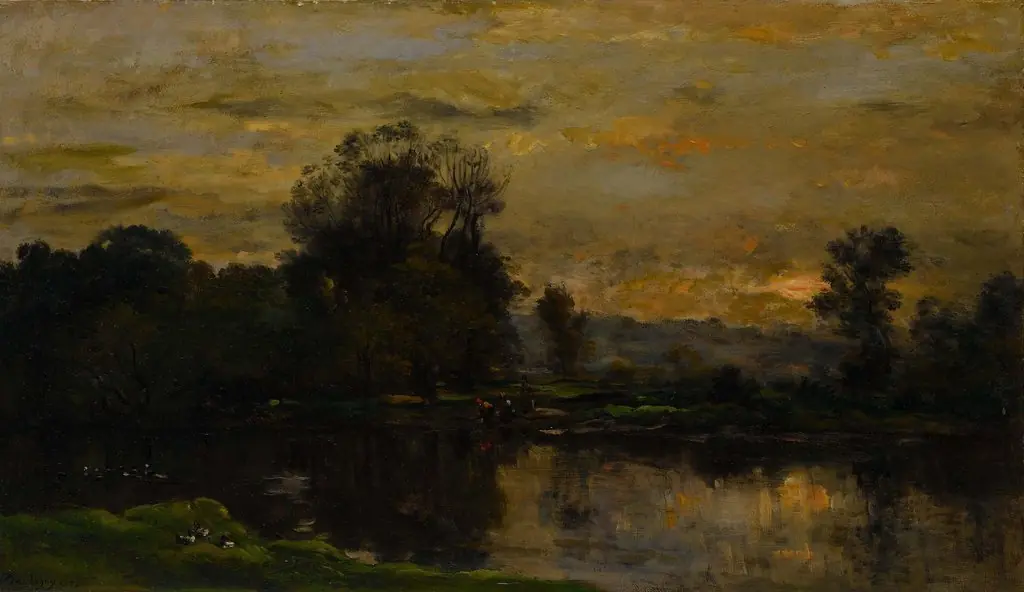
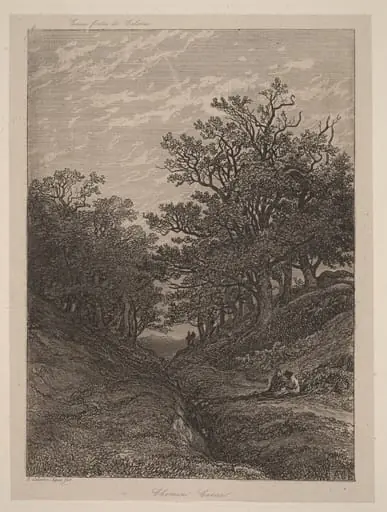
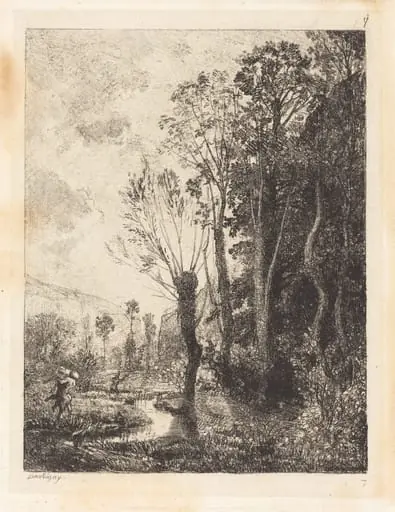
Brook in the Val Mondois is a print by the Impressionist artist Charles François Daubigny. It dates from 1862 and is held in the collection of the Cleveland Museum of Art.
About this work
Overview
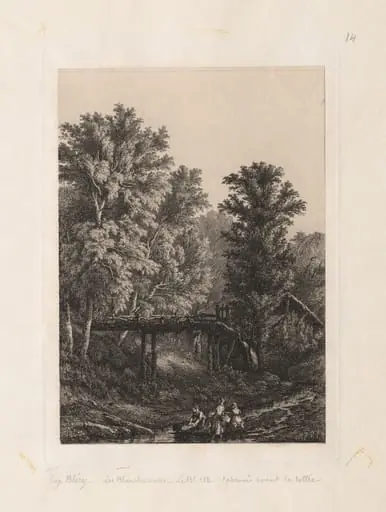
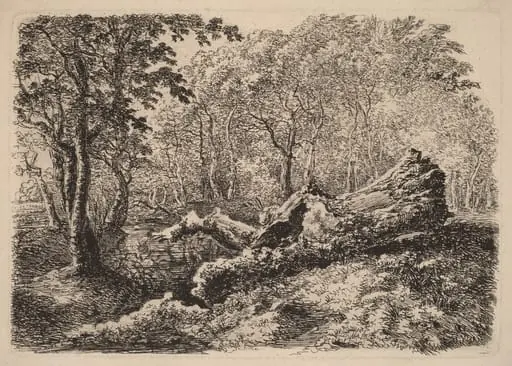
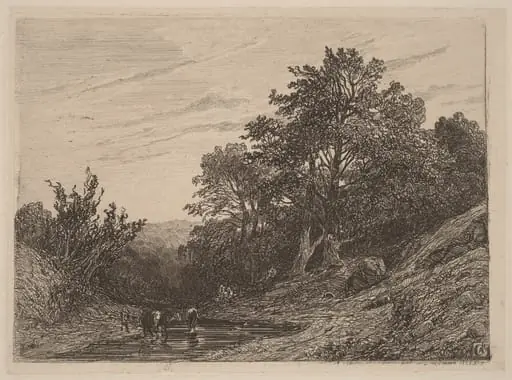
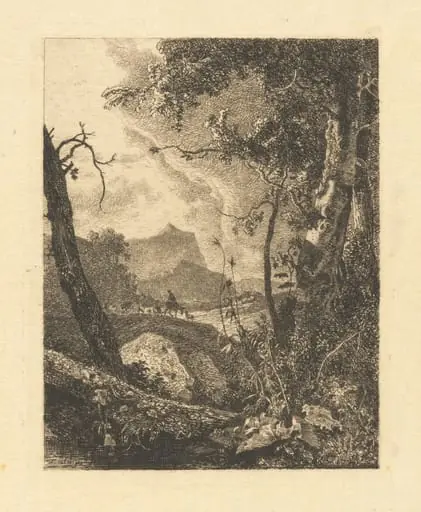
Created circa 1862, *Brook in the Val Mondois* is a print by Charles‑François Daubigny, a French landscape painter linked to the Barbizon circle. The work captures a narrow watercourse winding through a wooded valley, rendered with a calm, reflective atmosphere that typifies Daubigny’s interest in rural scenery during the early 1860s.
Subject & Meaning
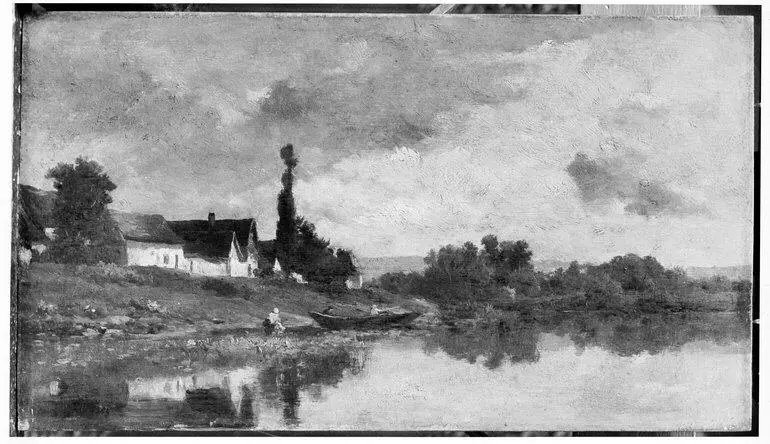
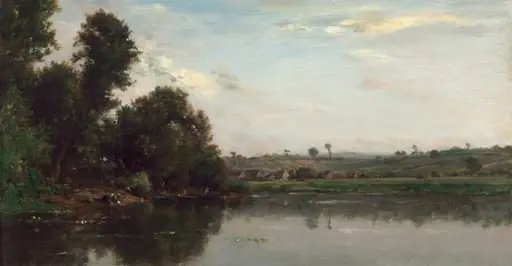
The image presents a secluded forested stretch where a modest stream bisects the composition. Trees line both banks, their tangled branches forming a dense canopy, while a few figures and animals appear along the shore, suggesting quiet human activity within an otherwise untouched natural setting. The tranquil water mirrors the surrounding foliage, emphasizing a sense of stillness.
Technique & Style
Daubigny employed delicate line work and nuanced shading to convey depth, giving the trees and shadows a near‑three‑dimensional presence. The print’s focus on the interplay of light on water and foliage reflects an experimental approach to rendering atmosphere, a departure from earlier, more rigid landscape conventions and a precursor to later developments in plein‑air painting.
History & Provenance
The piece belongs to a productive phase in Daubigny’s career when he repeatedly explored waterways in the Val‑Mondois region. Though originally produced as a print rather than a painted canvas, it circulated among collectors interested in the emerging naturalist aesthetic of the mid‑nineteenth century, reinforcing Daubigny’s reputation as an innovator in both painting and printmaking.
Own this work as a print
Artist & collection
Artist
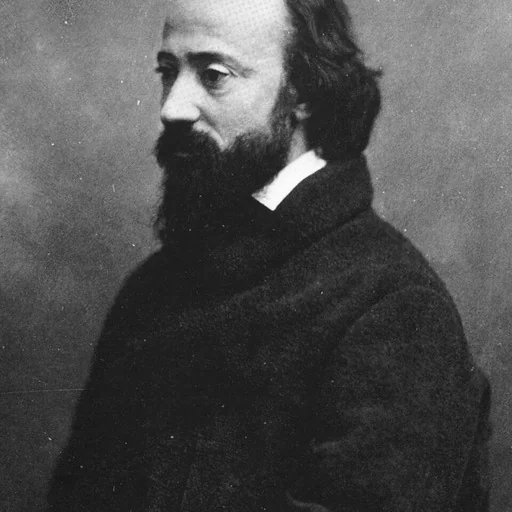
Charles-François Daubigny ( DOH-bin-yee, US: DOH-been-YEE, doh-BEEN-yee, French: ; 15 February 1817 – 19 February 1878) was a French painter, one of the members of the Barbizon school, and is considered an important precursor of…