Artwork
Untitled
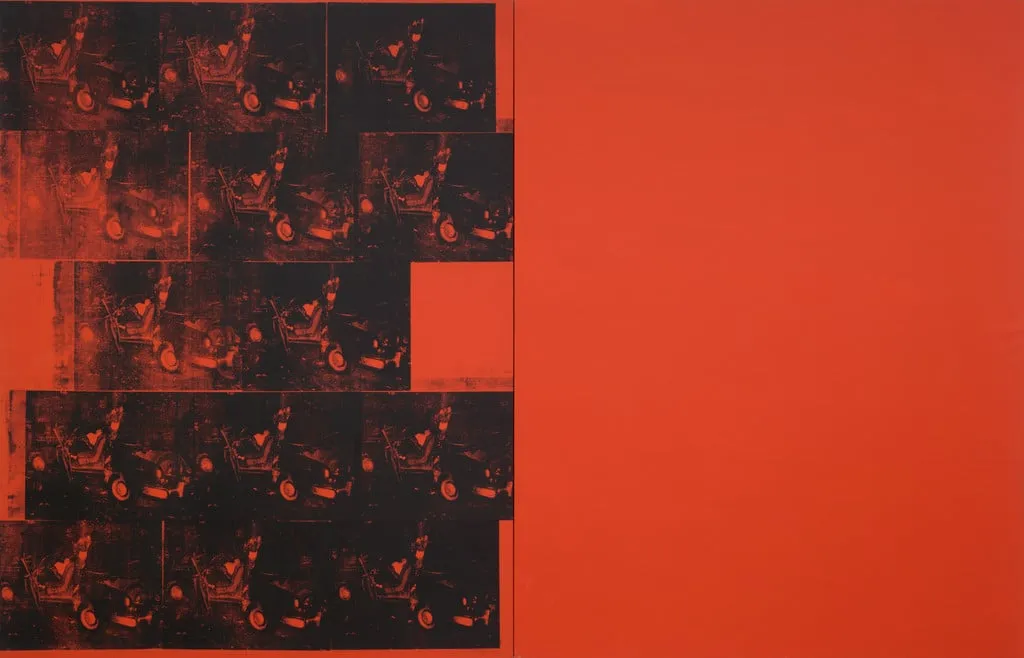
Untitled is an acrylic painting by the Pop art artist Andy Warhol. It dates from 1963 and is held in the collection of the Museum of Modern Art.
About this work
Overview
Created in 1963, this two-panel painting by Andy Warhol employs silkscreen ink on acrylic to present a repetitive grid of car crash images. The work belongs to Warhol’s early exploration of mass-produced visual culture, using mechanical reproduction to strip emotional context from traumatic imagery. Its format and method align with his broader interest in the ubiquity of media-saturated content.
Subject & Meaning
The subject consists of repeated, blurred photographs of automobile accidents, sourced from tabloid press. By isolating and multiplying these images, Warhol neutralizes their shock value, reflecting how media desensitizes viewers to violence. The absence of narrative or human figures transforms tragedy into a pattern, questioning the role of spectacle in public consciousness.
Technique & Style
Warhol used silkscreen printing to transfer photographic images onto acrylic-coated canvases, allowing for precise yet mechanically imperfect replication. The limited palette—dominated by red, black, and orange—heightens the graphic intensity. Slight misalignments and ink variations reveal the hand of the printing process, contrasting the illusion of industrial uniformity.
History & Provenance
It was produced during a pivotal period when Warhol shifted from commercial illustration to fine art, using found imagery to interrogate American culture.
The work entered The Museum of Modern Art’s collection shortly after its creation, reflecting early institutional recognition of Warhol’s challenge to traditional painting. It was produced during a pivotal period when Warhol shifted from commercial illustration to fine art, using found imagery to interrogate American culture. Its preservation underscores its significance in the evolution of postwar American art.
Context
Emerging in the early 1960s, this piece responds to the rise of television news and tabloid journalism, which increasingly brought graphic imagery into domestic spaces. Warhol’s use of repetition mirrors the rhythm of mass media consumption. The work aligns with broader Pop Art concerns but diverges by focusing on violence rather than consumer goods, expanding the movement’s thematic range.
Legacy
This painting influenced later artists who examined media, trauma, and repetition, including those working in photography and video. Its clinical presentation of horror without judgment became a touchstone for discussions on desensitization. Though initially controversial, it is now recognized as a critical intervention in how art engages with public imagery and collective memory.
Artist & collection
Artist
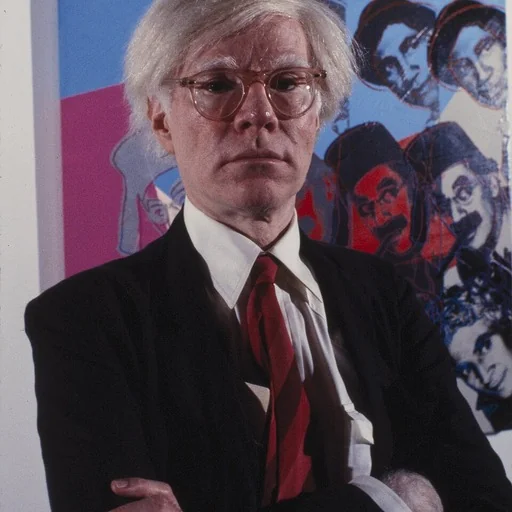
Andy Warhol ( ; born Andrew Warhola Jr.; August 6, 1928 – February 22, 1987) was an American artist and filmmaker.