Artwork
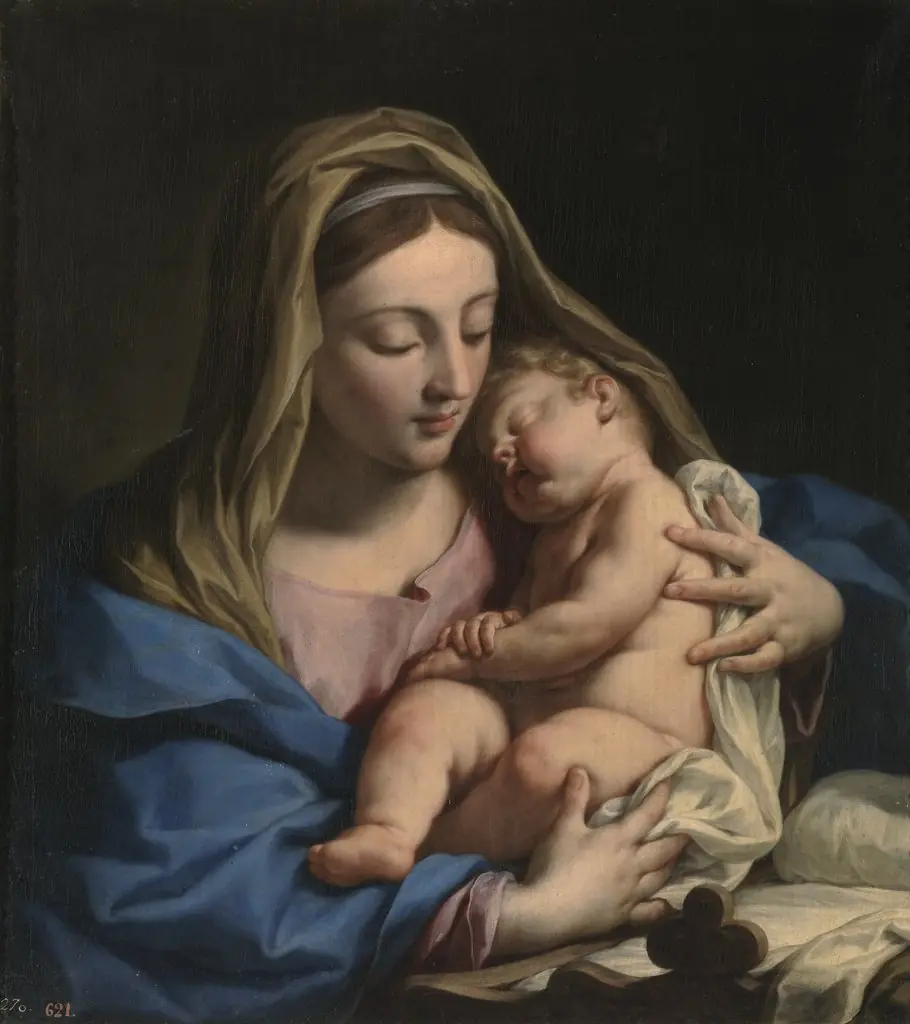
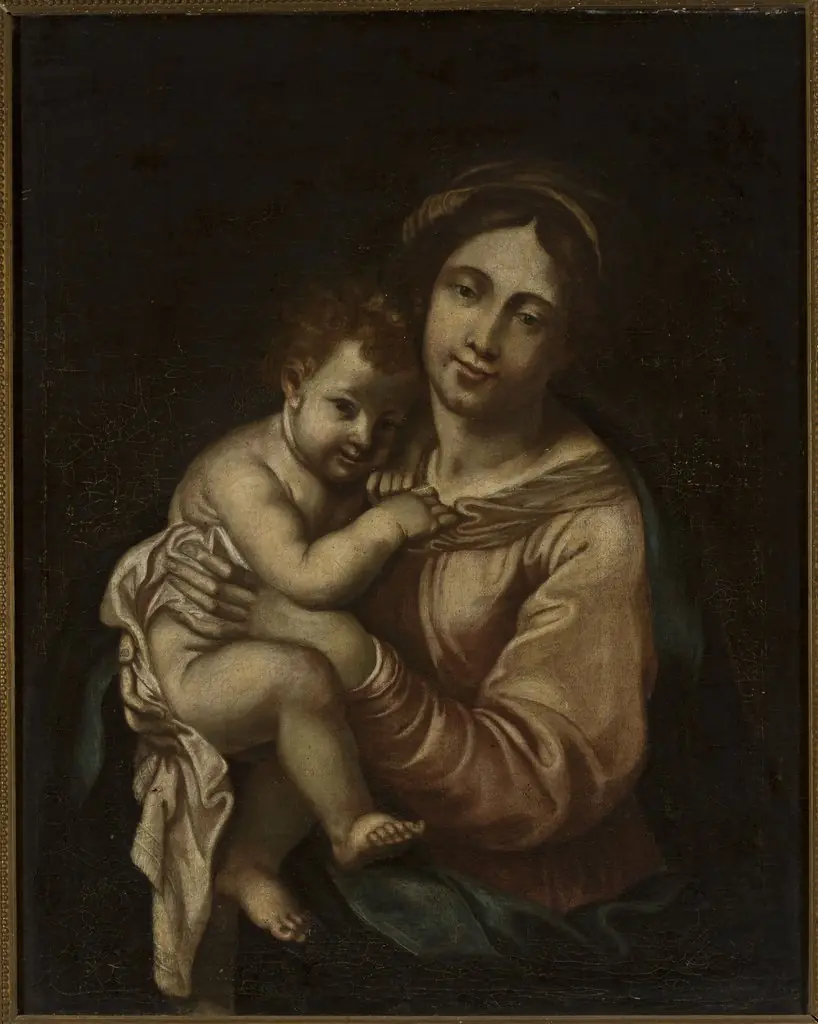
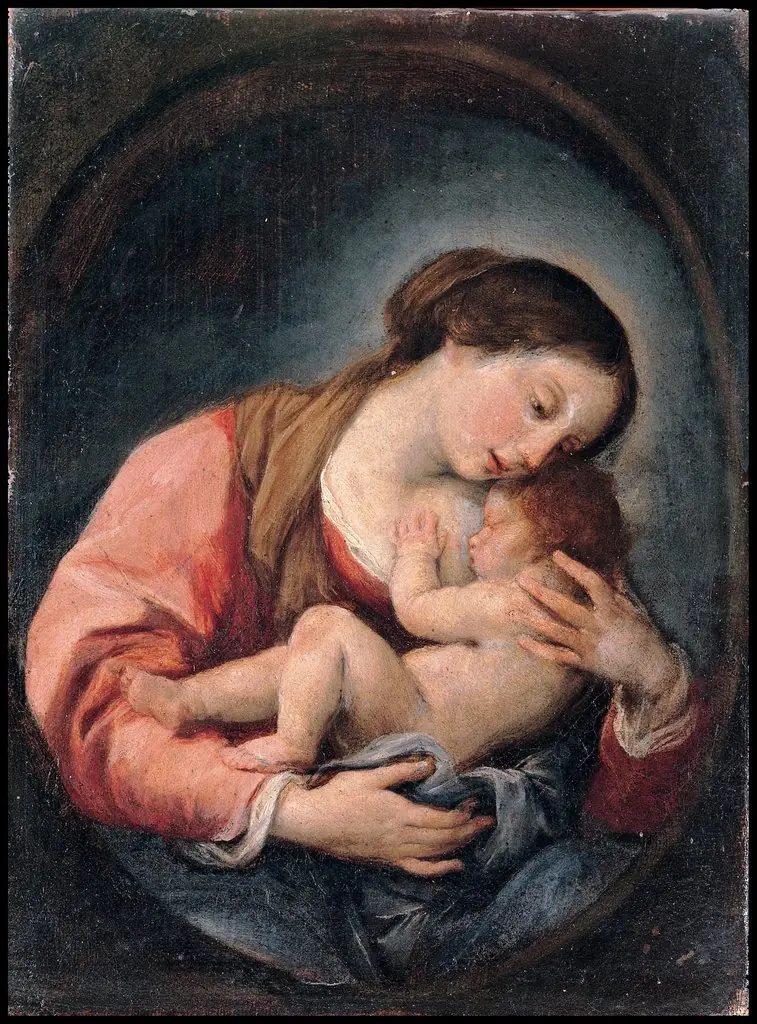
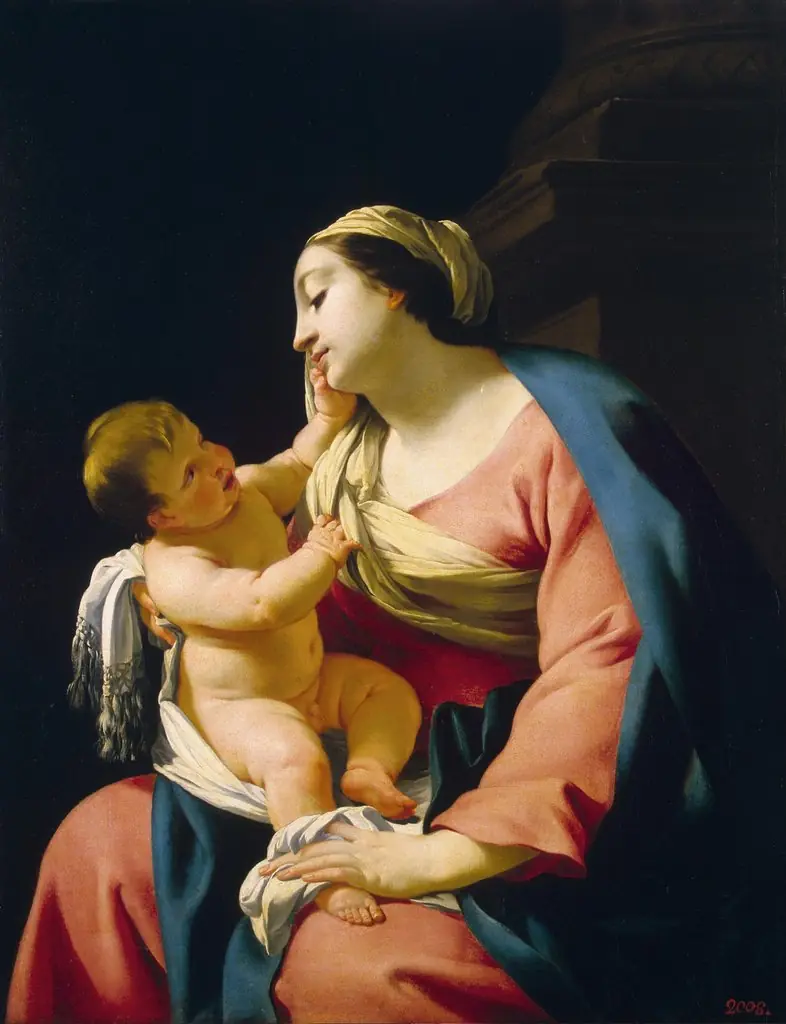
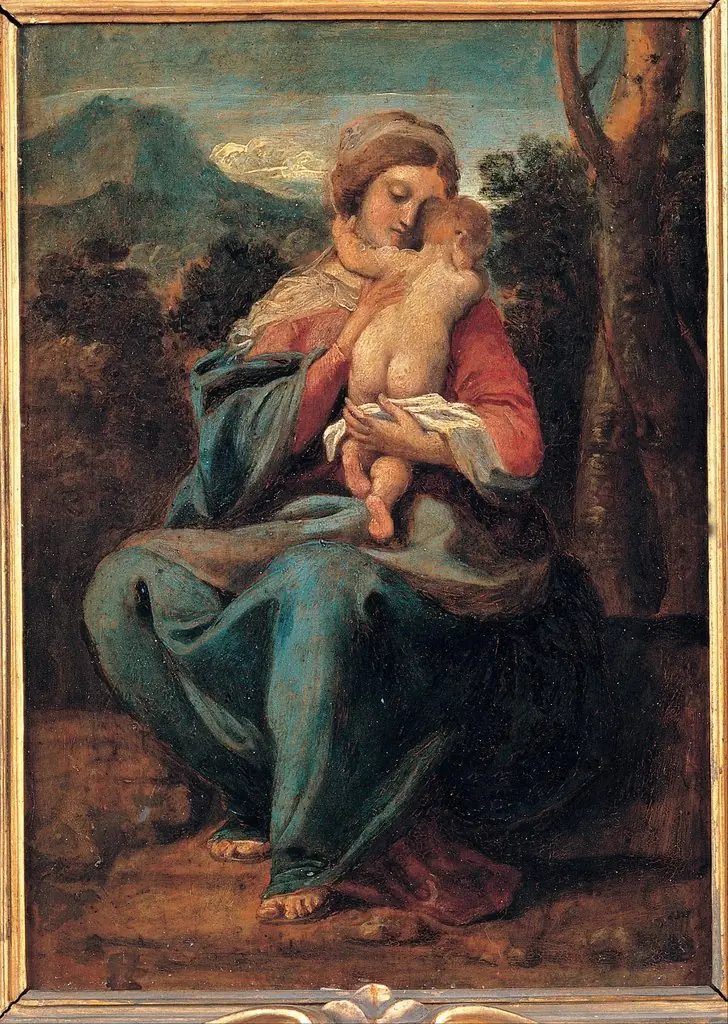
Madonna with sleeping Child Jesus
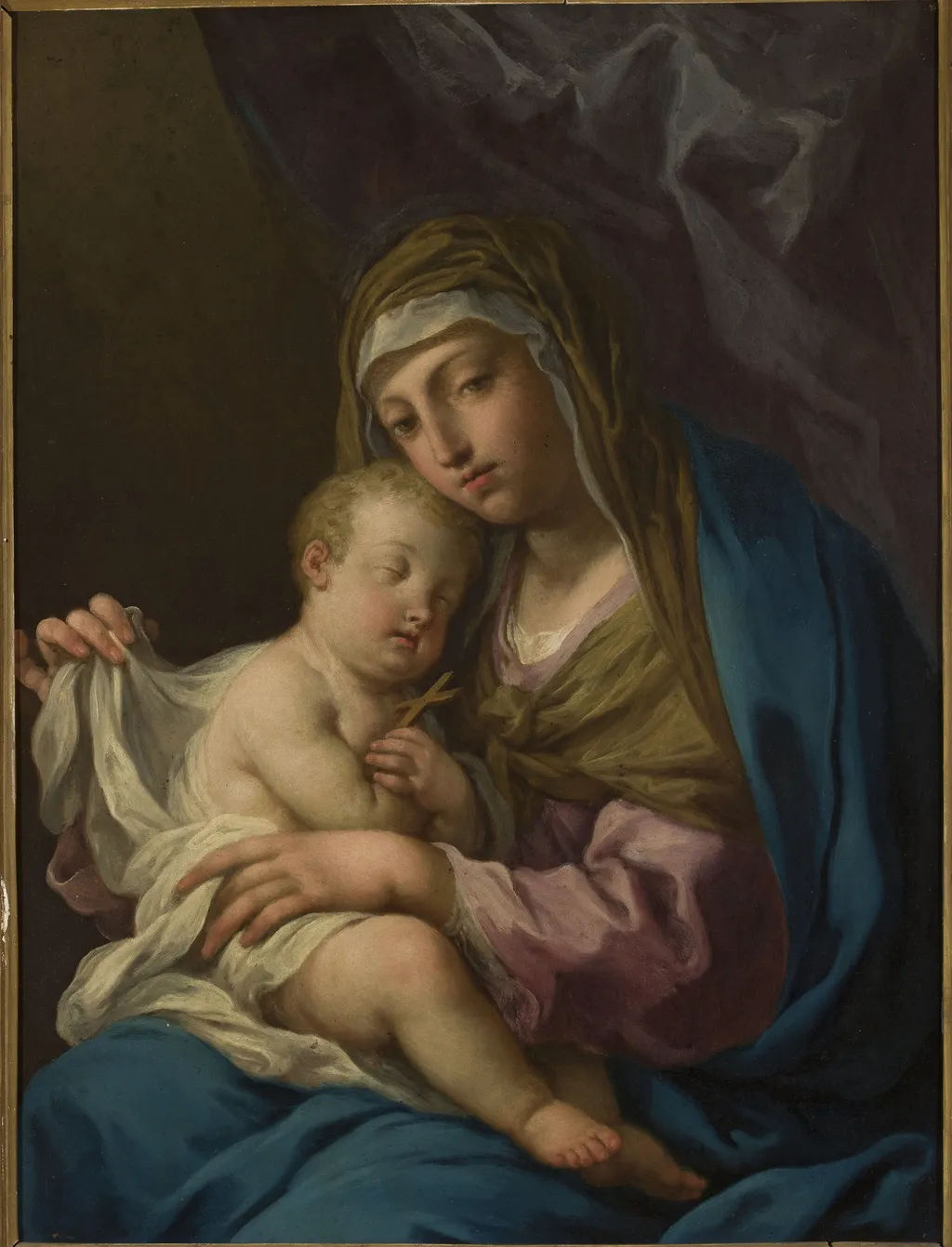
Madonna with sleeping Child Jesus is an unspecified painting by Angelo Trevisani. It dates from 1719 and is held in the collection of the National Museum in Warsaw.
About this work
Overview
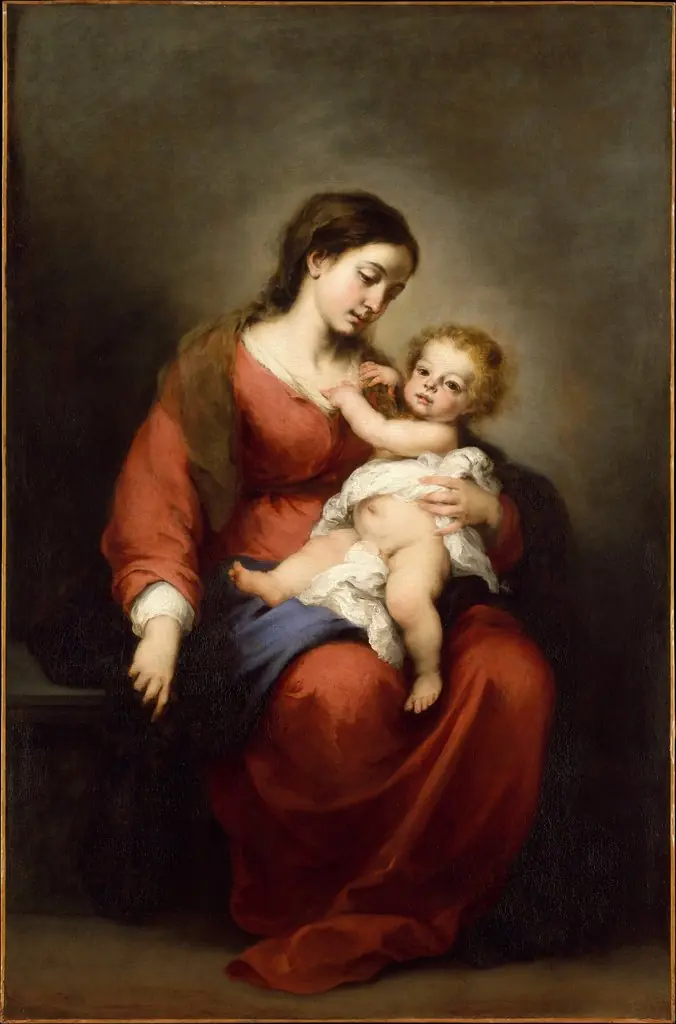
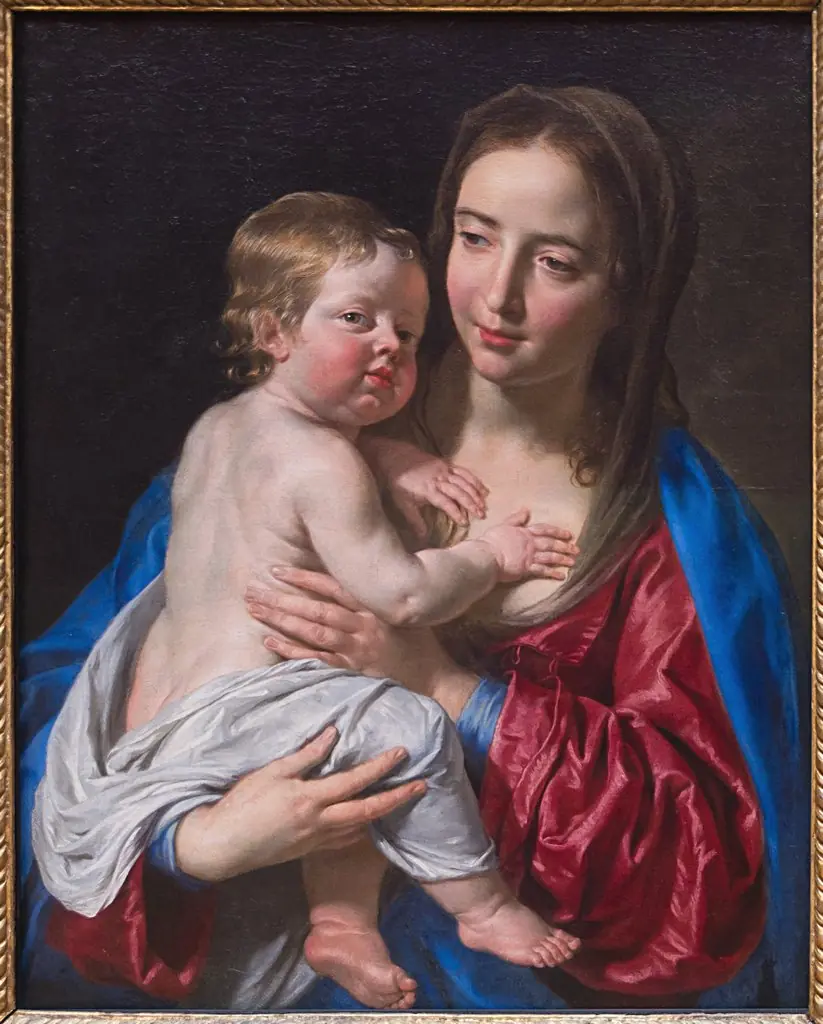
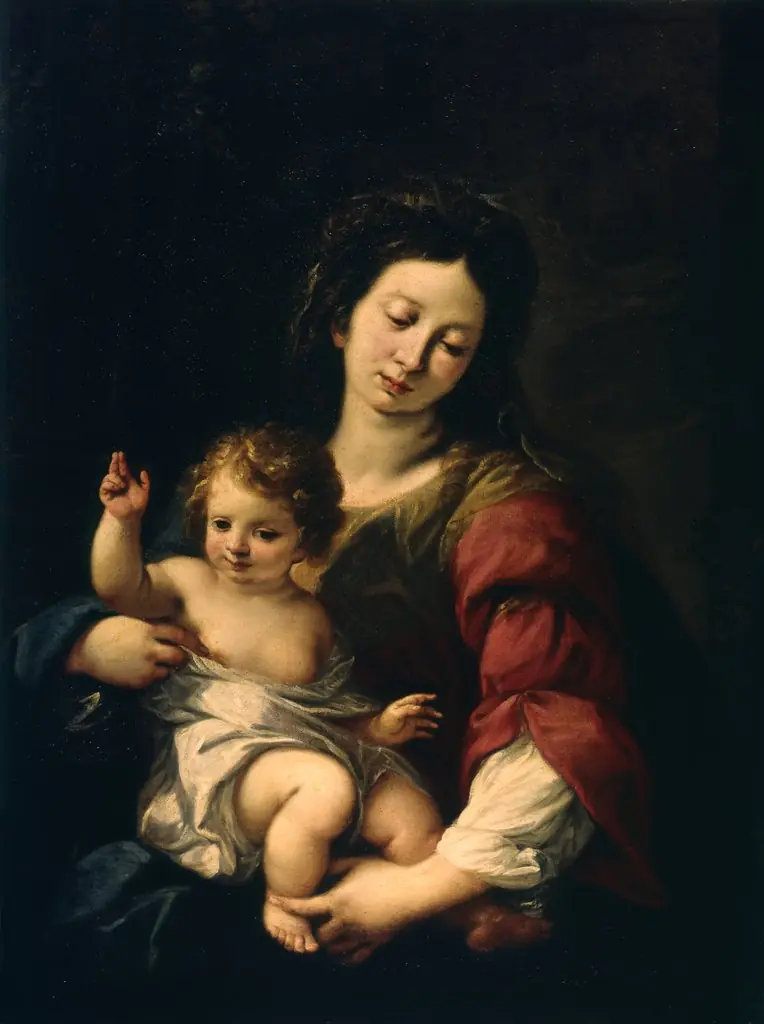
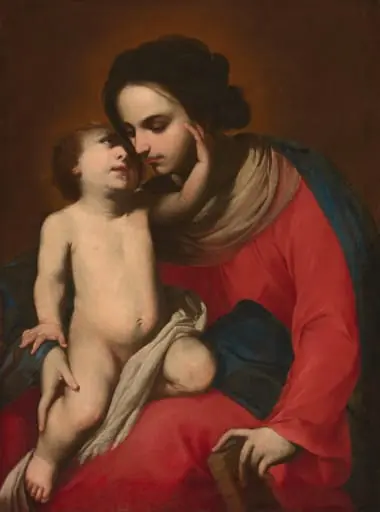
Created circa 1719 by the Venetian painter Angelo Trevisani, this oil work portrays the Virgin Mary cradling the infant Jesus. The composition centers on the two figures against a darkened backdrop, emphasizing their intimate connection. The painting belongs to the collection of the National Museum in Warsaw, where it is displayed as an example of late‑Baroque religious imagery.
Subject & Meaning
The scene presents Mary in a blue mantle and brown veil, gently supporting the sleeping child, who is swaddled in white. Her calm expression and tender grip convey maternal devotion and the serene divinity of the infant. The work reflects the Counter‑Reformation emphasis on approachable, humanized depictions of sacred figures, inviting contemplation of the Christ child’s vulnerability.
Technique & Style
The soft modeling of flesh and the delicate handling of fabrics reveal a Venetian sensibility, combining rich coloration with a restrained palette.
Trevisani employs chiaroscuro to model the forms, allowing light to fall on the faces and hands while the surrounding space recedes into shadow. The soft modeling of flesh and the delicate handling of fabrics reveal a Venetian sensibility, combining rich coloration with a restrained palette. Brushwork is smooth, reinforcing the tranquil atmosphere and the three‑dimensional presence of the figures.
History & Provenance
After its execution in the early eighteenth century, the painting entered various private collections before being acquired by the National Museum in Warsaw. Its provenance reflects the broader movement of Italian Baroque works into Central European institutions during the 19th and early 20th centuries, where they were valued for their devotional content and artistic merit.
Context
Trevisani trained under Andrea Celesti and absorbed influences from Antonio Balestra, situating him within the late‑Baroque tradition that blended dynamic composition with refined elegance. The work aligns with contemporary Venetian portrayals of the Madonna, which often highlighted emotional intimacy and employed dramatic lighting to enhance spiritual resonance.
Artist & collection

Artist
Angelo Trevisani (1669 – after 1753) was an Italian painter of the late-Baroque, active mainly in Venice.