Artwork
Untitled
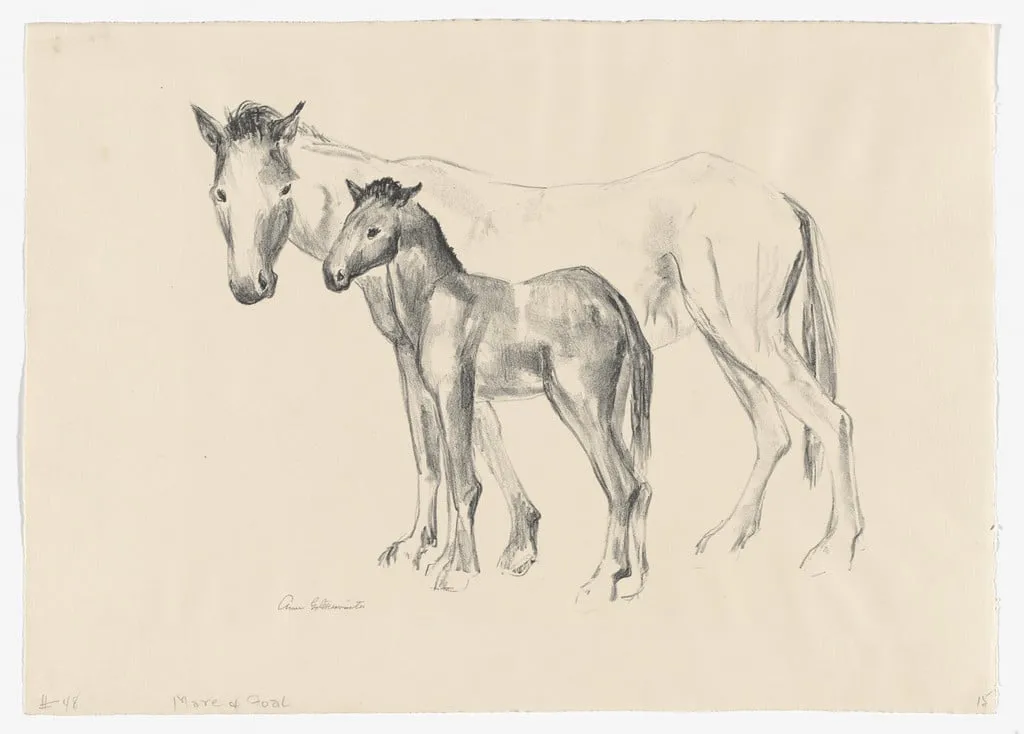
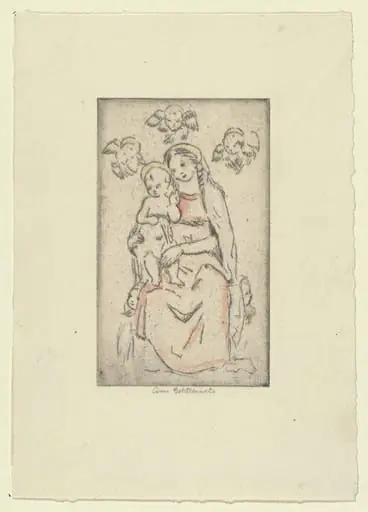
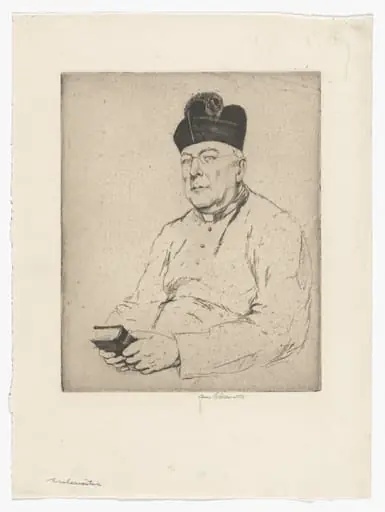
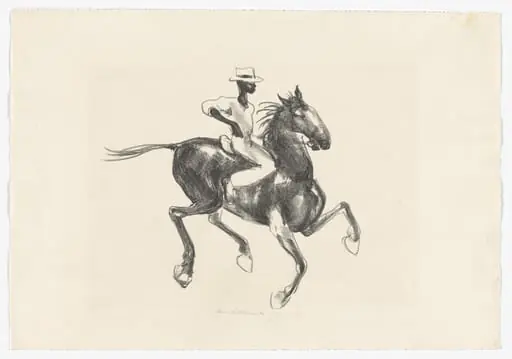
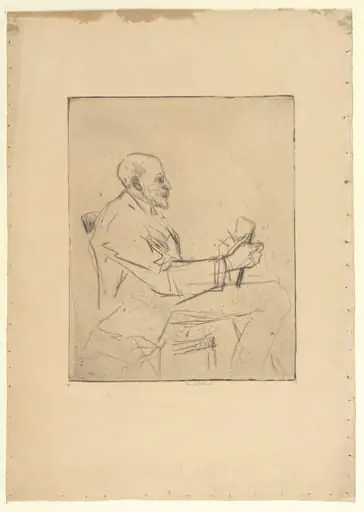
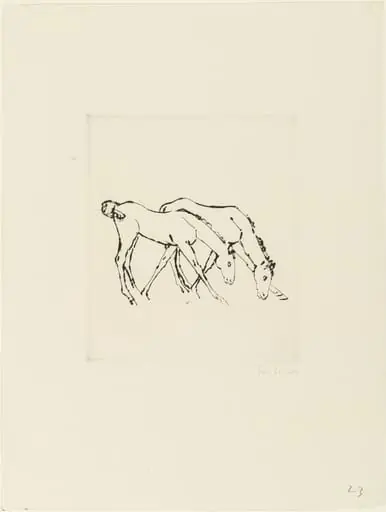
Untitled is an ink print by Anne Goldthwaite. It dates from 1938 and is held in the collection of the Museum of Modern Art.
About this work
Both are drawn in loose, quick lines, with no background—just their shapes against a plain, light-colored paper.
This sketch shows two horses side by side. The larger one stands still, its head turned slightly toward the smaller, younger horse. Both are drawn in loose, quick lines, with no background—just their shapes against a plain, light-colored paper.
The artist signed it in the corner, and the date "1938" is faintly marked. The lines feel hurried, like they were drawn fast to catch the horses’ movement.
Look up lithography to see how this kind of sketch was made.
Overview
Created around 1938, this lithograph by Anne Goldthwaite is part of The Museum of Modern Art’s collection. Executed in a spontaneous, sketch-like manner, it depicts two horses in close proximity, rendered without environmental context. The work’s minimalism and rapid linework reflect an emphasis on gesture over detail, characteristic of Goldthwaite’s approach to printmaking during this period.
Subject & Meaning
The composition centers on a mature horse and a younger one, positioned side by side with the larger animal turning its head toward the smaller. The absence of background or narrative cues invites focus on their quiet, intimate interaction. The image suggests a moment of calm connection between the animals, evoking themes of companionship or generational presence without explicit symbolism.
Technique & Style
Goldthwaite employed lithography to achieve fluid, immediate lines that mimic the energy of a quick drawing. The ink was applied directly to the stone, allowing for loose, gestural marks that retain the spontaneity of sketching. The paper’s light tone remains largely untouched, emphasizing the negative space and reinforcing the work’s understated, uncluttered aesthetic.
History & Provenance
The print was produced in 1938 and later acquired by The Museum of Modern Art. Goldthwaite, known for her regionalist subjects and printmaking, often captured rural and equestrian scenes during this phase of her career. The work’s modest scale and unassuming execution align with her broader interest in everyday moments rendered with quiet precision.
Context
In the late 1930s, American artists increasingly turned to intimate, observational subjects amid broader social and economic shifts. Goldthwaite’s focus on animals, devoid of human presence, reflects a quiet resistance to grand narratives. Her lithographs from this time prioritize tactile presence and subtle motion, distinguishing her from more overtly political contemporaries.
Legacy
This work exemplifies Goldthwaite’s contribution to American printmaking through its restraint and sensitivity to form. Though not widely reproduced, it remains a representative example of her ability to convey life and relationship through minimal means. Its inclusion in MoMA’s collection affirms its place within the broader narrative of 20th-century American graphic art.
Artist & collection

Artist
Anne Goldthwaite was an American painter and printmaker and an advocate of women's rights and equal rights.