Artwork
Untitled
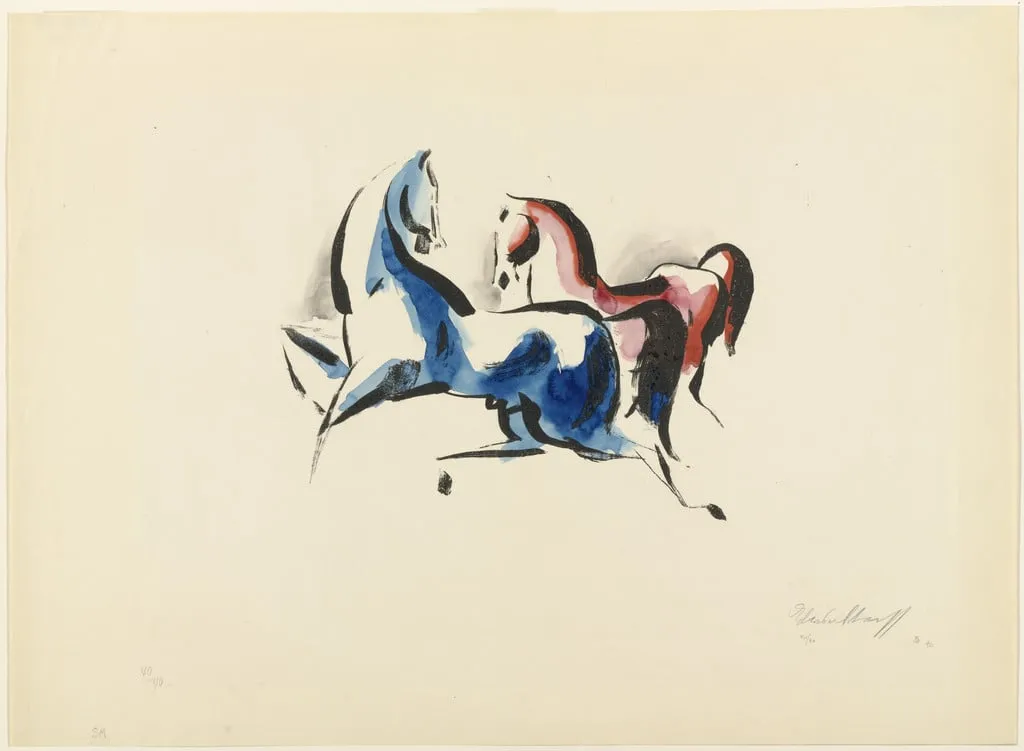
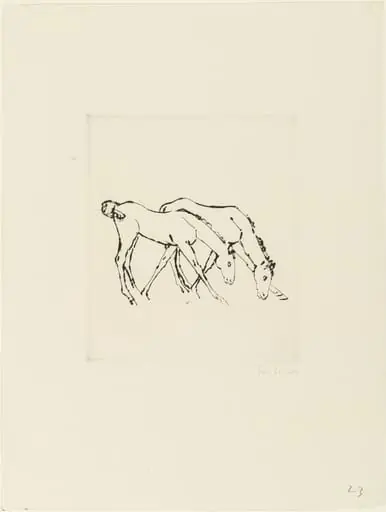
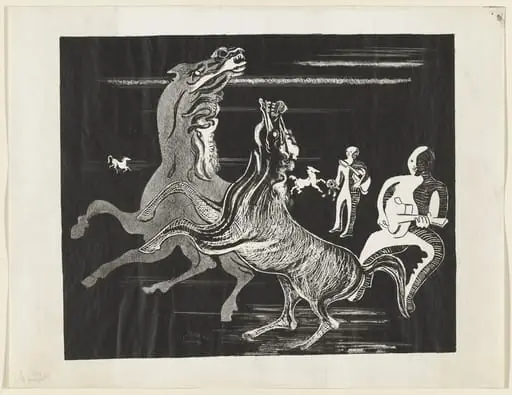
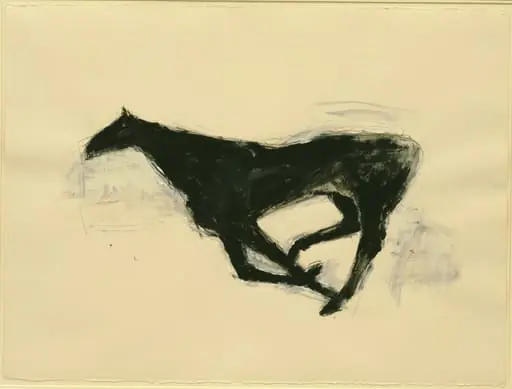
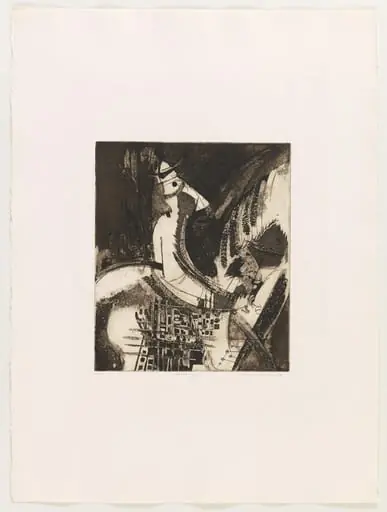
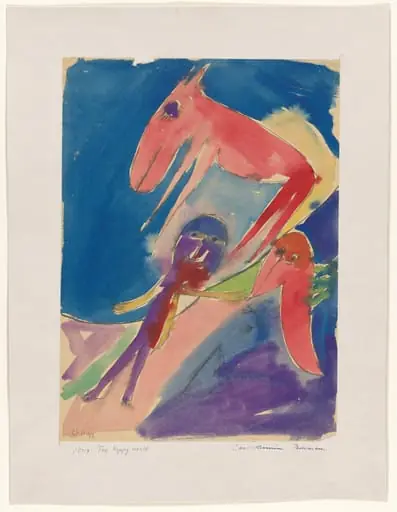
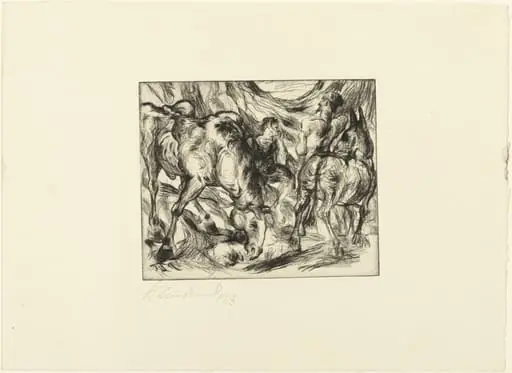
Untitled is a watercolor print by Edwin Scharff. It dates from 1919 and is held in the collection of the Museum of Modern Art.
About this work
Overview
Created in 1919, this lithograph by Edwin Scharff incorporates watercolor to enhance its dynamic composition. The work belongs to the collection of The Museum of Modern Art and exemplifies early 20th-century experimentation with printmaking and expressive color. Its minimal background and energetic forms reflect a focus on motion over narrative detail.
Subject & Meaning
Two horses are depicted in mid-gallop, their elongated forms suggesting rapid motion. The animals are rendered without context or environment, isolating their physical energy as the central theme. The contrast between the blue and red-white bodies may imply duality or opposing forces, though no explicit symbolism is documented. The emphasis remains on movement rather than narrative.
Technique & Style
Scharff employed bold, gestural lines in lithography to define the horses' musculature, with black outlines sharpening their forms.
Scharff employed bold, gestural lines in lithography to define the horses' musculature, with black outlines sharpening their forms. Watercolor was added selectively, applying flat, vivid hues of blue, red, and white without gradation. The background remains unworked, allowing the figures to dominate. The technique resembles a rapid sketch translated into print, prioritizing immediacy over refinement.
History & Provenance
The work was produced in 1919, during a period of artistic experimentation in Germany following World War I. It entered the collection of The Museum of Modern Art in the mid-20th century as part of its broader effort to document modernist print practices. No earlier ownership records are publicly documented beyond its acquisition by the museum.
Context
Scharff’s work aligns with Expressionist tendencies of the era, where emotion and movement were prioritized over realism. The use of simplified forms and non-naturalistic color reflects influences from contemporary German art movements. The absence of a setting echoes a broader trend among modernists to strip subjects of extraneous detail and focus on essential forms.
Legacy
This piece contributes to the understanding of how printmaking was adapted for expressive purposes in early modernism. While not widely reproduced, it remains a representative example of Scharff’s approach to movement and color. Its presence in MoMA’s collection ensures continued study within the context of interwar German graphic art.
Artist & collection

Artist
Edwin Scharff was a German sculptor. He was born in Neu-Ulm and died in Hamburg.