Artwork
Flying Cupid
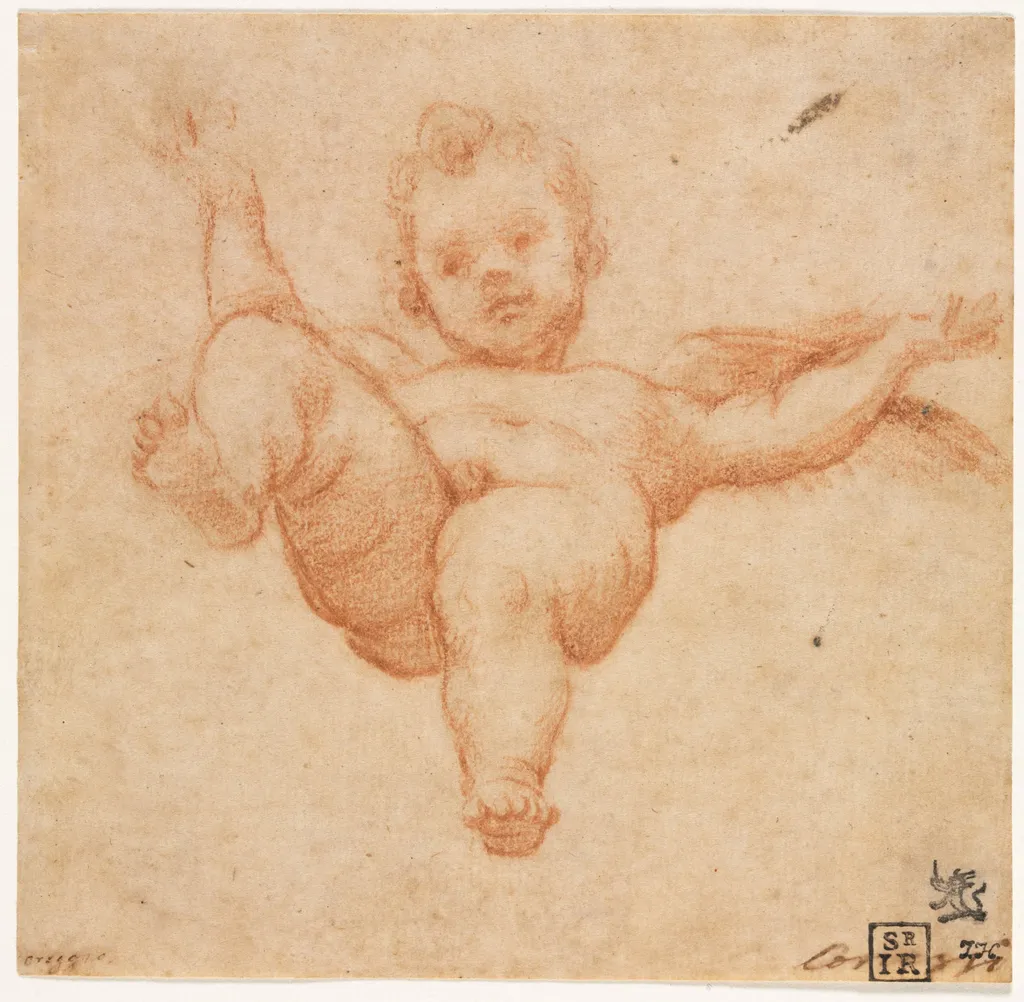
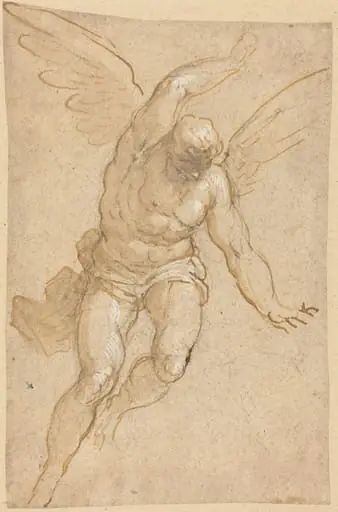
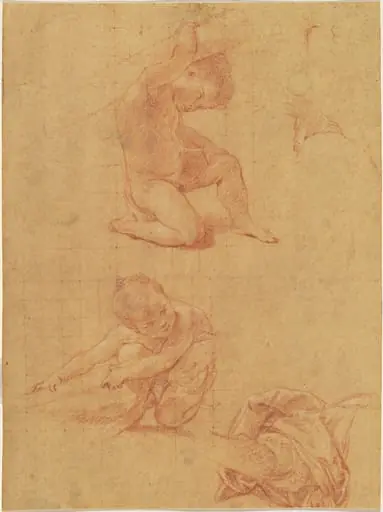
Flying Cupid is a drawing by the Renaissance artist Annibale Carracci. It dates from 1602 and is held in the collection of the Cleveland Museum of Art.
About this work
Overview
The work is part of the Cleveland Museum of Art’s collection and exemplifies his shift away from Mannerist rigidity toward a more animated, classical idiom.
Created around 1602, this drawing by Annibale Carracci captures a winged Cupid in mid-flight, turning his head backward with lively motion. Executed during Carracci’s Roman period, it reflects his role in redefining religious and mythological imagery through naturalism and dynamic composition. The work is part of the Cleveland Museum of Art’s collection and exemplifies his shift away from Mannerist rigidity toward a more animated, classical idiom.
Subject & Meaning
The figure of Cupid, god of desire, is depicted not as a static symbol but as a mischievous, airborne presence. His backward glance suggests movement and narrative continuity, evoking the fleeting nature of love. Unlike earlier static representations, this portrayal injects psychological nuance and physical vitality into a mythological subject, aligning with Carracci’s broader aim to revive classical themes with human vitality.
Technique & Style
Carracci employs fluid, expressive lines to convey motion and weightlessness, emphasizing the figure’s airborne trajectory. The drawing’s energy comes from rhythmic contours and subtle shifts in pressure, rather than heavy shading. While sfumato is more characteristic of painting, here the effect is achieved through delicate hatching and atmospheric line variation, creating a sense of depth and breath without color.
History & Provenance
Produced during Carracci’s tenure at the Palazzo Farnese, where he led a major decorative project, this drawing likely served as a preparatory study or independent work for a larger composition. It remained in private collections before entering the Cleveland Museum of Art, where it now stands as a testament to his influence on early Baroque draftsmanship and the transmission of classical ideals through sketch.
Context
In early 17th-century Rome, Carracci and his circle sought to reform painting by blending natural observation with idealized form, countering the artificiality of Mannerism. This drawing reflects that mission: mythological subjects were reimagined with lifelike motion and emotional immediacy. It aligns with broader trends in Bolognese art that prioritized study from life and classical harmony over stylized convention.
Legacy
Carracci’s approach to mythological figures, as seen in this drawing, influenced generations of artists who followed his emphasis on movement and emotional expression. His drawings became models for academic training, bridging Renaissance ideals with Baroque dynamism. This work exemplifies how preparatory sketches could carry artistic innovation beyond large-scale commissions, shaping the evolution of European drawing practices.
Artist & collection
Artist
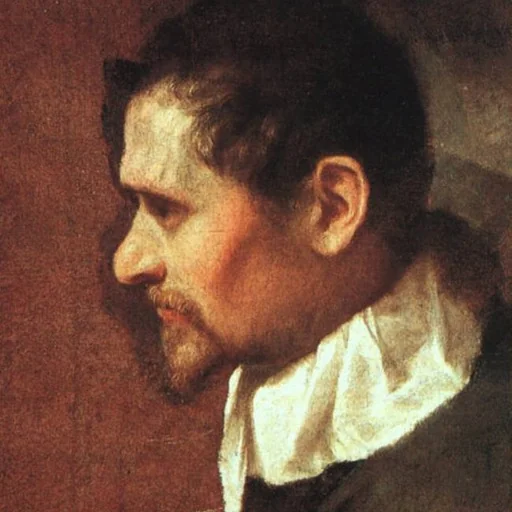
Annibale Carracci ( kə-RAH-chee, UK also kə-RATCH-ee, Italian: ; November 3, 1560 – July 15, 1609) was an Italian painter and instructor, active in Bologna and later in Rome.

![Baby [verso], by Baldassare Franceschini](https://artifactworldgallery.com/img/baldassare-franceschini--baby-verso--070e4d9e6f984e17-w320.webp)