Artwork
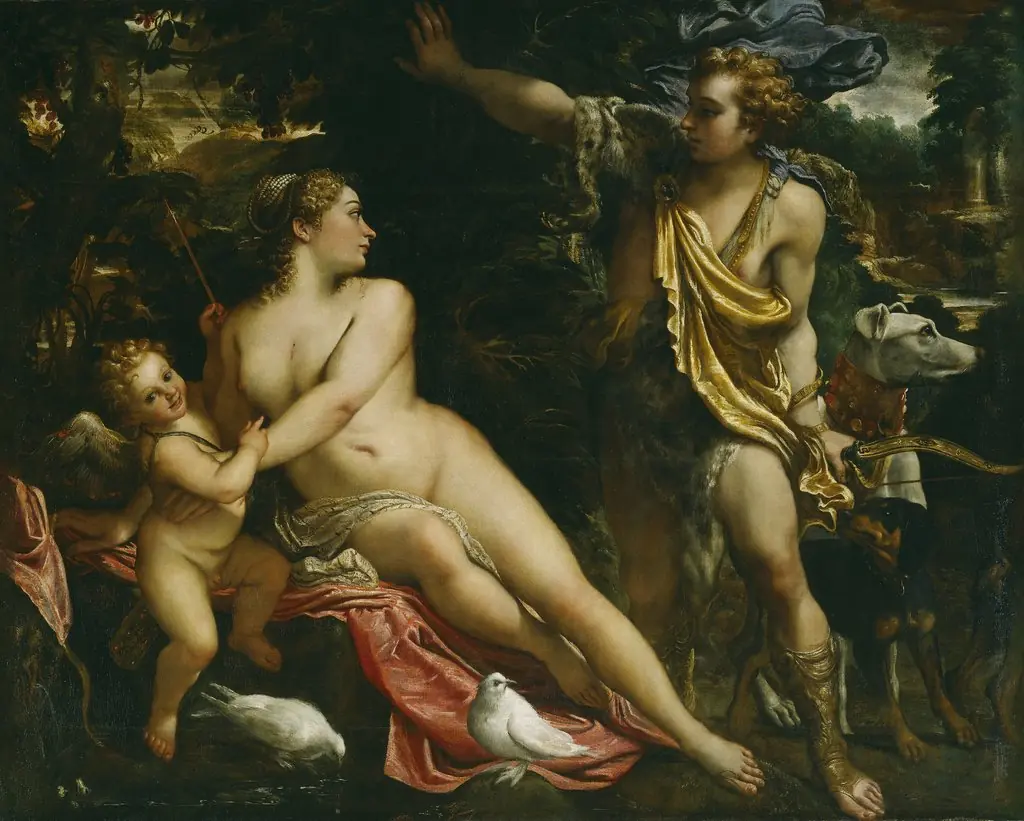
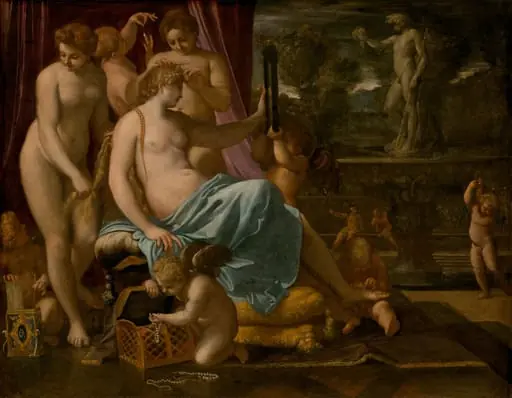
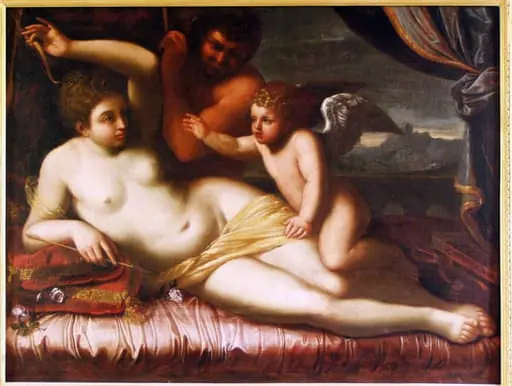
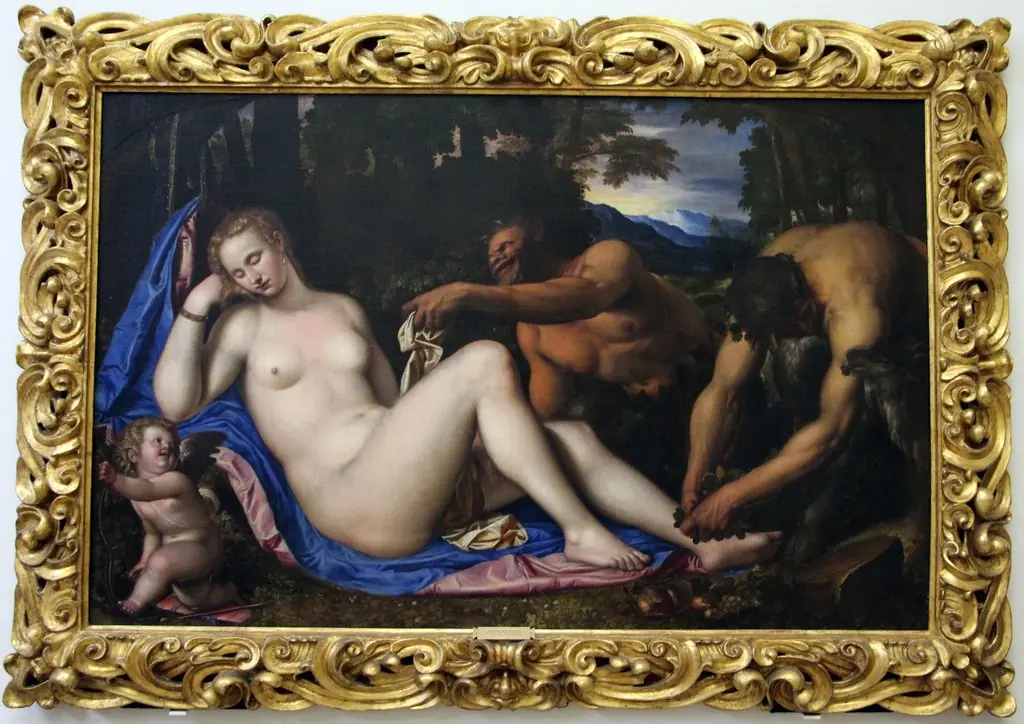
Venus with a Satyr and Cupids
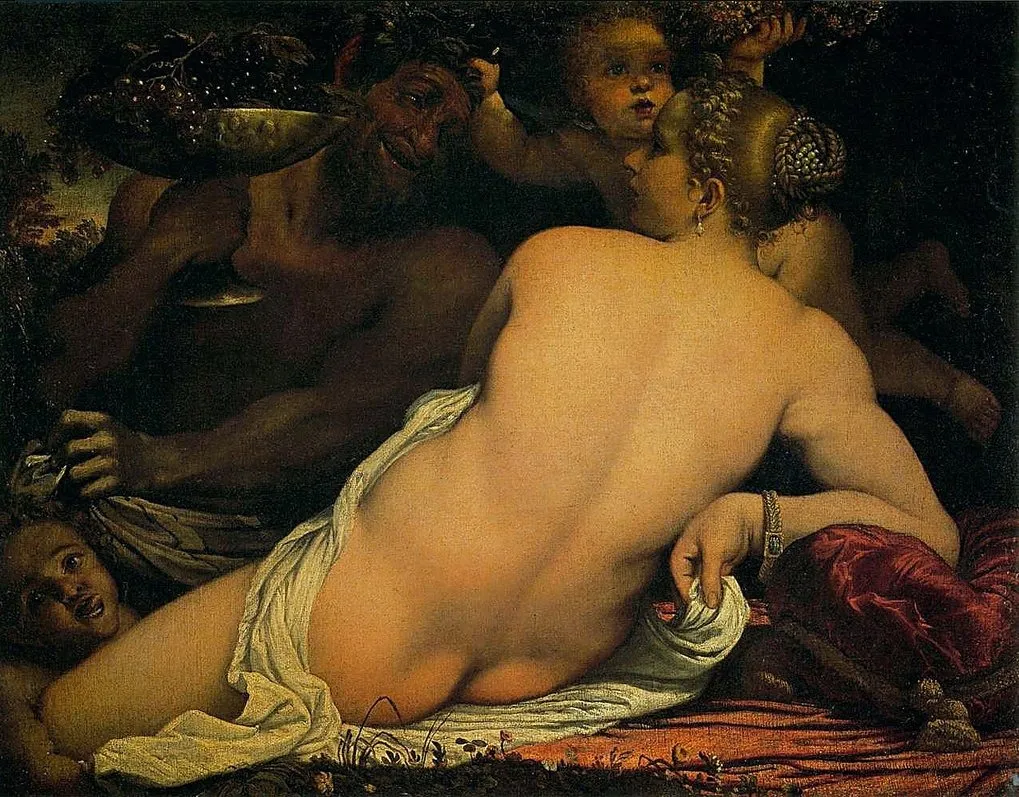
Venus with a Satyr and Cupids is an oil painting by the Early Baroque Italian artist Annibale Carracci. It dates from 1594 and is held in the collection of the Uffizi Gallery.
About this work
This painting shows Venus, a satyr, and two cupids. It’s an oil painting made around 1588 by Annibale Carracci. Now it lives in the Uffizi Gallery in Florence.
The artist spent time in Venice before making this work. That’s why the style looks a little like Venetian art.
Want to see more by the same hand? Look up Annibale Carracci.
Overview
Annibale Carracci’s oil on canvas, titled *Venus with a Satyr and Two Cupids* (also known as *The Bacchante*), dates to roughly 1588–1590. The composition presents the goddess Venus alongside a satyr and two cupids, rendered in a manner that reflects the artist’s brief Venetian sojourn. The painting is presently housed in the Uffizi Gallery, Florence.
Subject & Meaning
The work juxtaposes classical mythological figures: Venus, the embodiment of love; a satyr, a creature associated with rustic revelry; and two cupids, symbols of desire. Their interaction suggests a playful, perhaps erotic, narrative that explores themes of sensuality and the tension between civilized beauty and untamed nature.
Technique & Style
Carracci employs a rich, luminous palette and soft modeling reminiscent of Venetian masters, a direct influence of his time in the city. The figures are rendered with a naturalistic flesh tone and fluid brushwork, while the composition balances dynamic movement with a harmonious arrangement typical of the Bolognese school.
History & Provenance
The painting first appears in records in 1620, when Camillo Bolognetti, a Bolognese collector, sold it to an emissary of Grand Duke Cosimo II de’ Medici. It entered the Medici collection, was displayed in the Uffizi’s Tribuna, and later featured in Johann Zoffany’s depiction of that gallery, positioned beside Guido Reni’s *Charity* and above Raphael’s *Madonna della Seggiola*.
Context
Due to its overt eroticism, the canvas was concealed beneath another painting during the eighteenth century, a precaution reflecting contemporary moral sensibilities. It remained hidden until the early nineteenth century, when changing attitudes allowed it to be re‑exhibited and reassessed within Carracci’s oeuvre.
Artist & collection
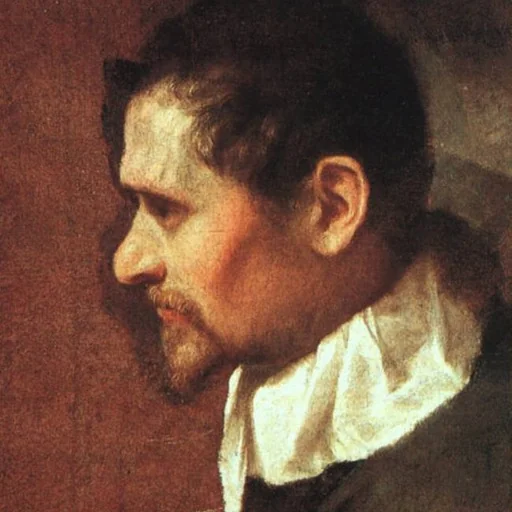
Artist
Annibale Carracci ( kə-RAH-chee, UK also kə-RATCH-ee, Italian: ; November 3, 1560 – July 15, 1609) was an Italian painter and instructor, active in Bologna and later in Rome.