Artwork
Peisaj
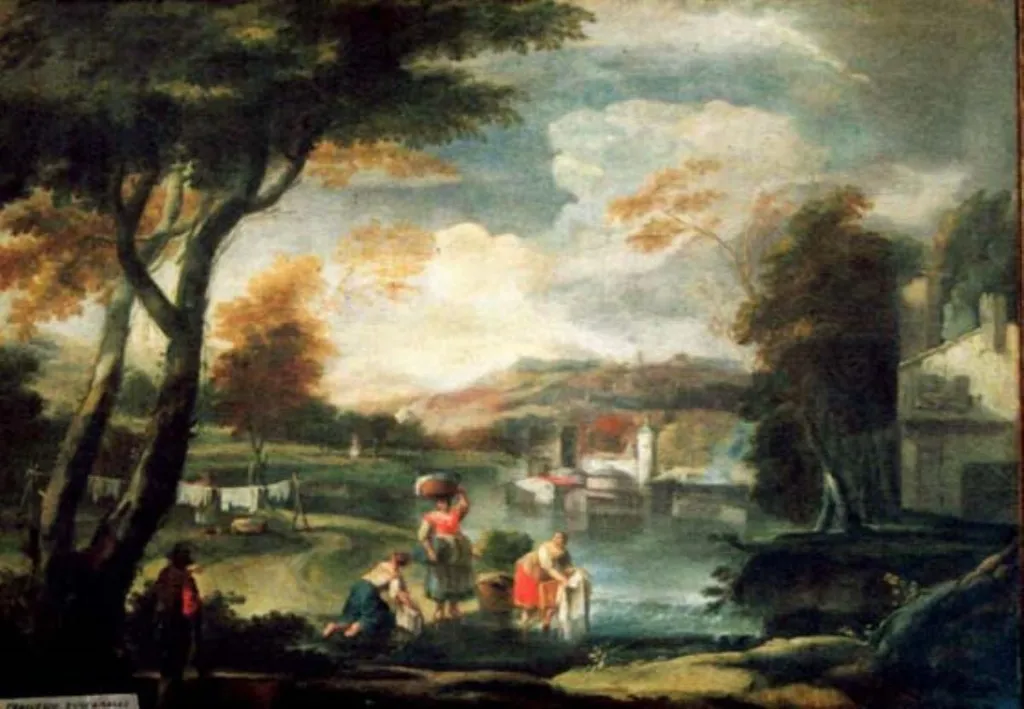
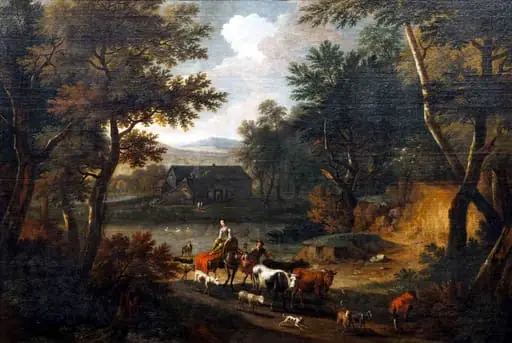
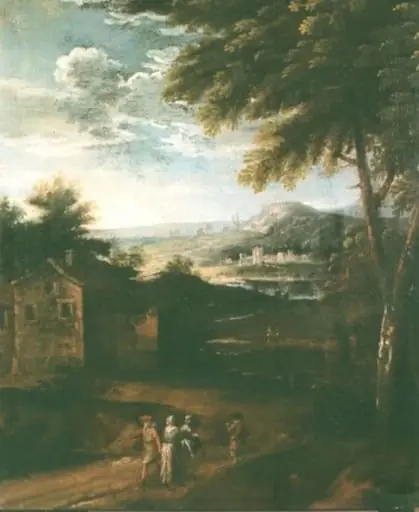
Peisaj is an unspecified painting by anonim italian. It dates from 1750 and is held in the collection of the Romanian Academy in Bucharest. Created around 1750 by an unidentified Italian hand, this oil painting is part of the collection at the Museum of Ethnography.
About this work
Overview
Created around 1750 by an unidentified Italian hand, this oil painting is part of the collection at the Museum of Ethnography. The work depicts a tranquil countryside scene, rendered in a restrained palette of greens, browns and blues, and is organized into a foreground of human activity beside water and a distant horizon of rolling hills under a clouded sky.
Subject & Meaning
The composition presents a modest landscape populated by figures engaged in routine tasks near a water’s edge, accompanied by domestic animals. The inclusion of everyday labor within a natural setting suggests an interest in the harmony between human life and the surrounding environment, a common theme in mid‑18th‑century Italian landscape painting.
Technique & Style
Executed with muted tonal values, the artist employs soft brushwork to blend foliage and sky, creating a gentle atmospheric effect. The spatial arrangement follows a shallow recession, with the foreground figures sharply defined against a more indistinct background, reflecting the pastoral aesthetic associated with the Italian veduta tradition of the period.
History & Provenance
The painting’s attribution remains anonymous, though stylistic parallels have been drawn to the work of Francesco Zuccarelli and his circle. It entered the Museum of Ethnography’s holdings through an acquisition in the early 20th century, where it has been displayed as an example of Italian landscape art from the mid‑1700s.
Artist & collection
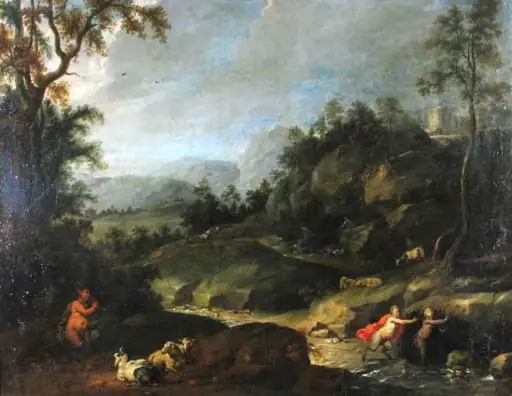 Nimfa Syrinx urmărită de satir
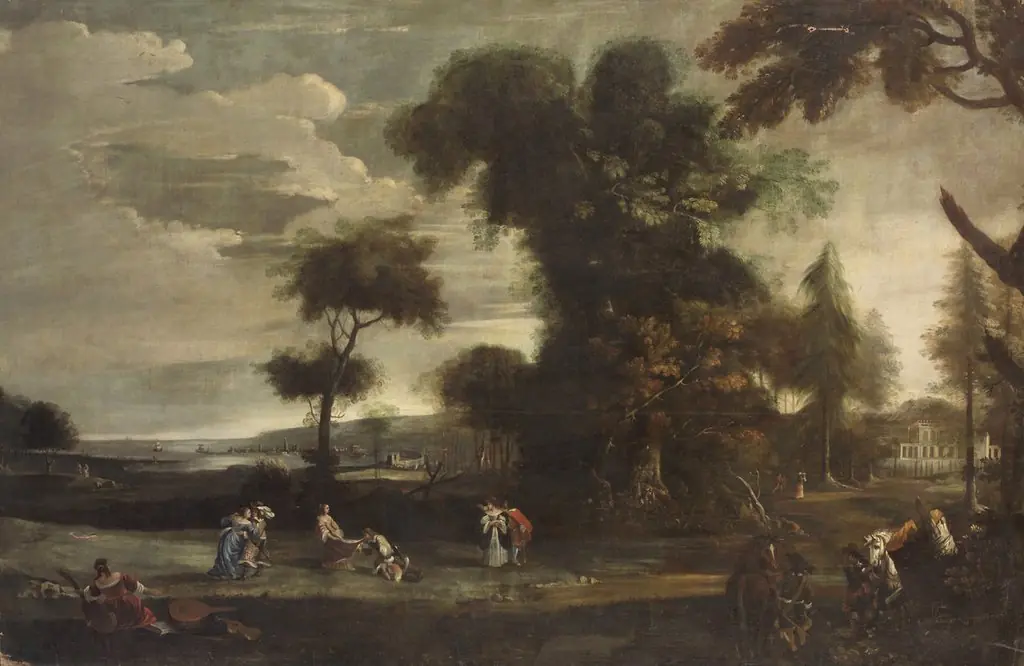 Landscape with love couple
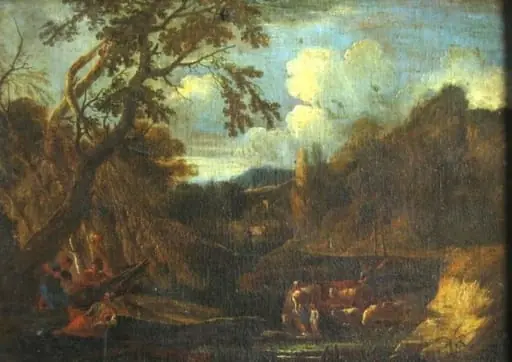 La adăpost
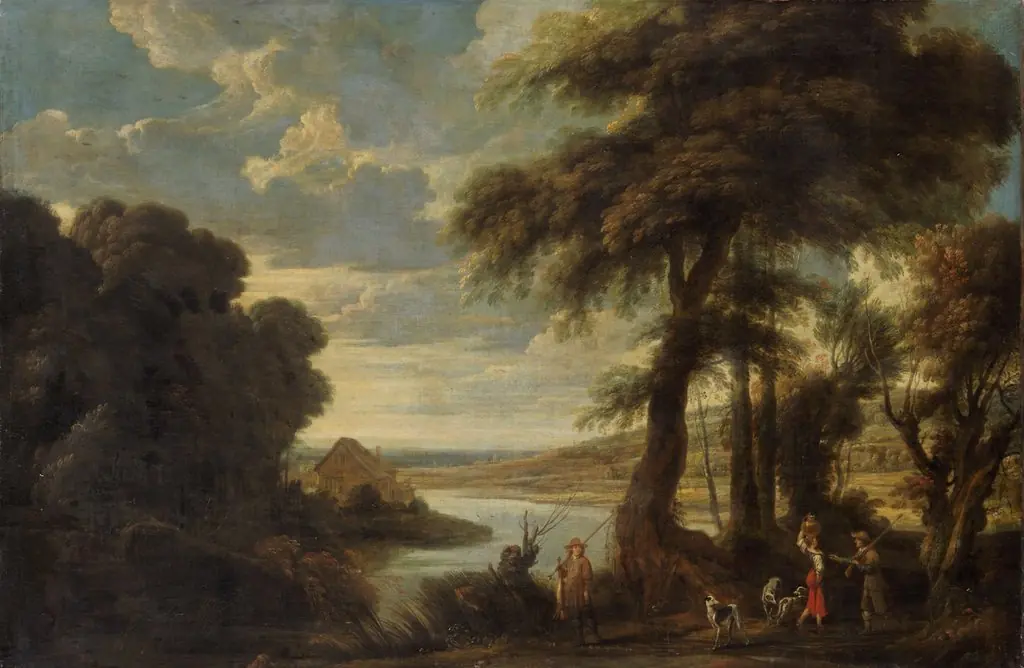 Landscape with hunters
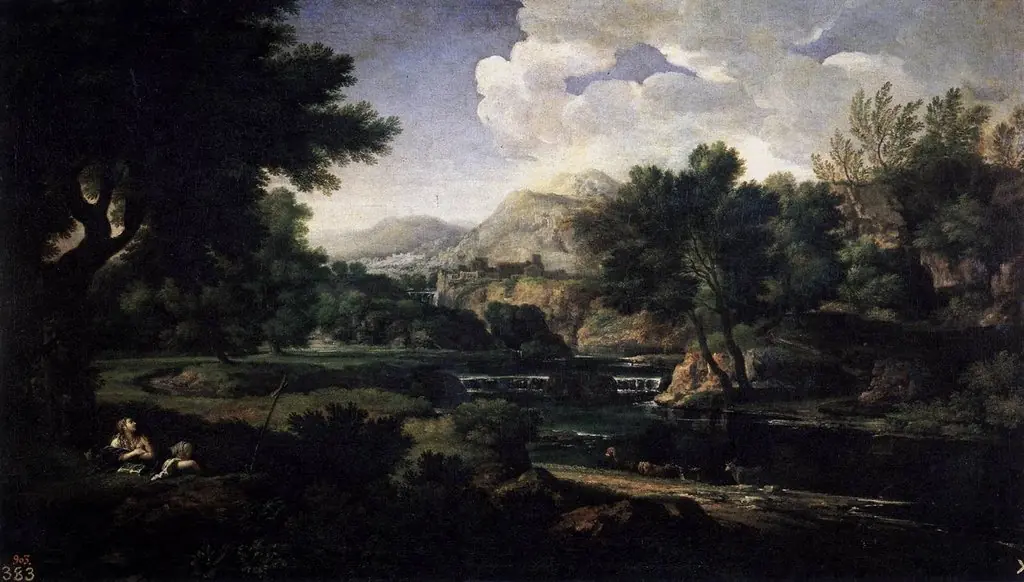 Landscape with Magdalen Worshipping the Cross
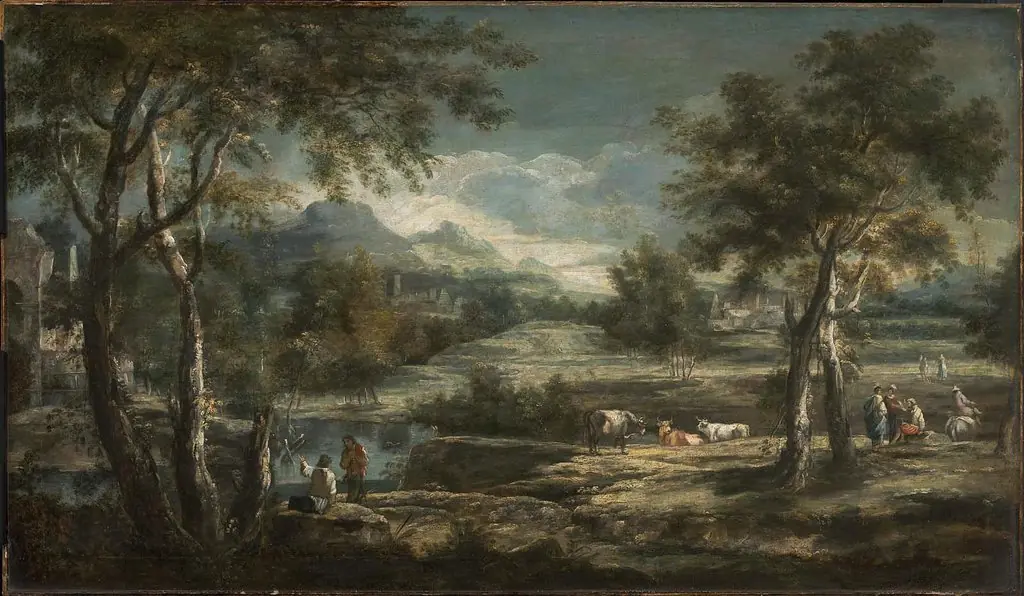 River Landscape with Mountains
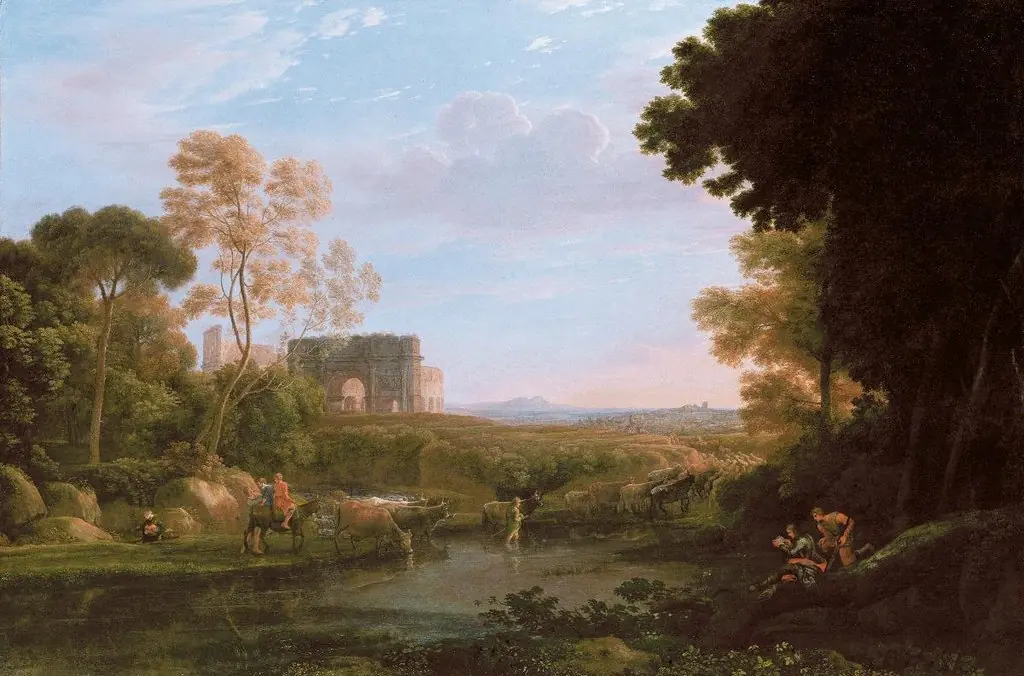 Pastorale avec l’Arc de Constantin
 Peisaj cu personaje și animale
 River landscape with resting shepherds and herds
 Paisaje con pastor
 Landscape with waterfall
 Peisaj cu personaje