Artwork
Pastorale avec l’Arc de Constantin

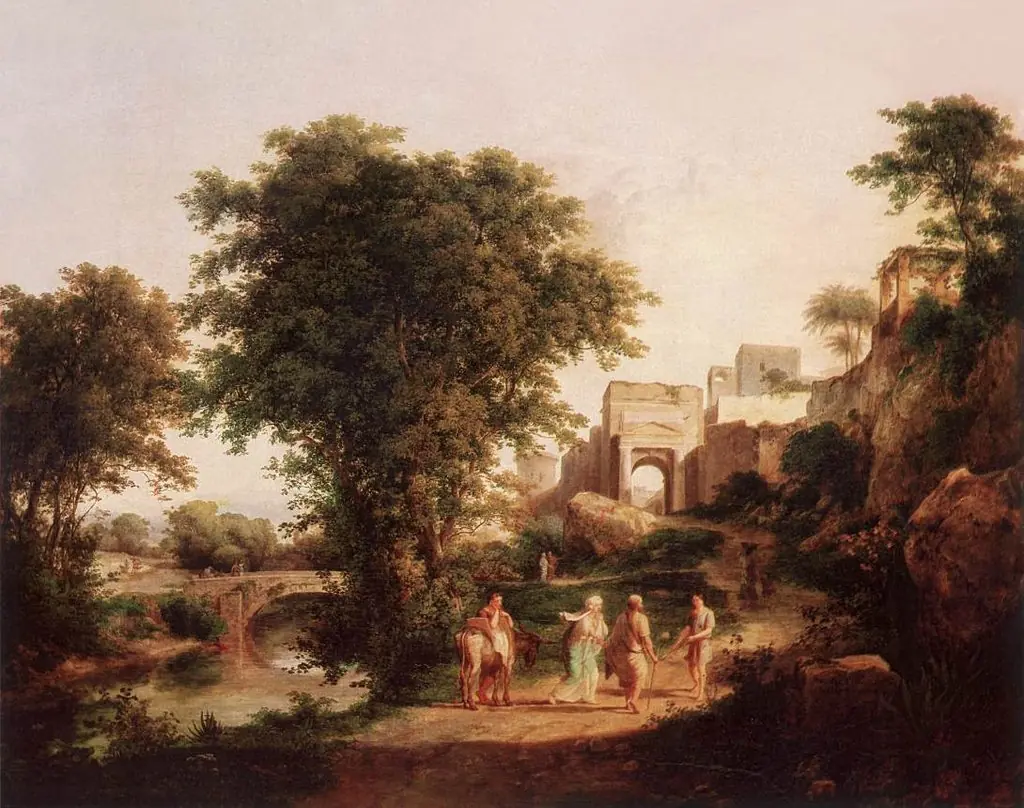
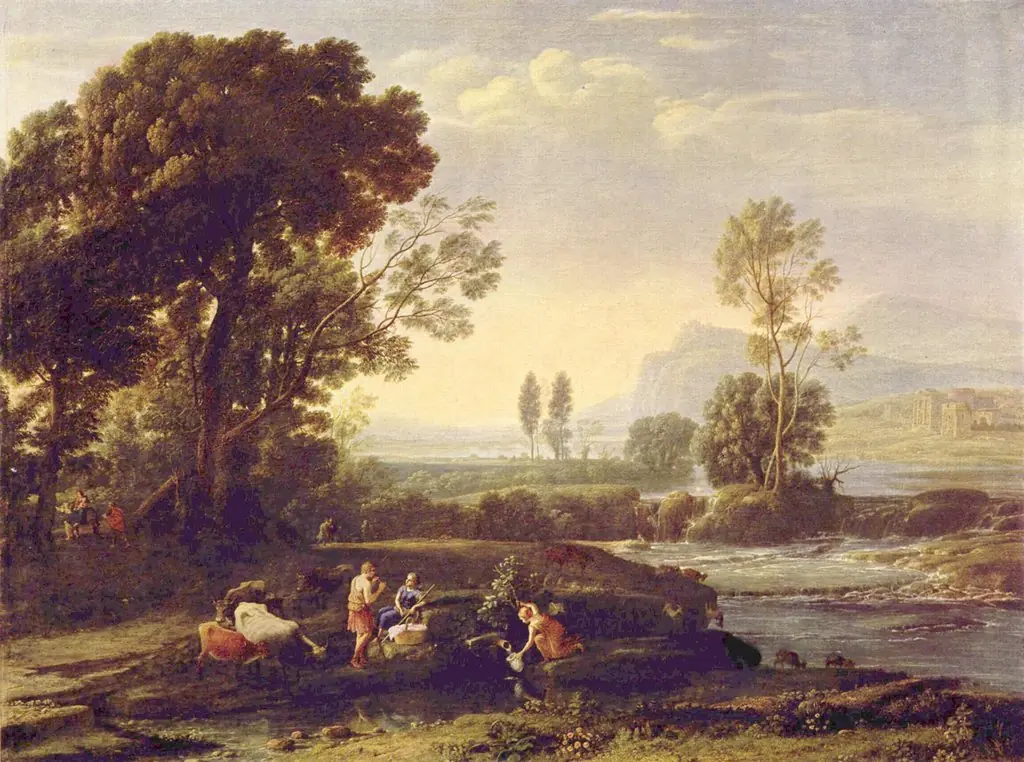
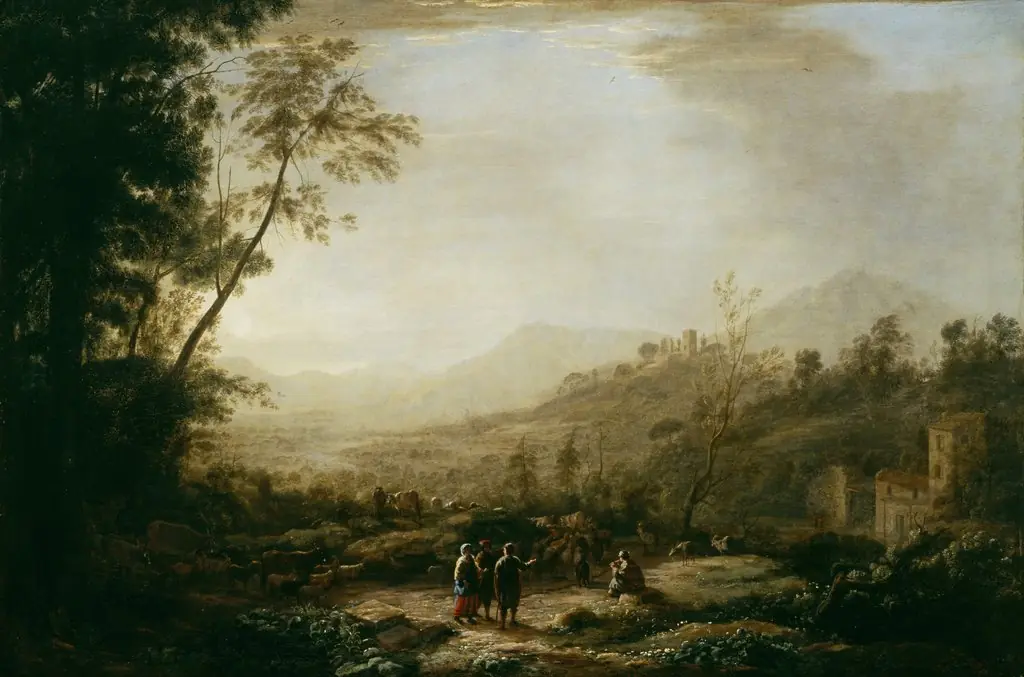
Pastorale avec l’Arc de Constantin is an oil painting by the Barbizon school artist Claude Lorrain. It dates from 1648 and is held in the collection of the Kunsthaus Zürich.
About this work
Overview
Claude Lorrain’s 1648 oil painting, titled *Pastorale avec l’Arc de Constantin*, presents a tranquil countryside vista anchored by a distant, weathered stone arch. The composition balances a verdant foreground populated with riders, shepherds and a quiet waterside with the muted grandeur of ancient ruins, all under a clear blue sky.
Subject & Meaning
The work juxtaposes everyday rural activity—horsemen, animal herders and figures at rest—with the timeless presence of classical architecture, suggesting a harmonious relationship between humanity and the remnants of antiquity. By embedding modest human narratives within a monumental setting, Lorrain elevates the pastoral genre to a contemplative reflection on history and nature.
Technique & Style
Executed in oil, the painting showcases Lorrain’s mastery of atmospheric perspective, using delicate gradations of light and shadow to model the landscape’s depth. The subtle chiaroscuro lends a luminous quality to the sky and foliage, while fine brushwork renders the texture of the ruined arch and the reflective surface of the water.
History & Provenance
Created during Lorrain’s long residence in Italy, the canvas entered the collection of the Kunsthaus Zürich, where it remains on display. Its acquisition reflects the museum’s commitment to representing the development of European landscape painting from the Baroque era onward.
Context
Lorrain, a French artist who spent most of his career in Italy, is renowned for integrating classical or biblical figures into expansive natural settings. *Pastorale avec l’Arc de Constantin* exemplifies his approach of using idealized scenery to frame human activity, a hallmark of the Baroque landscape tradition.
Artist & collection
Artist
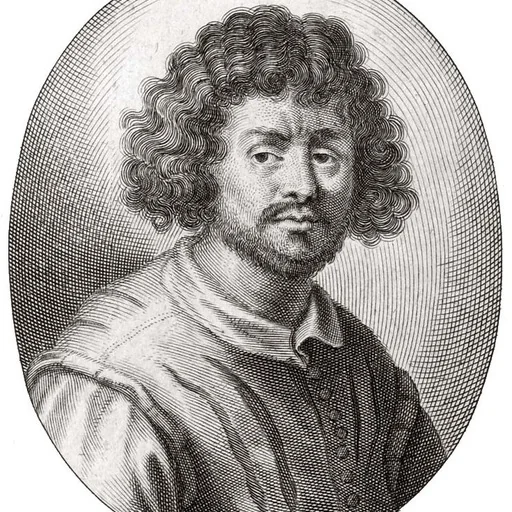
Claude Lorrain (French: ; born Claude Gellée , called le Lorrain in French; traditionally just Claude in English; c.