Artwork
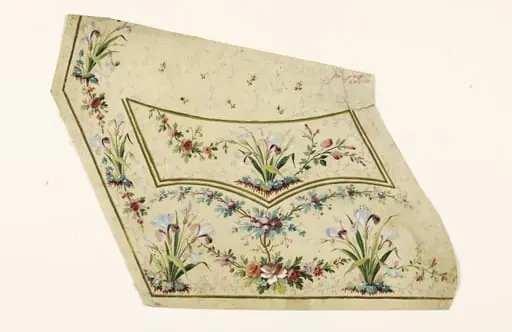
Composition avec bouquet de fleurs, guirlandes stylisées avec rubans bleus et grappes de fruits suspendues, projets de broderies de gilet, XVIIIème siècle
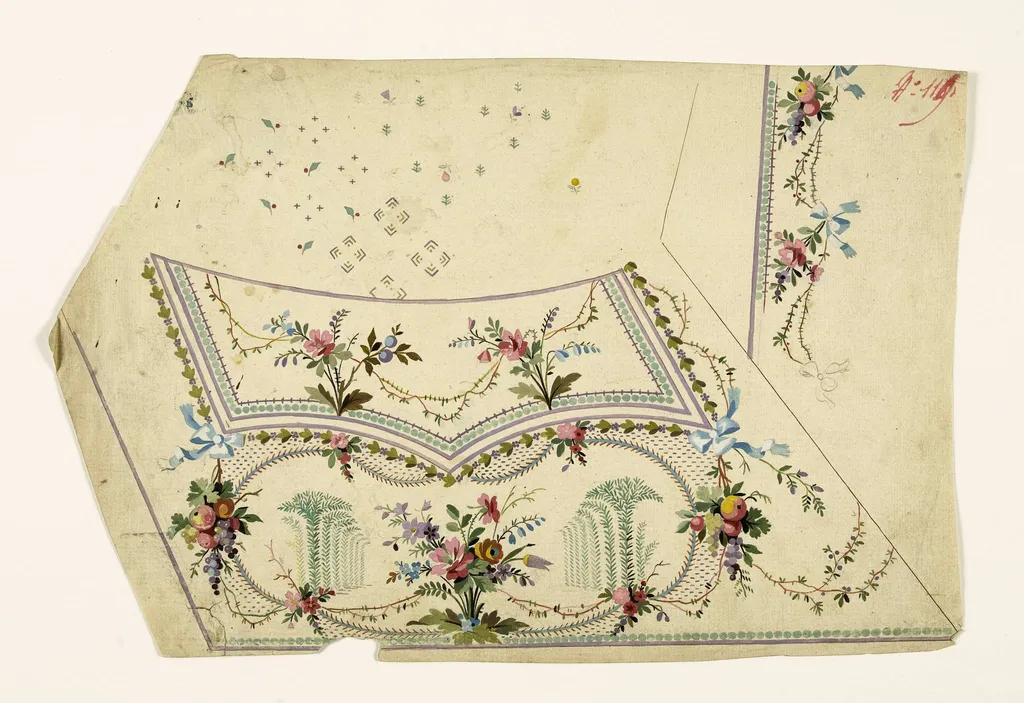
Composition avec bouquet de fleurs, guirlandes stylisées avec rubans bleus et grappes de fruits suspendues, projets de broderies de gilet, XVIIIème siècle is a drawing by Anonyme. It dates from 1750 and is held in the collection of the Palais Galliera - Musée de la Mode de la Ville de Paris. This anonymous 18th-century drawing, dated around 1750, serves as a design template for embroidery, likely intended for a waistcoat.
About this work
Overview
Executed in ink and pigment on paper, it presents a symmetrical arrangement of stylized flora and fruit, framed by looping vines and ribbons.
This anonymous 18th-century drawing, dated around 1750, serves as a design template for embroidery, likely intended for a waistcoat. Executed in ink and pigment on paper, it presents a symmetrical arrangement of stylized flora and fruit, framed by looping vines and ribbons. The plain background emphasizes the decorative elements, suggesting its function as a pattern guide rather than a standalone artwork. It is held in the collection of the Museum of Ethnography.
Subject & Meaning
The composition features bouquets, stylized garlands, and hanging clusters of fruit, all rendered in a decorative, non-naturalistic style. These motifs reflect 18th-century ornamental traditions where floral and fruit symbols conveyed abundance and refinement. The inclusion of blue ribbons suggests a link to fashionable textile design, possibly indicating aristocratic or elite domestic use. The design avoids narrative, focusing instead on rhythmic repetition and visual harmony.
Technique & Style
The drawing employs fine linework and dense stippling to define petals, leaves, and fruit textures, creating depth through pattern rather than shading. Colors—pink, blue, green, and yellow—are applied flatly, with no gradation, typical of preparatory textile designs. Forms are simplified and arranged in a continuous border, suggesting modular use. The precision of the dots and lines indicates skilled draftsmanship aimed at replication by embroiderers.
History & Provenance
The work’s origin is undocumented, but its format aligns with patterns used in French and Flemish embroidery workshops of the mid-1700s. It entered the Museum of Ethnography’s collection as part of a broader archive of textile design sources, likely acquired through donations or institutional transfers. Its anonymity reflects the common practice of attributing such functional designs to workshops rather than individual artists.
Context
In the 18th century, embroidered waistcoats were status symbols among European elites, requiring detailed patterns for skilled artisans. This drawing represents one of many such templates used to standardize motifs across garments. Similar designs appear in pattern books and royal textile archives, linking it to broader trends in decorative arts. The emphasis on symmetry and repetition mirrors contemporary aesthetics in wallpaper and porcelain design.
Legacy
Though not widely exhibited, this drawing contributes to understanding the material culture of 18th-century dressmaking. It preserves the visual language of a craft now largely forgotten, offering insight into how ornamentation was planned and transferred from paper to fabric. Its survival underscores the value placed on design documentation in pre-industrial textile production.
Artist & collection
Artist
A French designer from the 1700s made delicate flower drawings meant to decorate vests.

Museum
Palais Galliera - Musée de la Mode de la Ville de Paris
Continue through works from the same source collection.
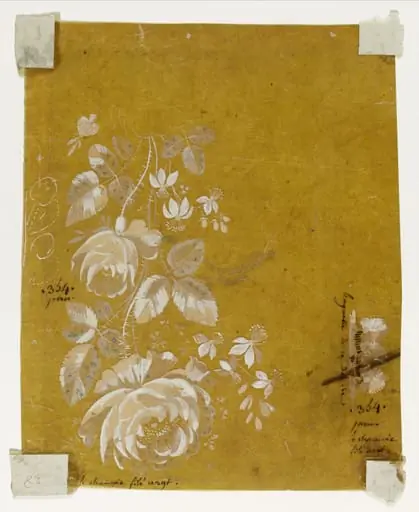 Bouquet de roses blanches pour étoffe, projets de broderies de gilet, XVIIIème siècle
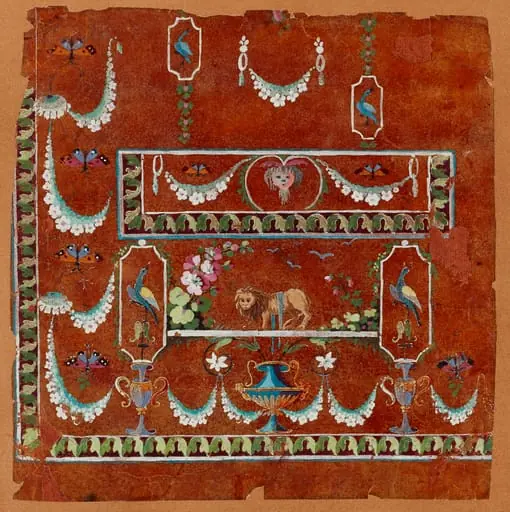 Gilet décor à grotesques, projets de broderies de gilet, XVIIIeme siècle
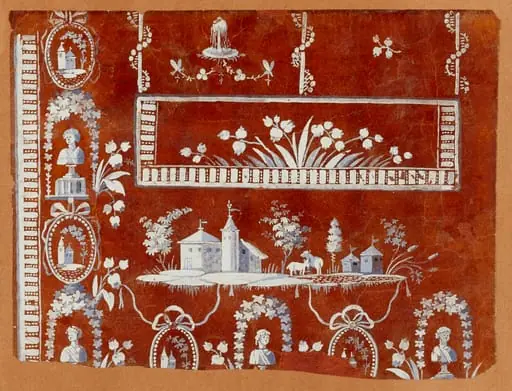 Gilet décor architectures rurales, projets de broderies de gilet, XVIIIème siècle
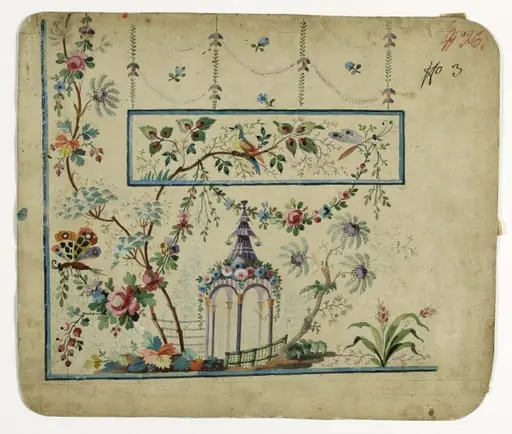 Gilet décor pagode, projets de broderies de gilet, XVIIIème siècle
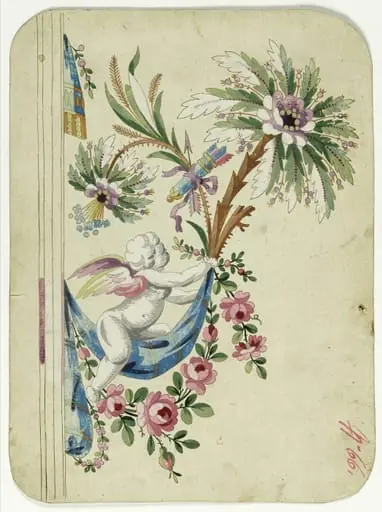 Décor de putti sur palmier, projets de broderies de gilet, XVIIIème siècle
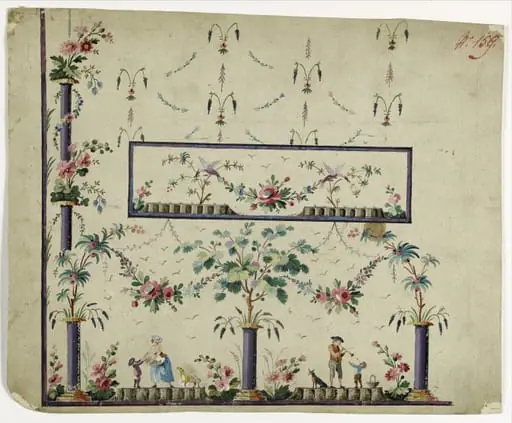 Gilet décor couple avec enfants, projets de broderies de gilet, XVIIIème siècle
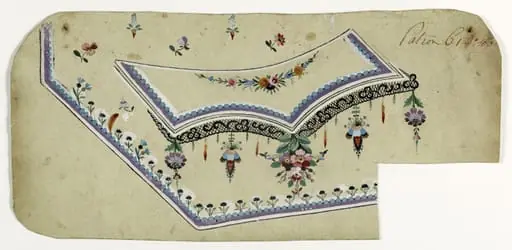 Gilet à la dentelle noire, projets de broderies de gilet, XVIIIème siècle
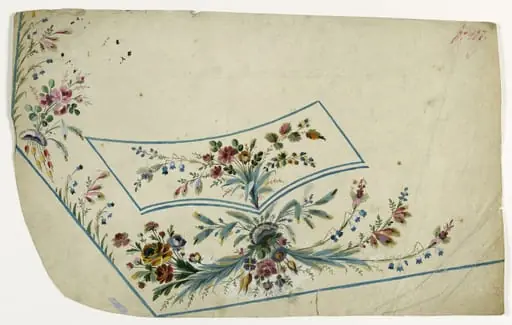 Gilet aux feuilles bleu-gris, projets de broderies de gilet, XVIIIème siècle
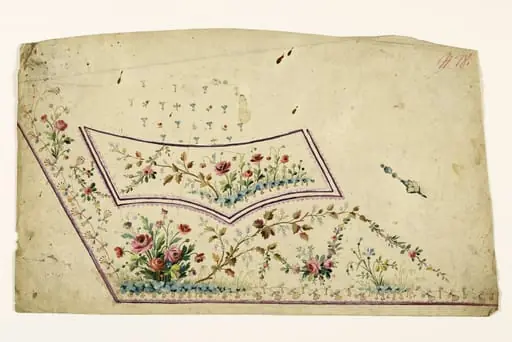 Composition avec bouquet et guirlandes de fleurs et branches de feuilles et de baies bleues, projets de broderies de gilet, XVIIIème siècle
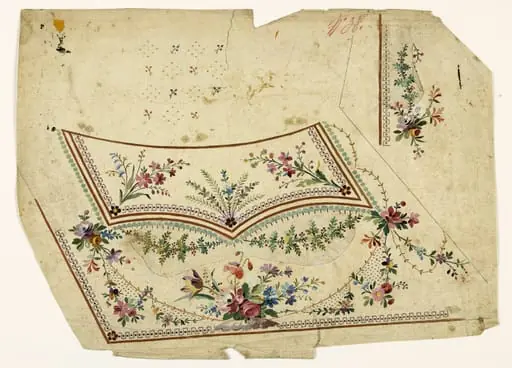 Composition avec bouquets de fleurs, frises de perles amandes et de grecques mauves, projets de broderies de gilet, XVIIIème siècle
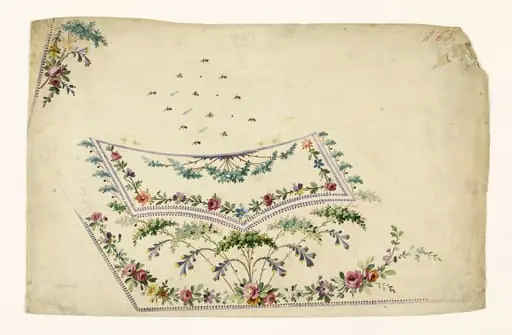 Composition avec guirlandes de fleurs et feuilles en grappes, projets de broderies de gilet, XVIIIème siècle
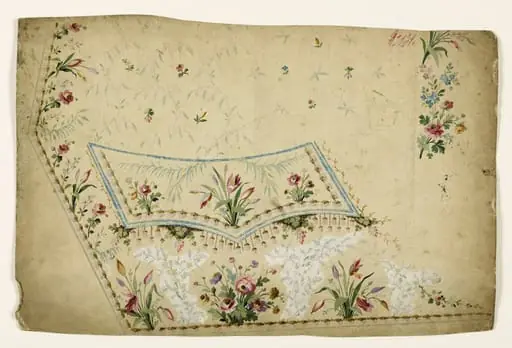 Composition avec bouquets de fleurs, frises de grappes et clochettes stylisées, projets de broderies de gilet, XVIIIème siècle
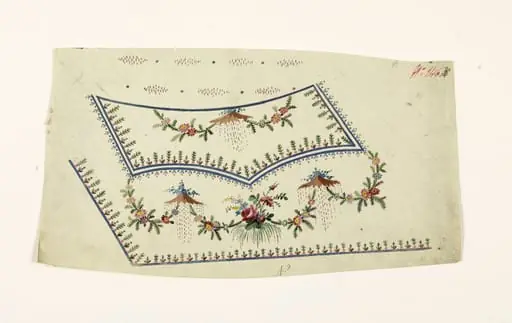 Composition avec bouquet et guirlandes de fleurs, bleuets sur tertres et frises de fleurs stylisées, projets de broderies de gilet, XVIIIème siècle
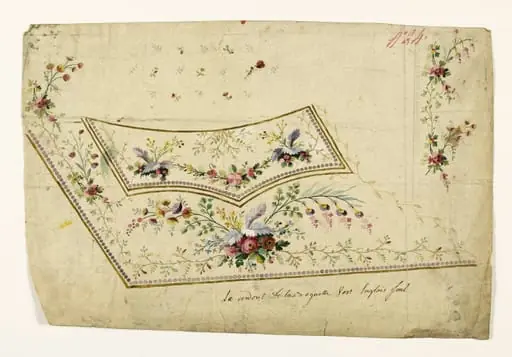 Composition avec bouquets de fleurs et branches fleuries avec grappes, frises de perles couleur glycine, projets de broderies de gilet, XVIIIème siècle
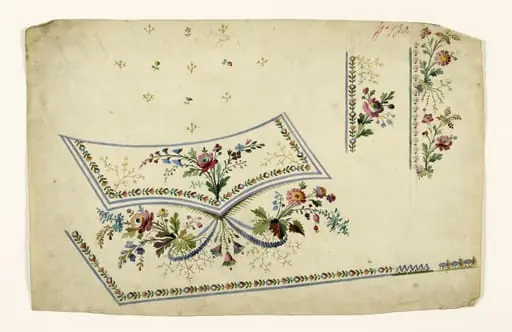 Composition florale avec bouquets et frises de fleurs stylisées, projets de broderies de gilet, XVIIIème siècle
 Composition de fleurs en bouquets et guirlandes de baies, projets de broderies de gilet, XVIIIème siècle