Artwork
Composition avec bouquets de fleurs, frises de grappes et clochettes stylisées, projets de broderies de gilet, XVIIIème siècle
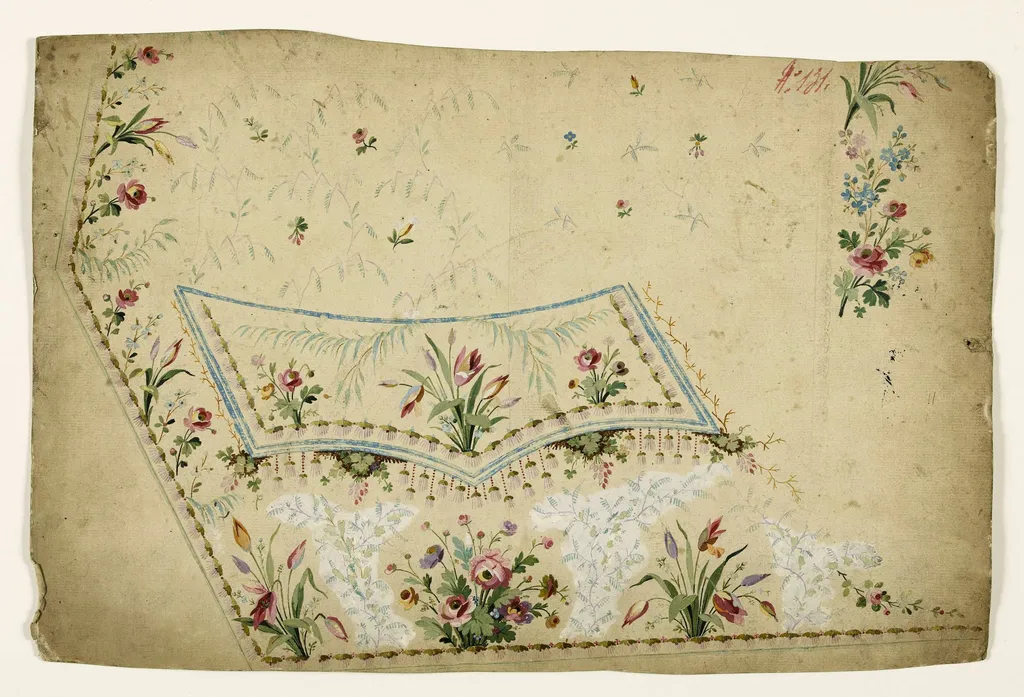
Composition avec bouquets de fleurs, frises de grappes et clochettes stylisées, projets de broderies de gilet, XVIIIème siècle is a drawing by Anonyme. It dates from 1750 and is held in the collection of the Palais Galliera - Musée de la Mode de la Ville de Paris. This undated drawing from around 1750 presents a decorative pattern intended for embroidery on a waistcoat.
About this work
Overview
The composition is organized with a central curved element surrounded by vines and blossoms, suggesting a structured layout for textile application.
This undated drawing from around 1750 presents a decorative pattern intended for embroidery on a waistcoat. Executed in soft, muted tones on a pale yellow ground, it features repeating floral motifs, stylized clusters, and bell-like forms. The composition is organized with a central curved element surrounded by vines and blossoms, suggesting a structured layout for textile application. The work is attributed to an anonymous artist and is preserved in the Museum of Ethnography.
Subject & Meaning
The design centers on botanical elements—flowers, leaves, and stylized bells—common in 18th-century ornamental arts. These motifs likely carried no symbolic narrative but served to convey elegance and refinement suitable for elite garments. The repetition of small, delicate forms reflects a preference for rhythmic, all-over patterning, typical of decorative arts meant to enhance the surface of clothing rather than tell a story.
Technique & Style
The artist employed fine, light pencil lines to define each floral unit, with subtle cross-hatching suggesting depth without heavy shading. Colors, now faded, originally included soft pinks, blues, and reds concentrated along the borders, contrasting with the pale center. The uniformity of the floral repeats indicates a methodical approach, possibly drawn from a pattern book or adapted from established textile designs of the period.
History & Provenance
The drawing’s origin is undocumented, but its format and motifs align with French or Flemish embroidery patterns from the mid-18th century. It was likely used by a seamstress or designer to guide hand-stitched decoration on a waistcoat. Acquired by the Museum of Ethnography, it survives as a rare example of a working design, preserved not as fine art but as a functional artifact of craft practice.
Context
In the 18th century, embroidered waistcoats were markers of social status, particularly among the bourgeoisie and nobility. Designers produced pattern sheets like this one to standardize ornamentation across garments. Such drawings circulated among artisans and were often copied or adapted, reflecting a network of shared visual language that bridged regional styles and workshop traditions.
Legacy
Though unsigned and unremarked in its time, this drawing offers insight into the quiet labor behind elite fashion. It preserves the visual vocabulary of a craft now largely forgotten, revealing how ornamentation was planned, repeated, and translated from paper to fabric. As a surviving fragment of textile design practice, it contributes to understanding the material culture of everyday artistry in the 1700s.
Artist & collection
Artist
A French designer from the 1700s made delicate flower drawings meant to decorate vests.
Museum
Palais Galliera - Musée de la Mode de la Ville de Paris
Continue through works from the same source collection.
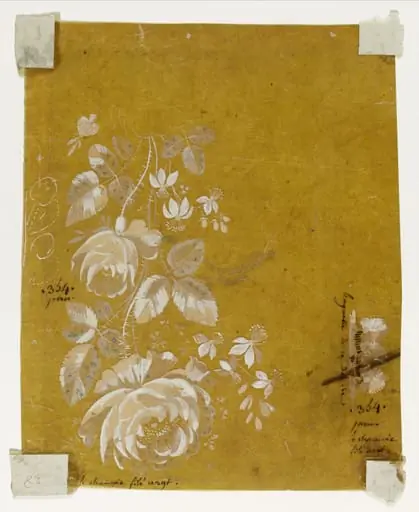 Bouquet de roses blanches pour étoffe, projets de broderies de gilet, XVIIIème siècle
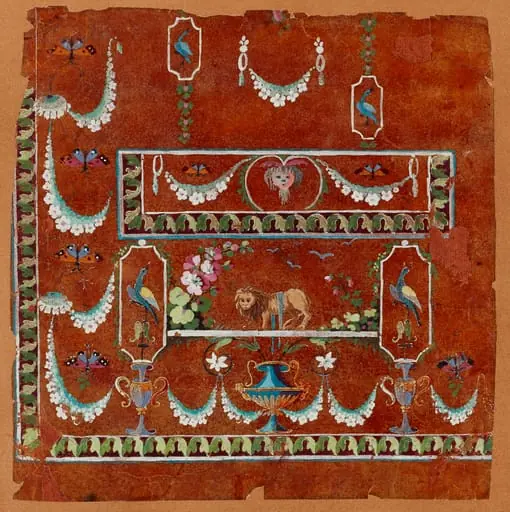 Gilet décor à grotesques, projets de broderies de gilet, XVIIIeme siècle
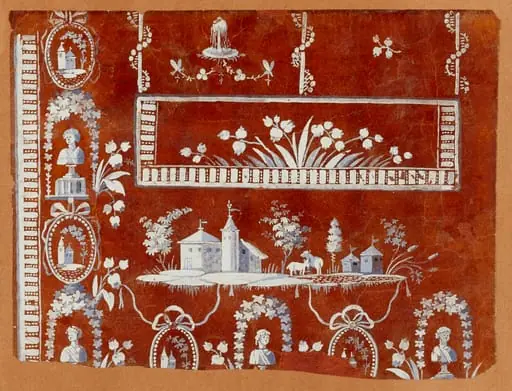 Gilet décor architectures rurales, projets de broderies de gilet, XVIIIème siècle
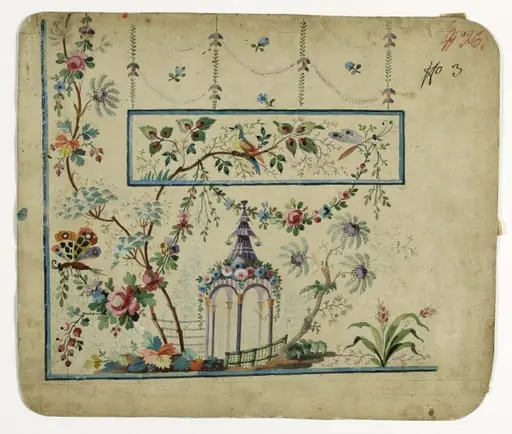 Gilet décor pagode, projets de broderies de gilet, XVIIIème siècle
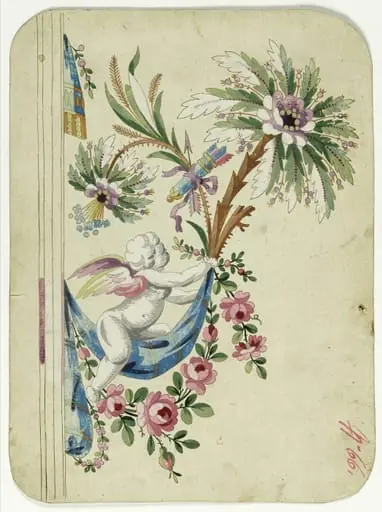 Décor de putti sur palmier, projets de broderies de gilet, XVIIIème siècle
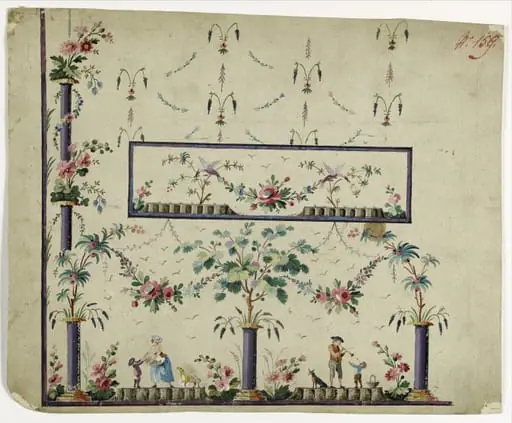 Gilet décor couple avec enfants, projets de broderies de gilet, XVIIIème siècle
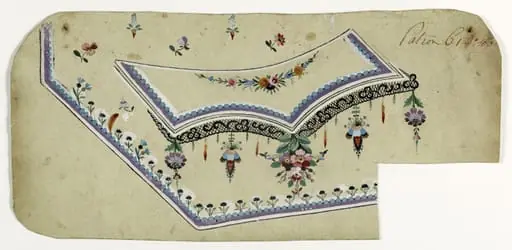 Gilet à la dentelle noire, projets de broderies de gilet, XVIIIème siècle
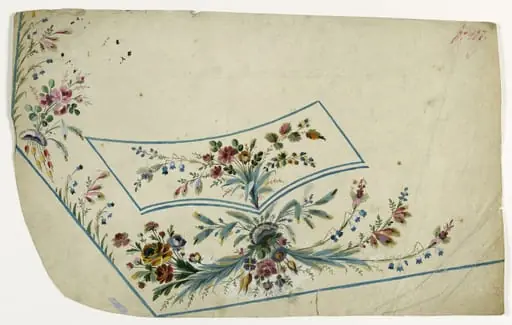 Gilet aux feuilles bleu-gris, projets de broderies de gilet, XVIIIème siècle
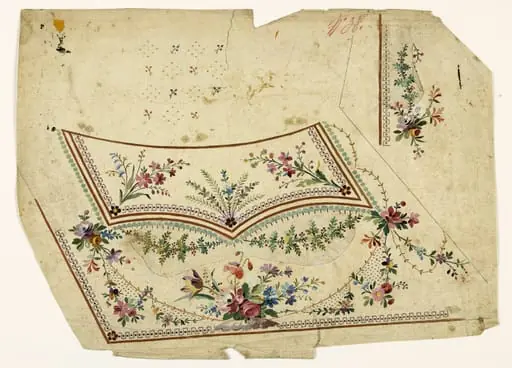 Composition avec bouquets de fleurs, frises de perles amandes et de grecques mauves, projets de broderies de gilet, XVIIIème siècle
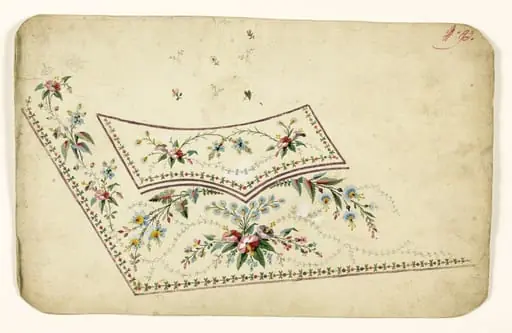 Composition de bouquets de fleurs et chardons, projets de broderies de gilet, XVIIIème siècle
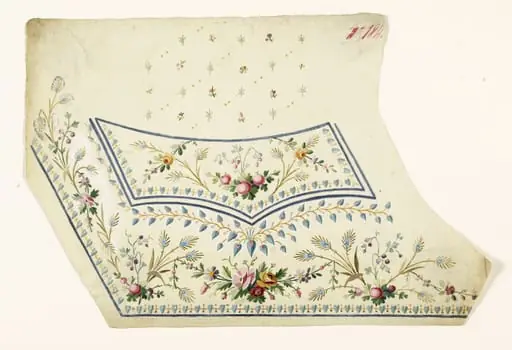 Composition de bouquets de fleurs et de baies et semis de fleurs, projets de broderies de gilet, XVIIIème siècle
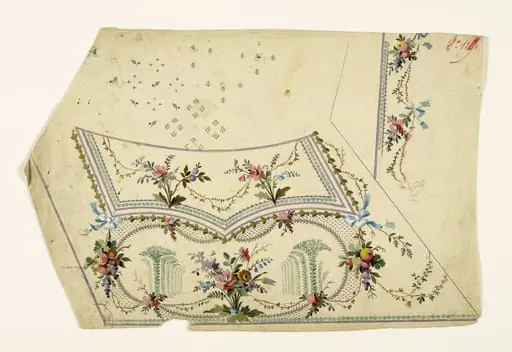 Composition avec bouquet de fleurs, guirlandes stylisées avec rubans bleus et grappes de fruits suspendues, projets de broderies de gilet, XVIIIème siècle
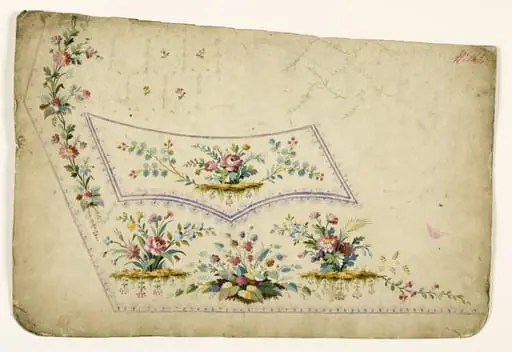 Compositions florales sur tertre et guirlandes de fleurs, projets de broderies de gilet, XVIIIème siècle
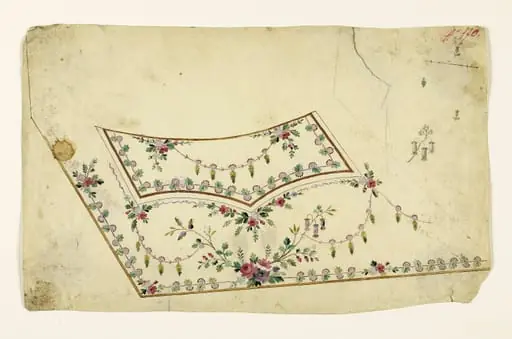 Composition avec bouquet de fleurs, guirlandes et frises de feuilles et de fleurs stylisées, projets de broderies de gilet, XVIIIème siècle
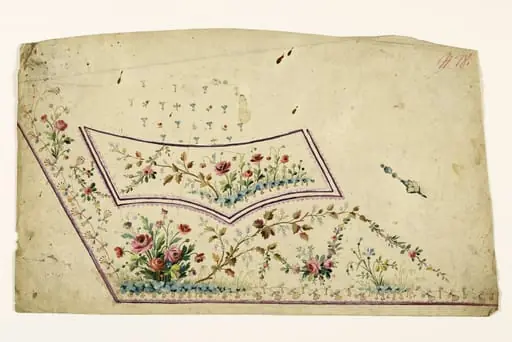 Composition avec bouquet et guirlandes de fleurs et branches de feuilles et de baies bleues, projets de broderies de gilet, XVIIIème siècle
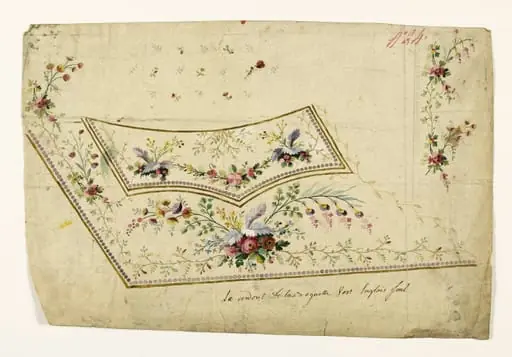 Composition avec bouquets de fleurs et branches fleuries avec grappes, frises de perles couleur glycine, projets de broderies de gilet, XVIIIème siècle
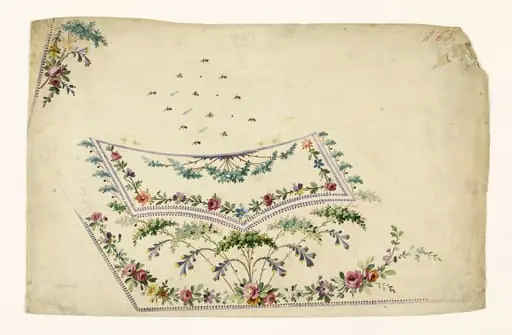 Composition avec guirlandes de fleurs et feuilles en grappes, projets de broderies de gilet, XVIIIème siècle