Artwork
Composition avec bouquets de fleurs liés par des cordons rayés et des guirlandes de fleurs, frises de perles pourpres, projets de broderies de gilet, XVIIIème siècle
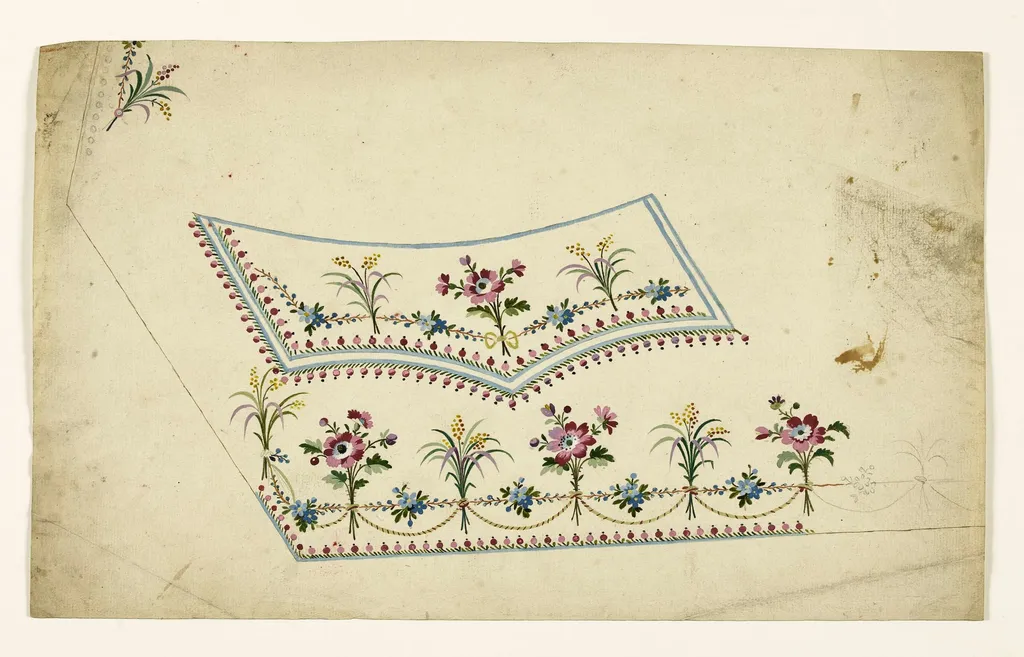
Composition avec bouquets de fleurs liés par des cordons rayés et des guirlandes de fleurs, frises de perles pourpres, projets de broderies de gilet, XVIIIème siècle is a drawing by Anonyme. It dates from 1750 and is held in the collection of the Palais Galliera - Musée de la Mode de la Ville de Paris. This anonymous 18th-century drawing, dated around 1750, presents a decorative composition of floral motifs arranged in undulating bands.
About this work
Overview
Small preliminary sketches appear in the margins, suggesting the sheet functioned as a study or pattern template rather than a finished artwork.
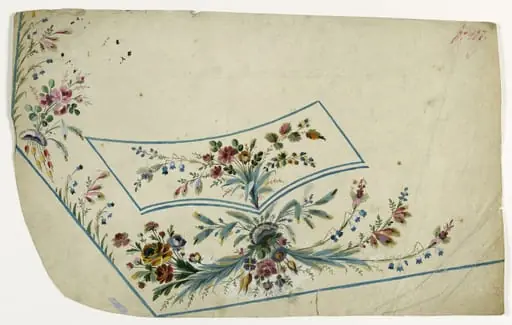
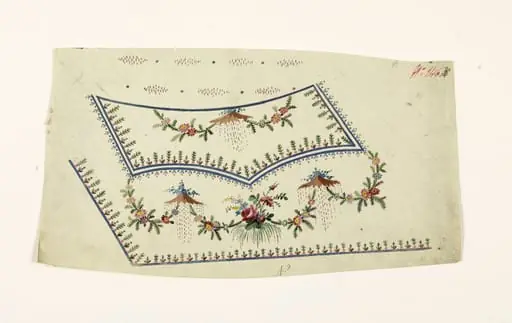
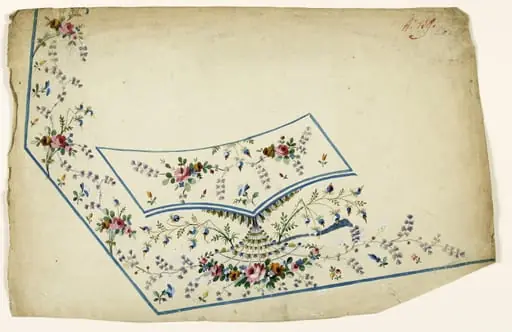
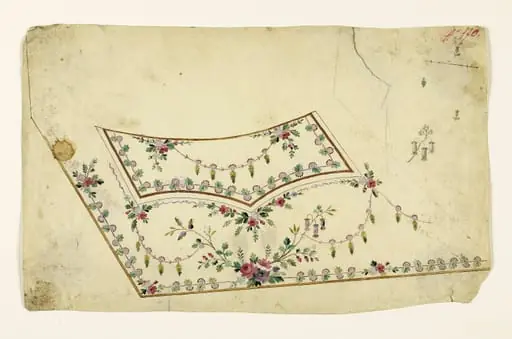
This anonymous 18th-century drawing, dated around 1750, presents a decorative composition of floral motifs arranged in undulating bands. Rendered in soft pinks, blues, and greens, the design is bordered by fine blue outlines and edged with small purple and gold beads. Small preliminary sketches appear in the margins, suggesting the sheet functioned as a study or pattern template rather than a finished artwork.
Subject & Meaning
The arrangement features bouquets bound by striped ribbons and entwined with floral garlands, evoking ornamental traditions used in textile design. Purple bead fringes and delicate floral patterns hint at embroidery or garment decoration, possibly intended for a waistcoat. The imagery reflects a decorative vocabulary common in aristocratic fashion, where nature-inspired motifs symbolized refinement and cultivated taste.
Technique & Style
The drawing employs light, fluid lines to define floral forms, with subtle cross-hatching adding depth to leaves and petals. Colors are applied with restraint, emphasizing clarity over saturation. The inclusion of bead-like dots along the lower edge suggests an attempt to translate textile embellishments into graphic form, bridging drawing and craft practice.
History & Provenance
The work resides in the Museum of Ethnography, though its origin remains undocumented. Likely produced in France or a neighboring region during the mid-1700s, it may have been part of a designer’s sketchbook or a workshop archive. Its survival suggests it was valued as a reference for embroidery or textile production, even if its creator is unknown.
Context
In mid-18th-century Europe, detailed floral studies were essential for textile artisans and tailors designing luxury garments. Such drawings circulated among workshops, serving as templates for embroidery, lacework, or woven patterns. This piece aligns with a broader culture of visual documentation, where artistic skill supported craft production rather than fine art display.
Legacy
Though unsigned and unattributed, the drawing preserves a tangible link to the anonymous artisans who shaped fashionable dress in the Enlightenment era. Its function as a working sketch underscores how design innovation in textiles often emerged from practical, iterative processes rather than individual genius.
Artist & collection
Artist
A French designer from the 1700s made delicate flower drawings meant to decorate vests.
Museum
Palais Galliera - Musée de la Mode de la Ville de Paris
Continue through works from the same source collection.
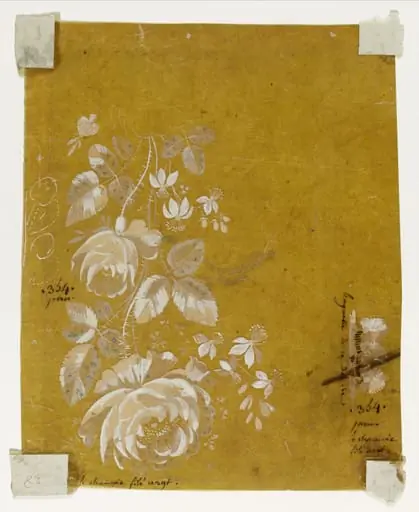 Bouquet de roses blanches pour étoffe, projets de broderies de gilet, XVIIIème siècle
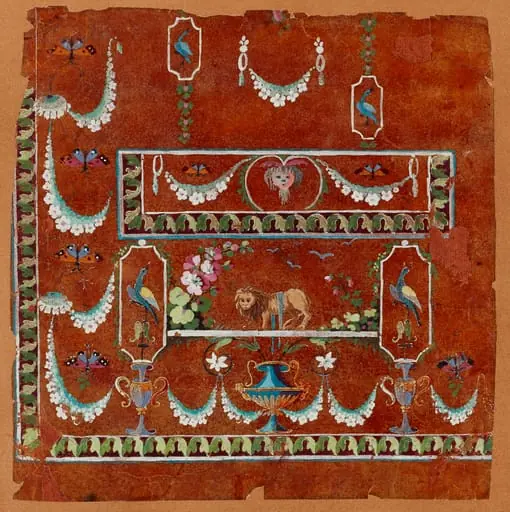 Gilet décor à grotesques, projets de broderies de gilet, XVIIIeme siècle
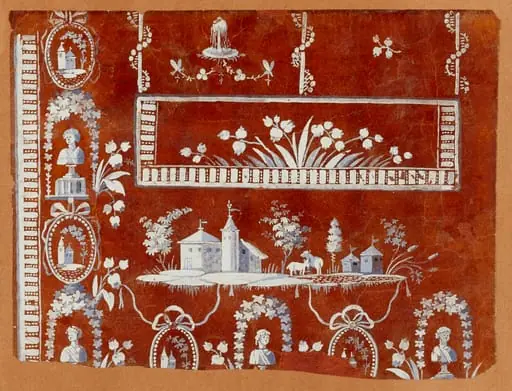 Gilet décor architectures rurales, projets de broderies de gilet, XVIIIème siècle
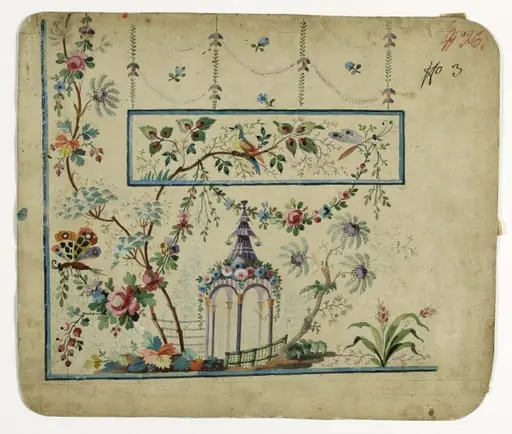 Gilet décor pagode, projets de broderies de gilet, XVIIIème siècle
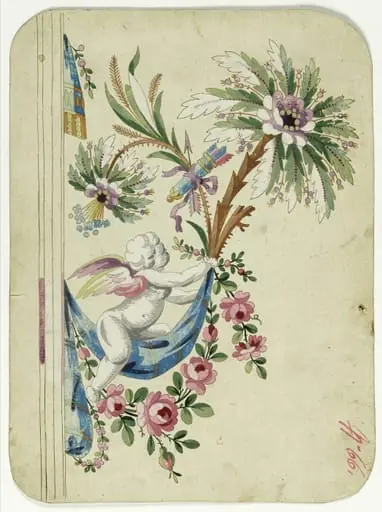 Décor de putti sur palmier, projets de broderies de gilet, XVIIIème siècle
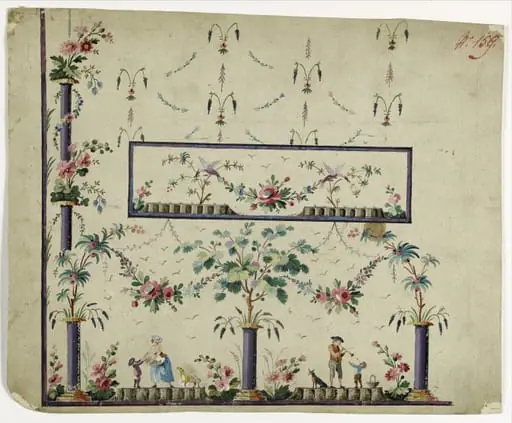 Gilet décor couple avec enfants, projets de broderies de gilet, XVIIIème siècle
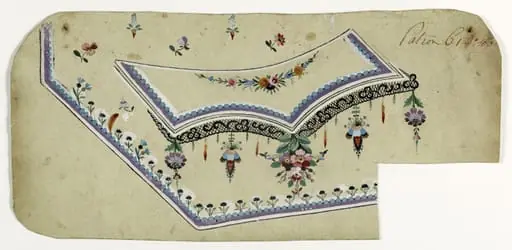 Gilet à la dentelle noire, projets de broderies de gilet, XVIIIème siècle
 Gilet aux feuilles bleu-gris, projets de broderies de gilet, XVIIIème siècle
 Composition avec bouquet et guirlandes de fleurs, bleuets sur tertres et frises de fleurs stylisées, projets de broderies de gilet, XVIIIème siècle
 Composition à bouquet de fleurs en éventail et guirlandes de fleurs mauves, projets de broderies de gilet, XVIIIème siècle
 Composition avec bouquet de fleurs, guirlandes et frises de feuilles et de fleurs stylisées, projets de broderies de gilet, XVIIIème siècle
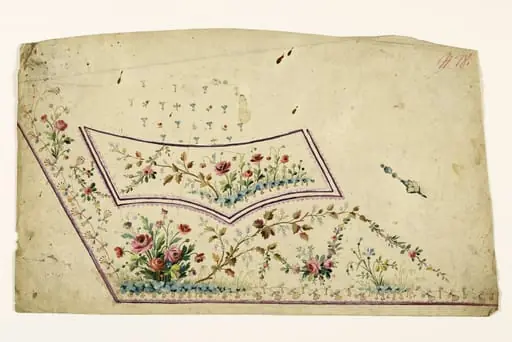 Composition avec bouquet et guirlandes de fleurs et branches de feuilles et de baies bleues, projets de broderies de gilet, XVIIIème siècle
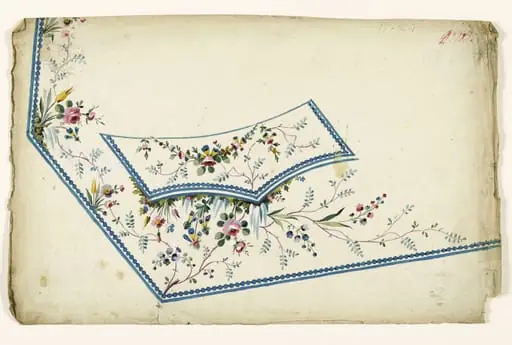 Composition de fleurs en branches et en bouquets, projets de broderies de gilet, XVIIIème siècle
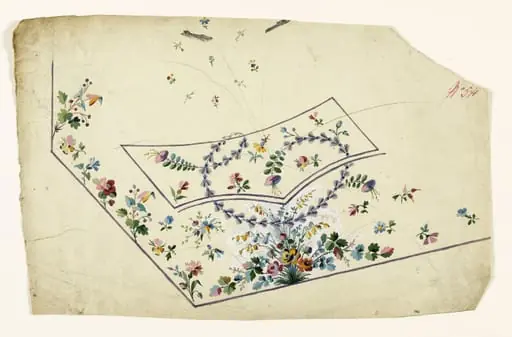 Composition de bouquets de fleurs multicolores et guirlandes de fleurs mauves, projets de broderies de gilet, XVIIIème siècle
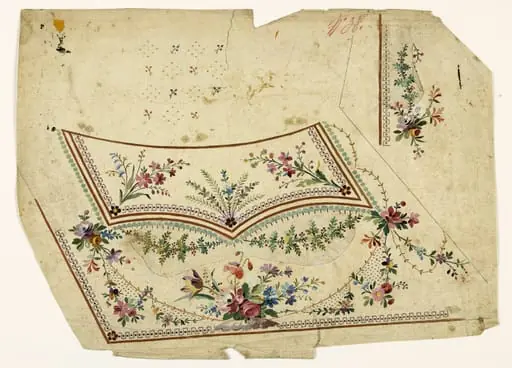 Composition avec bouquets de fleurs, frises de perles amandes et de grecques mauves, projets de broderies de gilet, XVIIIème siècle