Artwork
Composition de fleurs en branches et en bouquets, projets de broderies de gilet, XVIIIème siècle
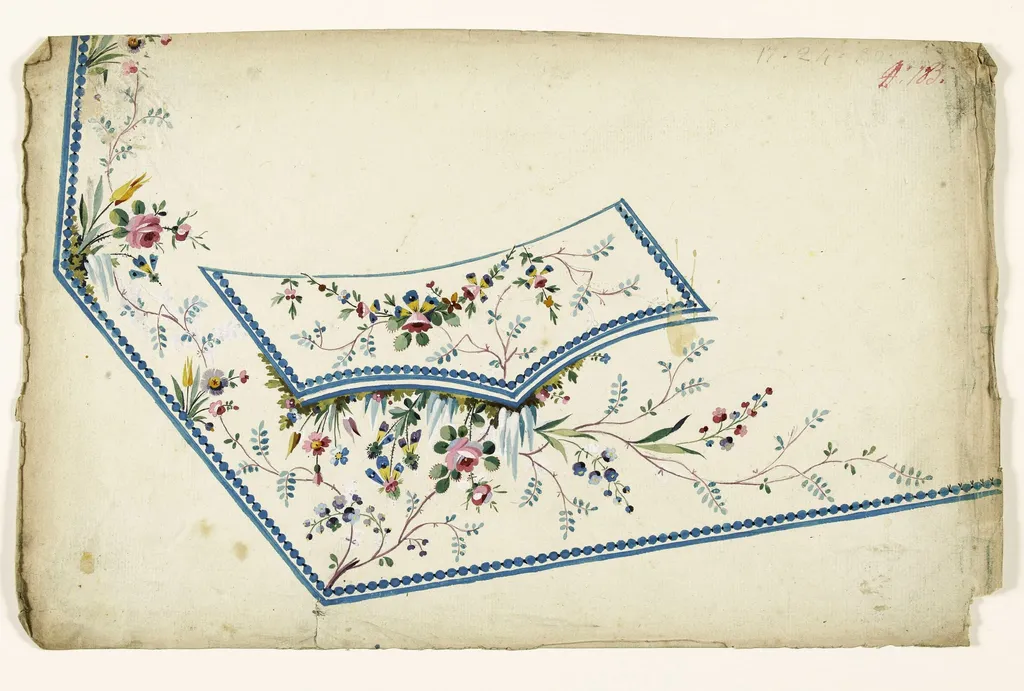
Composition de fleurs en branches et en bouquets, projets de broderies de gilet, XVIIIème siècle is a drawing by Anonyme. It dates from 1750 and is held in the collection of the Palais Galliera - Musée de la Mode de la Ville de Paris. This anonymous 18th-century design sheet features floral arrangements intended as patterns for embroidery on waistcoats.
About this work
Overview
This anonymous 18th-century design sheet features floral arrangements intended as patterns for embroidery on waistcoats. Created around 1750, it presents branches and bouquets rendered in delicate lines and soft color tones. The composition is framed by a blue border on a cream ground, suggesting its function as a textile pattern template rather than a standalone painting.
Subject & Meaning
The arrangement of blossoms—pink, blue, and yellow—with lush green foliage reflects the era’s fascination with natural forms in decorative arts. These motifs were not merely ornamental but signaled refinement and cultivated taste, aligning with aristocratic fashion. The overlapping blooms suggest abundance and harmony, values embedded in the visual language of luxury textiles at the time.
Technique & Style
The design employs fine, controlled linework to define petals and leaves, with subtle gradations suggesting volume without shading.
The design employs fine, controlled linework to define petals and leaves, with subtle gradations suggesting volume without shading. Colors are applied in flat, even washes, typical of preparatory textile patterns. The absence of perspective and the emphasis on rhythmic repetition indicate a focus on repeatable motifs suitable for embroidery, prioritizing clarity and adaptability over illusionistic depth.
History & Provenance
The work is held in the collection of the Museum of Ethnography, though its origin as a textile design suggests it was likely produced in a workshop serving elite fashion markets. Its survival is uncommon, as such patterns were often used and discarded. Its preservation implies it was valued as a reference or archive item, possibly by a master embroiderer or a collector of design samples.
Context
In mid-18th-century France, floral embroidery was a hallmark of aristocratic dress, especially on men’s waistcoats. Designers circulated pattern sheets like this one to guide artisans. The motifs drew from botanical illustrations and garden aesthetics, reflecting broader cultural interests in naturalism and the control of nature through artifice within domestic and personal adornment.
Legacy
Though unsigned and utilitarian, this sheet preserves the visual vocabulary of a vanished craft. It offers insight into the collaborative nature of fashion production, where designers, embroiderers, and wearers participated in a shared aesthetic. Today, it stands as a quiet testament to the precision and artistry embedded in everyday luxury of the period.
Artist & collection
Artist
A French designer from the 1700s made delicate flower drawings meant to decorate vests.
Museum
Palais Galliera - Musée de la Mode de la Ville de Paris
Continue through works from the same source collection.
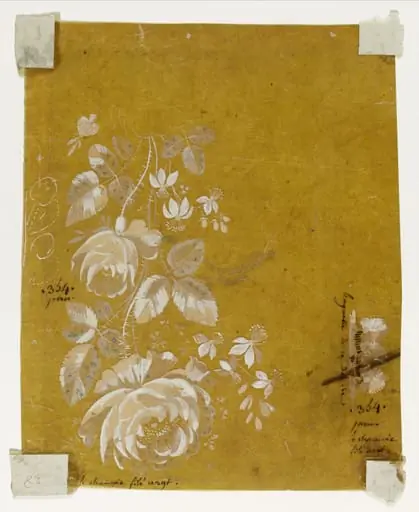 Bouquet de roses blanches pour étoffe, projets de broderies de gilet, XVIIIème siècle
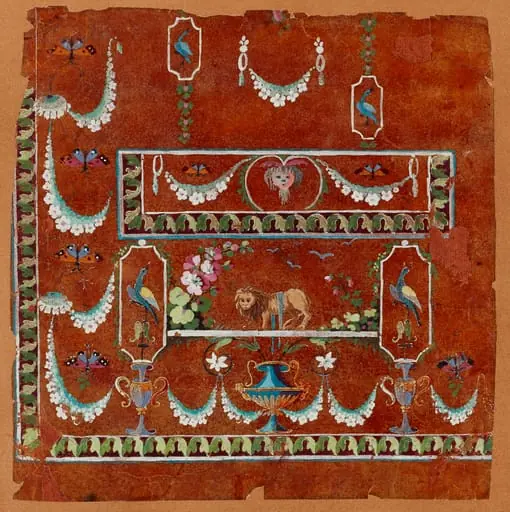 Gilet décor à grotesques, projets de broderies de gilet, XVIIIeme siècle
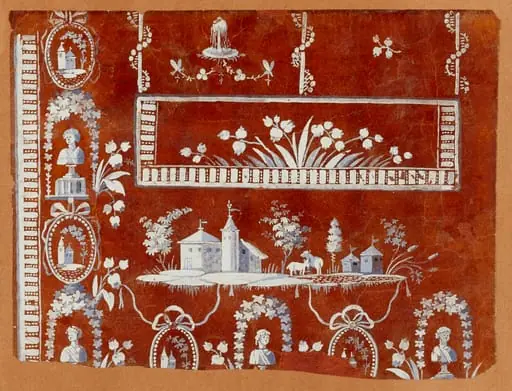 Gilet décor architectures rurales, projets de broderies de gilet, XVIIIème siècle
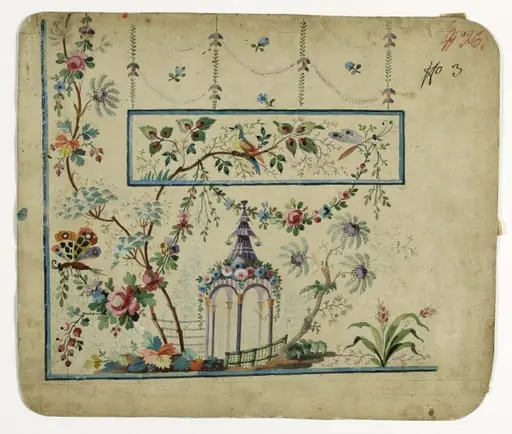 Gilet décor pagode, projets de broderies de gilet, XVIIIème siècle
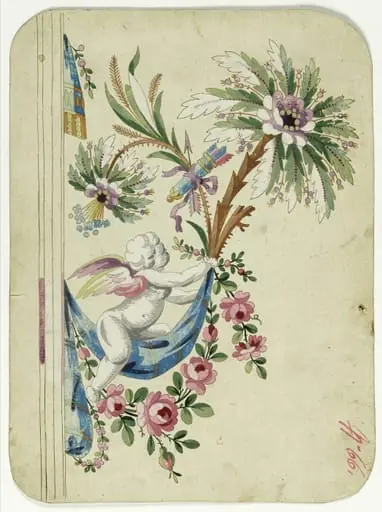 Décor de putti sur palmier, projets de broderies de gilet, XVIIIème siècle
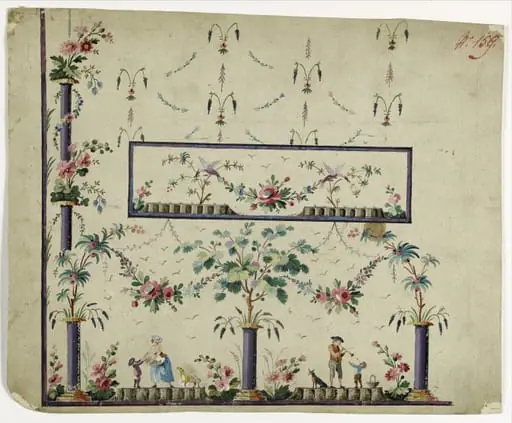 Gilet décor couple avec enfants, projets de broderies de gilet, XVIIIème siècle
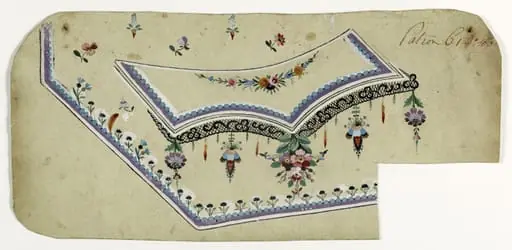 Gilet à la dentelle noire, projets de broderies de gilet, XVIIIème siècle
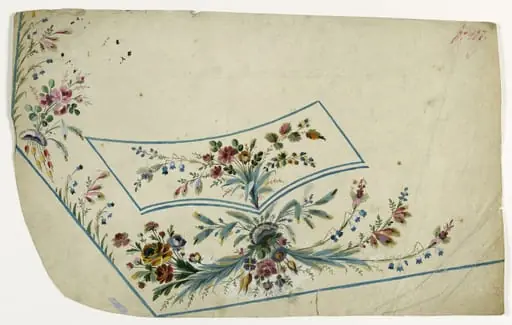 Gilet aux feuilles bleu-gris, projets de broderies de gilet, XVIIIème siècle
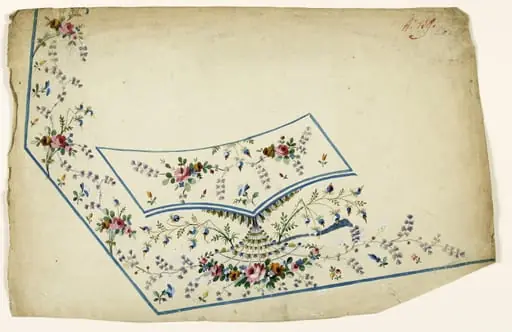 Composition à bouquet de fleurs en éventail et guirlandes de fleurs mauves, projets de broderies de gilet, XVIIIème siècle
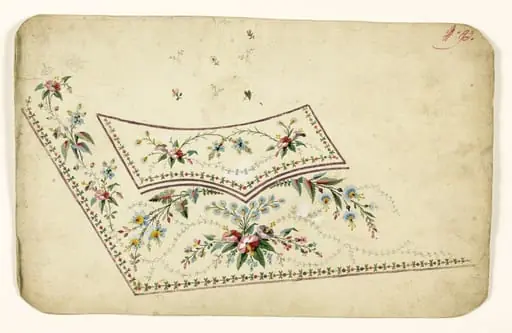 Composition de bouquets de fleurs et chardons, projets de broderies de gilet, XVIIIème siècle
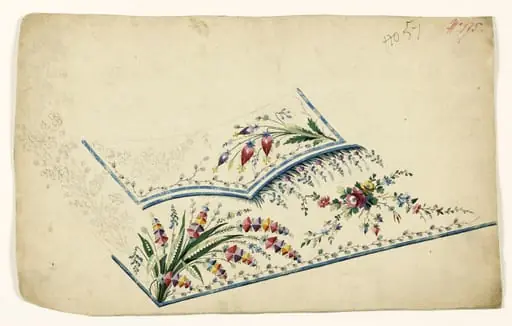 Composition en bouquets de fleurs et guirlandes de feuilles, projets de broderies de gilet, XVIIIème siècle
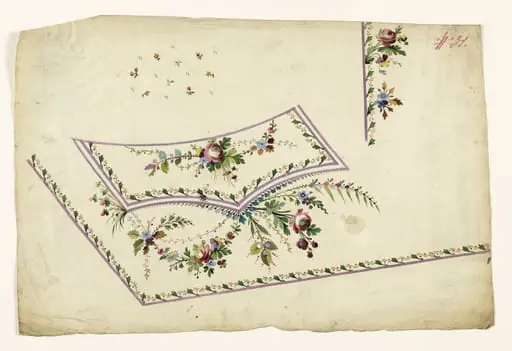 Composition de guirlandes de fleurs, frises de feuilles et de baies rouges, projets de broderies de gilet, XVIIIème siècle
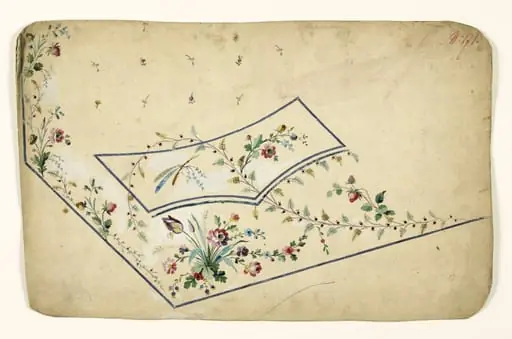 Composition avec bouquets et guirlandes de fleurs et phasme sur branche, projets de broderies de gilet, XVIIIème siècle
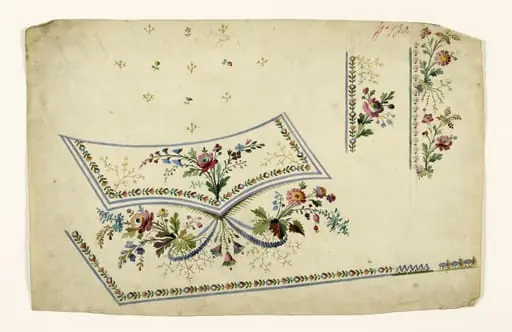 Composition florale avec bouquets et frises de fleurs stylisées, projets de broderies de gilet, XVIIIème siècle
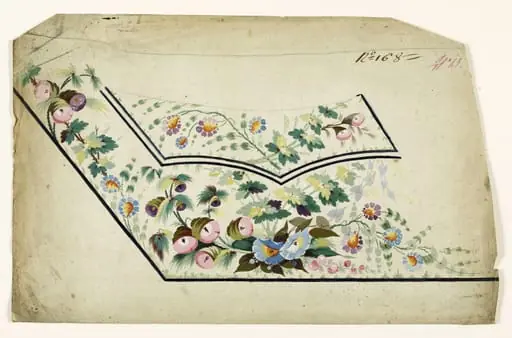 Composition de fleurs sauvages, projets de broderies de gilet, XVIIIème siècle
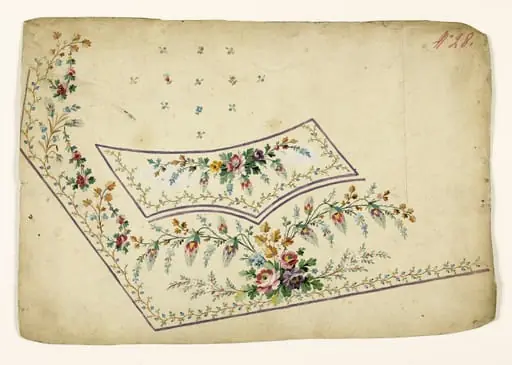 Bouquets de branches et de fleurs et frises de baies bleues, projets de broderies de gilet, XVIIIème siècle
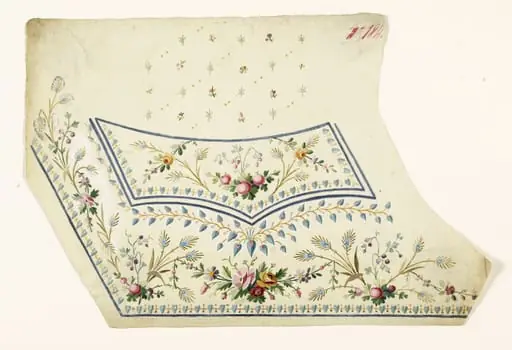 Composition de bouquets de fleurs et de baies et semis de fleurs, projets de broderies de gilet, XVIIIème siècle
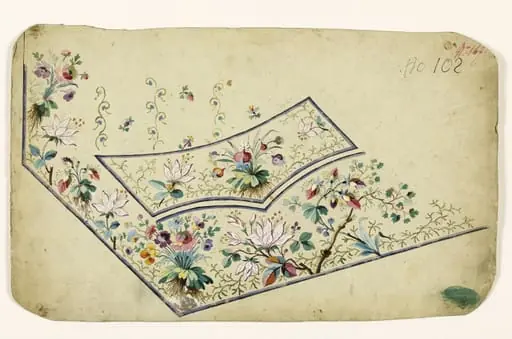 Composition de fleurs champêtres en branches et en bouquets, projets de broderies de gilet, XVIIIème siècle