Artwork
Composition de bouquets de bleuets et guirlandes de roses, frises de chevrons et de perles, projets de broderies de gilet, XVIIIème siècle
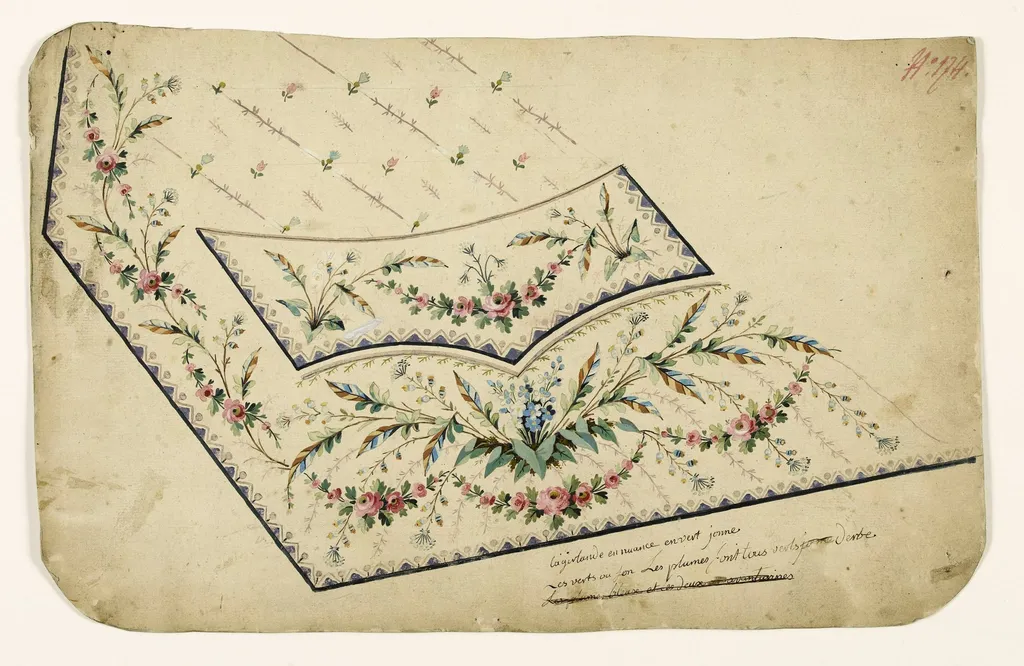
Composition de bouquets de bleuets et guirlandes de roses, frises de chevrons et de perles, projets de broderies de gilet, XVIIIème siècle is a drawing by Anonyme. It dates from 1750 and is held in the collection of the Palais Galliera - Musée de la Mode de la Ville de Paris. This undated drawing from around 1750 presents a decorative scheme intended for embroidery on a waistcoat.
About this work
Overview
The design includes roses, bluebells, and foliage, framed by zigzag borders dotted with fine dots and crowned with small floral sprigs at each corner.
This undated drawing from around 1750 presents a decorative scheme intended for embroidery on a waistcoat. Executed in ink and watercolor on paper, it features three interconnected diamond motifs filled with floral elements. The design includes roses, bluebells, and foliage, framed by zigzag borders dotted with fine dots and crowned with small floral sprigs at each corner. The faint yellowing and wear of the paper indicate its age and frequent handling.
Subject & Meaning
The composition blends naturalistic floral motifs—roses, bluebells, and leaves—with geometric patterns like chevrons and pearl-like dots. These elements reflect 18th-century decorative conventions, where botany and ornamentation merged to convey elegance and refinement. The inclusion of a French text at the base suggests the design was accompanied by poetic or instructional notes, possibly guiding the embroiderer in execution or symbolism.
Technique & Style
The drawing employs fine linework and delicate washes to define petals, leaves, and borders. The zigzag edges are rendered with precise, repetitive dots, creating a textured outline that mimics beaded embroidery. Cross-hatching appears in shaded areas of the foliage, adding subtle volume. The restrained palette—soft pinks, blues, and greens—on a pale tan ground emphasizes clarity and suitability for textile translation.
History & Provenance
The drawing resides in the Museum of Ethnography, suggesting its value lies in its role as a cultural artifact of domestic craft rather than fine art. Likely produced by an anonymous designer or artisan, it was probably part of a pattern book used by needleworkers. Its survival indicates it was preserved as a reference, possibly within a household or workshop that valued intricate handwork.
Context
In mid-18th-century France, embroidered waistcoats were markers of social status, particularly among the bourgeoisie and nobility. Pattern books like this one circulated among artisans and amateur needleworkers, offering standardized designs that balanced naturalism with stylized geometry. This drawing reflects the broader trend of integrating botanical motifs into domestic textiles, influenced by Enlightenment-era fascination with nature and order.
Legacy
Though unsigned and utilitarian, the drawing preserves the aesthetic sensibilities of pre-industrial textile design. It offers insight into the labor and precision required for hand embroidery before mechanization. As a surviving example of a once-common craft resource, it contributes to understanding how decorative arts were transmitted and adapted across social classes in the 18th century.
Artist & collection
Artist
A French designer from the 1700s made delicate flower drawings meant to decorate vests.
Museum
Palais Galliera - Musée de la Mode de la Ville de Paris
Continue through works from the same source collection.
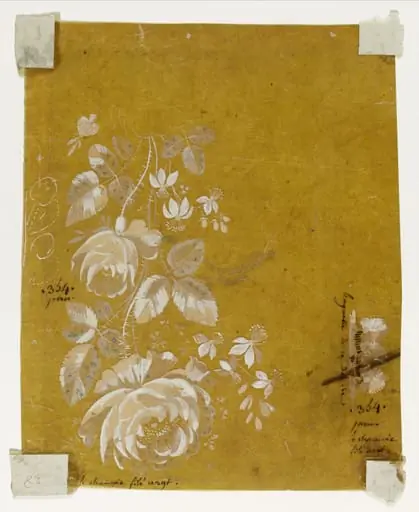 Bouquet de roses blanches pour étoffe, projets de broderies de gilet, XVIIIème siècle
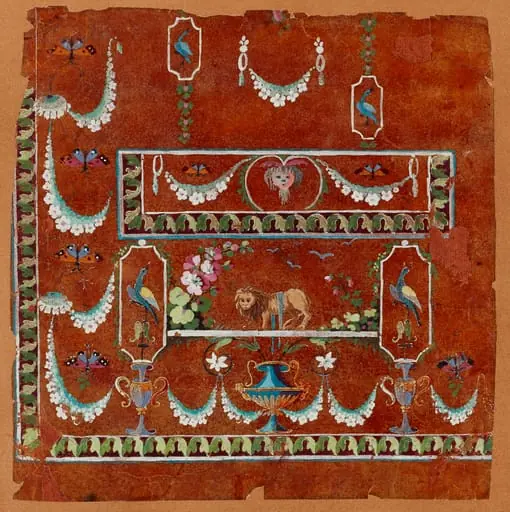 Gilet décor à grotesques, projets de broderies de gilet, XVIIIeme siècle
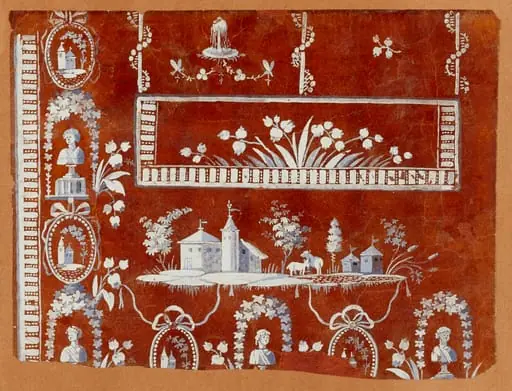 Gilet décor architectures rurales, projets de broderies de gilet, XVIIIème siècle
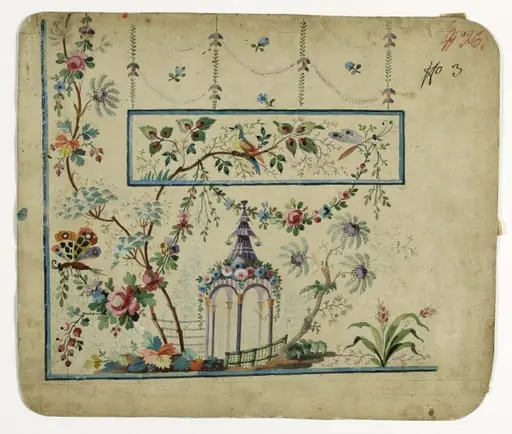 Gilet décor pagode, projets de broderies de gilet, XVIIIème siècle
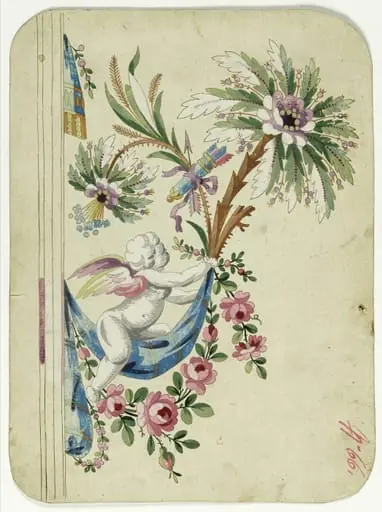 Décor de putti sur palmier, projets de broderies de gilet, XVIIIème siècle
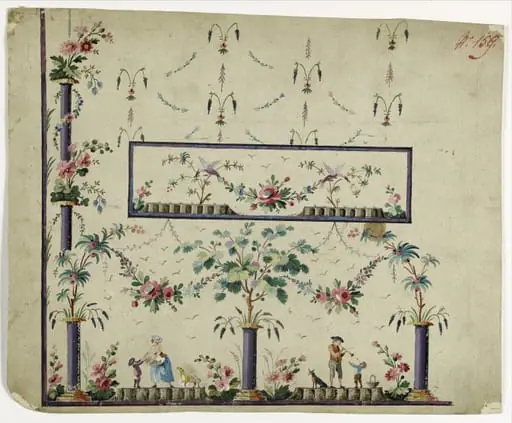 Gilet décor couple avec enfants, projets de broderies de gilet, XVIIIème siècle
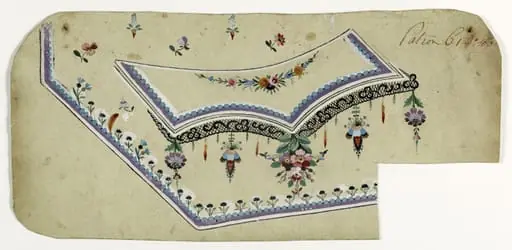 Gilet à la dentelle noire, projets de broderies de gilet, XVIIIème siècle
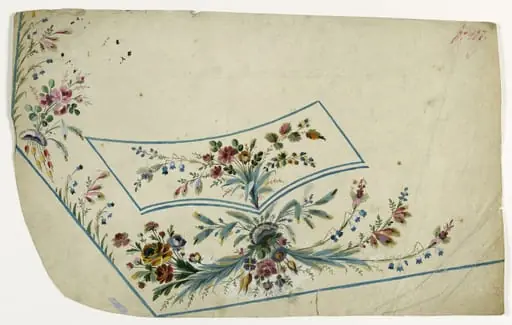 Gilet aux feuilles bleu-gris, projets de broderies de gilet, XVIIIème siècle
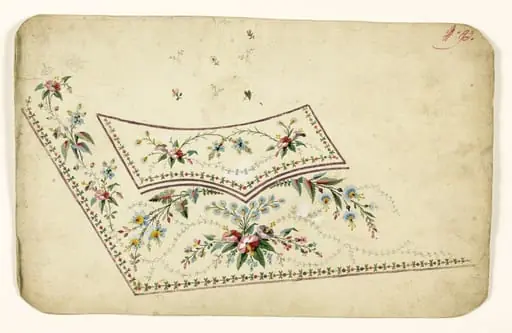 Composition de bouquets de fleurs et chardons, projets de broderies de gilet, XVIIIème siècle
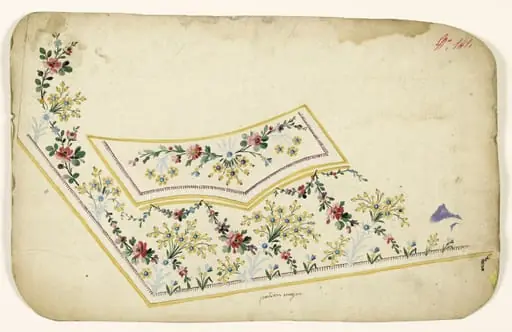 Composition de bouquets de fleurs jaunes, guirlandes de fleurs roses, frises de perles blanches et de franges pourpres et bandes jaunes, projets de broderies de gilet, XVIIIème siècle
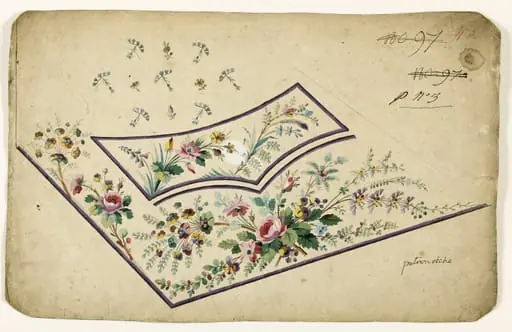 Composition florale en bouquets, projets de broderies de gilet, XVIIIème siècle
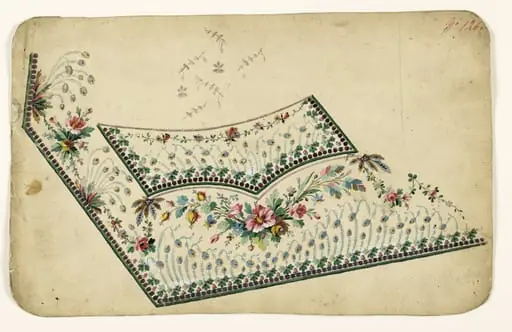 Composition florale de chardons bleus, frises de perles violettes, guirlandes de fleurs et d'insectes volants, projets de broderies de gilet, XVIIIème siècle
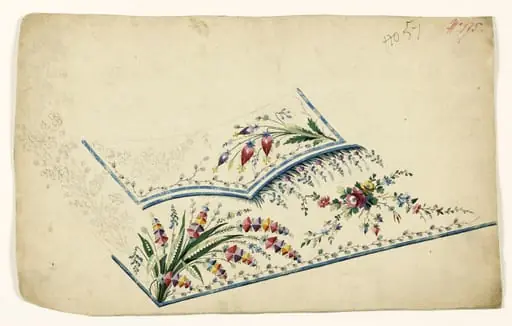 Composition en bouquets de fleurs et guirlandes de feuilles, projets de broderies de gilet, XVIIIème siècle
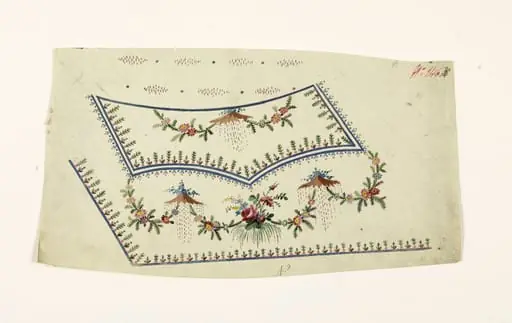 Composition avec bouquet et guirlandes de fleurs, bleuets sur tertres et frises de fleurs stylisées, projets de broderies de gilet, XVIIIème siècle
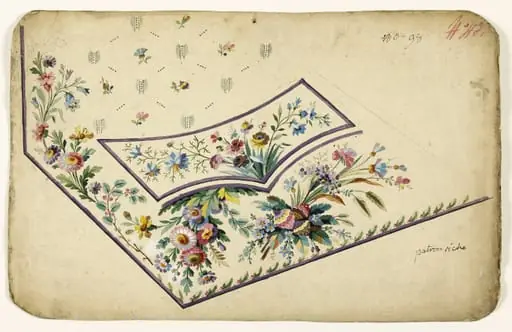 Composition de fleurs sauvages et fantaisistes en bouquets multicolores, projets de broderies de gilet, XVIIIème siècle