Artwork
Composition florale de chardons bleus, frises de perles violettes, guirlandes de fleurs et d'insectes volants, projets de broderies de gilet, XVIIIème siècle
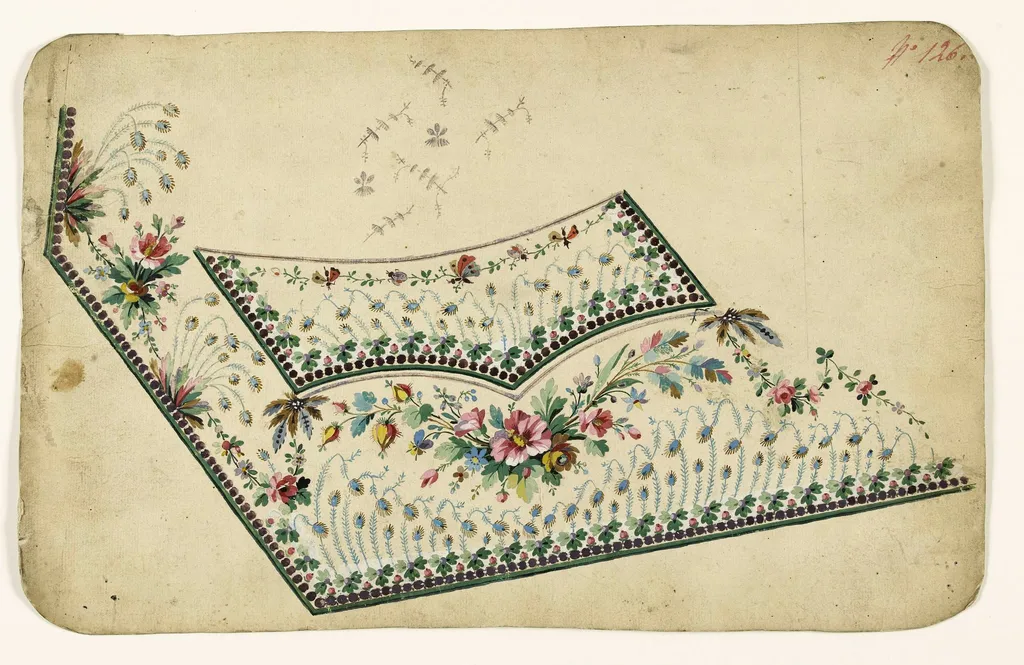
Composition florale de chardons bleus, frises de perles violettes, guirlandes de fleurs et d'insectes volants, projets de broderies de gilet, XVIIIème siècle is a drawing by Anonyme. It dates from 1750 and is held in the collection of the Palais Galliera - Musée de la Mode de la Ville de Paris. Composition florale de chardons bleus is an 18th-century design drawing, circa 1750, attributed to an anonymous artist.
About this work
Overview
Composition florale de chardons bleus is an 18th-century design drawing, circa 1750, attributed to an anonymous artist. The work is currently housed at the Museum of Ethnography.
Subject & Meaning
The drawing features two triangular floral compositions centered around large red, pink, and yellow blooms, accompanied by smaller leaves, stems, and flying insects sketched in the top corners. The overall design suggests a planned embroidery pattern, likely for a gilet (waistcoat).
Technique & Style
The composition incorporates vibrant floral motifs, delicate insect doodles, and decorative borders resembling beaded fringes (indicated by rows of purple and green dots). The mixed use of bold lines for flowers and faint pencil sketches for insects reflects a preliminary design approach.
History & Provenance
Created around 1750, the artwork's history prior to its acquisition by the Museum of Ethnography is not detailed in available records, highlighting the anonymity of its creator.
Context
This design reflects the 18th-century penchant for intricate floral patterns in embroidery and decorative arts, possibly influenced by then-popular botanical and naturalistic motifs in European fashion and home decor.
Legacy
While not attributed to a renowned artist, the piece contributes to the understanding of 18th-century embroidery design trends and the working processes of anonymous artisans of the time.
Artist & collection
Artist
A French designer from the 1700s made delicate flower drawings meant to decorate vests.
Museum
Palais Galliera - Musée de la Mode de la Ville de Paris
Continue through works from the same source collection.
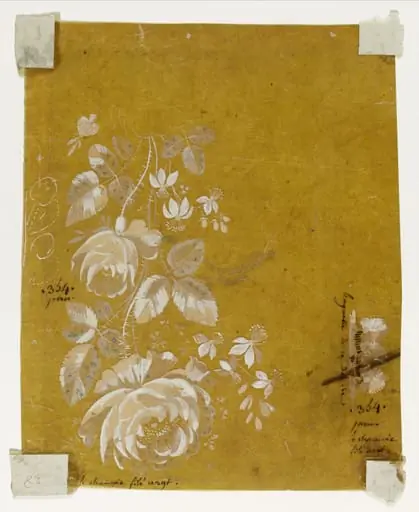 Bouquet de roses blanches pour étoffe, projets de broderies de gilet, XVIIIème siècle
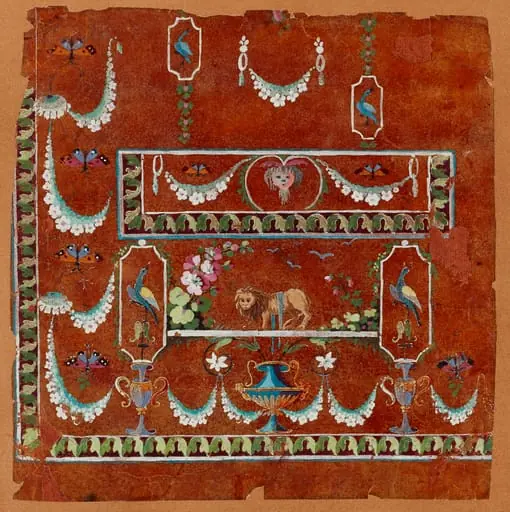 Gilet décor à grotesques, projets de broderies de gilet, XVIIIeme siècle
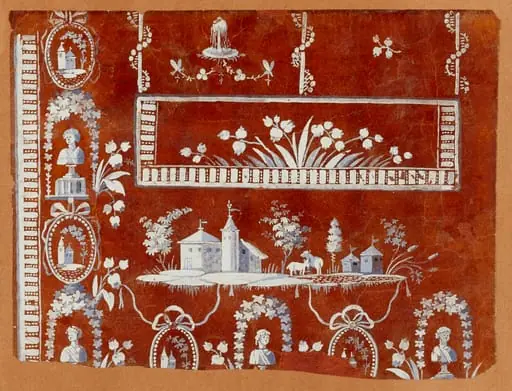 Gilet décor architectures rurales, projets de broderies de gilet, XVIIIème siècle
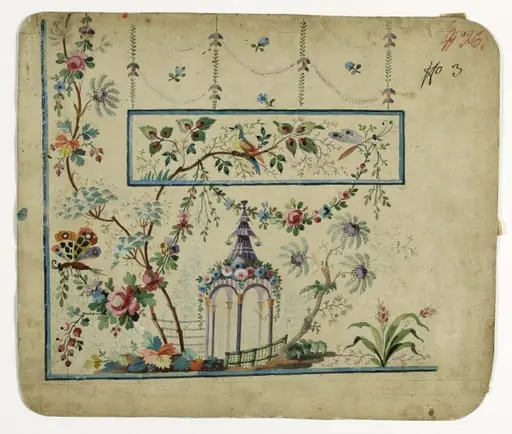 Gilet décor pagode, projets de broderies de gilet, XVIIIème siècle
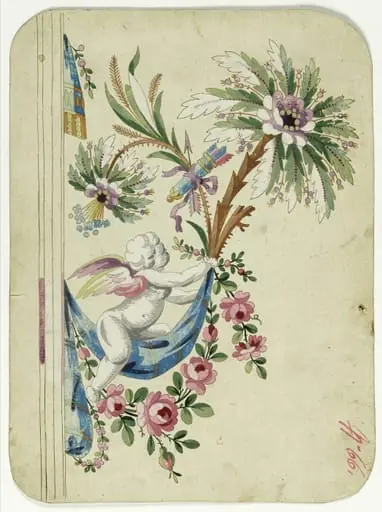 Décor de putti sur palmier, projets de broderies de gilet, XVIIIème siècle
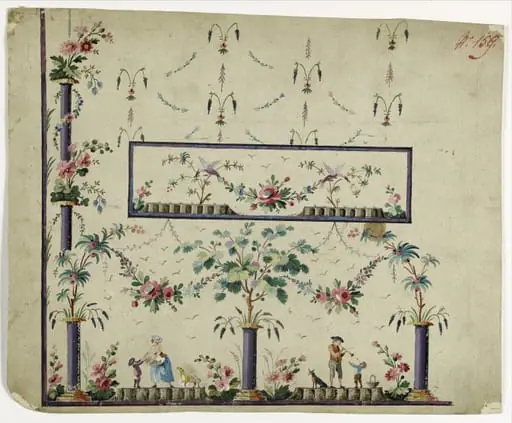 Gilet décor couple avec enfants, projets de broderies de gilet, XVIIIème siècle
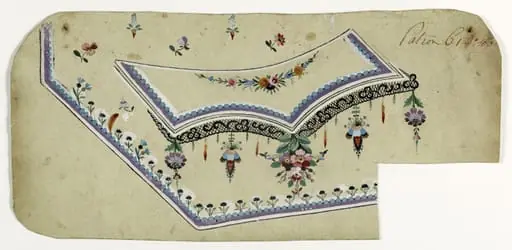 Gilet à la dentelle noire, projets de broderies de gilet, XVIIIème siècle
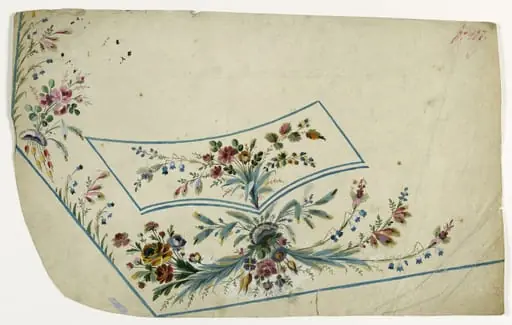 Gilet aux feuilles bleu-gris, projets de broderies de gilet, XVIIIème siècle
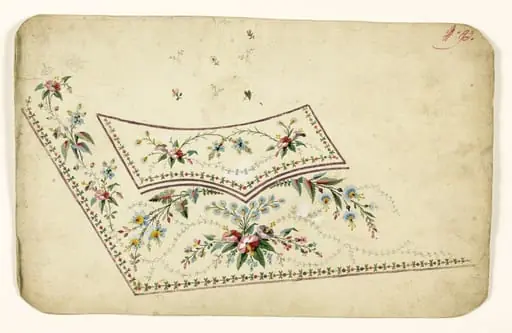 Composition de bouquets de fleurs et chardons, projets de broderies de gilet, XVIIIème siècle
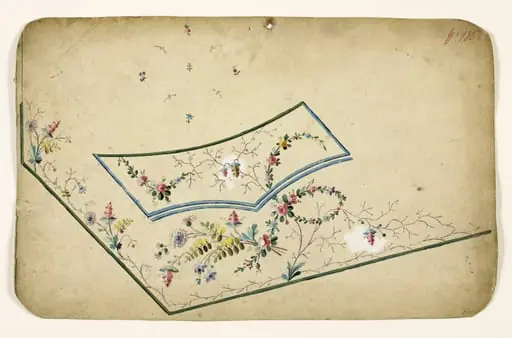 Composition florale avec guirlandes de branches et bandes bleues et vertes, projets de broderies de gilet, XVIIIème siècle
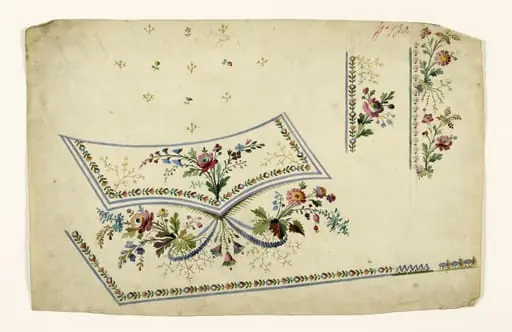 Composition florale avec bouquets et frises de fleurs stylisées, projets de broderies de gilet, XVIIIème siècle
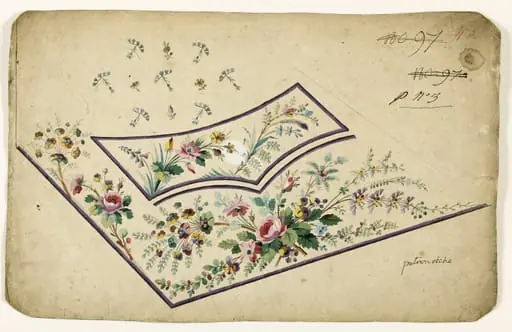 Composition florale en bouquets, projets de broderies de gilet, XVIIIème siècle
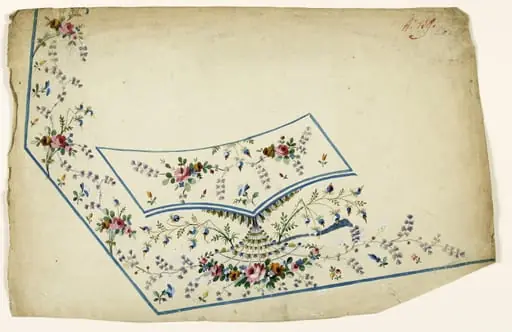 Composition à bouquet de fleurs en éventail et guirlandes de fleurs mauves, projets de broderies de gilet, XVIIIème siècle
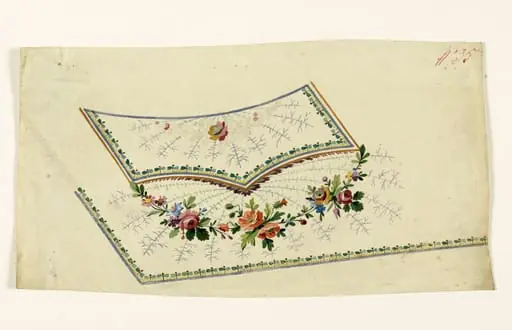 Composition avec guirlandes de fleurs multicolores, motifs rayonnants de branches et frises stylisées, projets de broderies de gilet, XVIIIème siècle
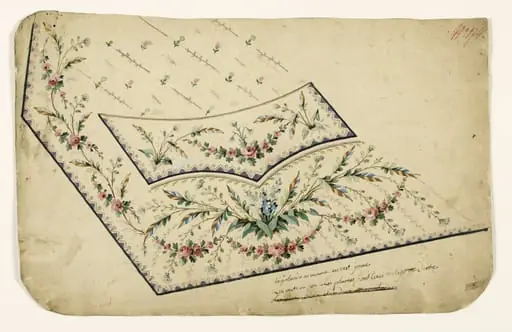 Composition de bouquets de bleuets et guirlandes de roses, frises de chevrons et de perles, projets de broderies de gilet, XVIIIème siècle