Artwork
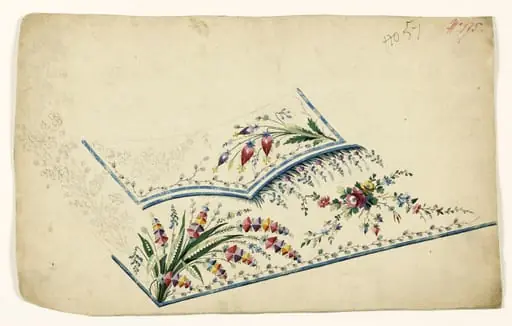
Composition de fleurs multicolores et de feuilles blanches et frises de fleurs de poirier, projets de broderies de gilet, XVIIIème siècle
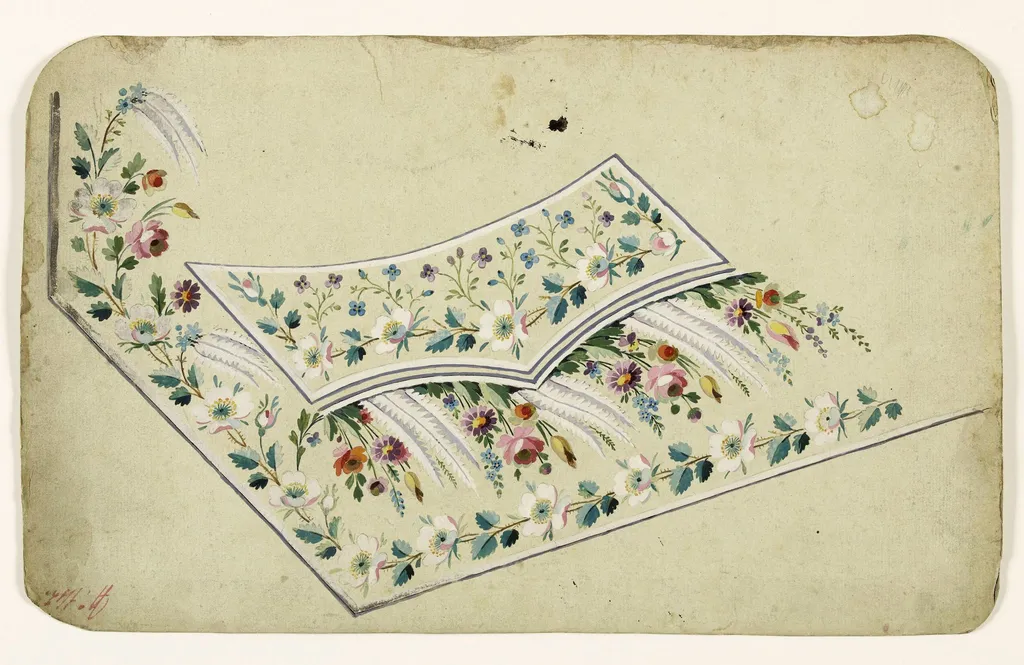
Composition de fleurs multicolores et de feuilles blanches et frises de fleurs de poirier, projets de broderies de gilet, XVIIIème siècle is a drawing by Anonyme. It dates from 1750 and is held in the collection of the Palais Galliera - Musée de la Mode de la Ville de Paris. This eighteenth‑century drawing, attributed to an unknown hand, presents a decorative scheme intended for embroidery on a men’s vest.
About this work
Overview
This eighteenth‑century drawing, attributed to an unknown hand, presents a decorative scheme intended for embroidery on a men’s vest. Rendered on two open folios, the composition fills the pages with a profusion of stylised blossoms and foliage, arranged in a continuous band that suggests a textile border. The work dates to around 1750 and is part of the collection of the Museum of Ethnography.
Subject & Meaning
The design features an array of multicoloured flowers—predominantly pinks, blues and greens—intermixed with white leaves and a frieze of pear‑tree blossoms. Such botanical motifs were popular in Rococo decorative arts, symbolising natural abundance and serving as ornamental patterns for clothing, where the floral imagery would have added visual richness to the garment.
Technique & Style
Executed in fine pen and wash, the drawing displays meticulous line work that delineates delicate petals, buds and leaf veins. The soft palette and graceful, curving outlines reflect the Rococo aesthetic of lightness and movement. The composition’s layout, with flowers spilling beyond the page edges, suggests a design meant to be transferred onto fabric and stitched with needle and thread.
History & Provenance
Created circa 1750, the piece remained within the realm of textile design before entering museum holdings. It is now conserved by the Museum of Ethnography, where it serves as an example of eighteenth‑century French-inspired embroidery projects for male apparel, illustrating the cross‑medium dialogue between drawing and textile craft.
Artist & collection
Artist
A French designer from the 1700s made delicate flower drawings meant to decorate vests.
Museum
Palais Galliera - Musée de la Mode de la Ville de Paris
Continue through works from the same source collection.
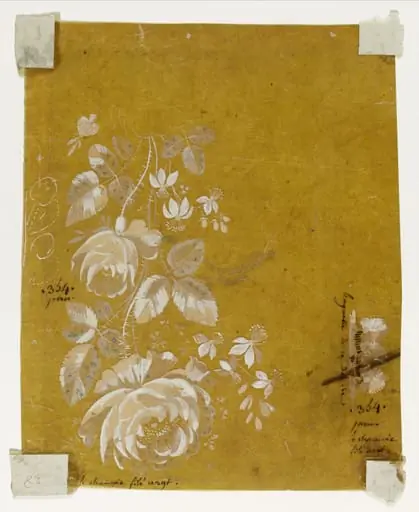 Bouquet de roses blanches pour étoffe, projets de broderies de gilet, XVIIIème siècle
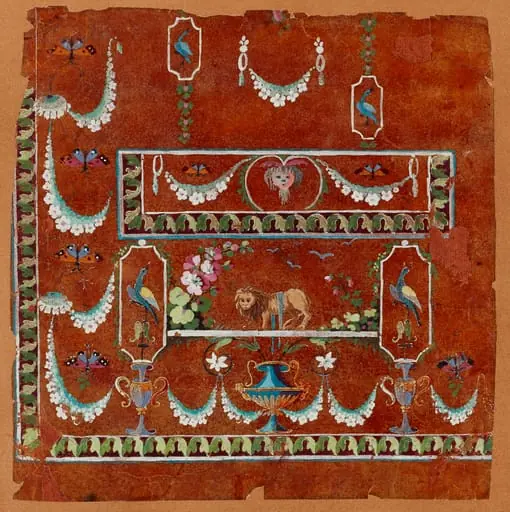 Gilet décor à grotesques, projets de broderies de gilet, XVIIIeme siècle
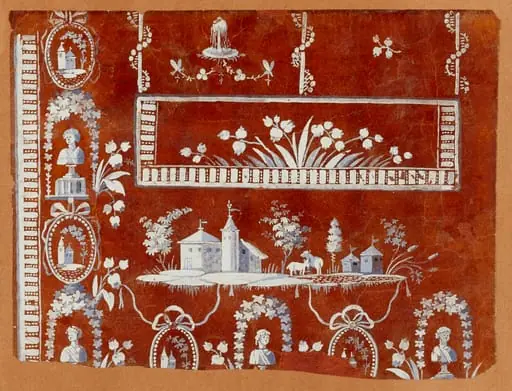 Gilet décor architectures rurales, projets de broderies de gilet, XVIIIème siècle
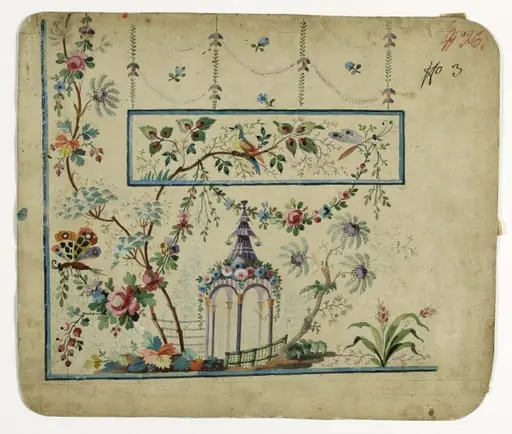 Gilet décor pagode, projets de broderies de gilet, XVIIIème siècle
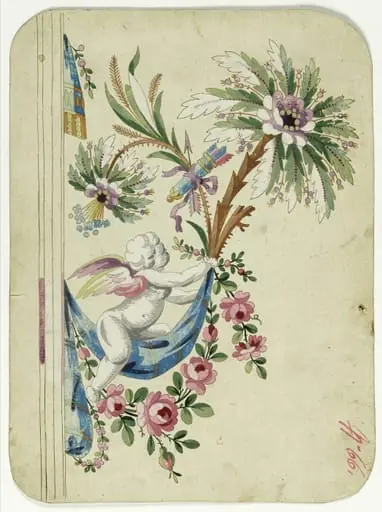 Décor de putti sur palmier, projets de broderies de gilet, XVIIIème siècle
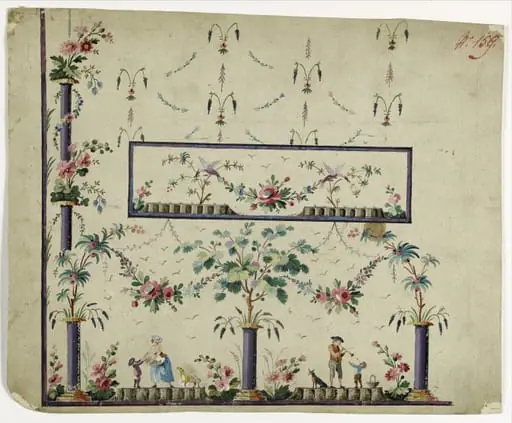 Gilet décor couple avec enfants, projets de broderies de gilet, XVIIIème siècle
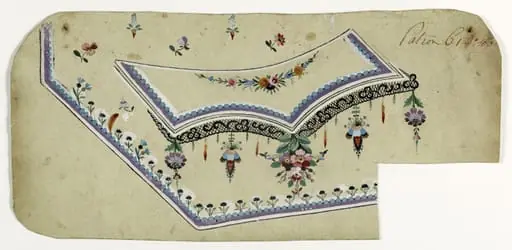 Gilet à la dentelle noire, projets de broderies de gilet, XVIIIème siècle
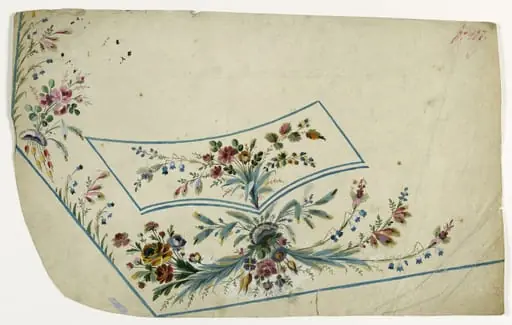 Gilet aux feuilles bleu-gris, projets de broderies de gilet, XVIIIème siècle
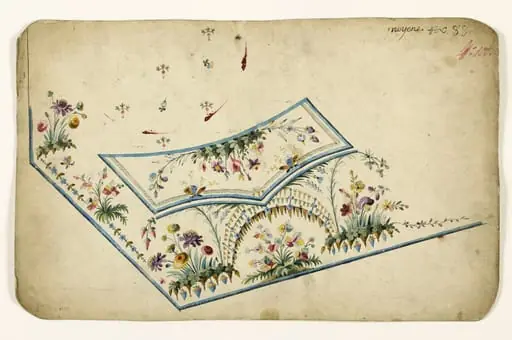 Composition en bouquets de fleurs multicolores et motifs de grappes rayonnants, projets de broderies de gilet, XVIIIème siècle
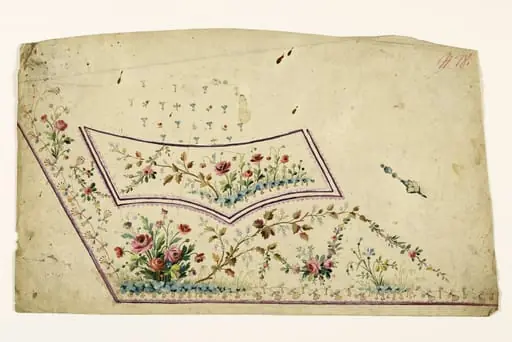 Composition avec bouquet et guirlandes de fleurs et branches de feuilles et de baies bleues, projets de broderies de gilet, XVIIIème siècle
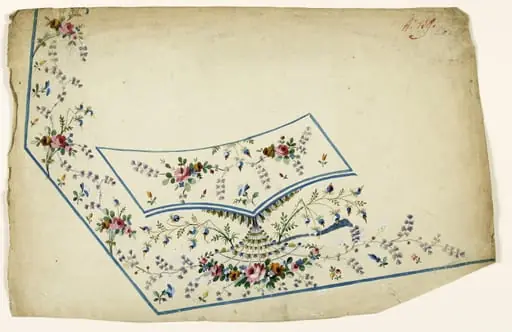 Composition à bouquet de fleurs en éventail et guirlandes de fleurs mauves, projets de broderies de gilet, XVIIIème siècle
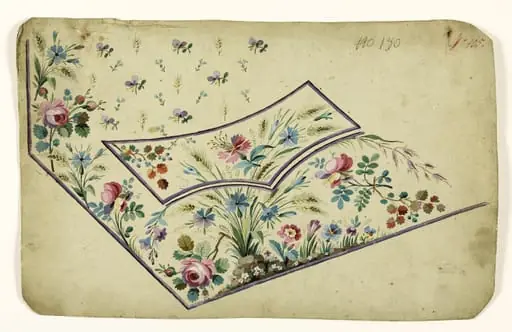 Composition de fleurs sauvages, d'épis et d'amoncellement de galets, projets de broderies de gilet, XVIIIème siècle
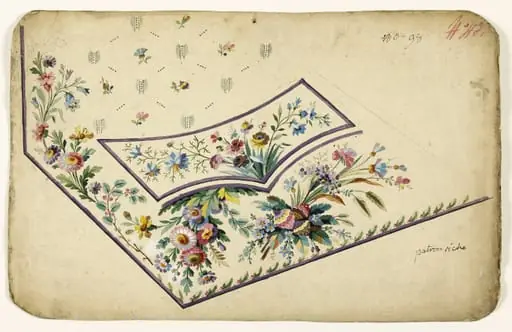 Composition de fleurs sauvages et fantaisistes en bouquets multicolores, projets de broderies de gilet, XVIIIème siècle
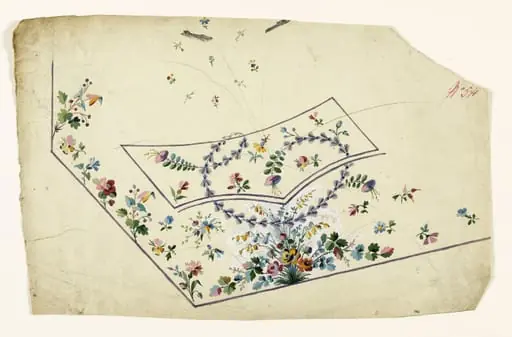 Composition de bouquets de fleurs multicolores et guirlandes de fleurs mauves, projets de broderies de gilet, XVIIIème siècle
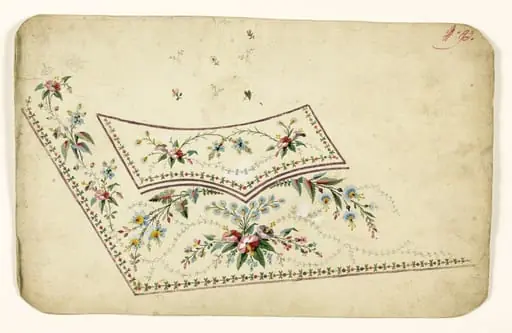 Composition de bouquets de fleurs et chardons, projets de broderies de gilet, XVIIIème siècle
 Composition en bouquets de fleurs et guirlandes de feuilles, projets de broderies de gilet, XVIIIème siècle