Artwork
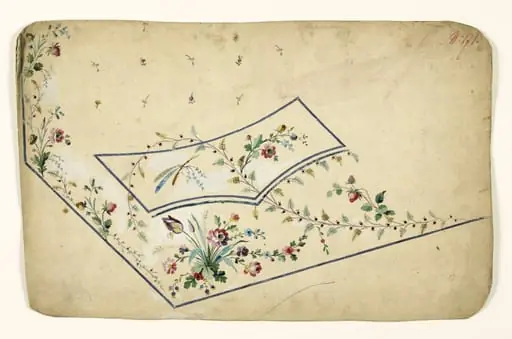
Composition en bouquets de fleurs multicolores et motifs de grappes rayonnants, projets de broderies de gilet, XVIIIème siècle
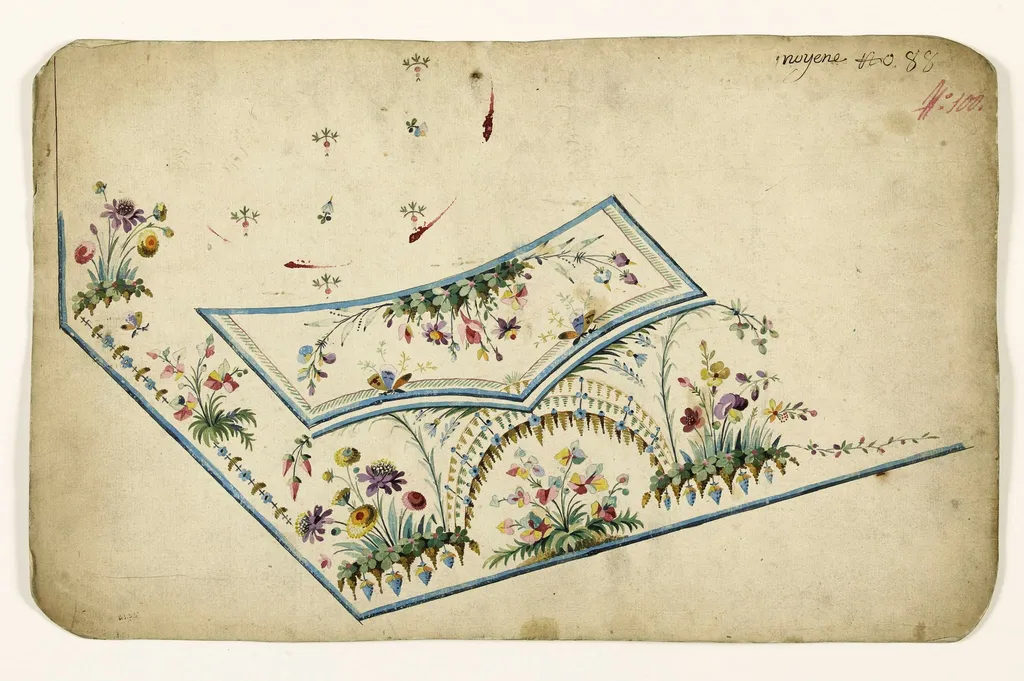
Composition en bouquets de fleurs multicolores et motifs de grappes rayonnants, projets de broderies de gilet, XVIIIème siècle is a drawing by Anonyme. It dates from 1750 and is held in the collection of the Palais Galliera - Musée de la Mode de la Ville de Paris.
About this work
Overview
This anonymous 18th-century drawing, dated around 1750, presents three open book pages filled with floral designs intended as templates for embroidery.
This anonymous 18th-century drawing, dated around 1750, presents three open book pages filled with floral designs intended as templates for embroidery. Rendered in vivid pigments on beige paper, the compositions feature clustered blossoms in pink, purple, yellow, and blue, accompanied by delicate buds and berries. Thin blue borders frame each page, suggesting their function as pattern books. The inclusion of fine linear markings implies they were used to guide needlework on garments, likely waistcoats.
Subject & Meaning
The designs center on stylized floral bouquets and radiating clusters, reflecting contemporary tastes for ornamental naturalism in textile decoration. These motifs were not mere decoration but practical references for artisans, translating botanical forms into wearable art. The arrangement suggests an emphasis on balance and repetition, aligning with the decorative conventions of mid-18th-century French and European fashion. Their purpose was utilitarian: to standardize and disseminate intricate patterns across workshops.
Technique & Style
Executed in watercolor or gouache, the flowers are rendered with bold, flat tones and precise outlines, prioritizing clarity over realism. Fine details—tiny berries, curled leaves, and subtle shading—enhance texture without overwhelming the pattern. The pages are framed by a consistent blue border, and faint linear guides suggest stitch paths. The style is methodical and systematic, indicating these were working documents rather than artistic expressions, designed for replication by embroiderers.
History & Provenance
Created in the mid-18th century, the drawing likely originated in a Parisian atelier or textile design studio, where pattern books were essential tools for garment decoration. It entered the collection of the Museum of Ethnography, where it is preserved as evidence of craft practices rather than fine art. Its anonymity reflects the common practice of uncredited artisan work, typical of design manuals used in commercial embroidery workshops of the period.
Context
During the 1750s, embroidered waistcoats were fashionable among European elites, demanding intricate, repeatable designs. Pattern books like this one circulated among tailors and embroiderers, often passed down or copied within guilds. The floral motifs echo the broader Rococo aesthetic, which favored organic forms and ornamental abundance. These sheets represent the intersection of art, commerce, and skilled labor in pre-industrial textile production.
Legacy
This drawing survives as a rare physical record of the technical infrastructure behind 18th-century embroidery. It illuminates the unseen labor of anonymous designers whose work shaped elite fashion. Today, it serves as a resource for historians studying craft transmission and material culture, offering insight into how aesthetic trends were standardized and disseminated before mass production.
Artist & collection
Artist
A French designer from the 1700s made delicate flower drawings meant to decorate vests.
Museum
Palais Galliera - Musée de la Mode de la Ville de Paris
Continue through works from the same source collection.
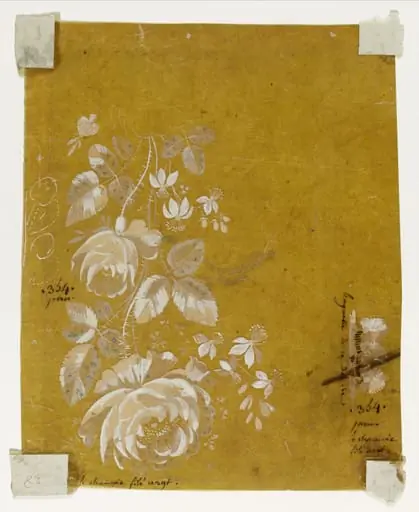 Bouquet de roses blanches pour étoffe, projets de broderies de gilet, XVIIIème siècle
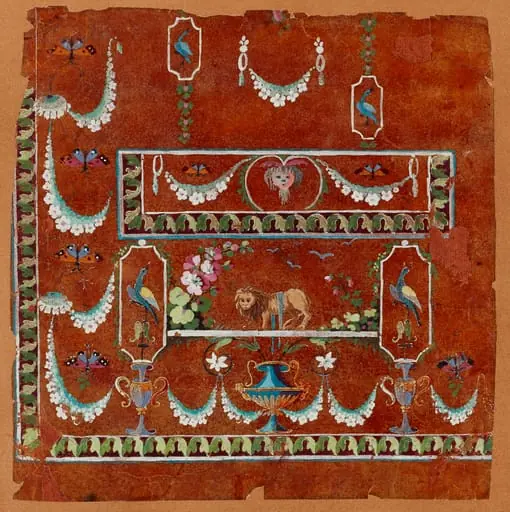 Gilet décor à grotesques, projets de broderies de gilet, XVIIIeme siècle
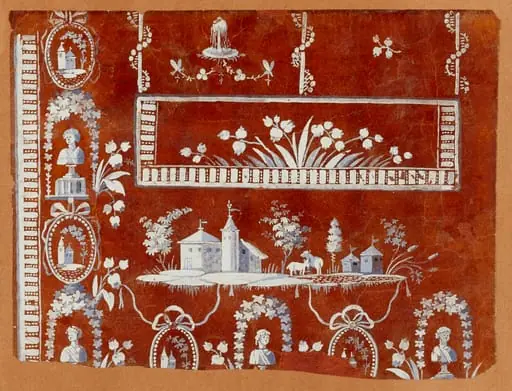 Gilet décor architectures rurales, projets de broderies de gilet, XVIIIème siècle
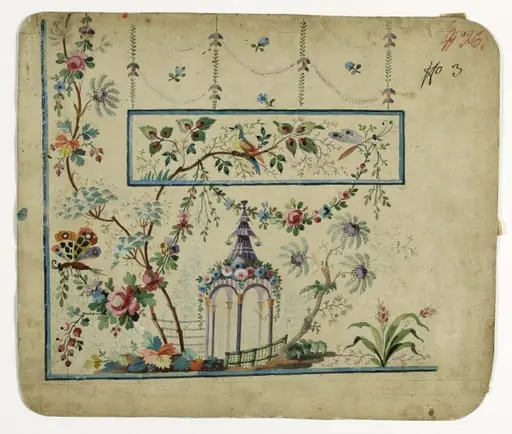 Gilet décor pagode, projets de broderies de gilet, XVIIIème siècle
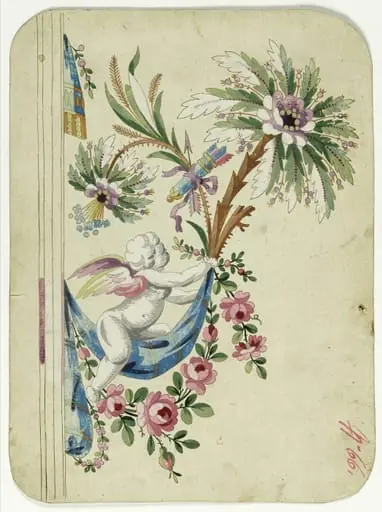 Décor de putti sur palmier, projets de broderies de gilet, XVIIIème siècle
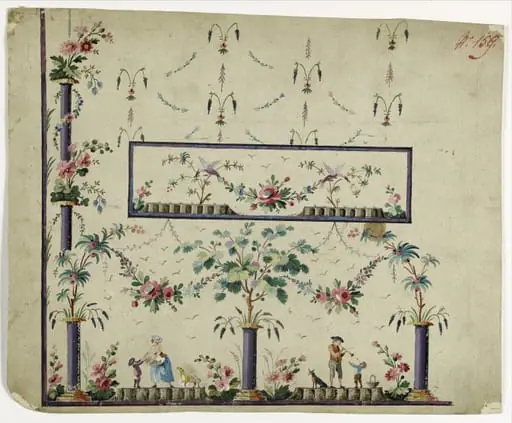 Gilet décor couple avec enfants, projets de broderies de gilet, XVIIIème siècle
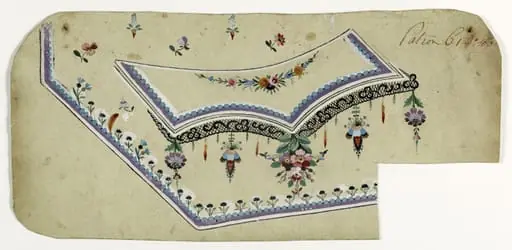 Gilet à la dentelle noire, projets de broderies de gilet, XVIIIème siècle
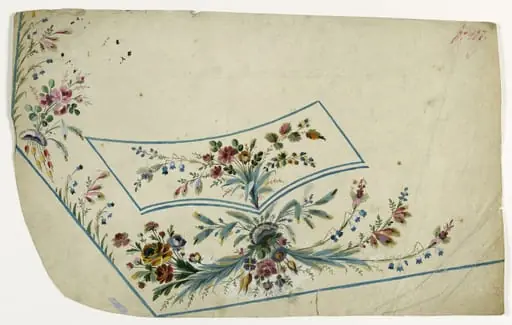 Gilet aux feuilles bleu-gris, projets de broderies de gilet, XVIIIème siècle
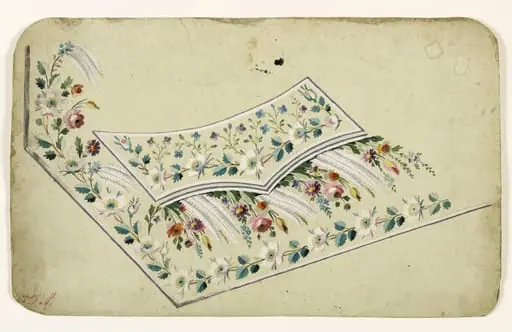 Composition de fleurs multicolores et de feuilles blanches et frises de fleurs de poirier, projets de broderies de gilet, XVIIIème siècle
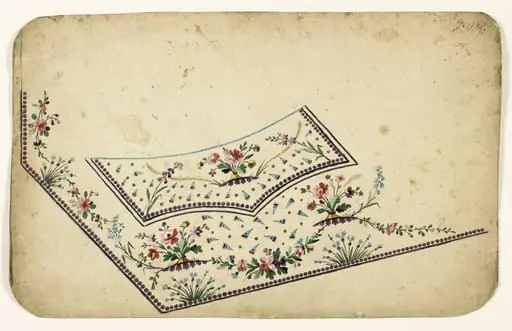 Composition de bouquets et guirlandes de fleurs, frises de perles pourpres et semis de motifs coniques bleus
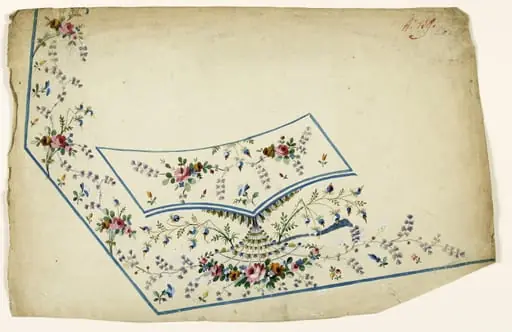 Composition à bouquet de fleurs en éventail et guirlandes de fleurs mauves, projets de broderies de gilet, XVIIIème siècle
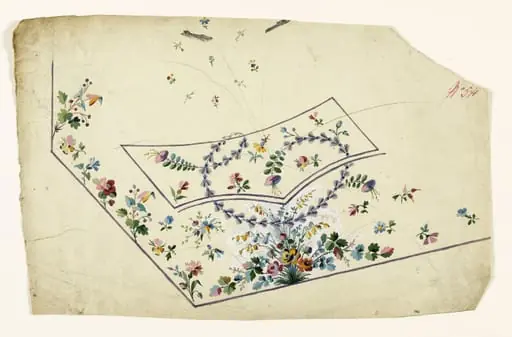 Composition de bouquets de fleurs multicolores et guirlandes de fleurs mauves, projets de broderies de gilet, XVIIIème siècle
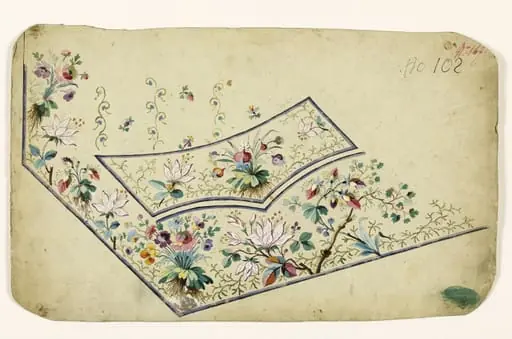 Composition de fleurs champêtres en branches et en bouquets, projets de broderies de gilet, XVIIIème siècle
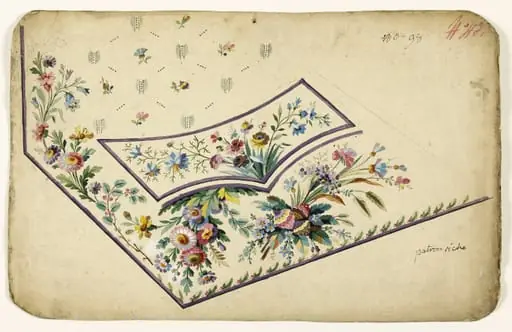 Composition de fleurs sauvages et fantaisistes en bouquets multicolores, projets de broderies de gilet, XVIIIème siècle
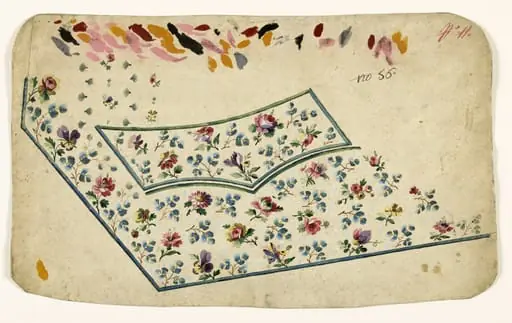 Composition en semis de fleurs, projets de broderies de gilet, XVIIIème siècle
 Composition avec bouquets et guirlandes de fleurs et phasme sur branche, projets de broderies de gilet, XVIIIème siècle