Artwork
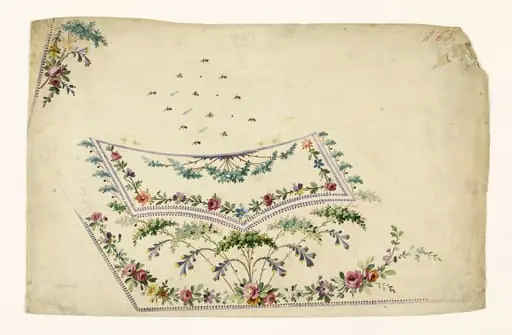
Composition de guirlandes de fleurs, frises de fleurs étoilées mauves et semis de fleurs, projets de broderies de gilet, XVIIIème siècle
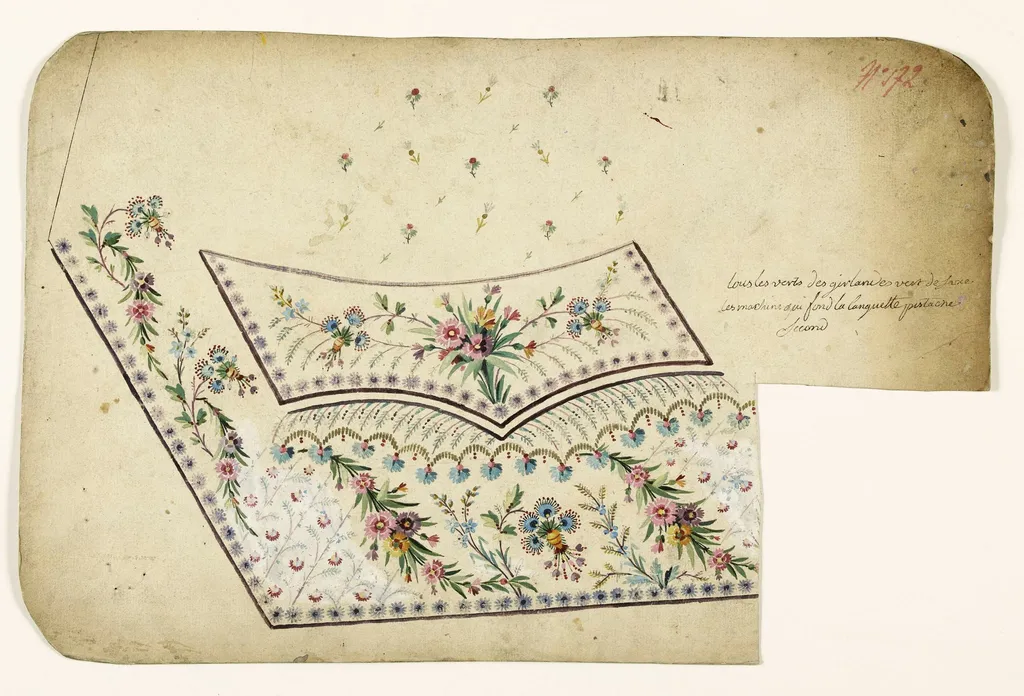
Composition de guirlandes de fleurs, frises de fleurs étoilées mauves et semis de fleurs, projets de broderies de gilet, XVIIIème siècle is an unspecified painting by Anonyme. It dates from 1750 and is held in the collection of the Palais Galliera - Musée de la Mode de la Ville de Paris. This undated draft from around 1750 presents two textile design proposals, likely intended for embroidery on a waistcoat.
About this work
Overview
This undated draft from around 1750 presents two textile design proposals, likely intended for embroidery on a waistcoat.
This undated draft from around 1750 presents two textile design proposals, likely intended for embroidery on a waistcoat. Executed in ink and watercolor on paper, the sheets display floral motifs in soft pinks, purples, yellows, and greens, with faint black borders framing the compositions. The surface shows signs of wear, suggesting repeated use in a workshop setting. French annotations accompany the designs, indicating their function as working templates rather than finished art.
Subject & Meaning
The designs feature two distinct floral arrangements: one with dense, clustered blossoms and another with a scattered, stippled pattern of smaller blooms. These were not decorative studies for their own sake but practical blueprints for embroidery, reflecting the demand for naturalistic floral patterns in 18th-century French fashion. The inclusion of a single vine motif along the margin suggests experimentation with border elements, common in garment decoration of the period.
Technique & Style
The sketches are rendered in delicate, loose brushwork with minimal color saturation, typical of preparatory textile designs. The faded pigments and thin ink outlines indicate rapid execution, prioritizing clarity over permanence. The composition is organized into clear, repeatable units, allowing for easy transfer to fabric. The style aligns with the conventions of French pattern books, where botanical accuracy was balanced with the constraints of hand embroidery.
History & Provenance
The sheet was acquired by the Museum of Ethnography, where it is cataloged as part of a collection of textile design materials. Its origin is unknown, but its format and language suggest it was produced in a Parisian atelier or by a provincial embroiderer. The physical condition—faded, creased, and worn—implies it was actively consulted during production, possibly over several years, before being archived as obsolete.
Context
In mid-18th-century France, floral embroidery was a hallmark of elite dress, particularly for men’s waistcoats. Designers circulated pattern sheets among workshops, adapting motifs from printed botanical texts and garden illustrations. This sheet reflects the intersection of horticultural interest and textile craft, where natural forms were stylized for needlework. Such documents were essential tools in a system of production that relied on skilled artisans translating paper into fabric.
Legacy
Though unsigned and unattributed, the sheet survives as a rare example of a working textile design from the period. It offers insight into the labor-intensive processes behind fashionable dress, revealing how aesthetic trends were translated into practical templates. Today, it stands as a quiet testament to the anonymous artisans who shaped the visual culture of 18th-century clothing, their names lost but their methods preserved in fragile ink on paper.
Artist & collection
Artist
A French designer from the 1700s made delicate flower drawings meant to decorate vests.
Museum
Palais Galliera - Musée de la Mode de la Ville de Paris
Continue through works from the same source collection.
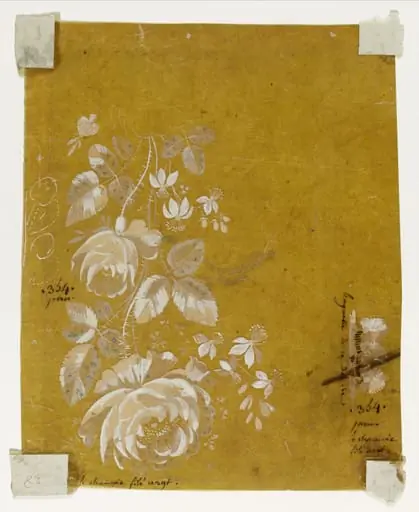 Bouquet de roses blanches pour étoffe, projets de broderies de gilet, XVIIIème siècle
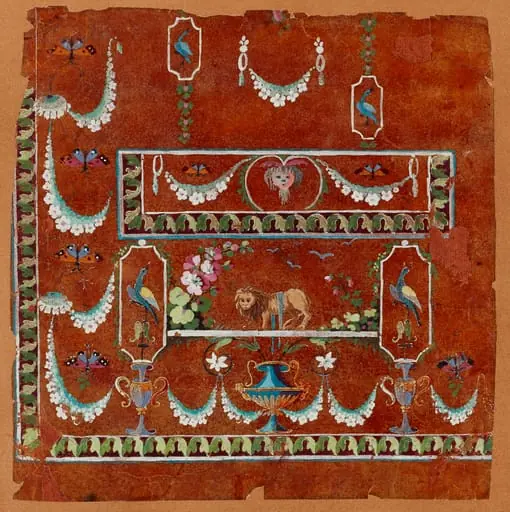 Gilet décor à grotesques, projets de broderies de gilet, XVIIIeme siècle
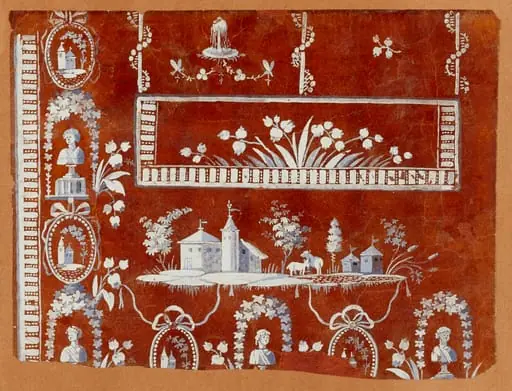 Gilet décor architectures rurales, projets de broderies de gilet, XVIIIème siècle
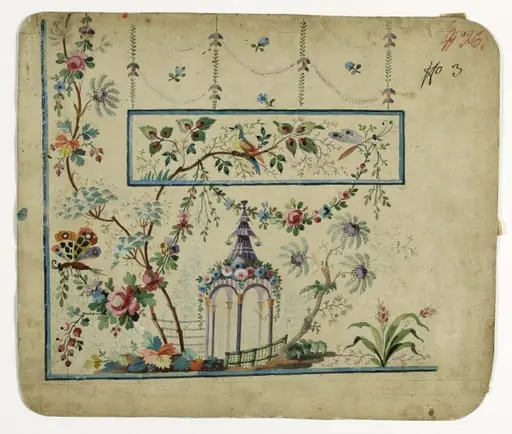 Gilet décor pagode, projets de broderies de gilet, XVIIIème siècle
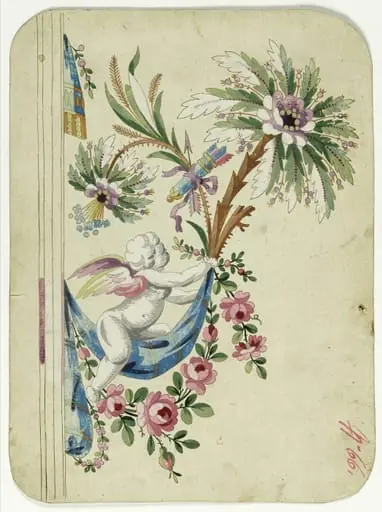 Décor de putti sur palmier, projets de broderies de gilet, XVIIIème siècle
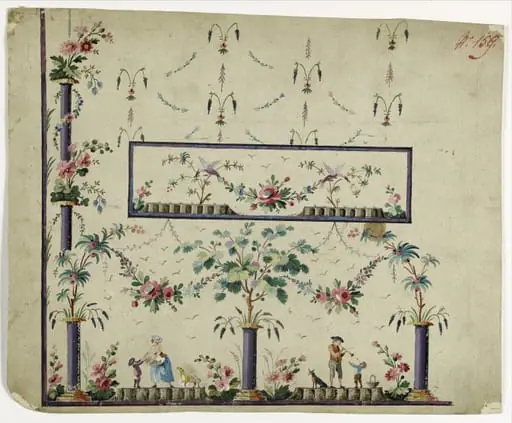 Gilet décor couple avec enfants, projets de broderies de gilet, XVIIIème siècle
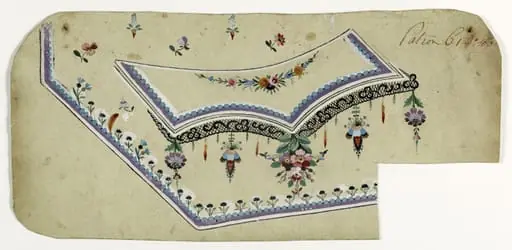 Gilet à la dentelle noire, projets de broderies de gilet, XVIIIème siècle
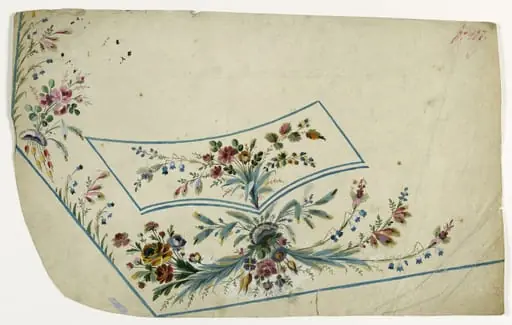 Gilet aux feuilles bleu-gris, projets de broderies de gilet, XVIIIème siècle
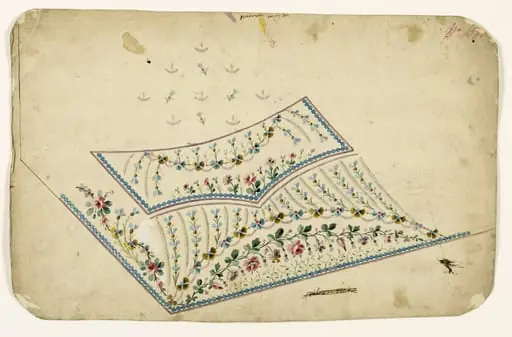 Composition de guirlandes de fleurs et de feuilles et frises de perles bleues, projets de broderies de gilet, XVIIIème siècle
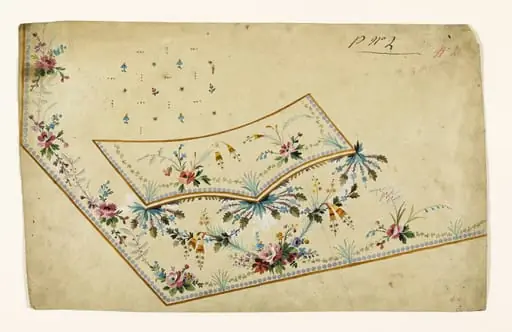 Composition avec guirlandes de fleurs, frises de perles lavande, projets de broderies de gilet, XVIIIème siècle
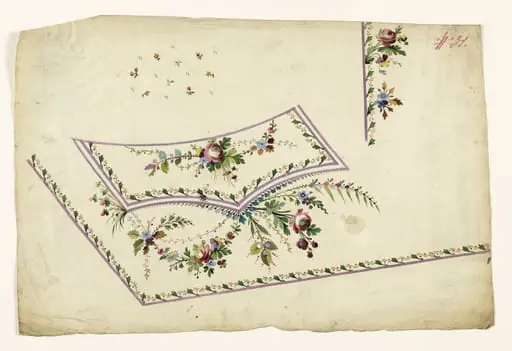 Composition de guirlandes de fleurs, frises de feuilles et de baies rouges, projets de broderies de gilet, XVIIIème siècle
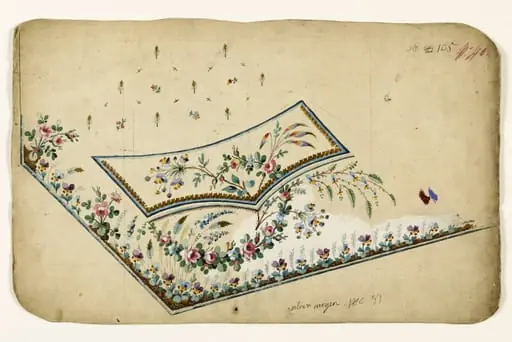 Composition avec guirlandes et branches de fleurs, bordures de fleurs et d'épis, projets de broderies de gilet, XVIIIème siècle
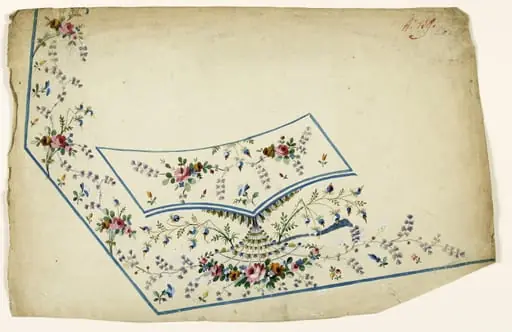 Composition à bouquet de fleurs en éventail et guirlandes de fleurs mauves, projets de broderies de gilet, XVIIIème siècle
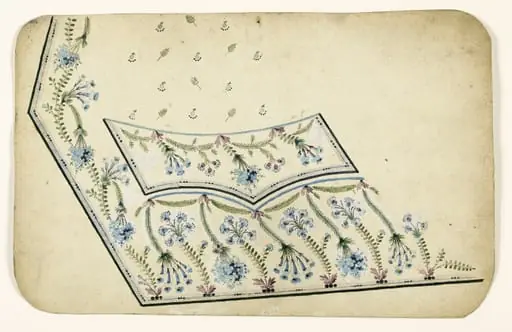 Composition en guirlandes de feuilles et de fleurs bleues, projets de broderies de gilet, XVIIIème siècle
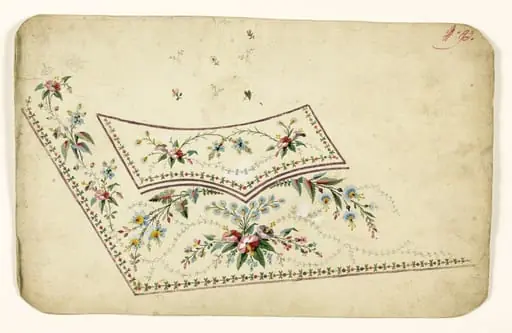 Composition de bouquets de fleurs et chardons, projets de broderies de gilet, XVIIIème siècle
 Composition avec guirlandes de fleurs et feuilles en grappes, projets de broderies de gilet, XVIIIème siècle