Artwork
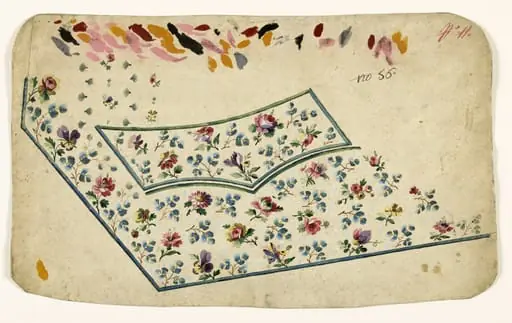
Composition en guirlandes de feuilles et de fleurs bleues, projets de broderies de gilet, XVIIIème siècle
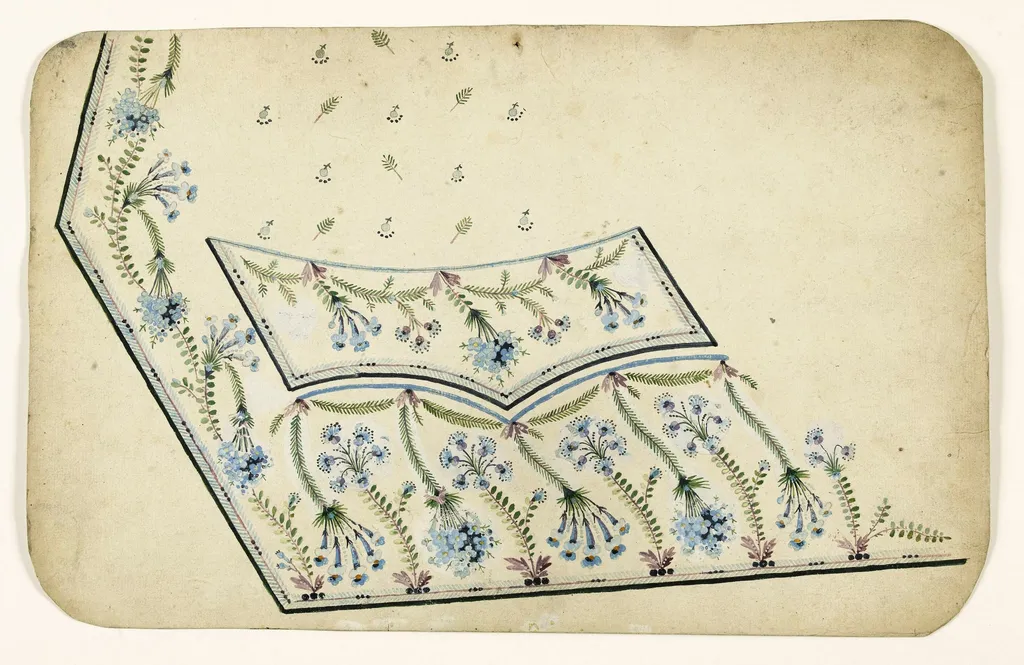
Composition en guirlandes de feuilles et de fleurs bleues, projets de broderies de gilet, XVIIIème siècle is a drawing by Anonyme. It dates from 1750 and is held in the collection of the Palais Galliera - Musée de la Mode de la Ville de Paris. This anonymous 18th-century design, dated around 1750, serves as a preparatory sketch for embroidery patterns intended for a waistcoat.
About this work
Overview
The background remains unadorned, while the folded areas feature delicate stippled textures, suggesting how light and shadow might fall on stitched fabric.
This anonymous 18th-century design, dated around 1750, serves as a preparatory sketch for embroidery patterns intended for a waistcoat. Executed in ink and watercolor, it presents two folded fabric forms adorned with floral and leaf motifs in blue and green. The background remains unadorned, while the folded areas feature delicate stippled textures, suggesting how light and shadow might fall on stitched fabric.
Subject & Meaning
The composition centers on ornamental garlands of flowers and foliage, likely inspired by naturalistic botanical studies popular in decorative arts of the period. These motifs were not merely decorative but signaled refinement and taste, often associated with elite fashion. The repetition of forms across folded fabric implies a modular design, meant to be replicated along garment edges in embroidery.
Technique & Style
The artist employed fine black outlines to define the floral elements, with soft washes of blue, green, and faint pink for color. The stippled dots and fine lines within the folded sections were drawn by hand to simulate texture and depth, a method common in textile design to suggest the three-dimensionality of stitched thread. This technique reflects a precise, methodical approach to translating pattern into wearable form.
History & Provenance
The drawing resides in the collection of the Museum of Ethnography, though its original maker and patron remain unidentified. Likely produced in a workshop or by a designer supplying tailors or embroiderers, it was preserved as a reference rather than a finished artwork. Its survival suggests it held practical value in the production of luxury garments during the mid-1700s.
Context
In mid-18th-century France and beyond, embroidered waistcoats were markers of status among the aristocracy and affluent bourgeoisie. Designers created detailed templates like this one to guide artisans in reproducing intricate patterns. Botanical themes were favored for their elegance and association with nature, aligning with broader Enlightenment interests in observation and order.
Legacy
This drawing exemplifies the quiet craftsmanship behind textile production before industrialization. Though not signed or widely known, it represents a class of utilitarian art that sustained fashion industries for centuries. Its preservation highlights how such sketches, once functional, now offer insight into the material culture and aesthetic values of their time.
Artist & collection
Artist
A French designer from the 1700s made delicate flower drawings meant to decorate vests.
Museum
Palais Galliera - Musée de la Mode de la Ville de Paris
Continue through works from the same source collection.
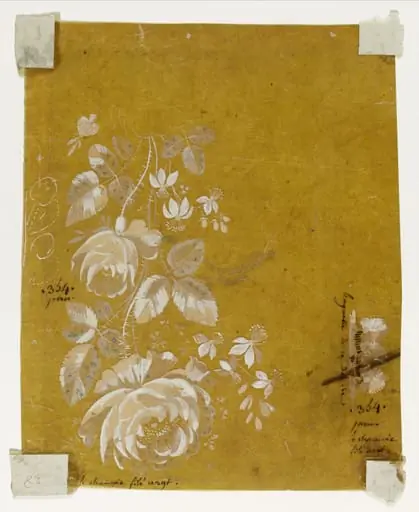 Bouquet de roses blanches pour étoffe, projets de broderies de gilet, XVIIIème siècle
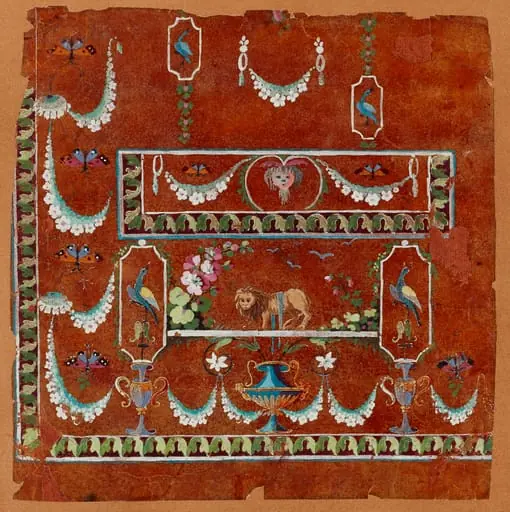 Gilet décor à grotesques, projets de broderies de gilet, XVIIIeme siècle
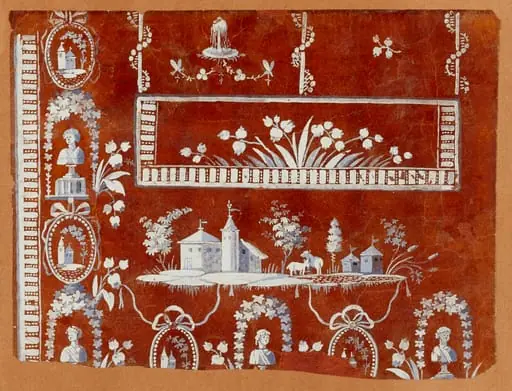 Gilet décor architectures rurales, projets de broderies de gilet, XVIIIème siècle
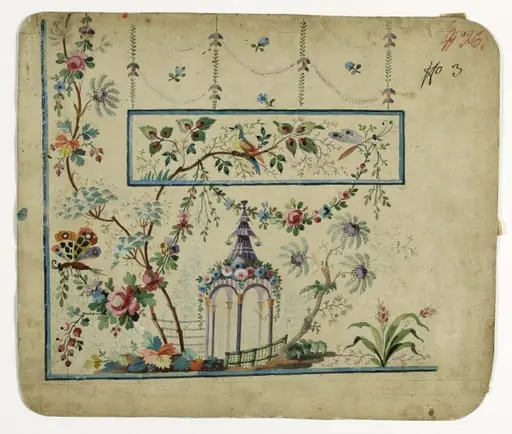 Gilet décor pagode, projets de broderies de gilet, XVIIIème siècle
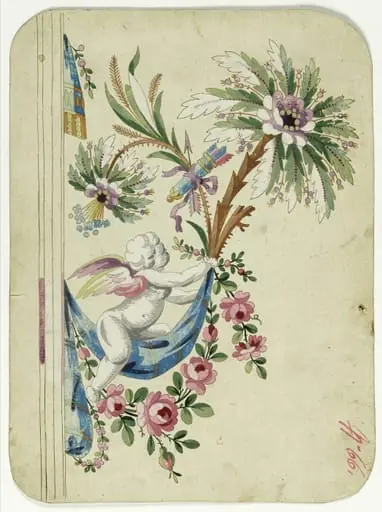 Décor de putti sur palmier, projets de broderies de gilet, XVIIIème siècle
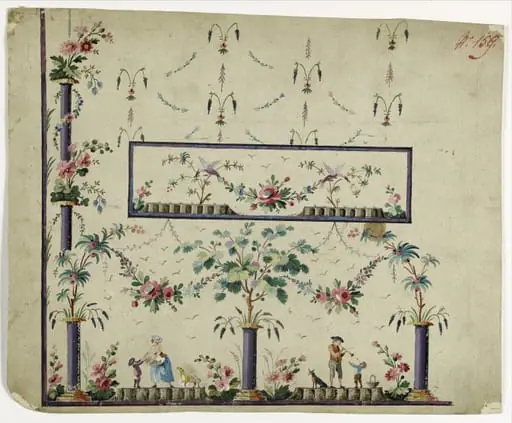 Gilet décor couple avec enfants, projets de broderies de gilet, XVIIIème siècle
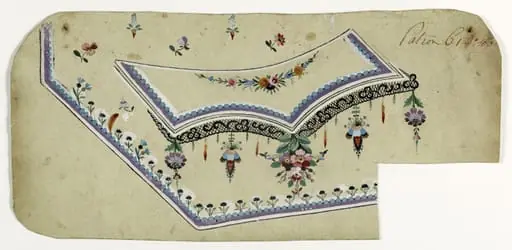 Gilet à la dentelle noire, projets de broderies de gilet, XVIIIème siècle
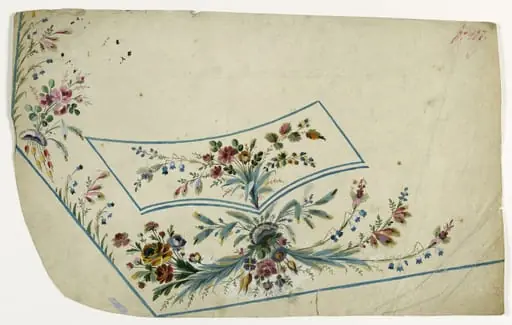 Gilet aux feuilles bleu-gris, projets de broderies de gilet, XVIIIème siècle
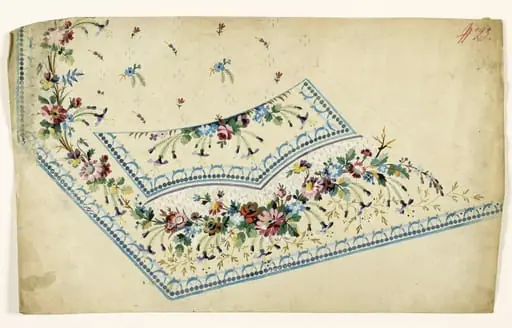 Composition de fleurs en guirlandes et en semis et frises de perles bleues, projets de broderies de gilet, XVIIIème siècle
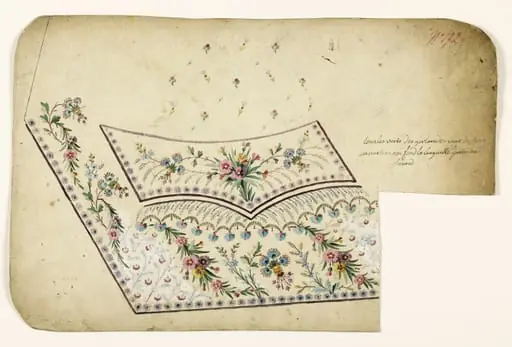 Composition de guirlandes de fleurs, frises de fleurs étoilées mauves et semis de fleurs, projets de broderies de gilet, XVIIIème siècle
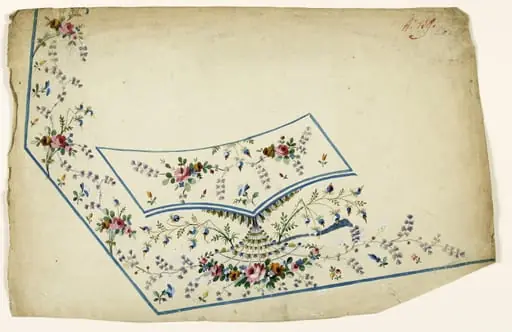 Composition à bouquet de fleurs en éventail et guirlandes de fleurs mauves, projets de broderies de gilet, XVIIIème siècle
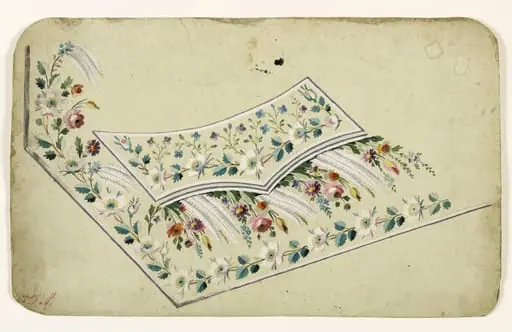 Composition de fleurs multicolores et de feuilles blanches et frises de fleurs de poirier, projets de broderies de gilet, XVIIIème siècle
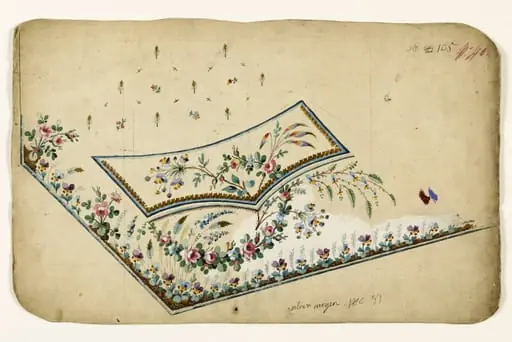 Composition avec guirlandes et branches de fleurs, bordures de fleurs et d'épis, projets de broderies de gilet, XVIIIème siècle
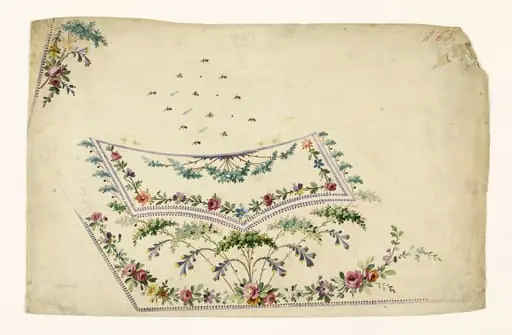 Composition avec guirlandes de fleurs et feuilles en grappes, projets de broderies de gilet, XVIIIème siècle
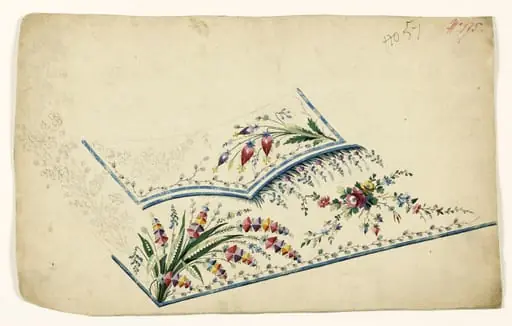 Composition en bouquets de fleurs et guirlandes de feuilles, projets de broderies de gilet, XVIIIème siècle
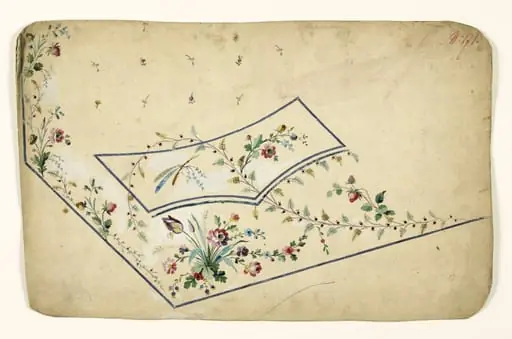 Composition avec bouquets et guirlandes de fleurs et phasme sur branche, projets de broderies de gilet, XVIIIème siècle
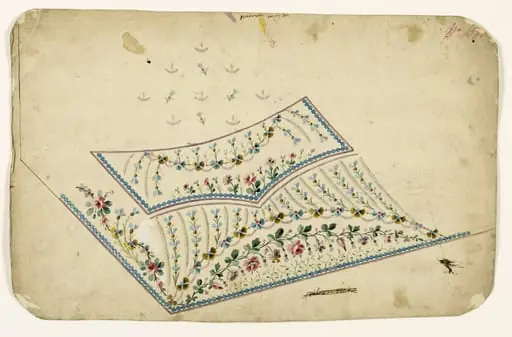 Composition de guirlandes de fleurs et de feuilles et frises de perles bleues, projets de broderies de gilet, XVIIIème siècle
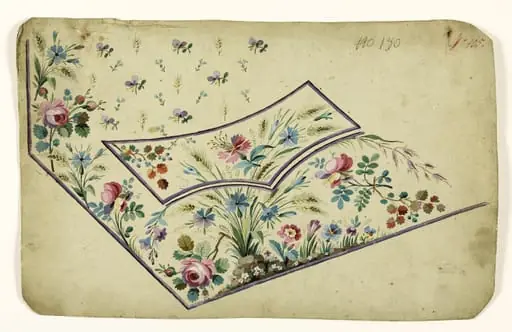 Composition de fleurs sauvages, d'épis et d'amoncellement de galets, projets de broderies de gilet, XVIIIème siècle
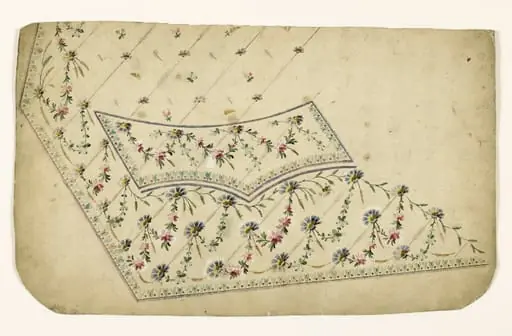 Composition de croisillons de fleurs et de feuilles, frises de feuilles et baies rouges, projets de broderies de gilet, XVIIIème siècle
 Composition en semis de fleurs, projets de broderies de gilet, XVIIIème siècle