Artwork
Décor faisans, projets de broderies de gilet, XVIIIème siècle
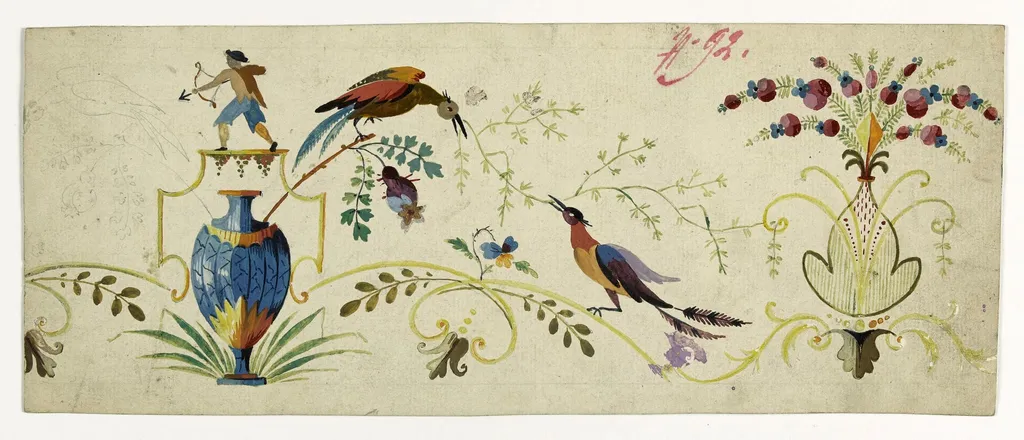
Décor faisans, projets de broderies de gilet, XVIIIème siècle is a drawing by the Romanticist artist Anonyme. It dates from 1787 and is held in the collection of the Palais Galliera - Musée de la Mode de la Ville de Paris.
About this work
Overview
Décor faisans, projets de broderies de gilet, XVIIIème siècle is an anonymous 1787 design intended for embroidery on a vest. Now housed at the Museum of Ethnography, the work features a intricate scene combining natural and decorative elements.
Subject & Meaning
The design depicts two pheasants on ornate, berry-laden branches, alongside a figure in striped pants balancing on a blue and gold vase, aiming an arrow. Surrounding curved vines and flowers in pastel hues frame the composition, emphasizing a blend of nature and fantasy.
Technique & Style
Characterized by delicate lines, the drawing showcases a style suited for translation into embroidery. The use of soft color notation (pinks, greens, yellows) and the intricacy of the design reflect late 18th-century embroidery aesthetics.
History & Provenance
Created in 1787, the work's artist remains unknown. It is currently part of the collection at the Museum of Ethnography, with no detailed provenance provided in available records.
Context
Emerging from the 18th century, this piece sits within the tradition of decorative arts designed for wearable textiles. It reflects the era's appreciation for intricate, nature-inspired patterns in clothing embellishments.
Legacy
While the work itself does not signify a broad artistic movement, it contributes to the historical record of 18th-century embroidery design, offering insight into the period's aesthetic preferences for clothing decoration.
Artist & collection
Artist
A French designer from the 1700s made delicate flower drawings meant to decorate vests.
Museum
Palais Galliera - Musée de la Mode de la Ville de Paris
Continue through works from the same source collection.
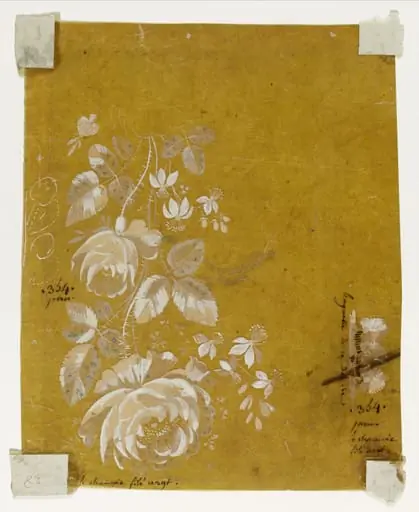 Bouquet de roses blanches pour étoffe, projets de broderies de gilet, XVIIIème siècle
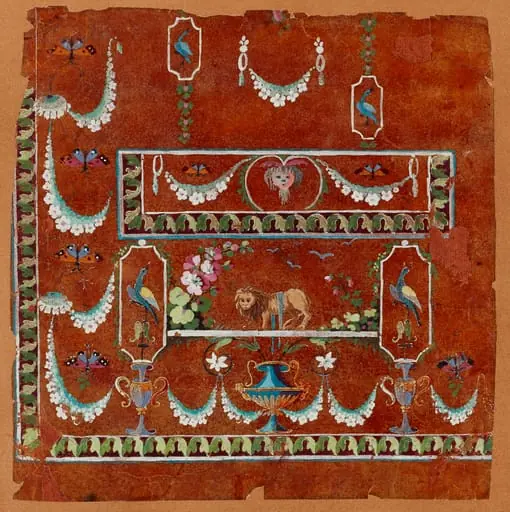 Gilet décor à grotesques, projets de broderies de gilet, XVIIIeme siècle
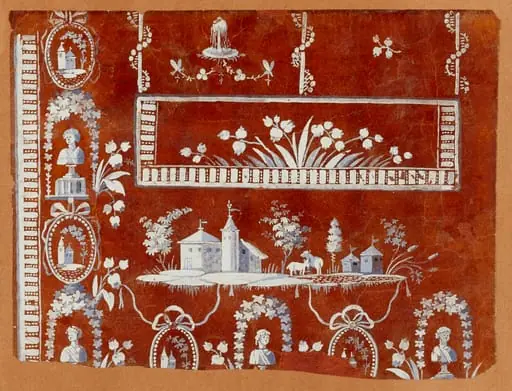 Gilet décor architectures rurales, projets de broderies de gilet, XVIIIème siècle
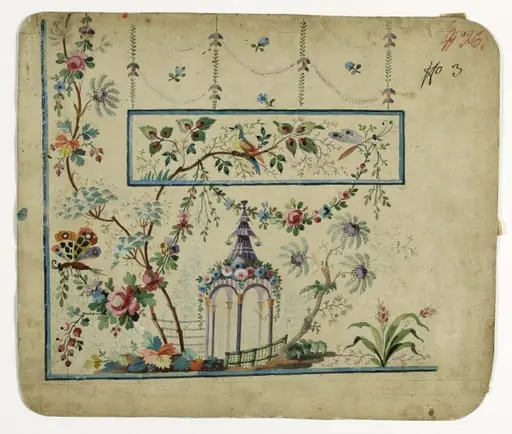 Gilet décor pagode, projets de broderies de gilet, XVIIIème siècle
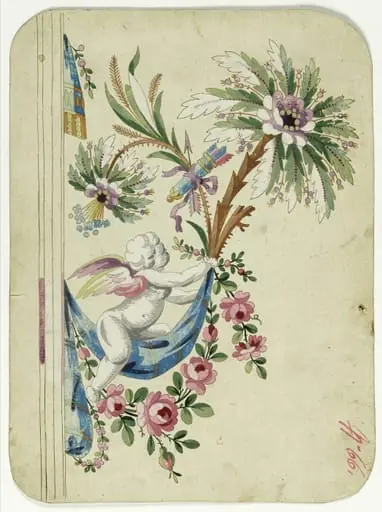 Décor de putti sur palmier, projets de broderies de gilet, XVIIIème siècle
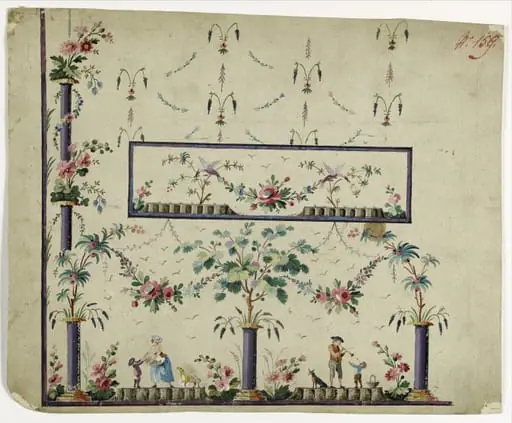 Gilet décor couple avec enfants, projets de broderies de gilet, XVIIIème siècle
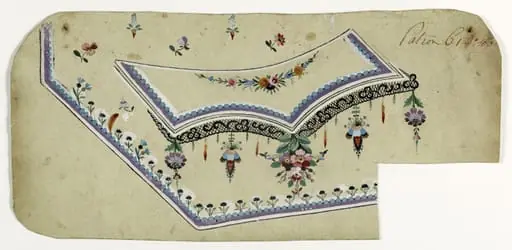 Gilet à la dentelle noire, projets de broderies de gilet, XVIIIème siècle
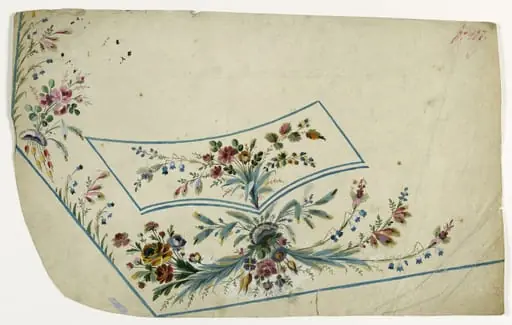 Gilet aux feuilles bleu-gris, projets de broderies de gilet, XVIIIème siècle
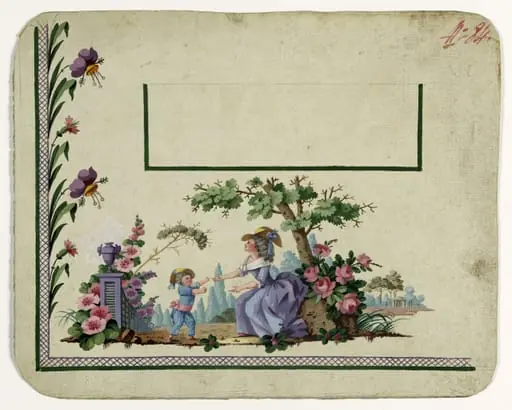 Gilet décor amour filial, projets de broderies de gilet, XVIIIème siècle
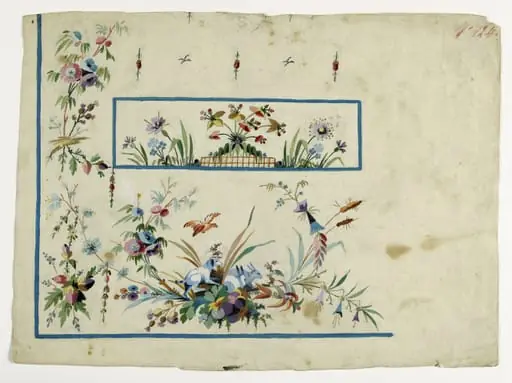 Gilet décor fleurs et fruits avec chien et lapins, projets de broderies de gilet, XVIIIème siècle
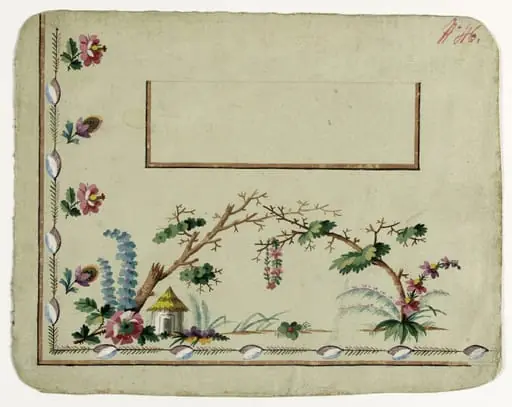 Gilet décor petite chaumière, projets de broderies de gilet, XVIIIème siècle
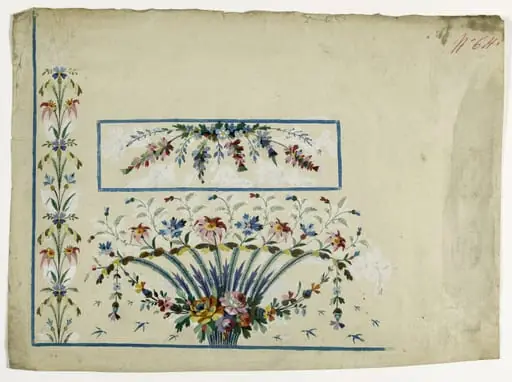 Gilet décor bouquet oeillets et églantines, projets de broderies de gilet, XVIIIème siècle
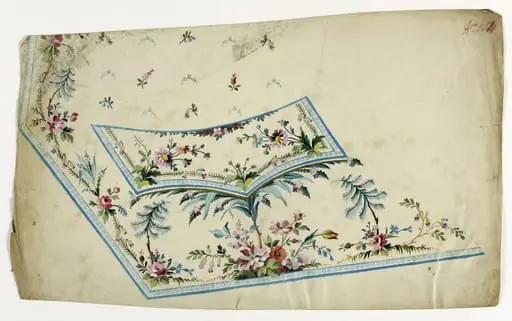 Gilet aux perles bleues, projets de broderies de gilet, XVIIIème siècle