Artwork
Gilet décor bouquet oeillets et églantines, projets de broderies de gilet, XVIIIème siècle
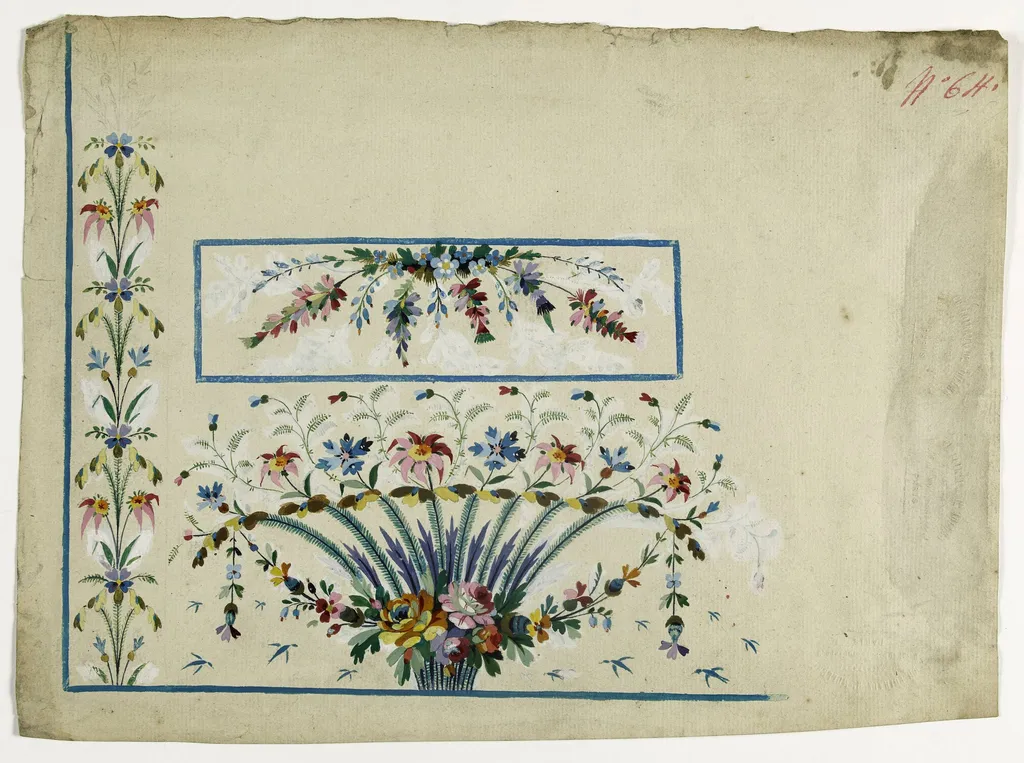
Gilet décor bouquet oeillets et églantines, projets de broderies de gilet, XVIIIème siècle is a drawing by Anonyme. It dates from 1750 and is held in the collection of the Palais Galliera - Musée de la Mode de la Ville de Paris. This 18th‑century design sheet, attributed to an anonymous creator and dated around 1750, is part of the Museum of Ethnography’s collection.
About this work
Overview
This 18th‑century design sheet, attributed to an anonymous creator and dated around 1750, is part of the Museum of Ethnography’s collection. It served as a preparatory illustration for a decorative embroidery project intended for a men’s jacket, showcasing the planning stage of textile ornamentation.
Subject & Meaning
The drawing presents two distinct floral motifs: a compact cluster of berries and leaves framed within a small rectangle at the top, and a larger, more elaborate bouquet of roses and wild roses arranged in a basket below. The motifs reflect the period’s fascination with naturalistic garden imagery as decorative elements for clothing.
Technique & Style
Rendered in ink on faded paper, the composition relies on clear line work to define petals, leaves, and stems. A thin blue border outlines the sheet, while the paper’s aged surface bears stains and faint marks, indicating its use as a working document rather than a finished artwork.
History & Provenance
The sheet originates from the mid‑1700s, a time when such drawings guided artisans in translating botanical designs into embroidered textiles. It entered the Museum of Ethnography’s holdings as part of its collection of historic costume and craft materials, preserving the link between design and textile production.
Context
During the Rococo period, elaborate floral patterns were popular in aristocratic attire, especially for outer garments like jackets. Designers produced detailed sketches like this one to communicate precise motifs to embroiderers, ensuring consistency across the garment’s decorative scheme.
Legacy
Such preparatory drawings provide insight into the collaborative process between designers and textile workers in the 18th century. They also inform contemporary scholars and practitioners about historical embroidery techniques and the aesthetic preferences that shaped period fashion.
Artist & collection
Artist
A French designer from the 1700s made delicate flower drawings meant to decorate vests.
Museum
Palais Galliera - Musée de la Mode de la Ville de Paris
Continue through works from the same source collection.
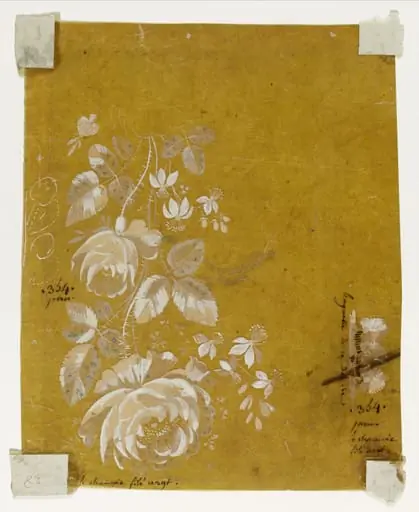 Bouquet de roses blanches pour étoffe, projets de broderies de gilet, XVIIIème siècle
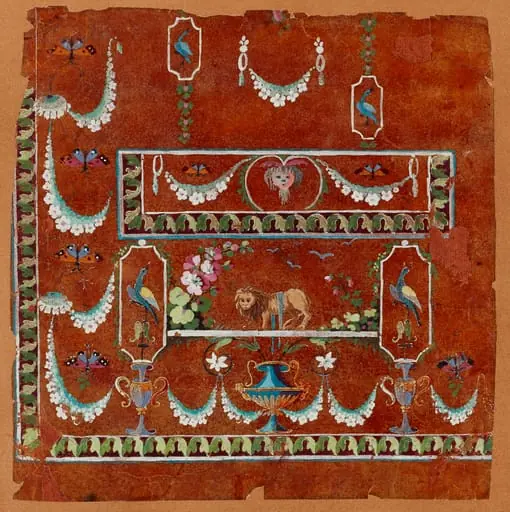 Gilet décor à grotesques, projets de broderies de gilet, XVIIIeme siècle
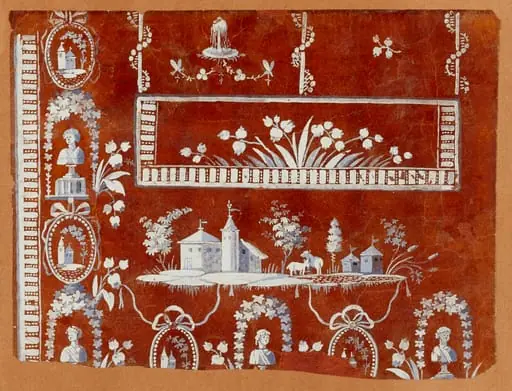 Gilet décor architectures rurales, projets de broderies de gilet, XVIIIème siècle
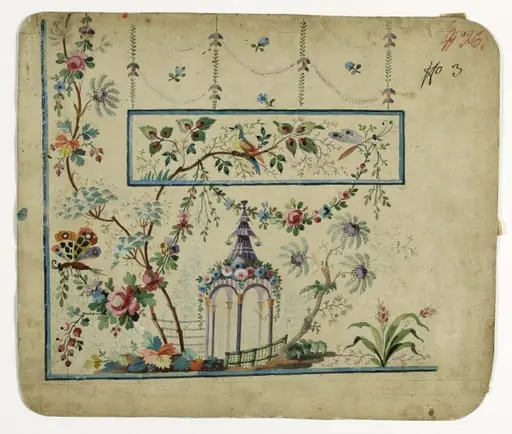 Gilet décor pagode, projets de broderies de gilet, XVIIIème siècle
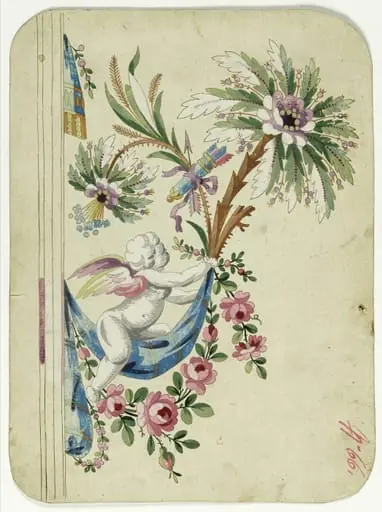 Décor de putti sur palmier, projets de broderies de gilet, XVIIIème siècle
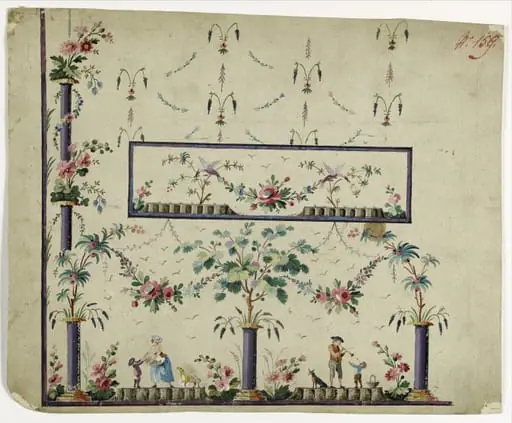 Gilet décor couple avec enfants, projets de broderies de gilet, XVIIIème siècle
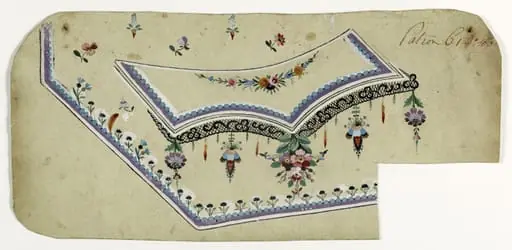 Gilet à la dentelle noire, projets de broderies de gilet, XVIIIème siècle
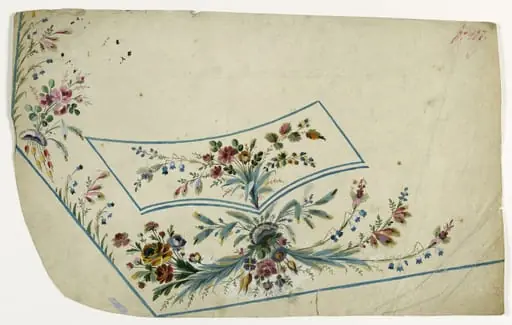 Gilet aux feuilles bleu-gris, projets de broderies de gilet, XVIIIème siècle
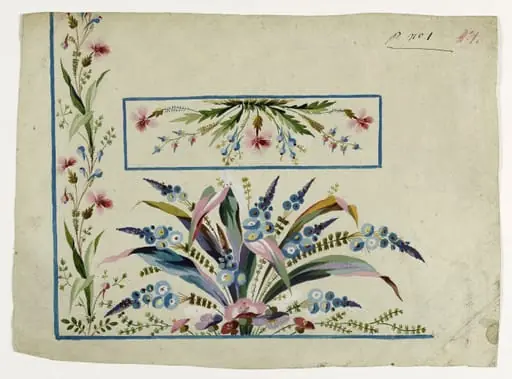 Gilet décor bouquet de bleuets et d'oeillets, projets de broderies de gilet, XVIIIème siècle
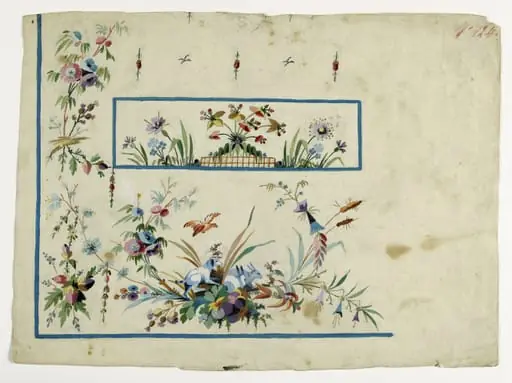 Gilet décor fleurs et fruits avec chien et lapins, projets de broderies de gilet, XVIIIème siècle
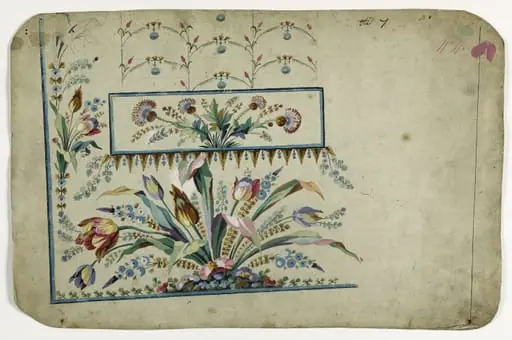 Gilet décor bouquet de tulipes, projets de broderies de gilet, XVIIIème siècle
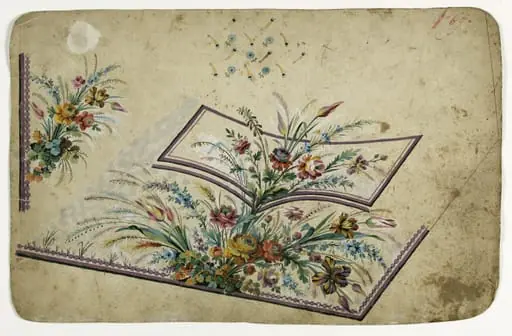 Gilet au bouquet de fleurs multicolores, projets de broderies de gilet, XVIIIème siècle
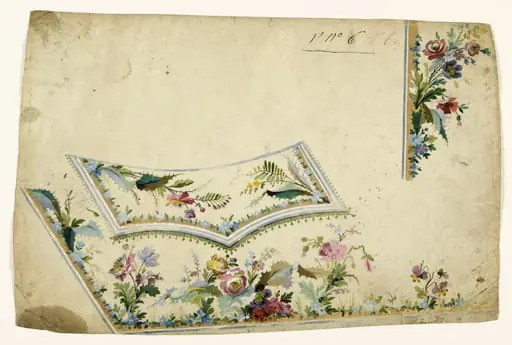 Composition florale aux bleuets, projets de broderies de gilet, XVIIIème siècle
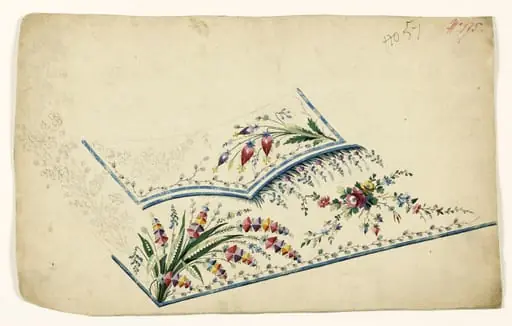 Composition en bouquets de fleurs et guirlandes de feuilles, projets de broderies de gilet, XVIIIème siècle
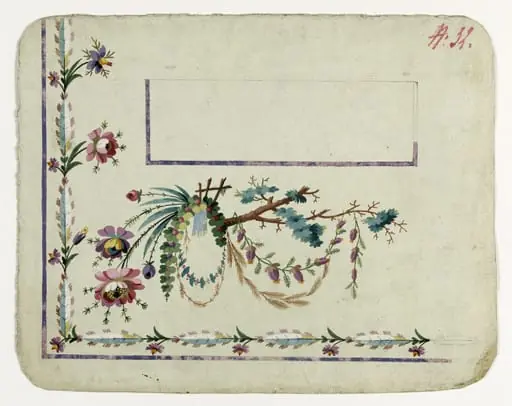 Gilet décor guirlande de branchage et de fleurs, projets de broderies de gilet, XVIIIème siècle
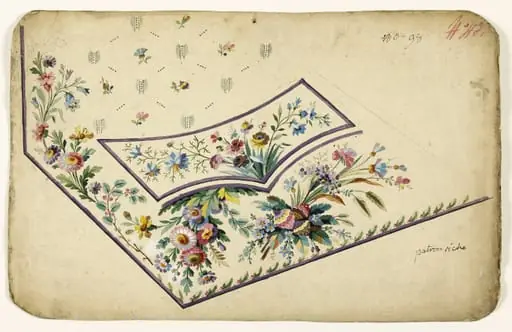 Composition de fleurs sauvages et fantaisistes en bouquets multicolores, projets de broderies de gilet, XVIIIème siècle
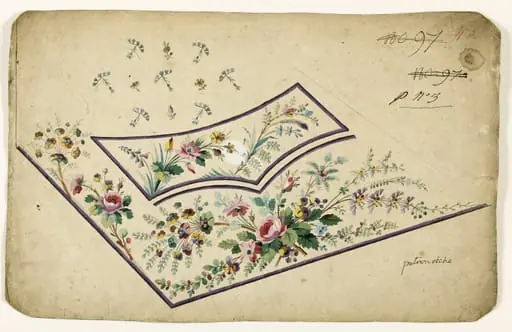 Composition florale en bouquets, projets de broderies de gilet, XVIIIème siècle
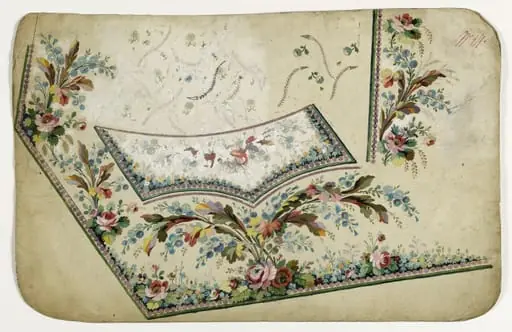 Gilet fleurs et feuilles multicolores, projets de broderies de gilet, XVIIIème siècle
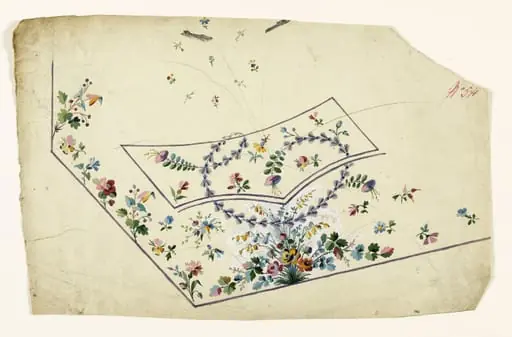 Composition de bouquets de fleurs multicolores et guirlandes de fleurs mauves, projets de broderies de gilet, XVIIIème siècle