Artwork
Gilet décor bouquet de bleuets et d'oeillets, projets de broderies de gilet, XVIIIème siècle
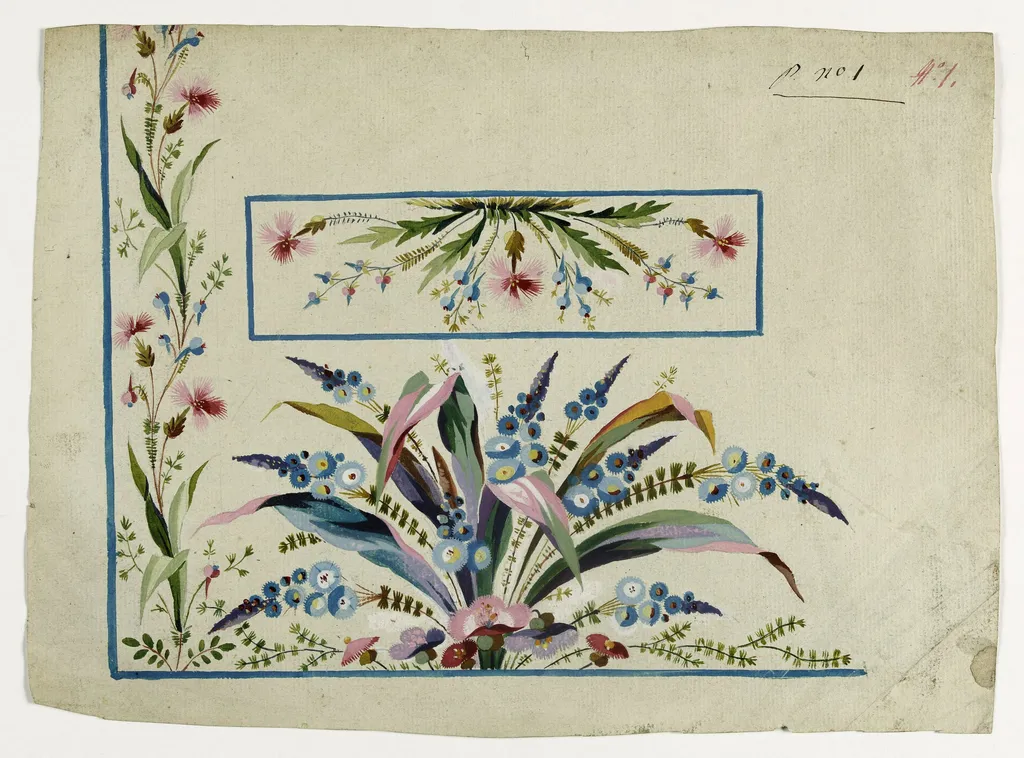
Gilet décor bouquet de bleuets et d'oeillets, projets de broderies de gilet, XVIIIème siècle is a drawing by Anonyme. It dates from 1750 and is held in the collection of the Palais Galliera - Musée de la Mode de la Ville de Paris.
About this work
Overview
This eighteenth‑century drawing, attributed to an unknown artist and dated to around 1750, functions as a design proposal for a embroidered garment. The composition presents a rectangular central area surrounded by a decorative border of stylised flowers, intended for application to a vest or similar textile piece. The work is part of the collection of the Museum of Ethnography.
Subject & Meaning
The motif centres on a bouquet of cornflowers and carnations, rendered with accompanying green foliage. The arrangement balances vivid blue, pink and yellow blossoms, suggesting an appreciation for naturalistic detail while adhering to the ornamental conventions of the period. Such floral schemes were commonly employed to convey refinement and to enhance the visual appeal of clothing accessories.
Technique & Style
The precise, repetitive grouping of the flowers reflects the practical needs of embroidery pattern making, where clear outlines guide stitchers.
Executed in a flat, coloured‑pencil‑like manner, the drawing employs clear, uniform washes to delineate each petal and leaf. The precise, repetitive grouping of the flowers reflects the practical needs of embroidery pattern making, where clear outlines guide stitchers. The style aligns with the Rococo taste for delicate, asymmetrical floral ornamentation prevalent in mid‑century French fashion design.
History & Provenance
Created circa 1750, the sketch likely served a workshop or patron seeking a bespoke embroidered vest. Over time it entered the holdings of the Museum of Ethnography, where it is preserved as an example of historical textile design documentation. Its anonymous authorship is typical of utilitarian design drawings, which were rarely signed or individually credited.
Artist & collection
Artist
A French designer from the 1700s made delicate flower drawings meant to decorate vests.
Museum
Palais Galliera - Musée de la Mode de la Ville de Paris
Continue through works from the same source collection.
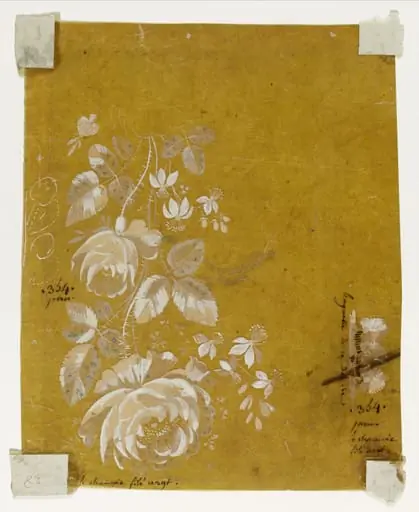 Bouquet de roses blanches pour étoffe, projets de broderies de gilet, XVIIIème siècle
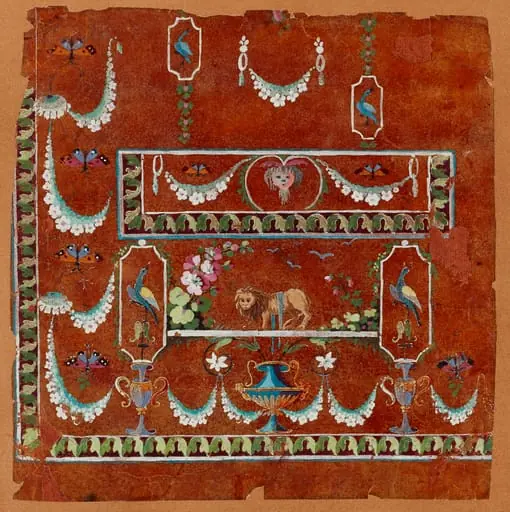 Gilet décor à grotesques, projets de broderies de gilet, XVIIIeme siècle
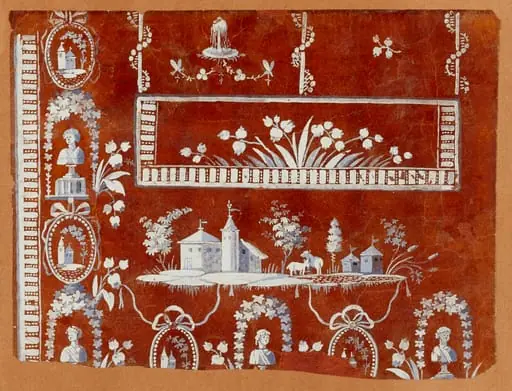 Gilet décor architectures rurales, projets de broderies de gilet, XVIIIème siècle
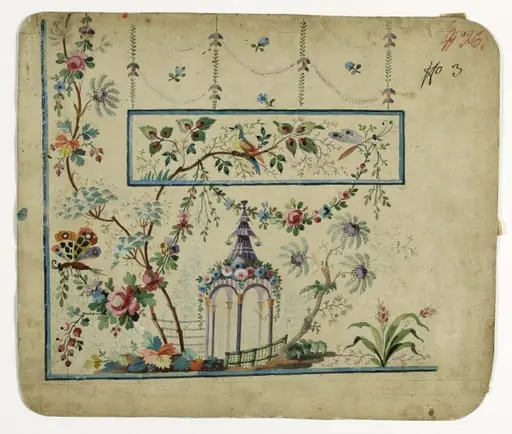 Gilet décor pagode, projets de broderies de gilet, XVIIIème siècle
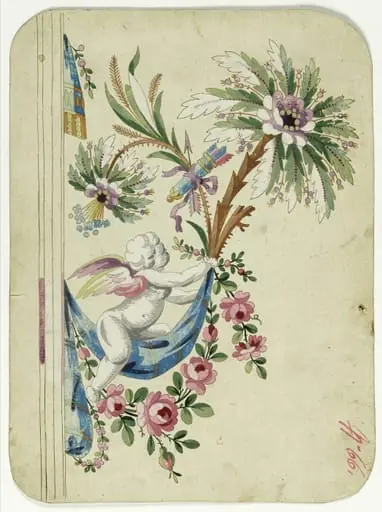 Décor de putti sur palmier, projets de broderies de gilet, XVIIIème siècle
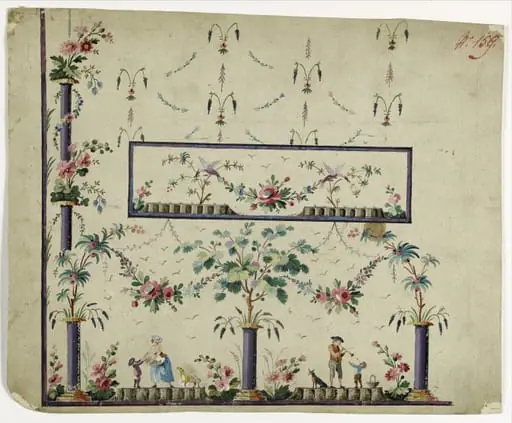 Gilet décor couple avec enfants, projets de broderies de gilet, XVIIIème siècle
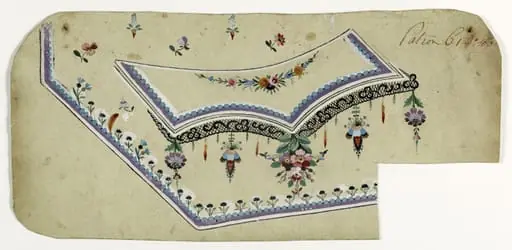 Gilet à la dentelle noire, projets de broderies de gilet, XVIIIème siècle
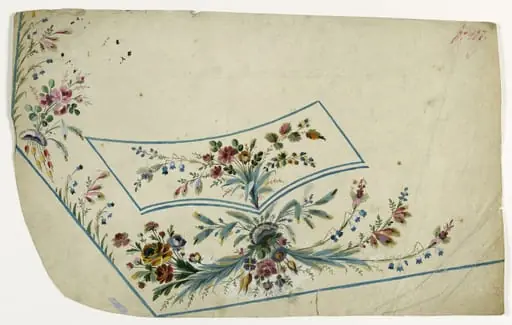 Gilet aux feuilles bleu-gris, projets de broderies de gilet, XVIIIème siècle
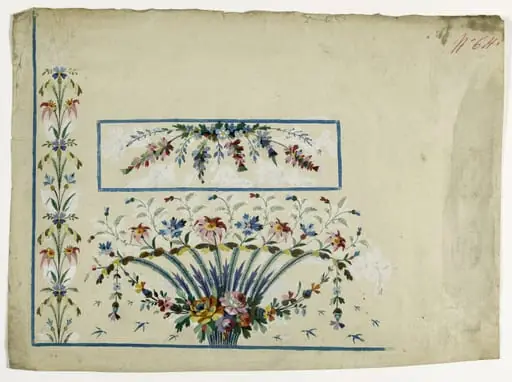 Gilet décor bouquet oeillets et églantines, projets de broderies de gilet, XVIIIème siècle
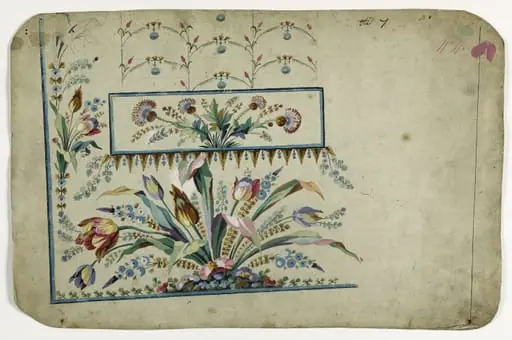 Gilet décor bouquet de tulipes, projets de broderies de gilet, XVIIIème siècle
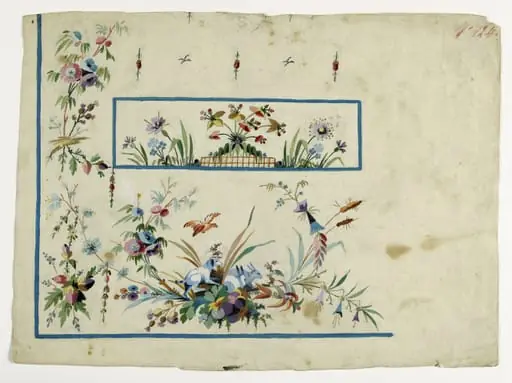 Gilet décor fleurs et fruits avec chien et lapins, projets de broderies de gilet, XVIIIème siècle
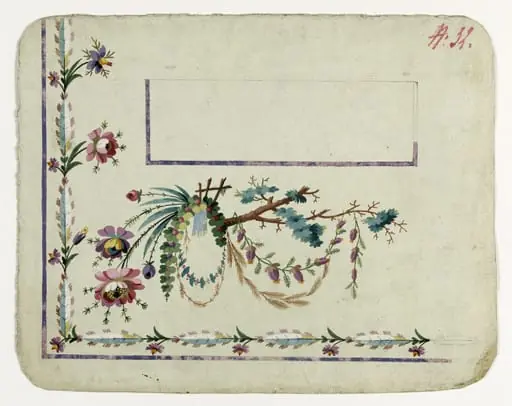 Gilet décor guirlande de branchage et de fleurs, projets de broderies de gilet, XVIIIème siècle
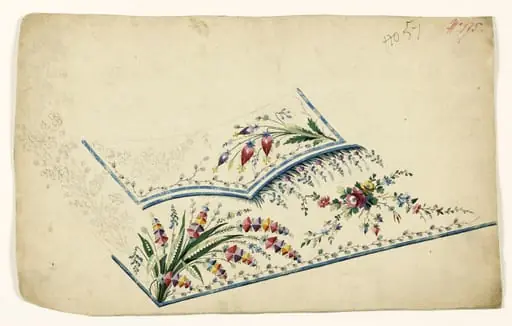 Composition en bouquets de fleurs et guirlandes de feuilles, projets de broderies de gilet, XVIIIème siècle
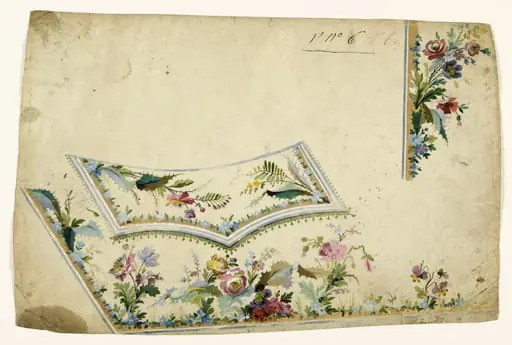 Composition florale aux bleuets, projets de broderies de gilet, XVIIIème siècle
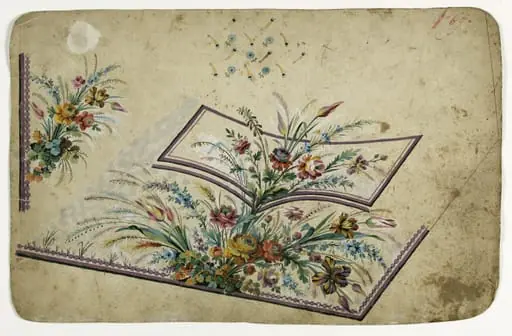 Gilet au bouquet de fleurs multicolores, projets de broderies de gilet, XVIIIème siècle
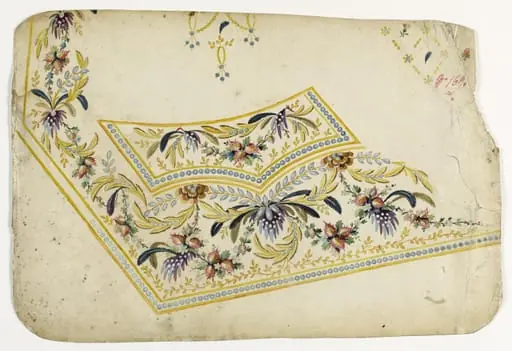 Gilet décor de plumes, fraises et perles, projets de broderies de gilet, XVIIIème siècle
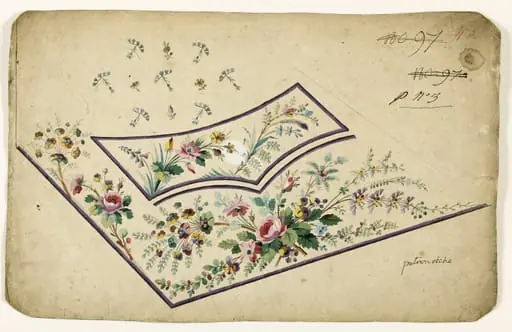 Composition florale en bouquets, projets de broderies de gilet, XVIIIème siècle
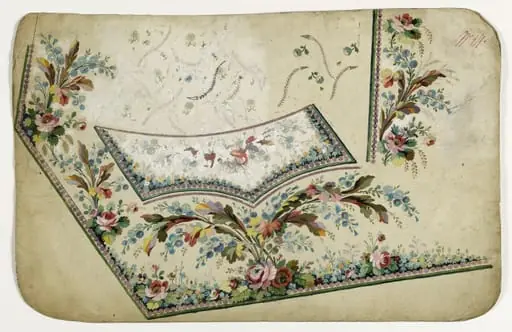 Gilet fleurs et feuilles multicolores, projets de broderies de gilet, XVIIIème siècle