Artwork
Gilet décor jeune couple assis dans les blés, projets de broderies de gilet, XVIIIème siècle
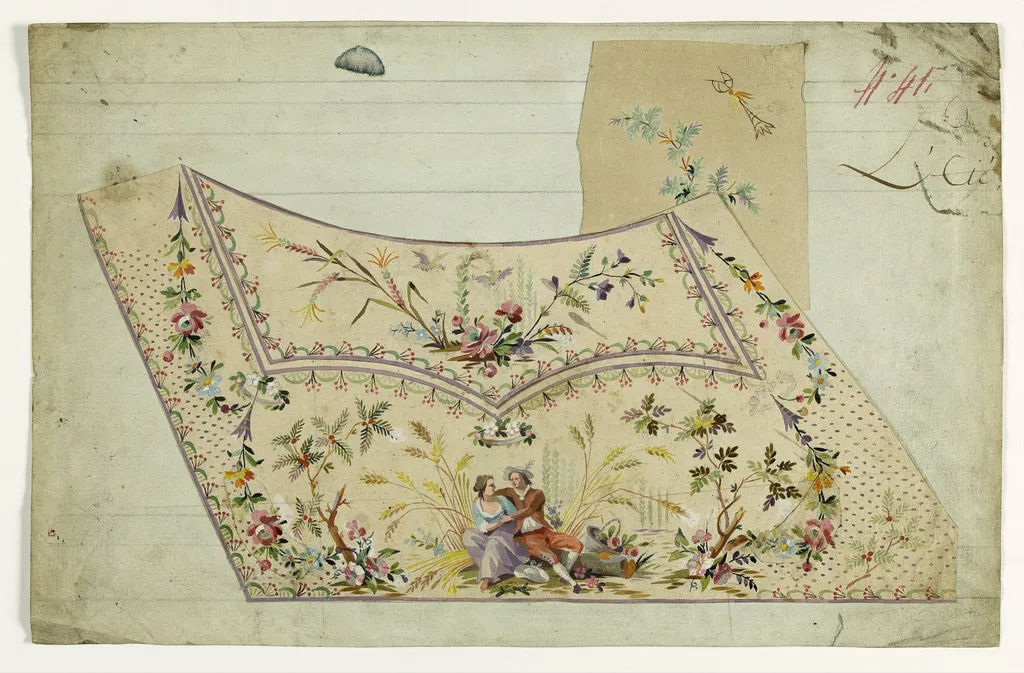
Gilet décor jeune couple assis dans les blés, projets de broderies de gilet, XVIIIème siècle is a drawing by the Romanticist artist Anonyme. It dates from 1780 and is held in the collection of the Palais Galliera - Musée de la Mode de la Ville de Paris.
About this work
Overview
This 18th-century design, attributed to an anonymous creator, dates to around 1780 and was likely intended as a pattern for embroidery on a waistcoat.
This 18th-century design, attributed to an anonymous creator, dates to around 1780 and was likely intended as a pattern for embroidery on a waistcoat. Executed in ink and watercolor, it presents a decorative panel meant to guide needlework. The composition is contained within a triangular frame, bordered by intricate floral motifs and dotted ornamentation. It resides in the collection of the Museum of Ethnography, where it serves as a record of domestic textile design practices.
Subject & Meaning
Two figures, a woman in a blue dress and a man in a brown coat, sit together on a grassy mound amid wheat fields. Their posture suggests a quiet, intimate moment, possibly symbolizing domestic harmony or rural leisure. The surrounding flora—vines, birds, and scattered blooms—enhances the pastoral tone. The scene is not narrative but emblematic, reflecting ideals of peaceful coexistence with nature common in decorative arts of the period.
Technique & Style
The design employs fine linear detail and soft washes of color to define forms, with clear outlines suited for transfer to fabric. Flowers, leaves, and birds are rendered with stylized precision, avoiding naturalism in favor of rhythmic repetition. The purple border, adorned with tiny dots and leaf tendrils, functions as a framing device. The entire composition is structured to align with the contours of a waistcoat, indicating practical intent over pure illustration.
History & Provenance
Created in the late 18th century, the drawing was likely used by a skilled needleworker or a household engaged in embroidery. Its survival suggests it was valued as a reference, perhaps passed down or preserved in a seamstress’s collection. It entered the Museum of Ethnography’s holdings as part of a broader collection of textile design materials, offering insight into non-professional artistic practices of the time.
Context
In 18th-century France and neighboring regions, embroidered waistcoats were common among the rural and urban middle classes. Patterns like this one circulated in hand-drawn form, often copied by hand or traced onto fabric. The pastoral theme aligns with broader cultural interests in nature and simplicity, even as it served a decorative function in everyday dress. Such designs reveal how artistry was integrated into domestic life.
Legacy
This drawing survives as a tangible link to the craft traditions of pre-industrial textile production. It illustrates how personal and regional aesthetics were encoded in wearable art before mass production. While the original garment may be lost, the design remains a document of skill, taste, and the quiet artistry embedded in ordinary clothing, informing modern studies of material culture and gendered labor.
Artist & collection
Artist
A French designer from the 1700s made delicate flower drawings meant to decorate vests.
Museum
Palais Galliera - Musée de la Mode de la Ville de Paris
Continue through works from the same source collection.
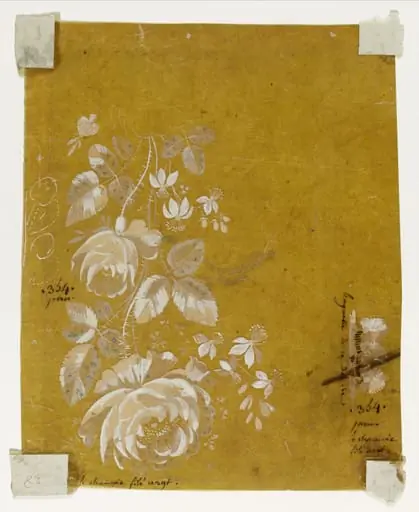 Bouquet de roses blanches pour étoffe, projets de broderies de gilet, XVIIIème siècle
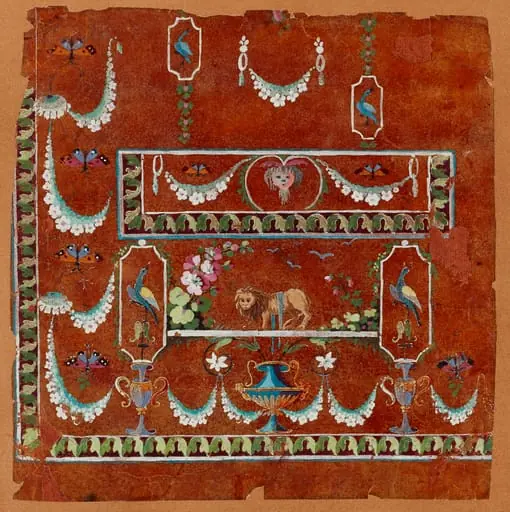 Gilet décor à grotesques, projets de broderies de gilet, XVIIIeme siècle
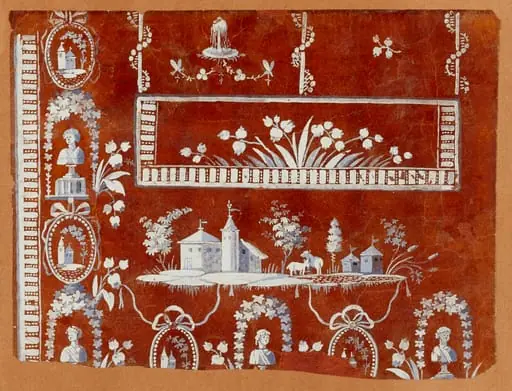 Gilet décor architectures rurales, projets de broderies de gilet, XVIIIème siècle
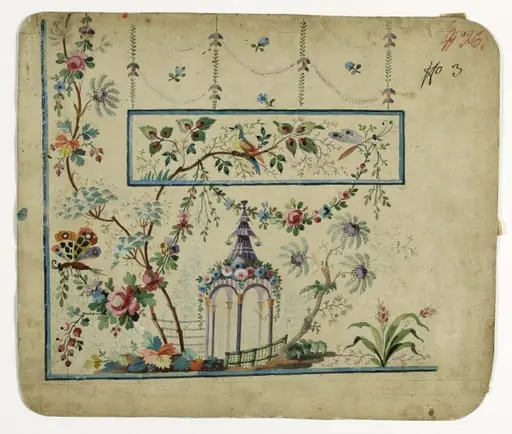 Gilet décor pagode, projets de broderies de gilet, XVIIIème siècle
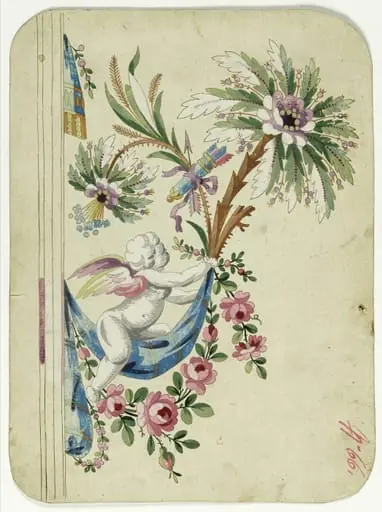 Décor de putti sur palmier, projets de broderies de gilet, XVIIIème siècle
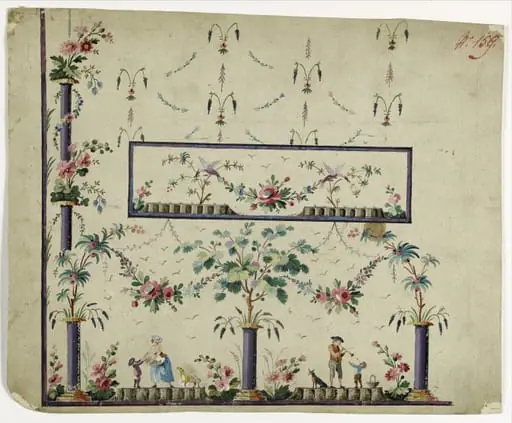 Gilet décor couple avec enfants, projets de broderies de gilet, XVIIIème siècle
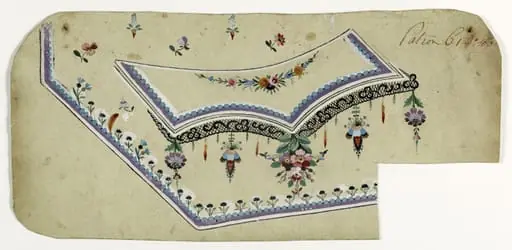 Gilet à la dentelle noire, projets de broderies de gilet, XVIIIème siècle
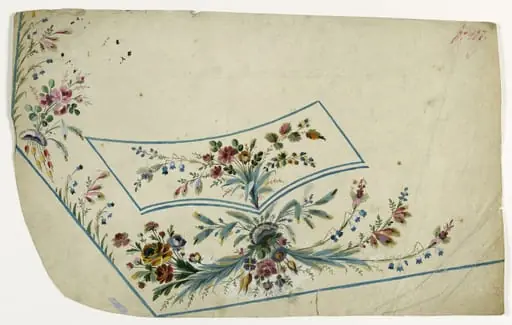 Gilet aux feuilles bleu-gris, projets de broderies de gilet, XVIIIème siècle
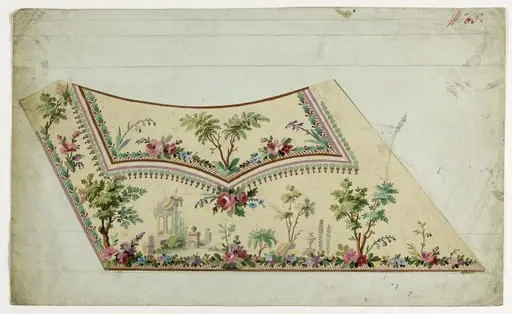 Gilet décor paysage architecture antique, projets de broderies de gilet, XVIIIème siècle
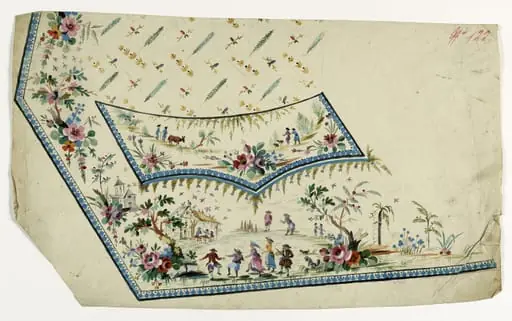 Gilet décor fête paysanne, projets de broderies de gilet, XVIIIème siècle
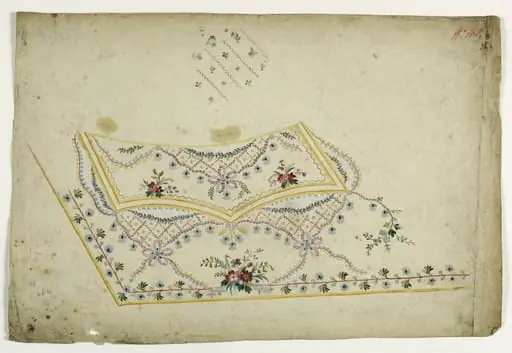 Gilet bouquets et noeuds, projets de broderies de gilet, XVIIIème siècle
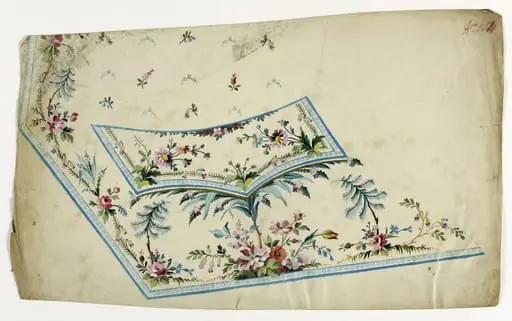 Gilet aux perles bleues, projets de broderies de gilet, XVIIIème siècle
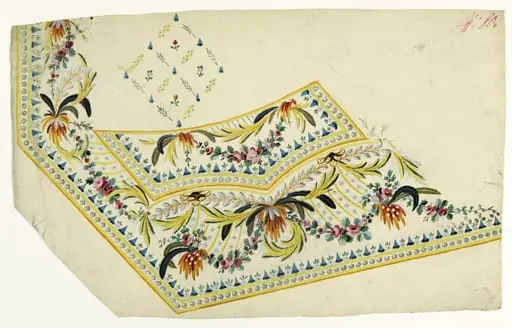 Gilet décor de perles, plumes et paillettes, projets de broderies de gilet, XVIIIème siècle
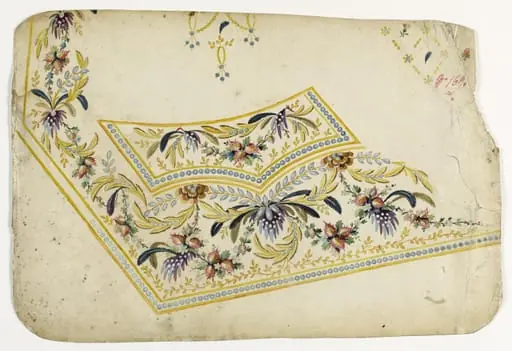 Gilet décor de plumes, fraises et perles, projets de broderies de gilet, XVIIIème siècle