Artwork
Gilet décor paysage architecture antique, projets de broderies de gilet, XVIIIème siècle
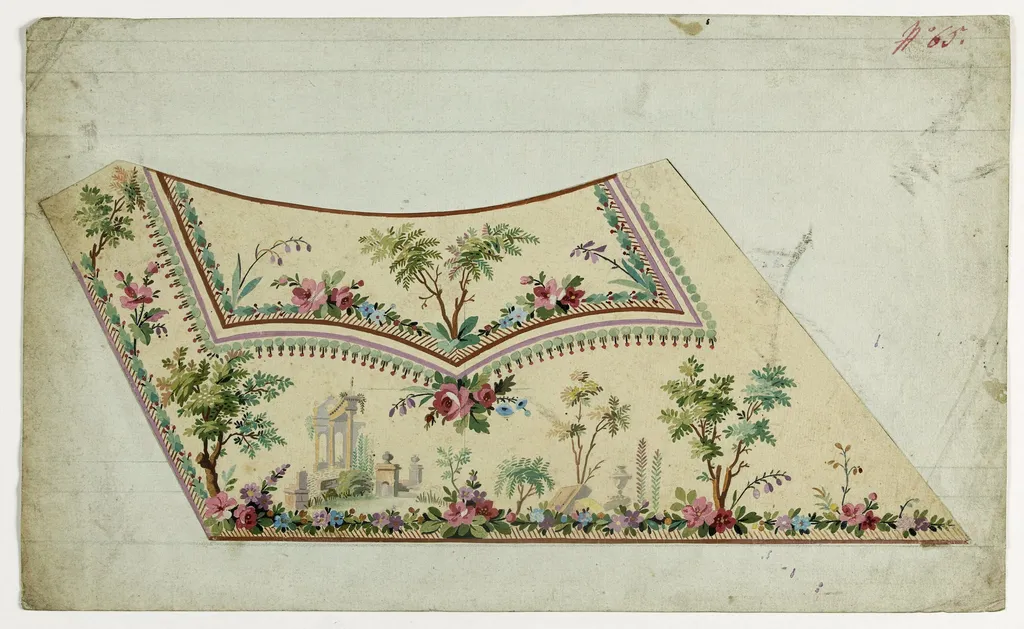
Gilet décor paysage architecture antique, projets de broderies de gilet, XVIIIème siècle is a drawing by the Romanticist artist Anonyme. It dates from 1780 and is held in the collection of the Palais Galliera - Musée de la Mode de la Ville de Paris. The drawing, attributed to an anonymous hand and dated to 1780, is a design intended for the embroidery of a men’s vest (gilet).
About this work
Overview
The drawing, attributed to an anonymous hand and dated to 1780, is a design intended for the embroidery of a men’s vest (gilet). Executed on paper, the composition is triangular with a scalloped upper edge and measures roughly the size of a garment panel. It is part of the collection of the Museum of Ethnography, where it serves as a reference for historic textile decoration.
Subject & Meaning
Within the triangular frame the artist arranged a bucolic scene: stylised trees, assorted blossoms and a diminutive temple‑like structure evoke an idealised classical landscape. The inclusion of architectural elements alongside flora reflects eighteenth‑century tastes for antiquarian motifs, suggesting the vest would convey both refinement and a cultured appreciation of ancient aesthetics.
Technique & Style
The drawing is rendered in a delicate palette of pinks, greens, yellows, with accents of red and purple, indicating the intended thread colours.
The drawing is rendered in a delicate palette of pinks, greens, yellows, with accents of red and purple, indicating the intended thread colours. Fine hatching outlines the proposed stitches, while a decorative border of miniature leaves and dots frames the scene. The overall style combines Rococo softness with neoclassical architectural references, typical of French embroidery projects of the period.
History & Provenance
Created around 1780, the design entered the Museum of Ethnography’s holdings through a 20th‑century acquisition of decorative arts material, though the exact path of ownership remains undocumented. Its anonymity is common for pattern books and workshop drawings, which were often produced for commercial use rather than signed artistic expression.
Context
In the late eighteenth century, embroidered garments were markers of status and taste among the European elite. Pattern sheets such as this one guided artisans in translating drawn motifs into stitched reality, bridging the worlds of drawing and textile craft. The triangular, scalloped format aligns with contemporary fashion for ornamental vest panels that framed the wearer’s torso.
Artist & collection
Artist
A French designer from the 1700s made delicate flower drawings meant to decorate vests.
Museum
Palais Galliera - Musée de la Mode de la Ville de Paris
Continue through works from the same source collection.
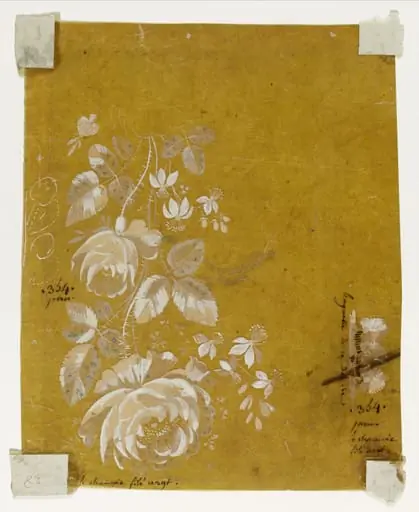 Bouquet de roses blanches pour étoffe, projets de broderies de gilet, XVIIIème siècle
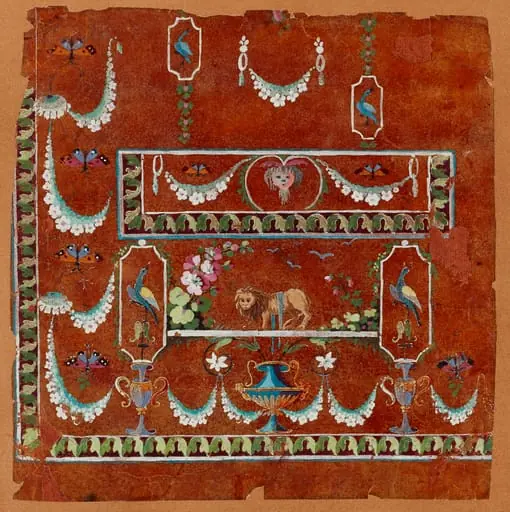 Gilet décor à grotesques, projets de broderies de gilet, XVIIIeme siècle
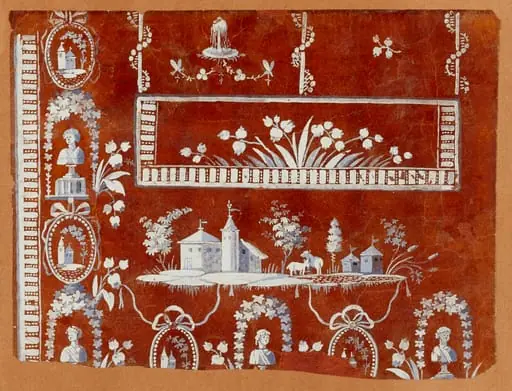 Gilet décor architectures rurales, projets de broderies de gilet, XVIIIème siècle
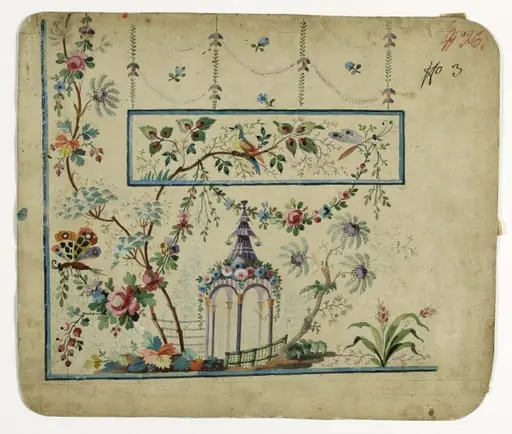 Gilet décor pagode, projets de broderies de gilet, XVIIIème siècle
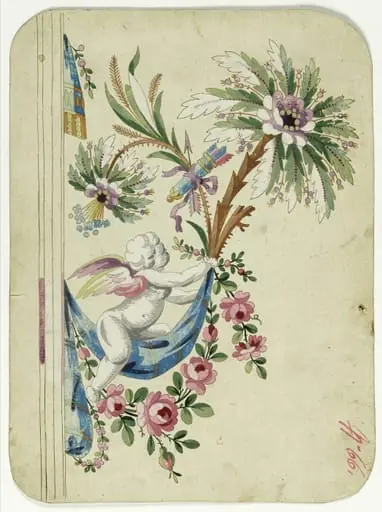 Décor de putti sur palmier, projets de broderies de gilet, XVIIIème siècle
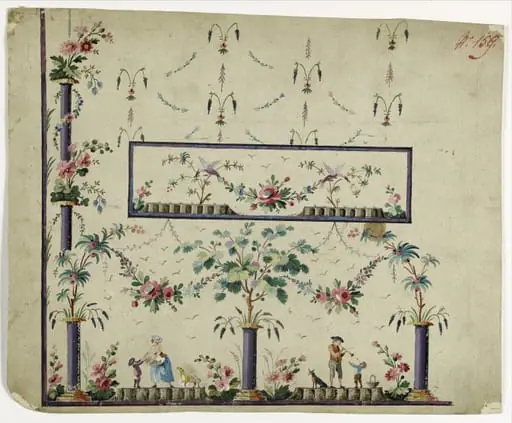 Gilet décor couple avec enfants, projets de broderies de gilet, XVIIIème siècle
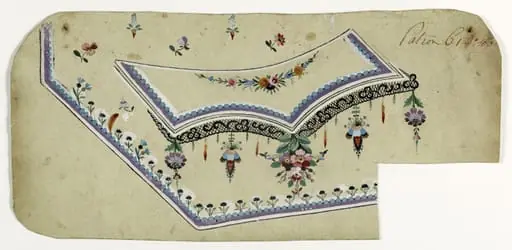 Gilet à la dentelle noire, projets de broderies de gilet, XVIIIème siècle
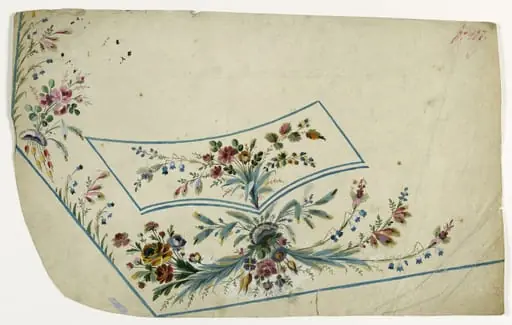 Gilet aux feuilles bleu-gris, projets de broderies de gilet, XVIIIème siècle
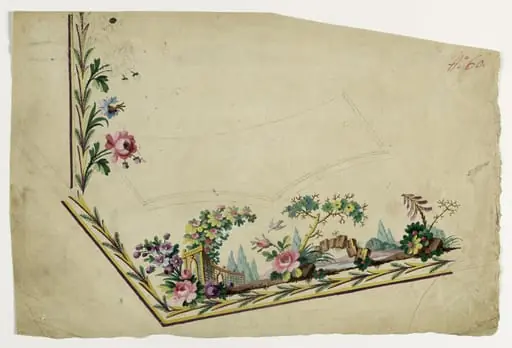 Gilet motif paysage aux rochers, projets de broderies de gilet, XVIIIème siècle
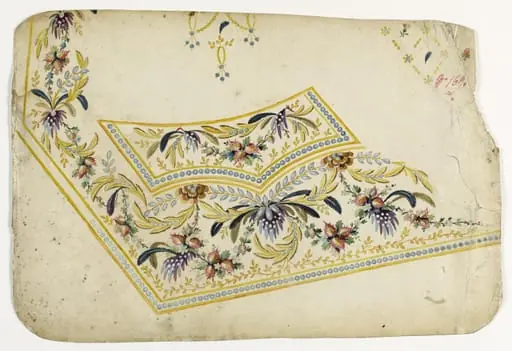 Gilet décor de plumes, fraises et perles, projets de broderies de gilet, XVIIIème siècle
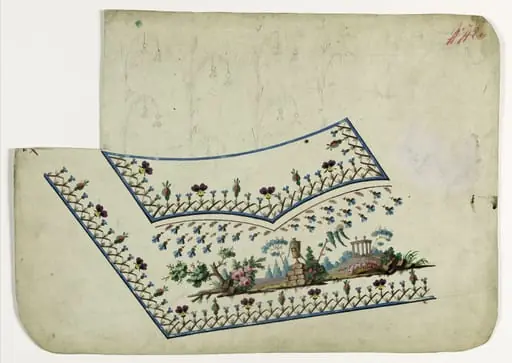 Paysage avec urne et ruine antique, projets de broderies de gilet, XVIIIème siècle
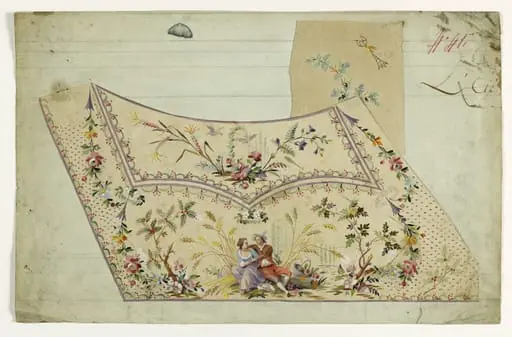 Gilet décor jeune couple assis dans les blés, projets de broderies de gilet, XVIIIème siècle
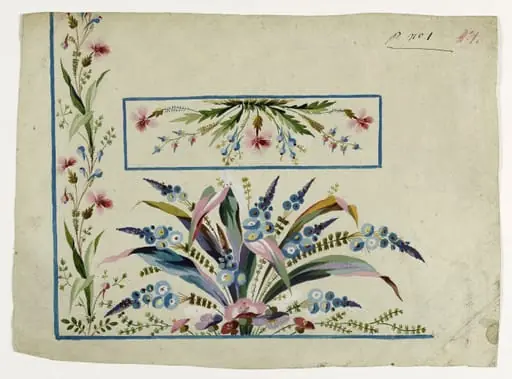 Gilet décor bouquet de bleuets et d'oeillets, projets de broderies de gilet, XVIIIème siècle
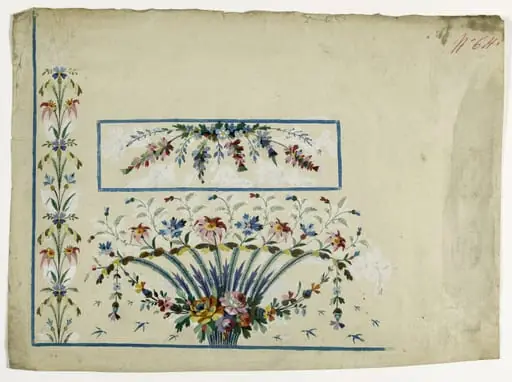 Gilet décor bouquet oeillets et églantines, projets de broderies de gilet, XVIIIème siècle
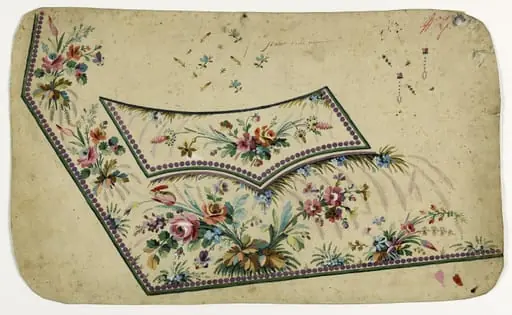 Gilet fleurs et perles mauves, projets de broderies de gilet, XVIIIème siècle
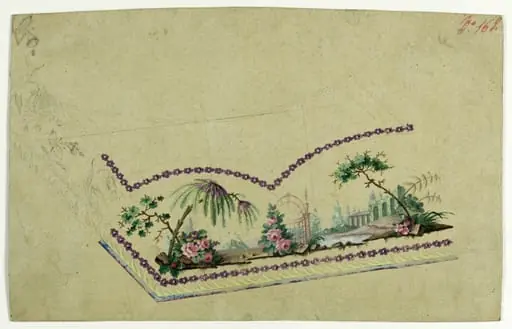 Décor paysage à bordure de violettes, projets de broderies de gilet, XVIIIème siècle
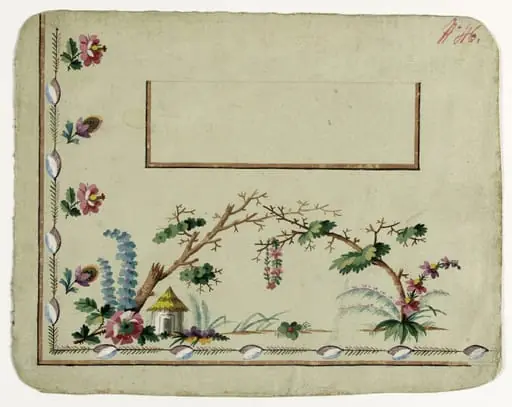 Gilet décor petite chaumière, projets de broderies de gilet, XVIIIème siècle