Artwork
Guirlandes de fleurs des bois, projets de broderies de gilet, XVIIIème siècle
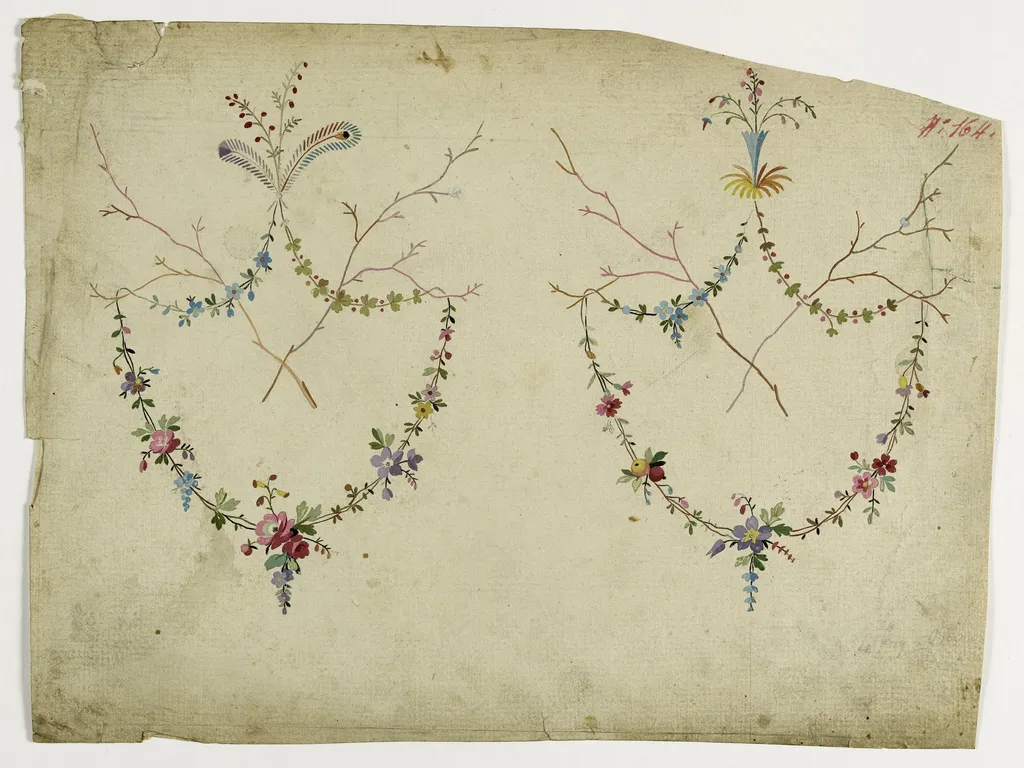
Guirlandes de fleurs des bois, projets de broderies de gilet, XVIIIème siècle is a drawing by the Romanticist artist Anonyme. It dates from 1780 and is held in the collection of the Palais Galliera - Musée de la Mode de la Ville de Paris. This anonymous 18th-century drawing, dated around 1780, presents a decorative design intended as a template for embroidery.
About this work
Overview
This anonymous 18th-century drawing, dated around 1780, presents a decorative design intended as a template for embroidery.
This anonymous 18th-century drawing, dated around 1780, presents a decorative design intended as a template for embroidery. Executed in soft pigments on aged paper, it features two interlacing branches adorned with flowers and berries. The composition forms a continuous loop, suggesting its use as a repeating motif. Its delicate lines and muted palette reflect the aesthetic priorities of textile design in late Enlightenment France.
Subject & Meaning
The drawing depicts naturalistic floral elements—wild blossoms and berries—arranged in a flowing, symmetrical garland. These motifs were not merely ornamental; they evoked ideals of pastoral harmony and the cultivated beauty of nature, common themes in aristocratic fashion. The choice of woodland flora, rather than exotic or cultivated species, aligns with a growing appreciation for simplicity and organic forms in decorative arts of the period.
Technique & Style
Rendered in pencil and watercolor, the drawing balances precision with spontaneity. Some blossoms are carefully detailed, while others are reduced to minimal dots or strokes, suggesting a working sketch rather than a finished presentation piece. The paper’s yellowed tone and subtle fading indicate age and handling, typical of patterns used repeatedly in workshops. The loose, wavy lines guide the eye in a rhythmic, unbroken motion, ideal for embroidery repetition.
History & Provenance
The drawing resides in the Museum of Ethnography, though its origins are undocumented. Likely produced in a Parisian atelier, it was part of a broader tradition of pattern books circulated among embroiderers and tailors. Such designs were copied, adapted, and transferred onto fabric, often for men’s waistcoats. Its survival suggests it was valued beyond immediate use, possibly preserved as a reference or specimen of artisanal practice.
Context
In late 18th-century France, embroidered waistcoats were essential elements of male aristocratic dress. Designers and artisans relied on pattern sheets like this one to translate floral motifs into thread. The preference for naturalistic, asymmetrical garlands reflected broader shifts in decorative arts, moving away from rigid Baroque forms toward the lighter, more organic sensibilities of the Rococo and early Neoclassical periods.
Legacy
Though created for practical use, this drawing now serves as a rare artifact of textile design processes. It offers insight into the collaborative nature of fashion production, where artists, draftsmen, and needleworkers interacted. Its preservation highlights how ephemeral craft materials—intended for consumption—can become historical documents, revealing the quiet labor behind elite aesthetics.
Artist & collection
Artist
A French designer from the 1700s made delicate flower drawings meant to decorate vests.
Museum
Palais Galliera - Musée de la Mode de la Ville de Paris
Continue through works from the same source collection.
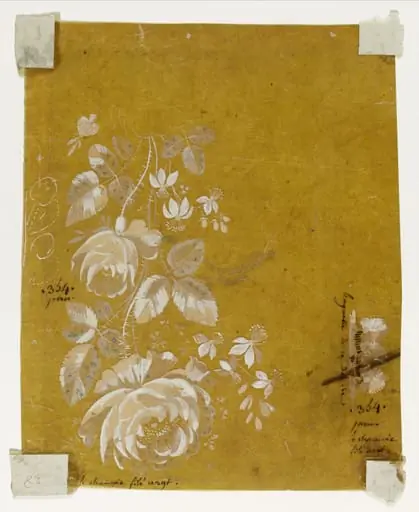 Bouquet de roses blanches pour étoffe, projets de broderies de gilet, XVIIIème siècle
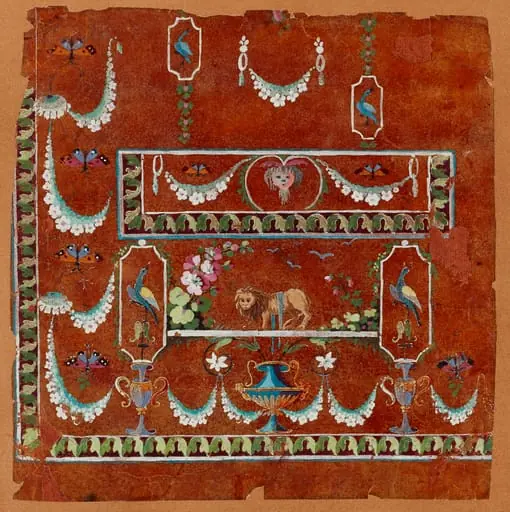 Gilet décor à grotesques, projets de broderies de gilet, XVIIIeme siècle
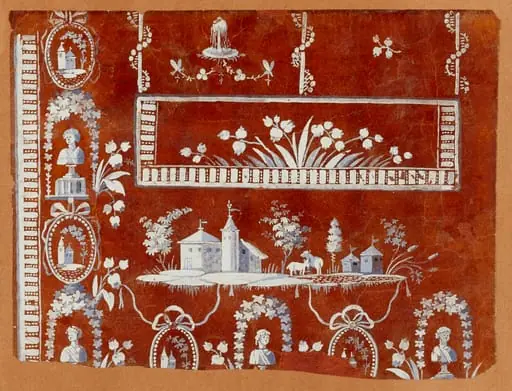 Gilet décor architectures rurales, projets de broderies de gilet, XVIIIème siècle
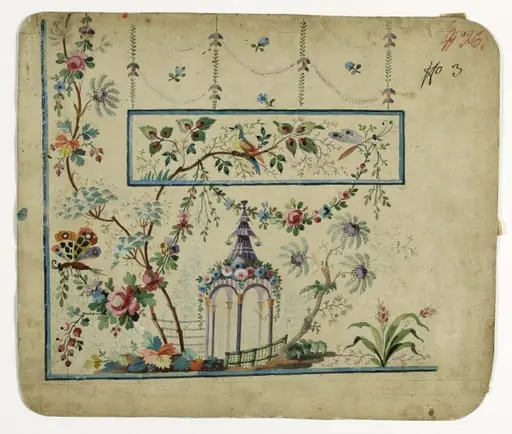 Gilet décor pagode, projets de broderies de gilet, XVIIIème siècle
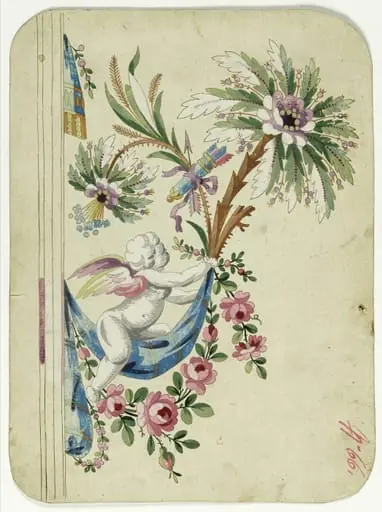 Décor de putti sur palmier, projets de broderies de gilet, XVIIIème siècle
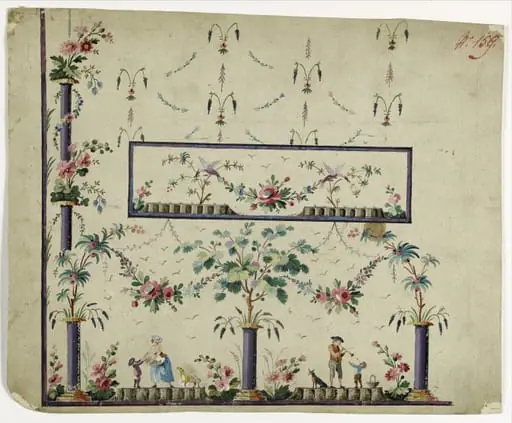 Gilet décor couple avec enfants, projets de broderies de gilet, XVIIIème siècle
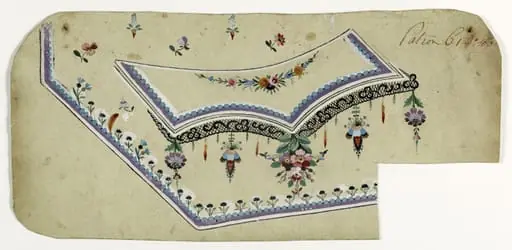 Gilet à la dentelle noire, projets de broderies de gilet, XVIIIème siècle
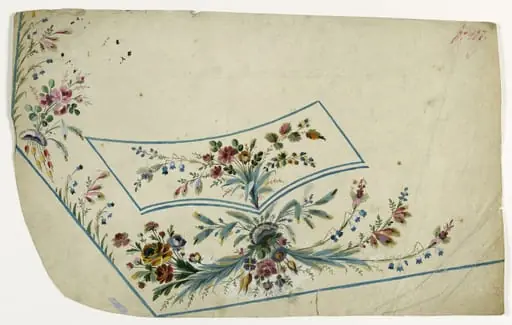 Gilet aux feuilles bleu-gris, projets de broderies de gilet, XVIIIème siècle
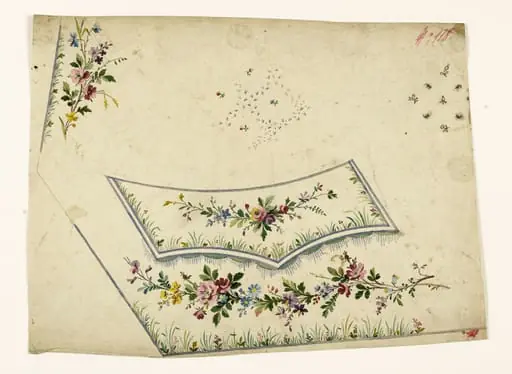 Guirlandes de fleurs et frise de franges perlées mauves, projets de broderies de gilet, XVIIIème siècle
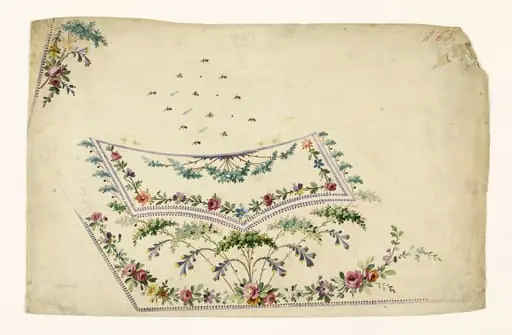 Composition avec guirlandes de fleurs et feuilles en grappes, projets de broderies de gilet, XVIIIème siècle
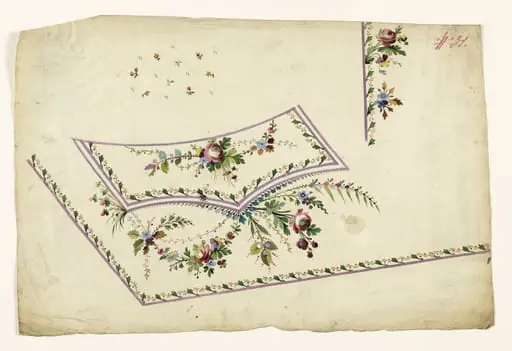 Composition de guirlandes de fleurs, frises de feuilles et de baies rouges, projets de broderies de gilet, XVIIIème siècle
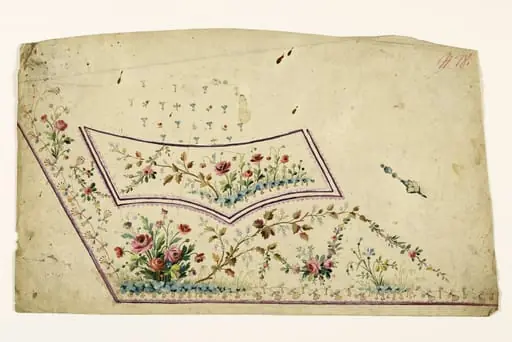 Composition avec bouquet et guirlandes de fleurs et branches de feuilles et de baies bleues, projets de broderies de gilet, XVIIIème siècle
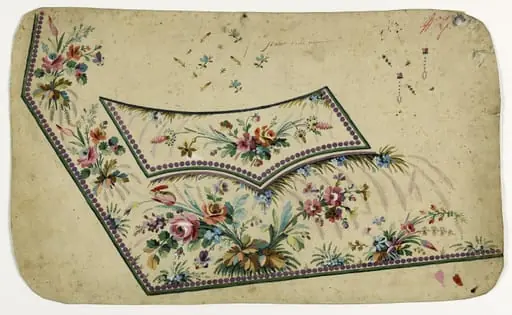 Gilet fleurs et perles mauves, projets de broderies de gilet, XVIIIème siècle
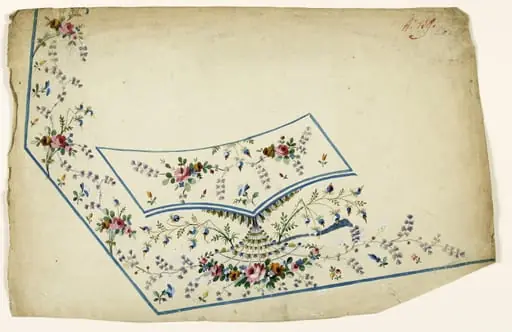 Composition à bouquet de fleurs en éventail et guirlandes de fleurs mauves, projets de broderies de gilet, XVIIIème siècle
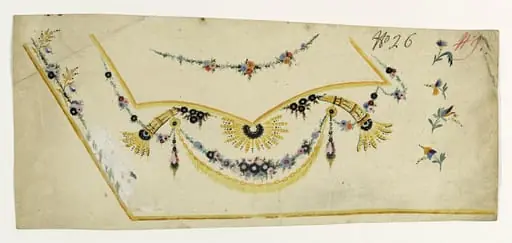 Gilet aux fleurs noires, projets de broderies de gilet, XVIIIème siècle
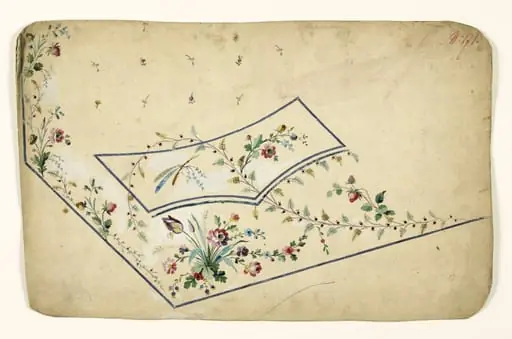 Composition avec bouquets et guirlandes de fleurs et phasme sur branche, projets de broderies de gilet, XVIIIème siècle
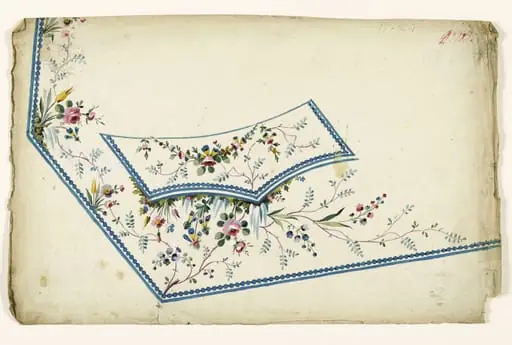 Composition de fleurs en branches et en bouquets, projets de broderies de gilet, XVIIIème siècle