Artwork
Gunpowder Plot
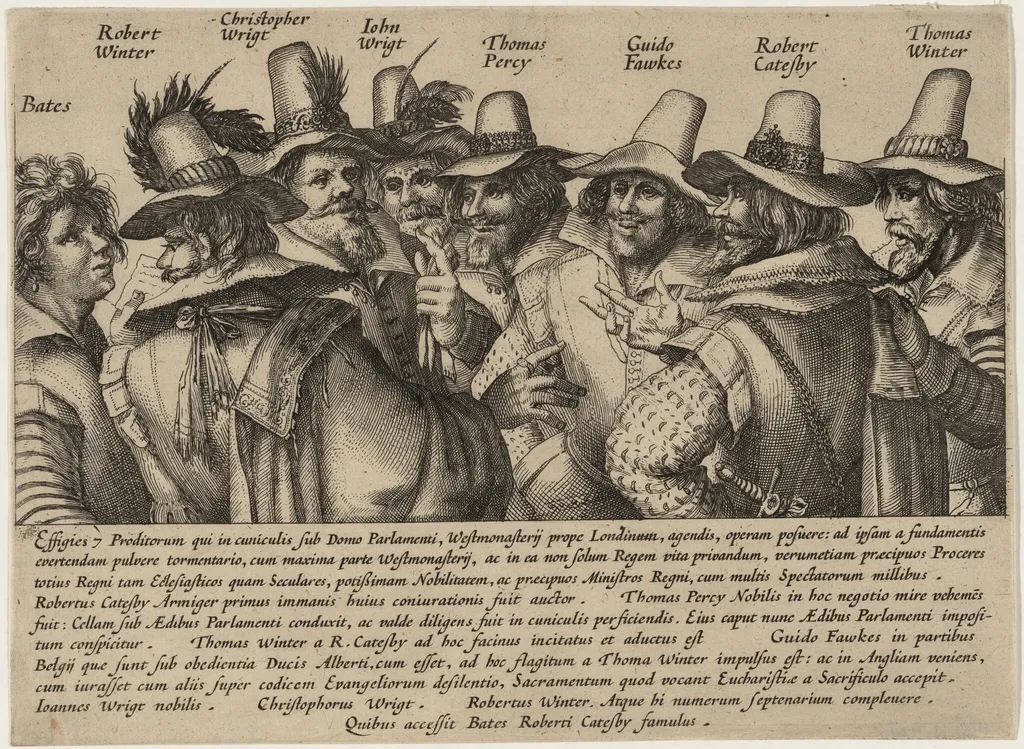
Gunpowder Plot is an ink print by the Baroque artist Unknown. It dates from 1605 and is held in the collection of the National Gallery of Art.
About this work
Overview
The figures are tightly grouped, their expressions somber, with one holding a barrel marked 'gunpowder.
This engraving depicts the seven principal conspirators of the 1605 Gunpowder Plot, rendered in fine linear detail characteristic of early 17th-century printmaking. The figures are tightly grouped, their expressions somber, with one holding a barrel marked 'gunpowder.' Latin inscriptions above each man identify them and their roles, while a descriptive caption at the base contextualizes the scene as a record of treasonous intent.
Subject & Meaning
The image captures the conspirators moments before their planned explosion of the English Parliament. Their close proximity and solemn demeanor convey collective resolve, while the barrel of gunpowder serves as the central symbol of their plot. The Latin labels transform the scene into a formal indictment, presenting the men not as rebels but as documented traitors, reinforcing the state’s narrative of the event.
Technique & Style
Executed in the precise, linear style typical of copperplate engraving, the image relies on fine cross-hatching and controlled ink lines to define fabric, facial features, and spatial depth. The lack of shading or color emphasizes clarity and legibility, suited to its function as a propagandistic record. Clothing details are rendered with meticulous attention, enhancing the sense of historical authenticity.
History & Provenance
Created shortly after the plot’s failure in 1605, the engraving was likely commissioned by authorities to publicize the conspiracy and reinforce loyalty to the Crown. It circulated widely as a warning against sedition, appearing in pamphlets and official reports. Its survival in multiple institutional collections suggests its enduring role in early modern political messaging.
Context
The engraving emerged during a period of intense religious and political tension in England, following decades of Catholic persecution and fears of foreign-backed insurrection. By visually naming and shaming the conspirators, the print served to unify Protestant identity and legitimize state repression. It reflects how print media became a tool for shaping public perception of political crime.
Legacy
As one of the earliest visual records of the Gunpowder Plot, the engraving established a lasting iconography of the conspirators. Its formal composition and Latin inscriptions influenced later depictions in textbooks and commemorative art. Though no longer widely known to the public, it remains a key artifact in understanding how early modern states used imagery to control historical memory.
Artist & collection

 Domestic Scene
 Giacomo and Cardinal Marco, investing Andrea, Abbot of San Zeno, with his Benefice
 The Nymph of Fontainebleau
 Portrait of a Woman
 Madonna and Child with Saints in the Enclosed Garden
 Venus and Minerva
 Family Group of Four on Sofa
 Wall painting from Room H of the Villa of P. Fannius Synistor at Boscoreale
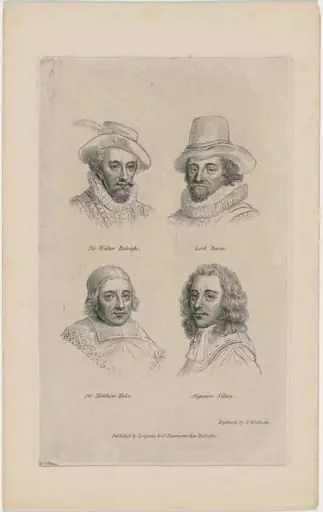 Portraits of Sir Walter Raleigh, Lord Bacon, Algernon Sidney, and Sir Matthew Hale
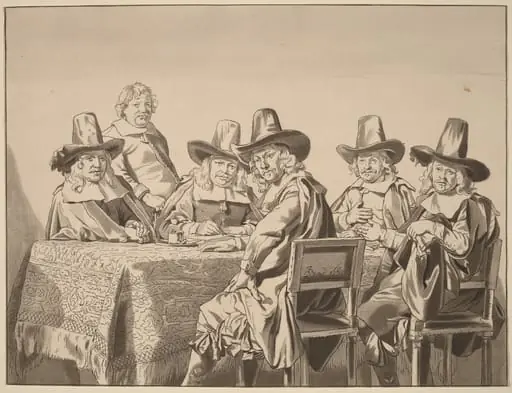 Directors of the Orphan Asylum of Haarlem
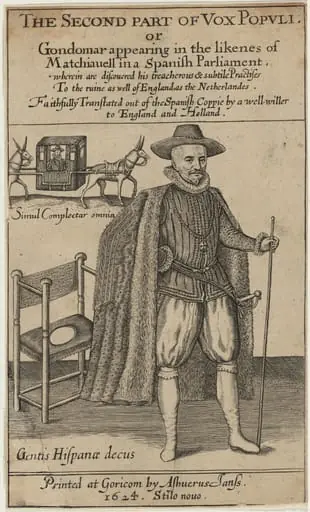 Title Page for Vox Populi Eoricum, by Thomas Scott
 Entry into Ferrara
 Standing Cavalier and Beggar Boy
![King and Queen in Consultation about the Turks [recto], by Jacques Callot](https://artifactworldgallery.com/img/jacques-callot--king-and-queen-in-consultation-about-the-turks-recto--5b03792b86815455-w320.webp) King and Queen in Consultation about the Turks [recto]
King and Queen in Consultation about the Turks [recto] King and Queen in Consultation about the Turks
 Prince Maurits accompanied by his two brothers, Frederick V, Elector of the Palatinate, and some counts of Nassau on horseback