Artwork
Illustration for Edward Benlowes, Theophila
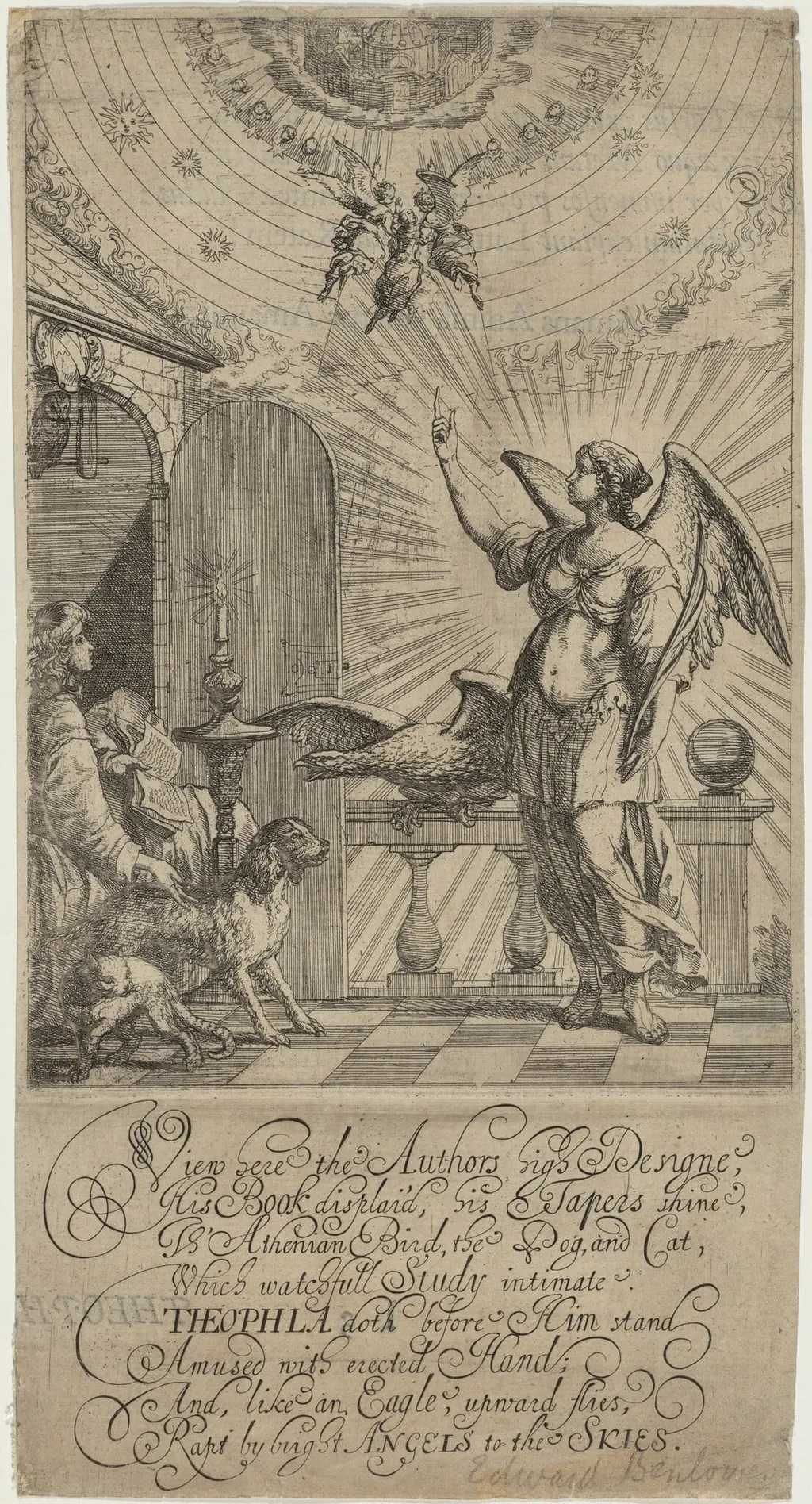
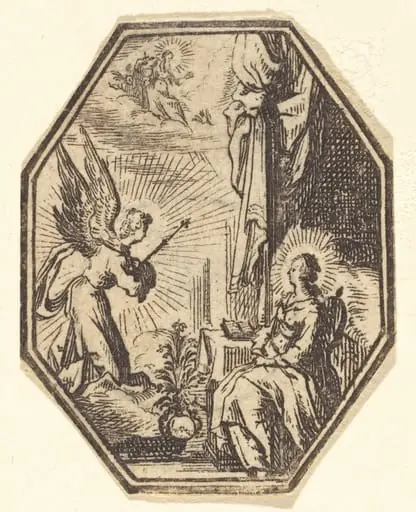
Illustration for Edward Benlowes, Theophila is an ink print by the Baroque artist Unknown. It dates from 1652 and is held in the collection of the National Gallery of Art. This engraving was created as an illustration for Edward Benlowes' poetic work Theophila.
About this work
Overview
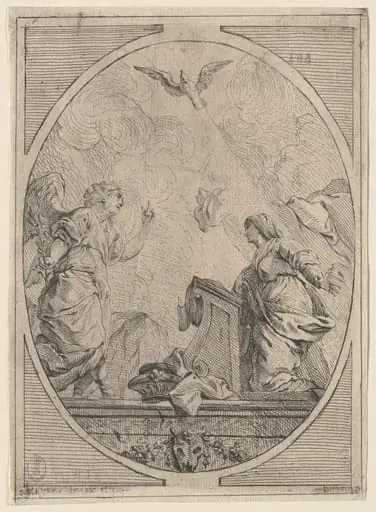
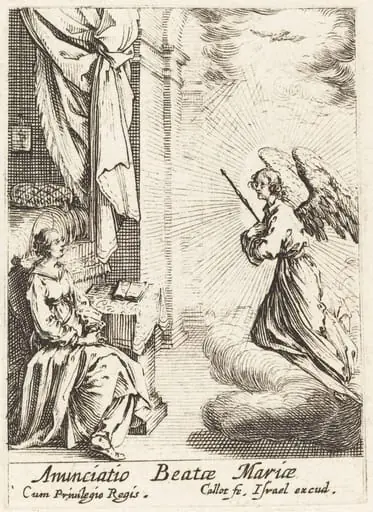
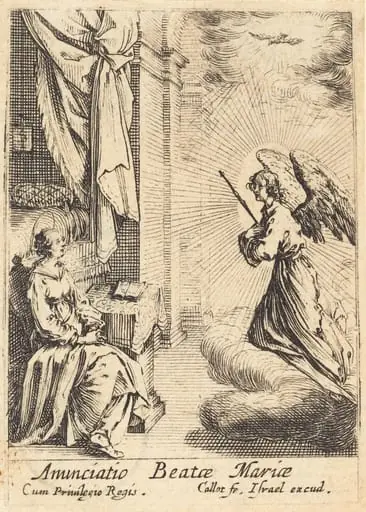
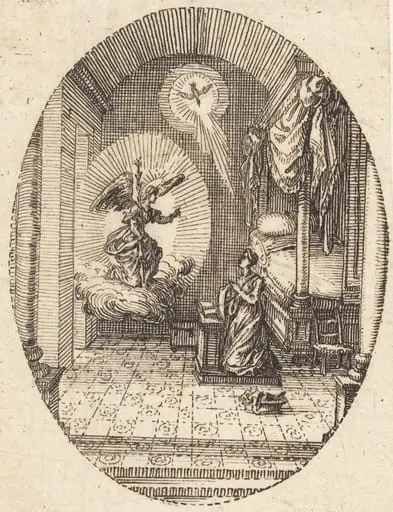
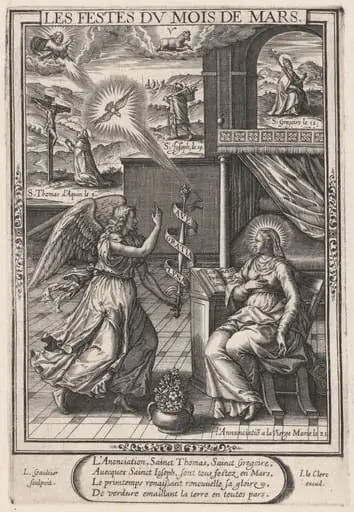
This engraving was created as an illustration for Edward Benlowes' poetic work Theophila. It depicts a celestial figure holding a scroll and gesturing skyward, while a woman kneels in reverence below, accompanied by a dog, a cat, and a perched bird. The architectural backdrop and radiant light suggest a sacred or transcendent setting, aligning with the spiritual tone of the accompanying verse.
Subject & Meaning
The scene likely represents divine inspiration, with the angel symbolizing a celestial messenger guiding the woman’s contemplation of Benlowes’ poetry. The animals may signify loyalty or quiet companionship, reinforcing themes of devotion. The upward gesture and light rays imply spiritual awakening, while the woman’s posture conveys humility before a higher intellectual or divine force.
Technique & Style
The image is rendered in fine-line engraving, a method requiring precise incisions on a metal plate to create intricate detail. Delicate hatching defines textures in fabric and stone, while the contrast between light and shadow enhances the ethereal quality of the scene. Decorative motifs in the background reflect Baroque influences, emphasizing ornamentation and spatial depth.
History & Provenance
The engraving was produced to accompany Benlowes’ 1652 publication Theophila, a devotional poem blending personal piety with literary ambition. As a printed illustration, it was likely one of many copies distributed with the text. Its survival offers insight into early modern publishing practices, where visual art supported literary works for educated audiences.
Context
In mid-17th-century England, illustrated poetry was uncommon but not unheard of, particularly among those with religious or scholarly interests.
In mid-17th-century England, illustrated poetry was uncommon but not unheard of, particularly among those with religious or scholarly interests. Benlowes, a minor poet and patron, sought to elevate his work through visual symbolism. The engraving’s celestial imagery aligns with contemporary trends in devotional art, where divine intervention was often depicted as a guiding presence in intellectual pursuits.
Legacy
Though not widely reproduced or studied today, the engraving remains a rare example of how early modern poetry was visually interpreted. It reflects the intersection of literary culture and print technology, offering a window into how spiritual themes were made tangible for readers. Its preservation aids scholarly understanding of the material culture of 17th-century English verse.
Artist & collection

 Domestic Scene
 Giacomo and Cardinal Marco, investing Andrea, Abbot of San Zeno, with his Benefice
 The Nymph of Fontainebleau
 Portrait of a Woman
 Madonna and Child with Saints in the Enclosed Garden
 Venus and Minerva
 Family Group of Four on Sofa
 Wall painting from Room H of the Villa of P. Fannius Synistor at Boscoreale