Artwork
Exempel und Lehr Jetziger Welt Lauf
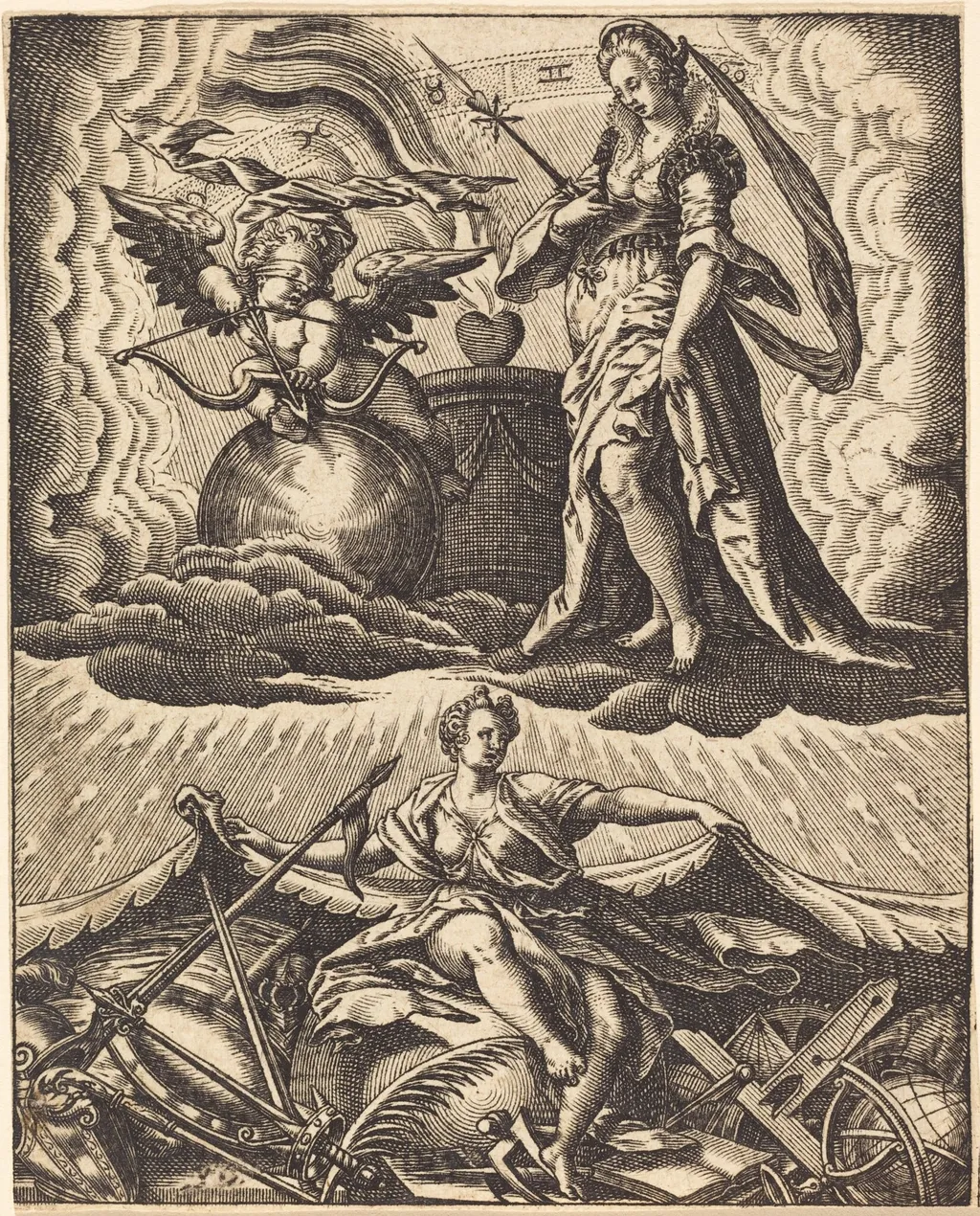
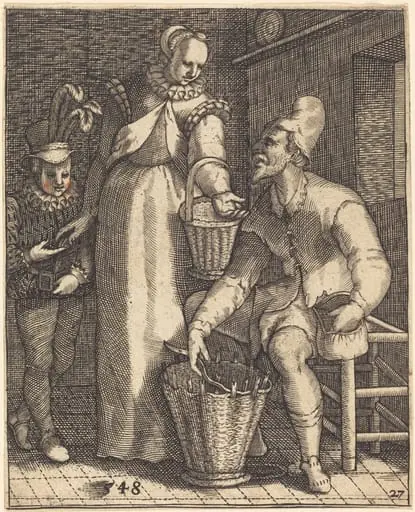
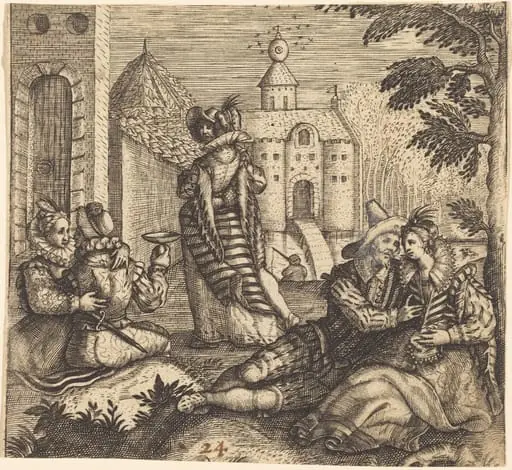
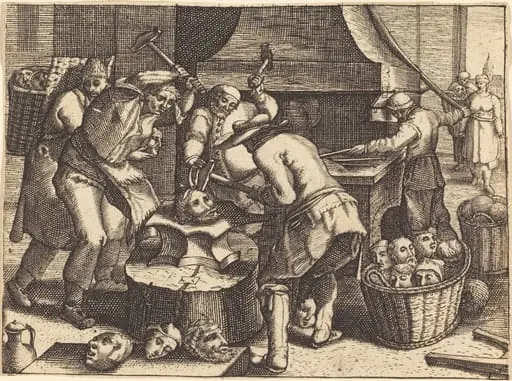
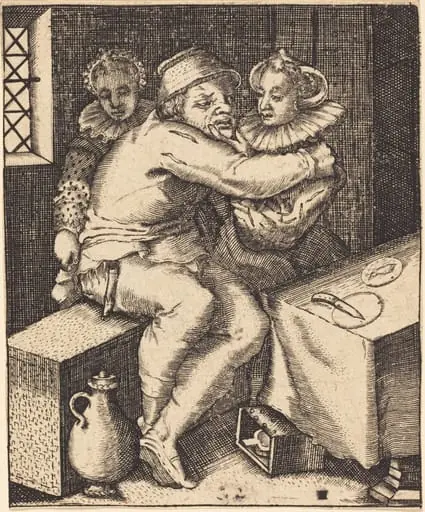
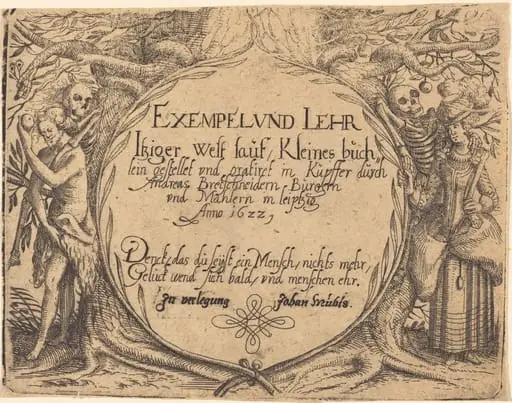
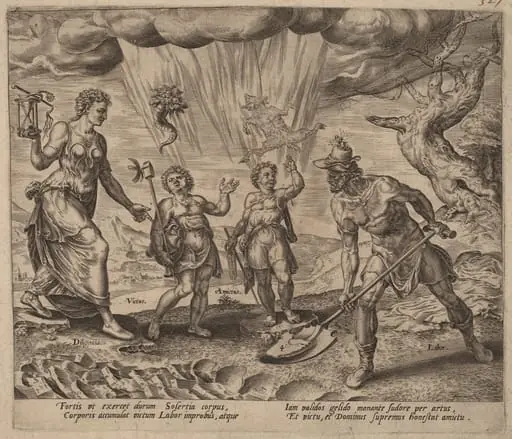
Exempel und Lehr Jetziger Welt Lauf is an ink print by the Baroque artist Andreas Bretschneider III. It dates from 1622 and is held in the collection of the National Gallery of Art.
About this work
Overview
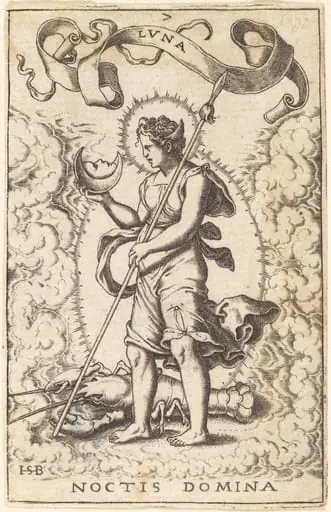
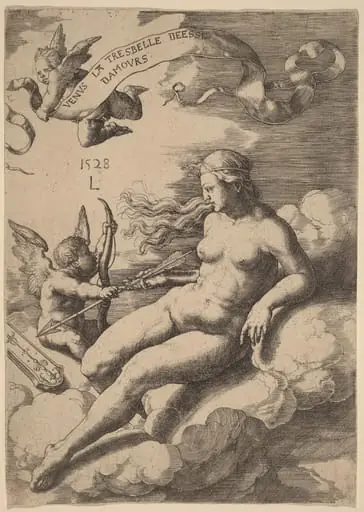
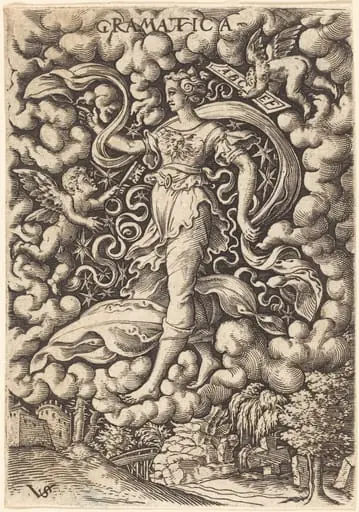
Rendered in fine linear detail, it presents an allegorical scene featuring two female figures and a winged child, set against a sky of soft, rounded clouds.
Created in 1622 by Andreas Bretschneider III, this etching belongs to a tradition of moralizing prints popular in early 17th-century Germany. Rendered in fine linear detail, it presents an allegorical scene featuring two female figures and a winged child, set against a sky of soft, rounded clouds. The work was produced as a printed image, intended for wider dissemination rather than private contemplation.
Subject & Meaning
The composition personifies abstract concepts through its figures: one woman holds a flag, suggesting loyalty or cause; another wields a sword, implying justice or conflict. Above them, a cherub with bow and arrow evokes divine intervention or fate. Positioned on clouds, they occupy a liminal space between earth and heavens, reinforcing the theme of moral guidance in worldly affairs. The scene functions as a visual sermon on virtue and consequence.
Technique & Style
Executed as an etching, the image relies on incised lines and controlled ink tones to define form and texture. The clouds are rendered with delicate, rounded contours, contrasting with the sharp outlines of the figures and their attributes. The style reflects Northern European printmaking traditions of the period, emphasizing clarity and symbolic precision over dramatic chiaroscuro, though it anticipates Baroque sensibilities in its theatrical arrangement.
History & Provenance
The print was produced in 1622 during a period of religious and political upheaval in the Holy Roman Empire. It entered the collection of the National Gallery of Art in Washington, D.C., through established acquisition channels, likely as part of a broader effort to document early modern moral imagery. Its survival in good condition reflects its value as a document of contemporary thought rather than artistic novelty.
Context
This work emerged amid a surge in allegorical prints designed to instruct the public on ethical conduct during the Thirty Years' War. Such images often blended religious symbolism with civic ideals, serving as visual guides for a literate but not necessarily elite audience. Similar motifs appear in contemporary broadsheets and emblem books, where figures embodied virtues, vices, or divine forces.
Legacy
Though not widely known today, the print contributes to understanding how moral instruction was visualized in Protestant regions of Central Europe. Its preservation in a major institution underscores its role as a historical artifact of didactic art. It remains a reference point for scholars studying the intersection of print culture, theology, and public morality in the early Baroque era.
Artist & collection