Artwork
Jacob's Dream
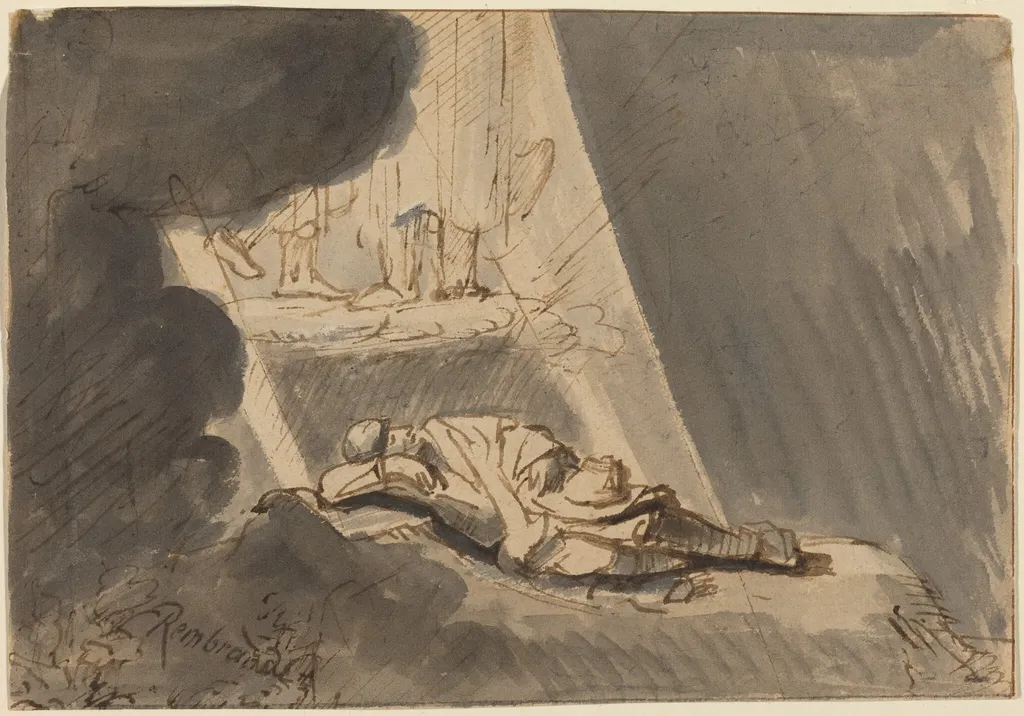
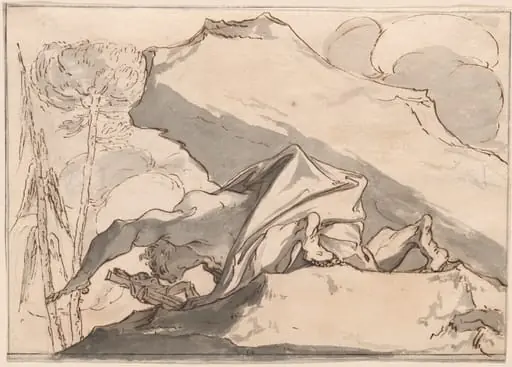
Jacob's Dream is an ink drawing by the Baroque artist Unknown. It dates from 1638 and is held in the collection of the National Gallery of Art. This drawing, executed in pen and brown ink with gray wash on laid paper, depicts the biblical scene of Jacob’s Dream.
About this work
Overview
This drawing, executed in pen and brown ink with gray wash on laid paper, depicts the biblical scene of Jacob’s Dream. Created as a standalone work on paper, it belongs to the tradition of early modern draftsmanship, where religious narratives were rendered with precision and atmospheric depth. The medium allows for subtle tonal gradations, enhancing the ethereal quality of the vision.
Subject & Meaning
The image illustrates Genesis 28:12, in which Jacob sees a ladder reaching from earth to heaven, with angels ascending and descending. The scene captures a moment of divine revelation, emphasizing spiritual connection and divine promise. Jacob, shown reclining below, is framed by the celestial structure, reinforcing the theme of human vulnerability and divine presence.
Technique & Style
The artist employed fine pen lines to define forms, complemented by diluted gray washes to suggest shadow and spatial depth. The use of laid paper, with its visible chain lines, adds texture and authenticity to the work. The composition is tightly focused, with minimal background detail, directing attention to the ladder and figures, reflecting a deliberate, contemplative approach to narrative.
History & Provenance
The drawing’s early ownership is undocumented, but its style and materials align with early 17th-century Northern European draftsmanship. It likely originated in a private collection before entering institutional hands. No definitive attribution to a known artist has been established, though its execution suggests training in a workshop familiar with biblical illustration.
Context
During the early 1600s, religious subjects remained central to artistic production, even in non-commissioned drawings. Artists often explored biblical episodes as studies in emotion and divine order. This work reflects a broader trend of intimate, personal interpretations of scripture, made for private devotion or artistic practice rather than public display.
Legacy
Though not widely reproduced or celebrated in its time, the drawing contributes to the understanding of how biblical themes were visually processed in private artistic circles. Its restrained technique and focused composition offer insight into the quiet, reflective side of early modern religious art, distinct from grand altarpieces or public monuments.
Artist & collection

 Domestic Scene
 Giacomo and Cardinal Marco, investing Andrea, Abbot of San Zeno, with his Benefice
 The Nymph of Fontainebleau
 Portrait of a Woman
 Madonna and Child with Saints in the Enclosed Garden
 Venus and Minerva
 Family Group of Four on Sofa
 Wall painting from Room H of the Villa of P. Fannius Synistor at Boscoreale
 Don Quixote Defeated by the Windmill
 Embracing Lovers in Classical Dress
 Diogenese visited by Alexander the Great
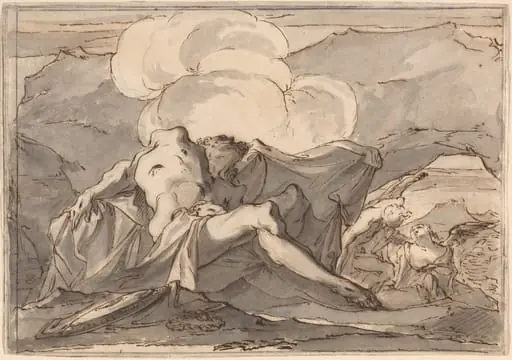 The Dead Christ with Angels
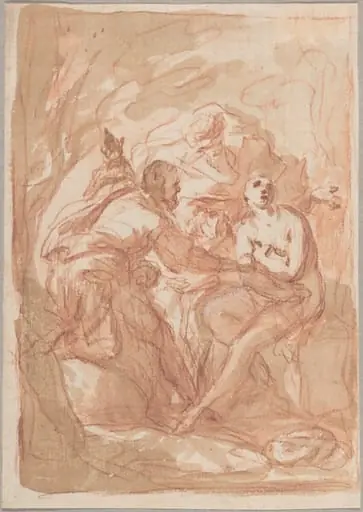 Susanna and the Elders
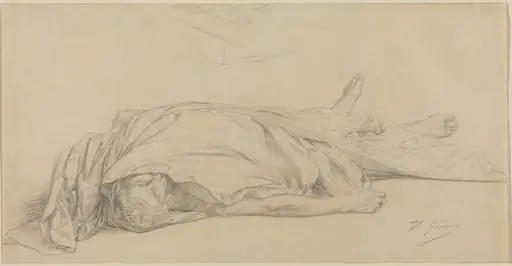 The Dead Caesar
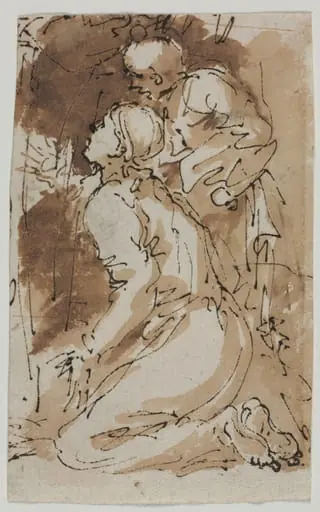 Figure Studies
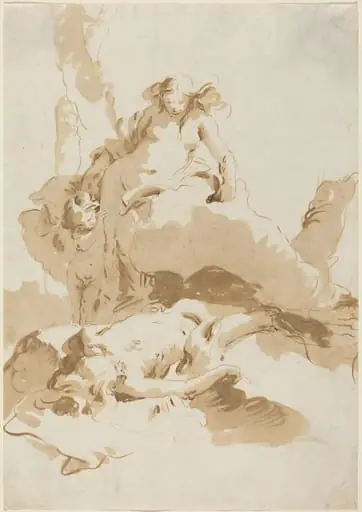 Venus and Cupid Discovering the Body of Adonis
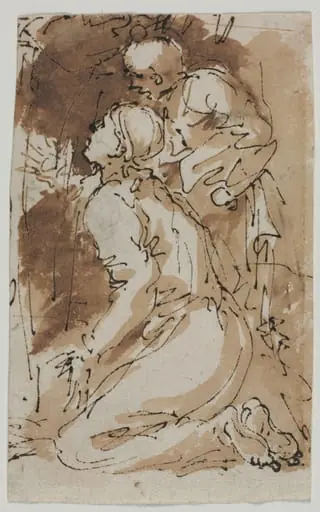 Figure Studies (recto)
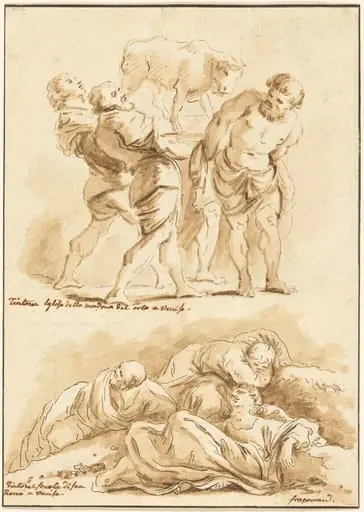 Worship of the Golden Calf and Christ on the Mount of Olives
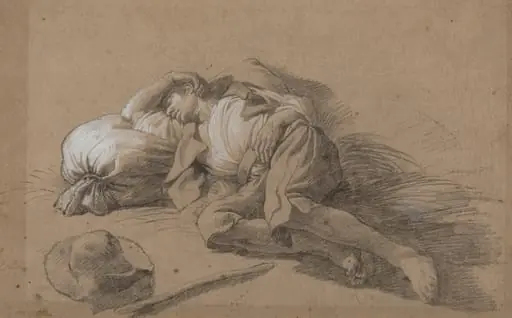 Sleeping Peasant
 A Desert Hermit Adoring the Crucifix