Artwork
The Dead Caesar
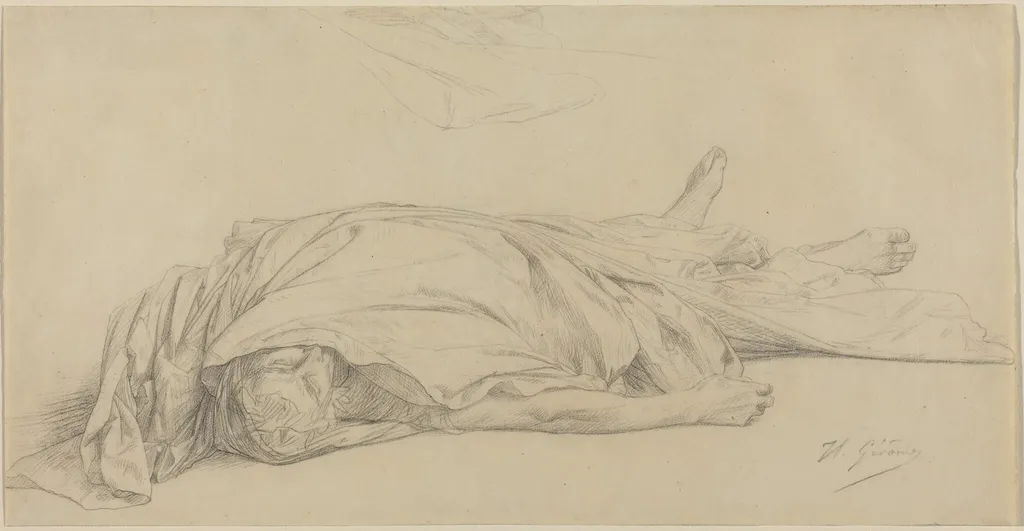
The Dead Caesar is a graphite drawing by the Impressionist artist Jean-Léon Gérôme. It dates from 1859 and is held in the collection of the National Gallery of Art.
About this work
Next, check out Realism to see how this style changed how artists depicted everyday life.
This sketch shows a body lying on its back, wrapped in a draped cloth. The head is slightly turned, and one arm rests outside the cloth. The lines are loose and quick, like a rough draft.
The artist focused on the shape of the fabric and the stillness of the pose. This was drawn around 1859, when artists were exploring realism.
Next, check out Realism to see how this style changed how artists depicted everyday life.
Overview
The Dead Caesar is a drawing by Jean-Léon Gérôme, created around 1859. It is executed in graphite on wove paper.
Subject & Meaning
The drawing depicts a lifeless body wrapped in a cloth, with the head turned to one side and an arm exposed. The pose conveys stillness and the fabric's folds are a primary focus.
Technique & Style
Loose, rapid lines characterize the sketch, suggesting a preliminary study. The emphasis on fabric's shape and the figure's repose reflects the artist's attention to form and quietude.
Context
Created during a period when realism was emerging, the work aligns with the movement's focus on everyday subjects and unidealized representation.
Artist & collection



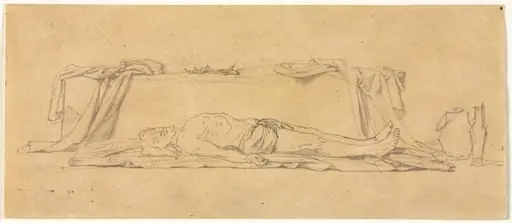 Sketch of the Dead Christ Lying by the Sepulchre
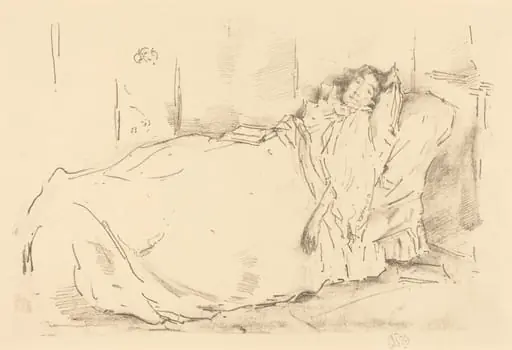 The Siesta
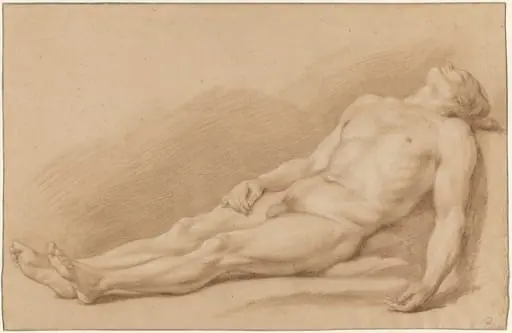 An Academy Study of a Reclining Male Nude
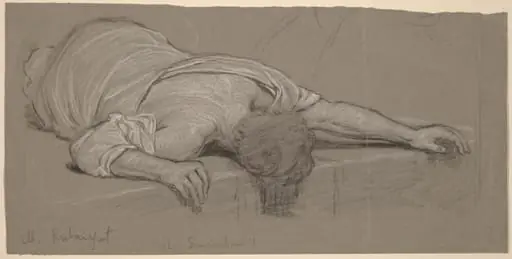 From the Rubáiyát
![Man Reclining on the Ground and the Corner of a Bed [verso], by Jean-Baptiste Deshays](https://artifactworldgallery.com/img/jean-baptiste-deshays--man-reclining-on-the-ground-and-the-corner-of-a-bed-verso--3e054816ddd681bf-w320.webp) Man Reclining on the Ground and the Corner of a Bed [verso]
Man Reclining on the Ground and the Corner of a Bed [verso]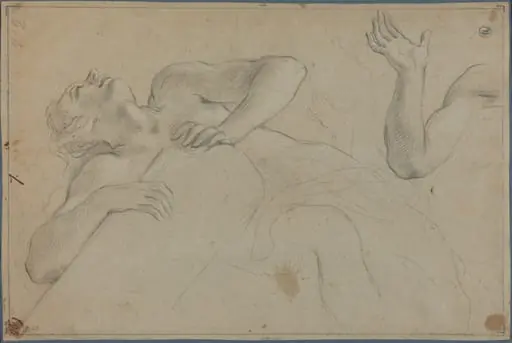 Satyr Leaning on a Column
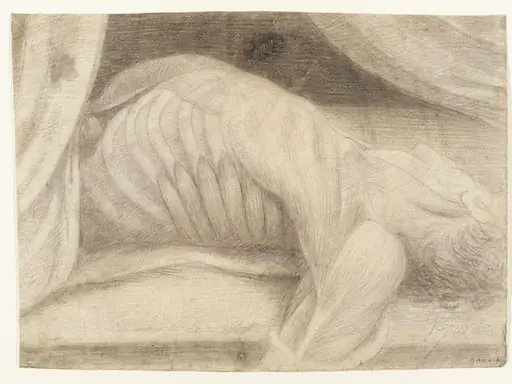 Half-length anatomical study of a man, drawn from a dissected corpse
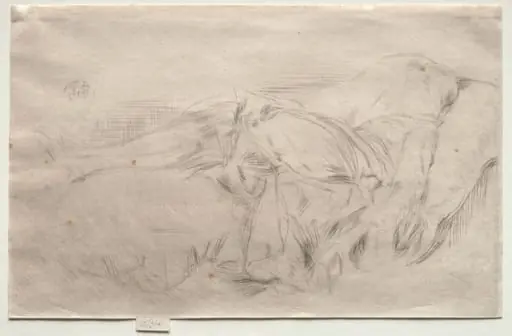 A Child on a Couch, No. 2
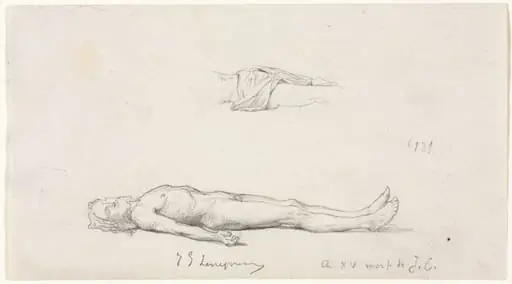 Sketch of the Dead Christ, and Detail Sketch of Loincloth