Artwork
Sir Francis Bacon
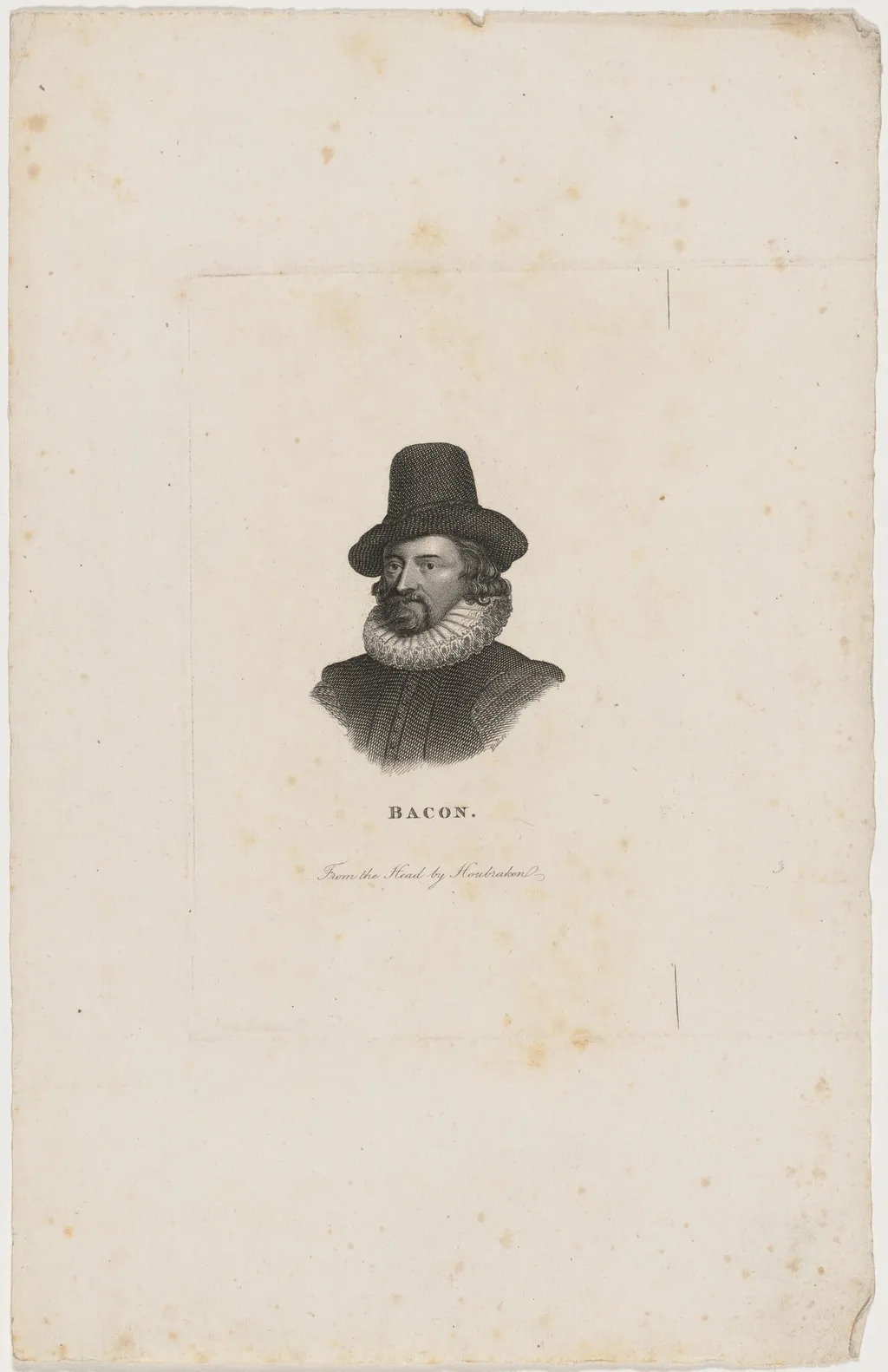
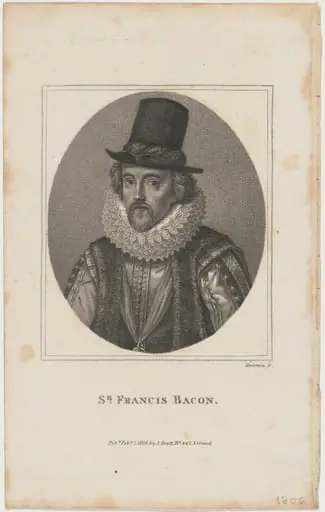
Sir Francis Bacon is an ink print by Unknown. It dates from 1850 and is held in the collection of the National Gallery of Art.
About this work
Overview
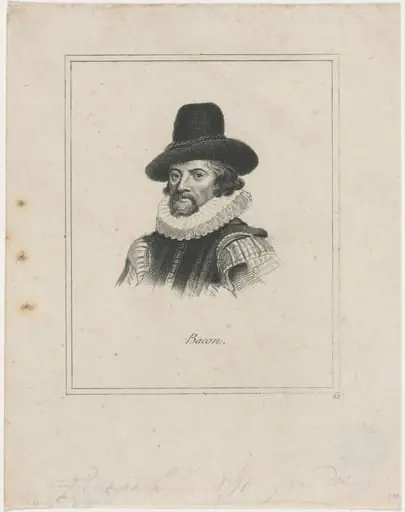
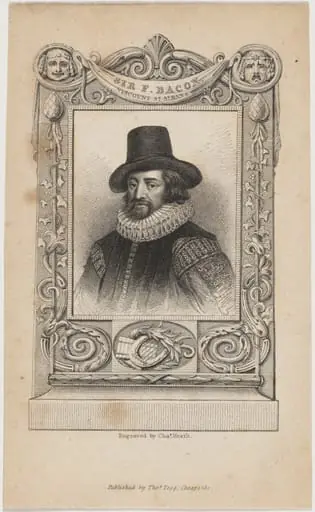
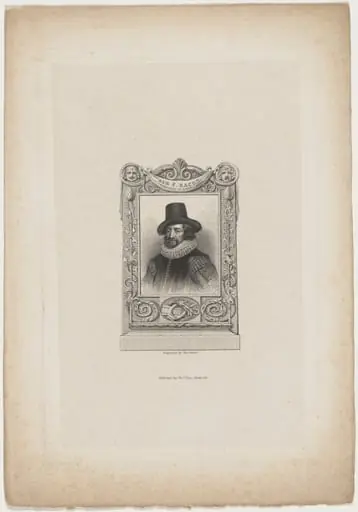
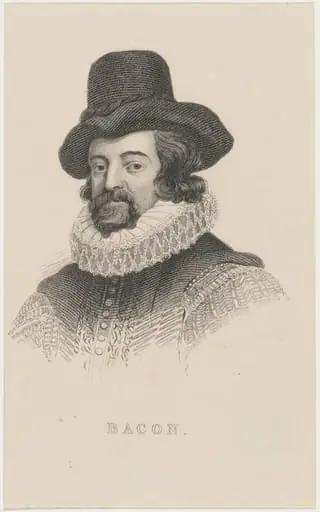
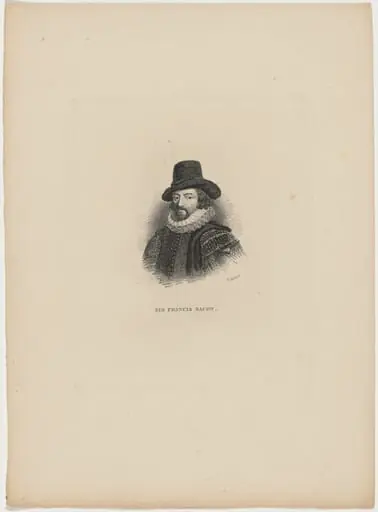
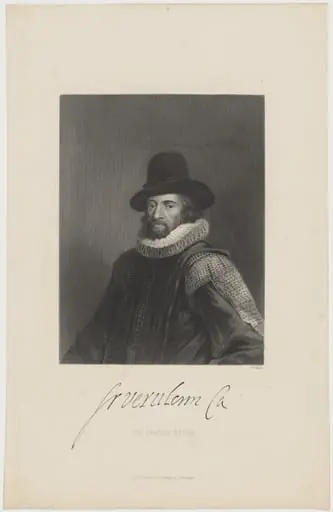
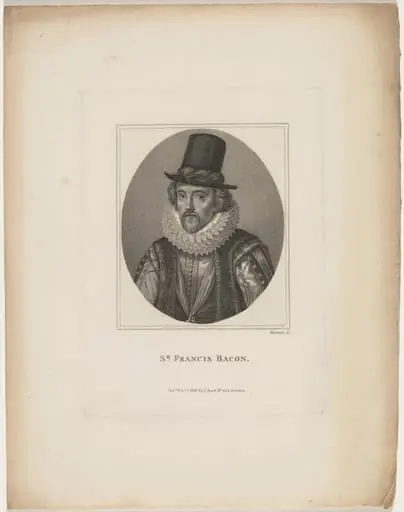
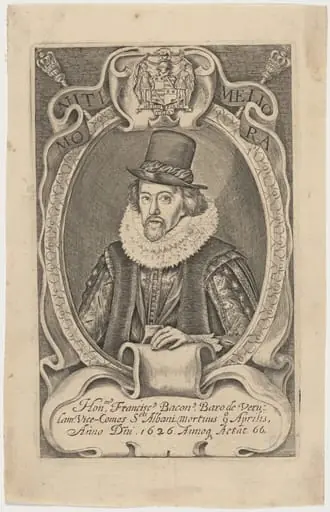
This black-and-white engraving depicts Sir Francis Bacon, the English philosopher and statesman, in formal attire.
This black-and-white engraving depicts Sir Francis Bacon, the English philosopher and statesman, in formal attire. Rendered with fine linear detail, the portrait emphasizes texture in his beard, ruffled collar, and tall hat. The plain background isolates the figure, directing focus to his solemn expression and direct gaze to the left. The medium reflects 17th-century printmaking conventions used for scholarly and aristocratic portraiture.
Subject & Meaning
The portrait presents Bacon as a figure of intellectual authority, his serious demeanor and refined clothing signaling status and gravitas. The absence of symbolic objects or elaborate settings avoids narrative distraction, reinforcing his identity as a thinker rather than a courtier. The leftward gaze may suggest contemplation, aligning with his philosophical pursuits and public role as a promoter of empirical inquiry.
Technique & Style
Executed in engraving, the image relies on incised lines to build tone and texture, particularly in the beard and fabric folds. The contrast between dark shadows and clean paper enhances three-dimensionality. Fine cross-hatching and controlled etching reflect the precision expected in portrait prints of the period, prioritizing clarity and likeness over expressive flourish.
History & Provenance
The engraving likely dates to the early 17th century, produced shortly after Bacon’s rise to prominence. It may have been made from a painted prototype, common for disseminating likenesses of notable figures. While the original artist is unconfirmed, such prints circulated among scholars and collectors, serving as visual records before photography.
Context
During Bacon’s lifetime, engraved portraits were key tools for establishing public image, especially among intellectuals and political figures. Unlike painted portraits, engravings could be reproduced and distributed widely, aiding in the spread of a subject’s reputation. This print reflects the era’s growing print culture and the value placed on visual representation of intellectual authority.
Legacy
As one of many engraved portraits of Bacon, this work contributes to the visual archive of early modern thinkers. Though not widely reproduced today, it exemplifies how printmaking preserved the likenesses of influential figures for posterity. Its stylistic restraint aligns with contemporary ideals of dignity and rationality, values Bacon himself championed.
Artist & collection

 Domestic Scene
 Giacomo and Cardinal Marco, investing Andrea, Abbot of San Zeno, with his Benefice
 The Nymph of Fontainebleau
 Portrait of a Woman
 Madonna and Child with Saints in the Enclosed Garden
 Venus and Minerva
 Family Group of Four on Sofa
 Wall painting from Room H of the Villa of P. Fannius Synistor at Boscoreale