Artwork
Sir Francis Bacon
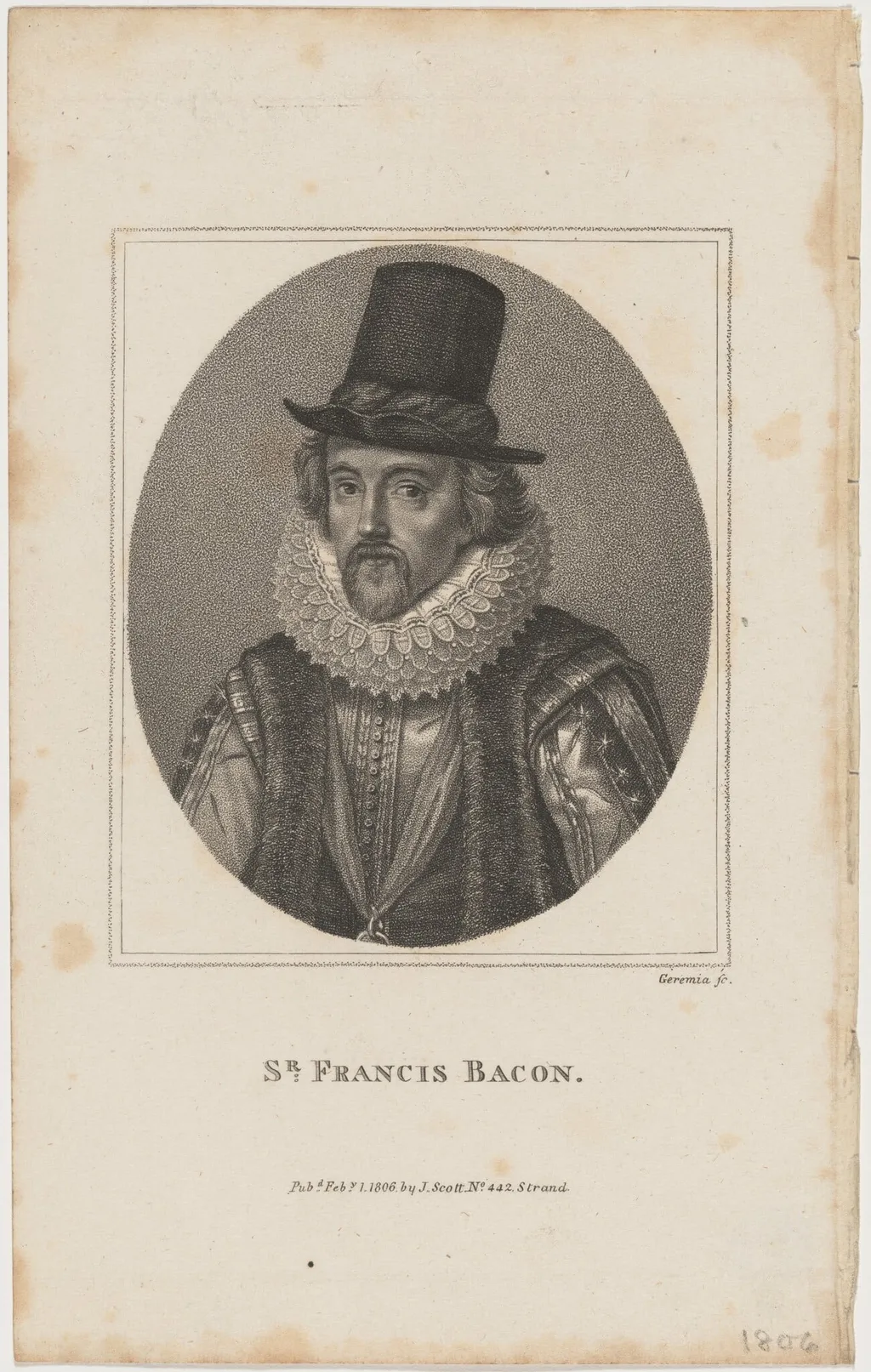
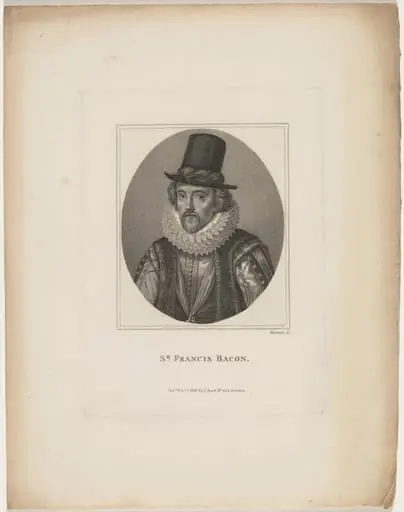
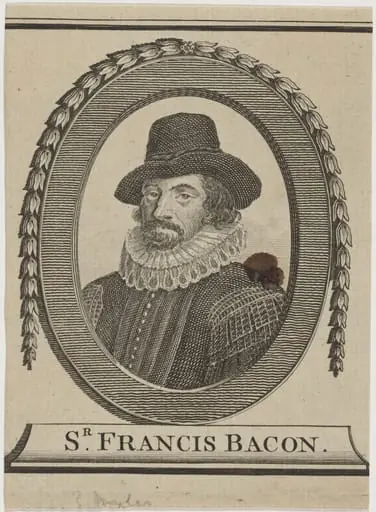
Sir Francis Bacon is an ink print by the Romanticist artist Innocenzo Geremia. It dates from 1806 and is held in the collection of the National Gallery of Art.
About this work
He’s wearing a high-collared shirt with lace at the neck, a dark coat with buttons, and a wide-brimmed hat.
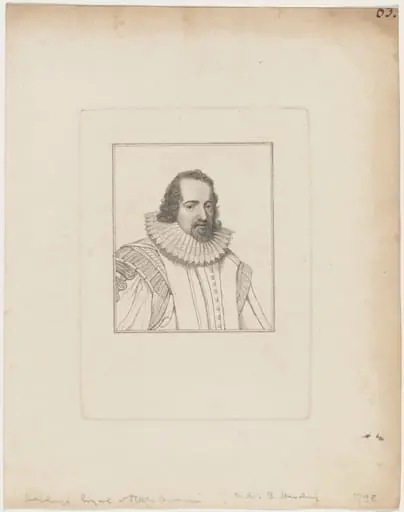
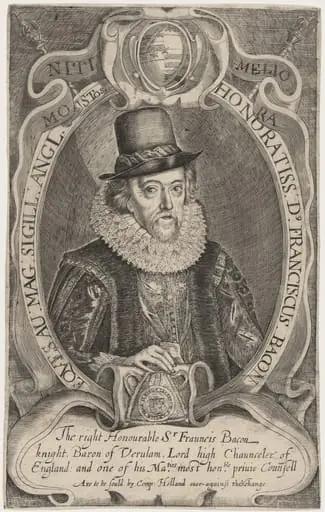
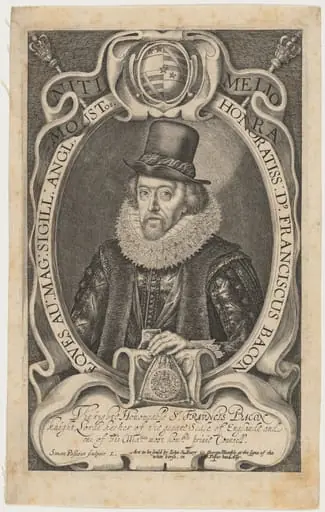
This is a black-and-white portrait of a man with a serious expression. He’s wearing a high-collared shirt with lace at the neck, a dark coat with buttons, and a wide-brimmed hat. The background is plain, keeping all the focus on his face and clothes.
The print looks old, with some wear on the edges. It’s labeled at the bottom as *"Sir Francis Bacon"* and was published in 1806.
Next, look up how engraving works to see how artists like this made detailed prints.
Overview
This black-and-white print, created in 1806 by Innocenzo Geremia, depicts Sir Francis Bacon through the technique of engraving. The image is a formal portrait rendered in fine lines, emphasizing the subject’s facial features and attire. The composition is minimal, with no background detail to distract from the figure. The print bears a label identifying the subject and the year of publication, reflecting its function as a historical portrait reproduction.
Subject & Meaning
The portrait represents Sir Francis Bacon, the 16th-century English philosopher and statesman, known for his contributions to the scientific method. Though created over two centuries after his death, the image seeks to convey his intellectual authority through a stern expression and dignified dress. The high collar, lace trim, and wide-brimmed hat align with early modern elite attire, reinforcing his status as a learned figure of the Renaissance.
Technique & Style
Geremia employed engraving, a method involving incised lines on a metal plate inked and pressed onto paper. The fine, controlled strokes capture texture in the lace, fabric folds, and facial contours. The monochrome palette and sharp contrasts reflect the limitations and strengths of the medium, prioritizing clarity and detail over tonal variation. The wear along the print’s edges suggests repeated handling or aging of the impression.
History & Provenance
The print was produced in 1806, during a period of renewed interest in historical figures of the Enlightenment and Renaissance. Geremia, an Italian engraver, likely based the image on an earlier painting or portrait, as no contemporary likeness of Bacon from his lifetime survives with certainty. Its publication indicates a demand for visual representations of intellectual forebears in early 19th-century Europe.
Context
In the early 1800s, engraved portraits of philosophers and scientists were commonly circulated in books and collections to educate and inspire. Bacon’s reputation as a pioneer of empirical reasoning made him a fitting subject for such reproductions. This print fits within a broader trend of using print media to memorialize and disseminate the likenesses of historical thinkers, especially in academic and private libraries.
Legacy
Though not widely known today, this engraving contributes to the visual tradition of representing Bacon as a solemn, authoritative thinker. It reflects how 19th-century audiences interpreted and preserved the image of early modern intellectuals through accessible printed formats. As a historical artifact, it reveals how cultural memory was shaped by the reproduction of portraiture in the pre-photographic era.
Artist & collection