Artwork
Sir Francis Bacon, Lord Verulam
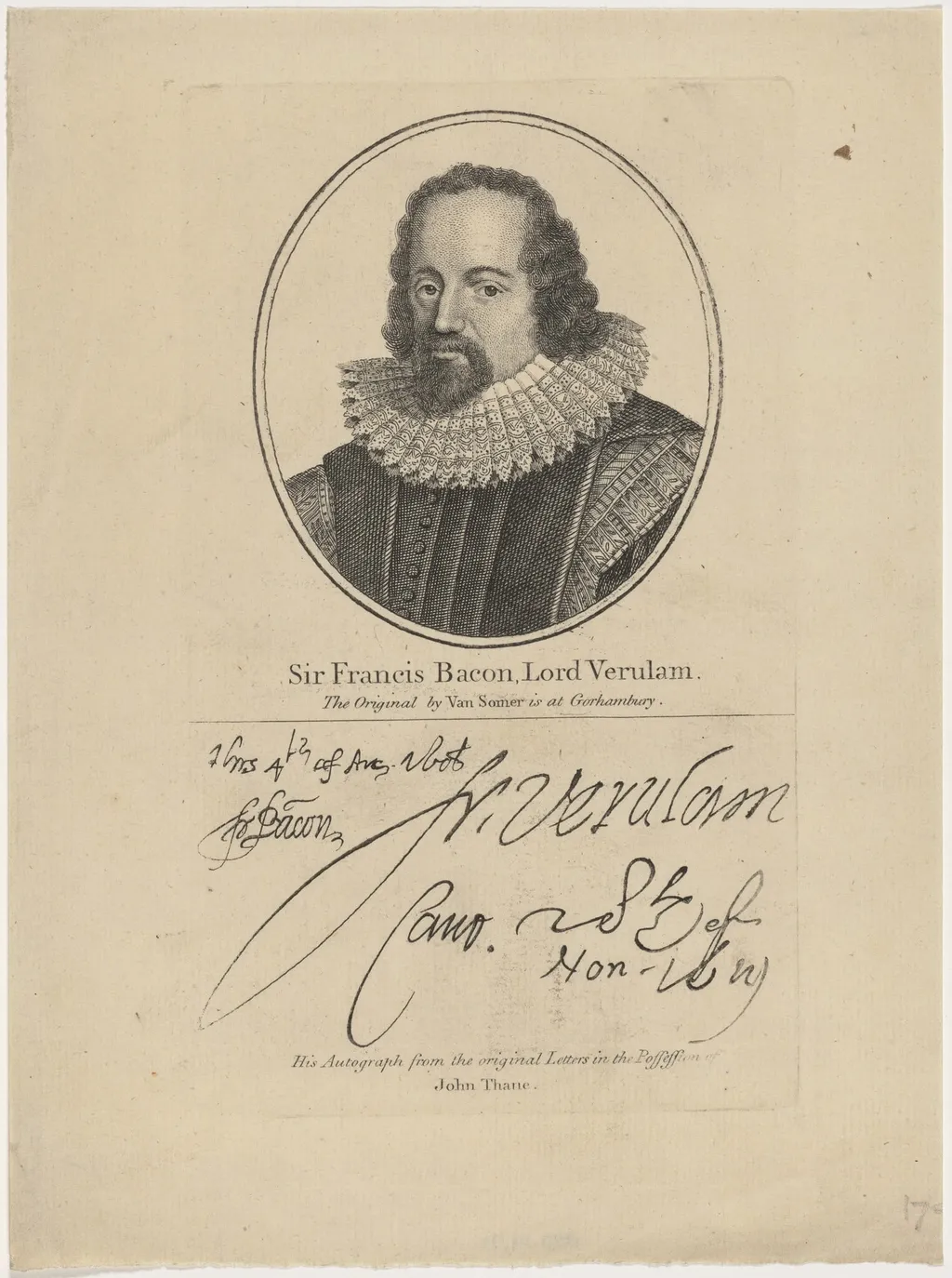
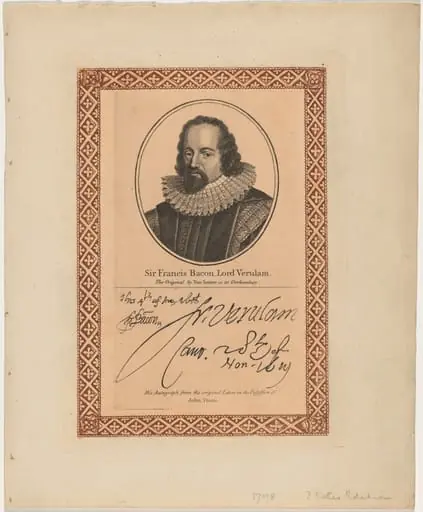
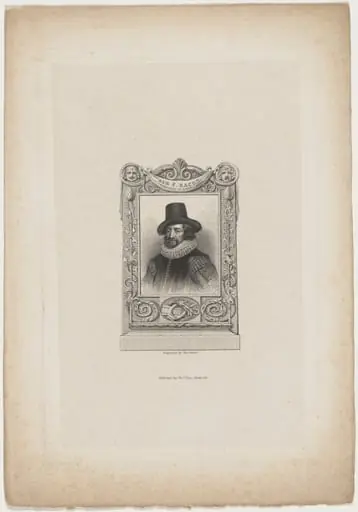
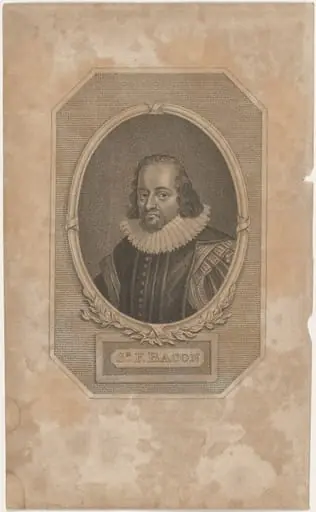
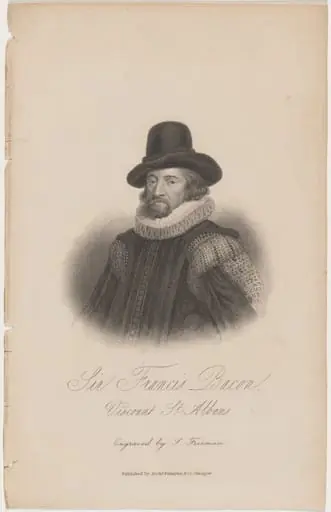
Sir Francis Bacon, Lord Verulam is an ink print by the Romanticist artist Unknown. It dates from 1790 and is held in the collection of the National Gallery of Art.
About this work
Overview
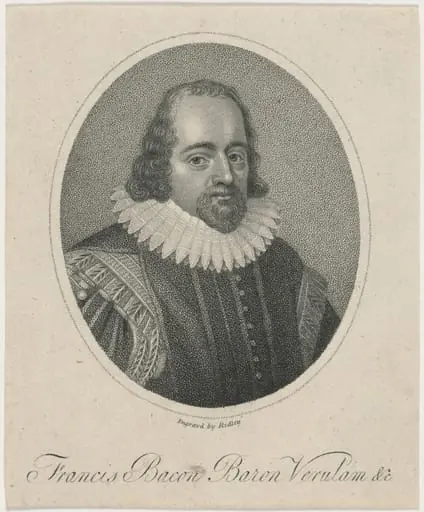
Below the image, his full title is inscribed, and his handwritten signature, reproduced from original correspondence, adds a personal touch.
This black-and-white engraving depicts Sir Francis Bacon, Lord Verulam, in formal attire with a ruffled collar and dark patterned jacket. The portrait is enclosed within a circular frame, a common compositional choice for commemorative prints of the period. Below the image, his full title is inscribed, and his handwritten signature, reproduced from original correspondence, adds a personal touch. The work is unsigned, but its technique reflects traditional engraving methods of early modern printmaking.
Subject & Meaning
The portrait presents Bacon not as a philosopher or statesman in action, but as a figure of established authority. His beard, collar, and jacket convey the dignity of his social and intellectual status. The inclusion of his authentic signature reinforces authenticity and personal legacy, suggesting the print was intended to honor his reputation rather than capture a fleeting moment. The circular format evokes medallions and seals, aligning the image with official commemoration.
Technique & Style
The image was produced using engraving, a process involving incised lines on a metal plate inked and pressed onto paper. The fine, controlled strokes suggest a skilled hand, though the artist remains unidentified. The style is restrained and linear, typical of 17th-century reproductive prints, prioritizing clarity and likeness over expressive detail. The absence of shading or color reflects the limitations and conventions of the medium at the time.
History & Provenance
Created likely in the decades following Bacon’s death in 1626, the print served to circulate his image among scholars and patrons. Its reproduction of his signature indicates access to original documents, possibly from his estate or a collector. Such prints were commonly distributed to affirm the status of notable figures, especially those whose writings influenced public thought. No record of the original artist has survived.
Context
In early 17th-century England, engraved portraits of statesmen and intellectuals were widely circulated as tokens of respect and intellectual affiliation. Bacon, as a leading philosopher and Lord Chancellor, was a natural subject for such imagery. The circular format and textual identification mirror practices used in coinage and heraldry, reinforcing his institutional role. These prints helped shape public perception of figures who shaped the emerging scientific and legal frameworks of the age.
Legacy
This engraving remains one of the most recognizable visual representations of Bacon, despite its anonymous authorship. It contributed to the standardization of his likeness in later biographies and scholarly works. The use of his authentic signature set a precedent for linking textual and visual authority in portraiture. Though not artistically innovative, it endures as a historical artifact of how intellectual authority was visually affirmed in the early modern era.
Artist & collection

 Domestic Scene
 Giacomo and Cardinal Marco, investing Andrea, Abbot of San Zeno, with his Benefice
 The Nymph of Fontainebleau
 Portrait of a Woman
 Madonna and Child with Saints in the Enclosed Garden
 Venus and Minerva
 Family Group of Four on Sofa
 Wall painting from Room H of the Villa of P. Fannius Synistor at Boscoreale