Artwork
Francis Bacon, Baron Verulam
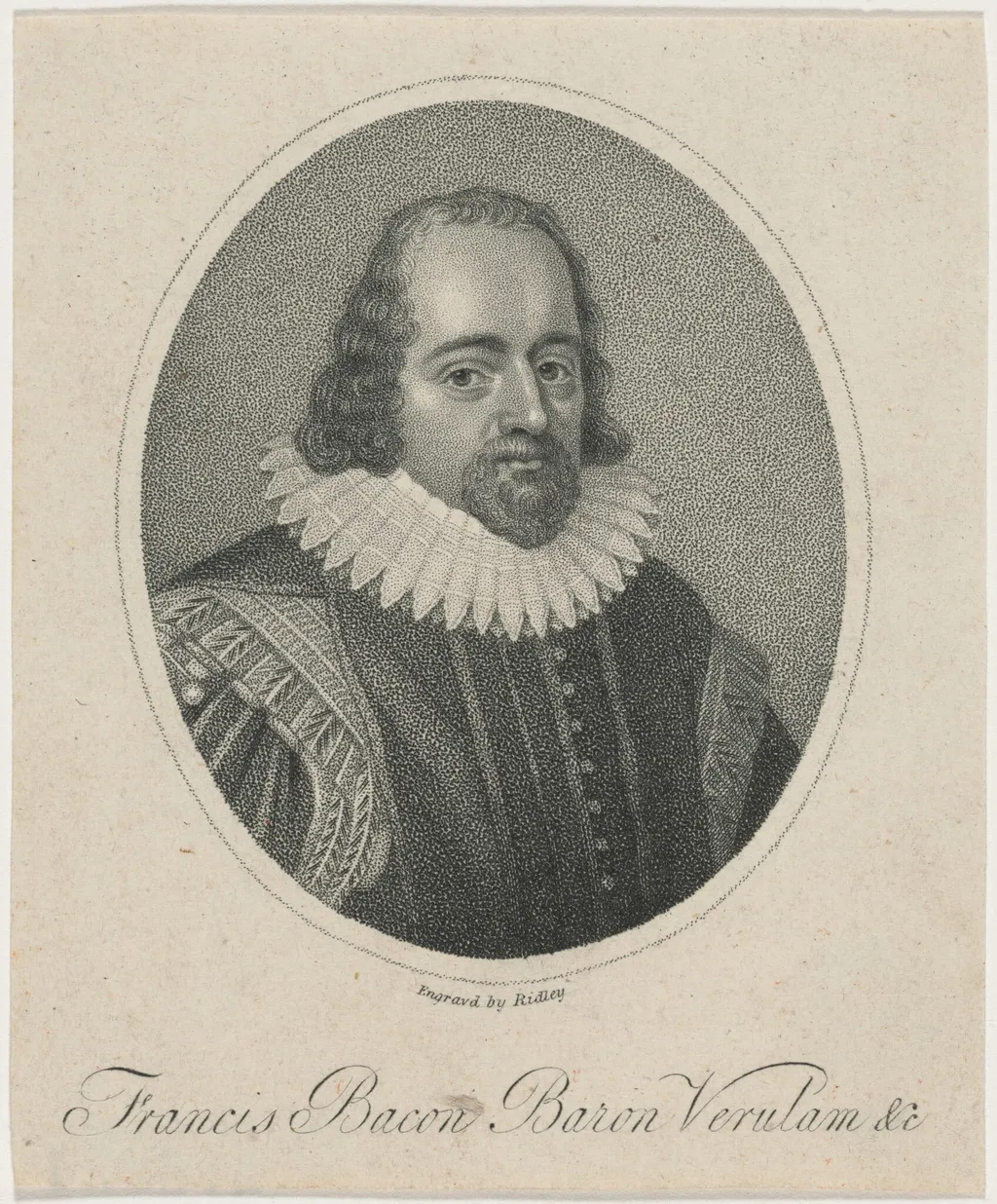
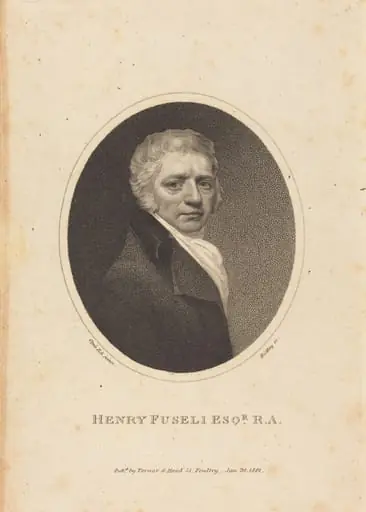
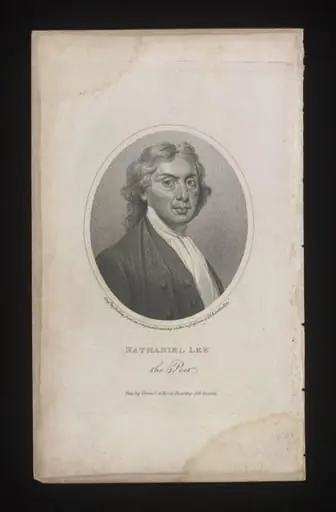
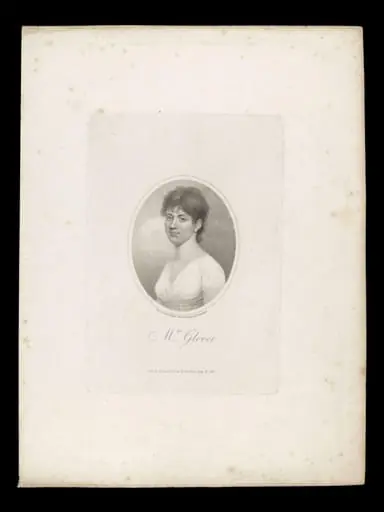
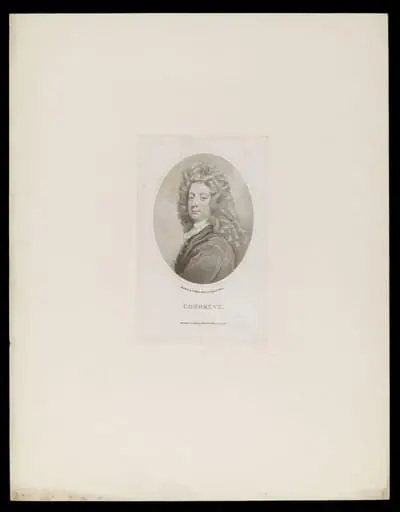
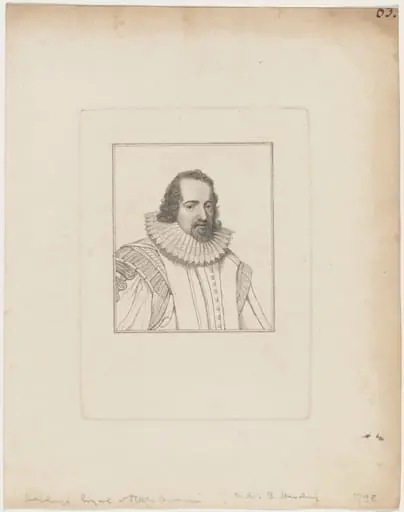
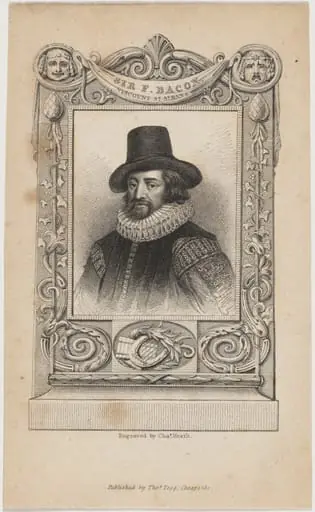
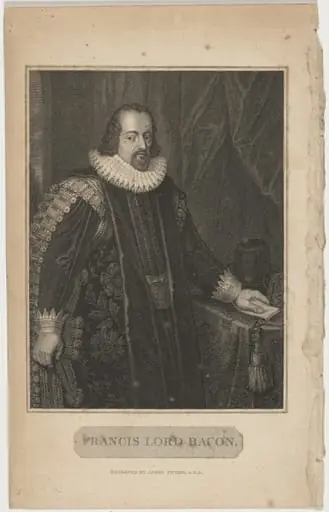
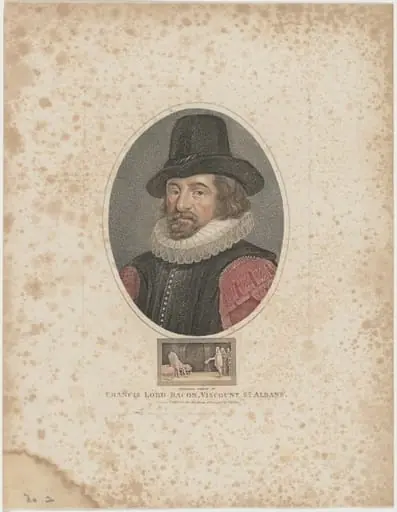
Francis Bacon, Baron Verulam is an ink print by the Romanticist artist William Ridley. It dates from 1801 and is held in the collection of the National Gallery of Art.
About this work
Overview
The image serves as a commemorative likeness, not a contemporary portrait, as Bacon died over a century before its creation.
This 1801 etching by William Ridley depicts Francis Bacon, Baron Verulam, a 17th-century English philosopher and statesman. Rendered in monochrome, the portrait is confined within a circular frame, emphasizing the subject’s solemn presence. The technique relies on fine lines and stippled dots to model form and texture, typical of intaglio printmaking. The image serves as a commemorative likeness, not a contemporary portrait, as Bacon died over a century before its creation.
Subject & Meaning
Francis Bacon, Baron Verulam, was a foundational figure in the development of empirical science and early modern philosophy. The portrait captures him with a grave demeanor, reflecting his intellectual stature. The high white collar and dark, ruffled coat signify his status as a nobleman and scholar of the Elizabethan and Jacobean eras. The circular border may allude to the enduring nature of his ideas, framing him as a timeless intellectual figure.
Technique & Style
Ridley employed etching, a method involving acid-bitten lines on a metal plate, to create fine tonal gradations. The image uses delicate cross-hatching and dot work to suggest the texture of lace, fabric, and hair. The absence of color and the precision of line reflect the conventions of 18th-century portrait prints, designed for reproduction and dissemination among educated audiences. The composition is restrained, prioritizing clarity over dramatic effect.
History & Provenance
Created in 1801, the print likely emerged during a period of renewed interest in early modern thinkers. Ridley, known for his reproductive engravings, based the image on earlier painted or drawn portraits of Bacon. The work was probably intended for inclusion in biographical collections or scholarly publications. Its survival suggests it was circulated among antiquarians and institutions interested in the history of science and philosophy.
Context
In the early 19th century, there was a growing cultural emphasis on documenting national intellectual heritage. Portraits of figures like Bacon were reproduced to reinforce their legacy in the age of Enlightenment and scientific advancement. Ridley’s etching aligns with this trend, offering a standardized visual reference for readers encountering Bacon’s writings. The print’s format reflects the era’s preference for accessible, reproducible imagery over original artistic expression.
Legacy
Though not an original likeness, Ridley’s etching became one of the most widely circulated images of Bacon in the 19th century. It contributed to the visual canon of the philosopher, appearing in textbooks and encyclopedias. Its restrained style and formal composition influenced later depictions, anchoring Bacon’s public image in the conventions of scholarly portraiture rather than personal expression.
Artist & collection