Artwork
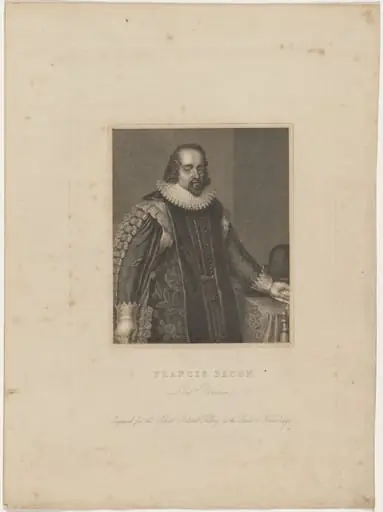
Sir Francis Bacon, Lord Verulam
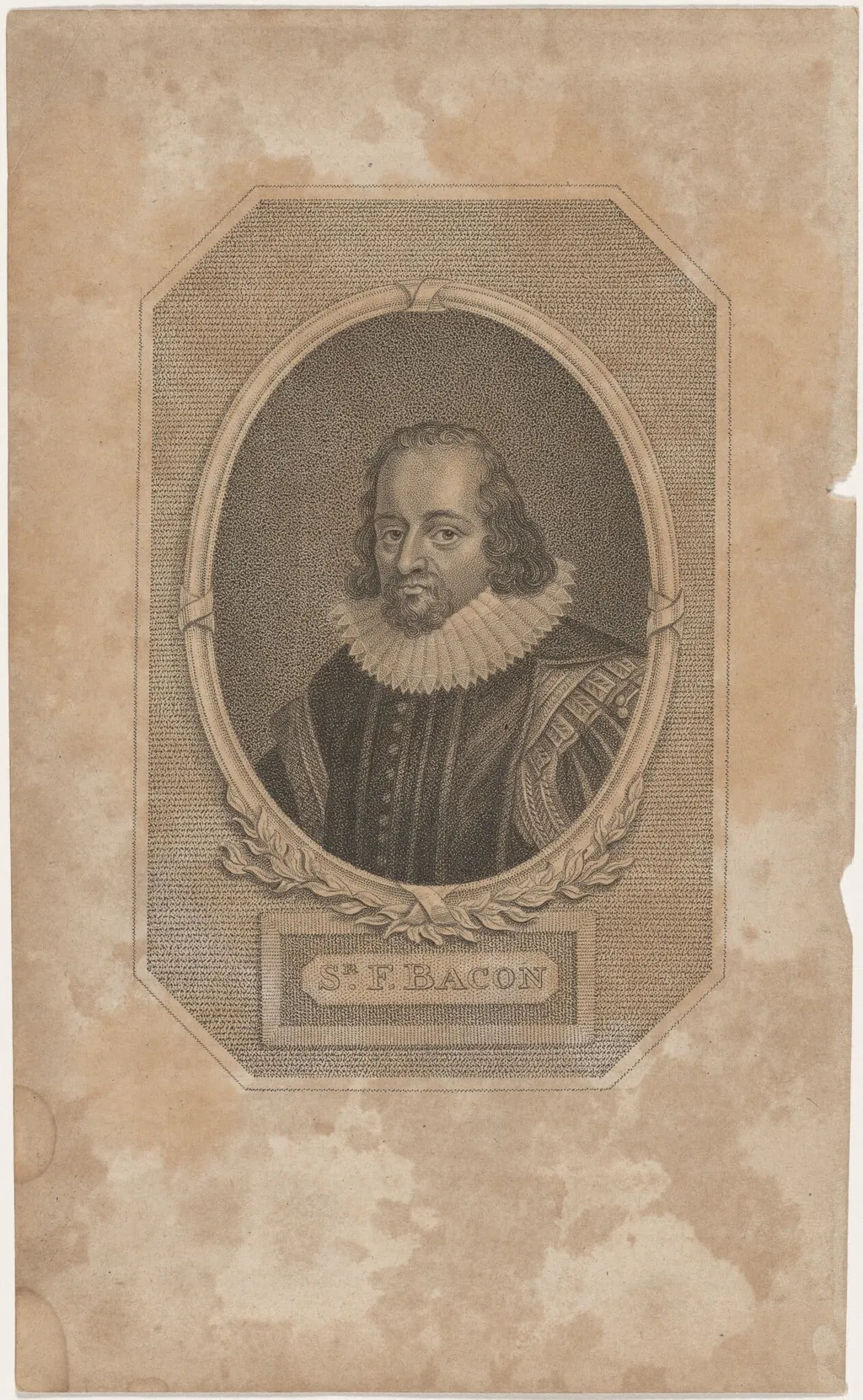
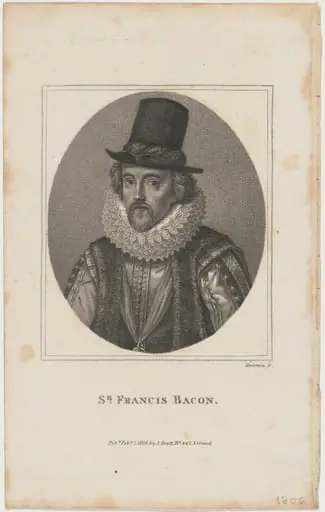
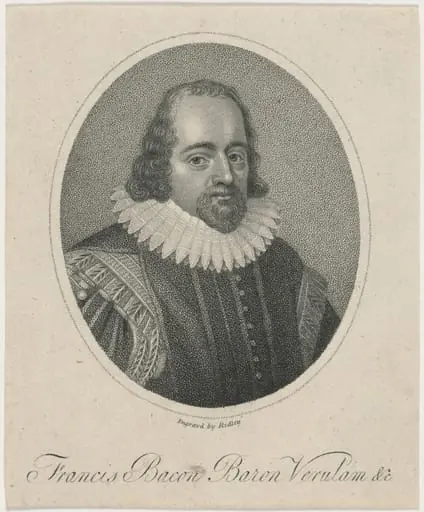
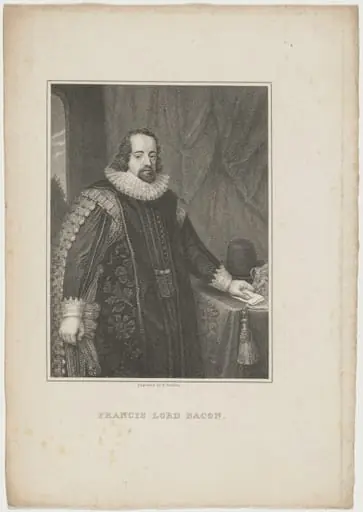
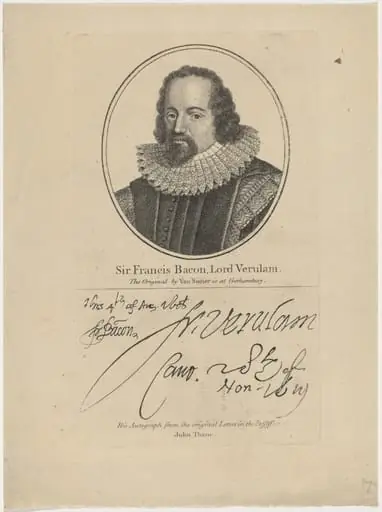
Sir Francis Bacon, Lord Verulam is an ink print by the Romanticist artist Unknown 19th Century. It dates from 1850 and is held in the collection of the National Gallery of Art. This print is an engraved portrait of Sir Francis Bacon, who held the title Lord Verulam.
About this work
Overview
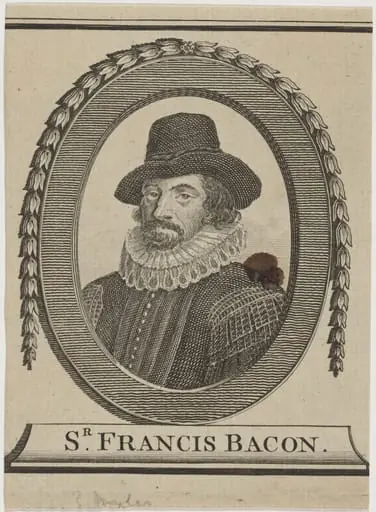
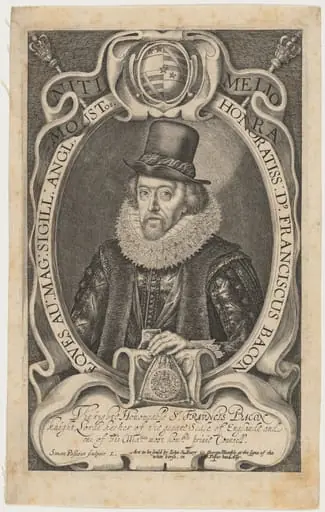
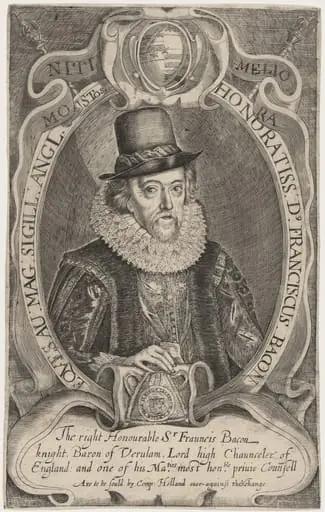
This print is an engraved portrait of Sir Francis Bacon, who held the title Lord Verulam. Rendered in black and white, the image presents the sitter in a dark robe with a ruff collar, his face surrounded by a leafy wreath. The composition is confined within an oval shape that sits inside a pointed ornamental frame, and the artist’s signature appears beneath the portrait.
Subject & Meaning
The work depicts Sir Francis Bacon, a notable figure of the early 17th century, emphasizing his status through formal dress and the inclusion of a heraldic leaf wreath. The solemn expression and restrained pose convey the dignified bearing expected of a nobleman, while the inscription of his name reinforces his identity for viewers.
Technique & Style
Executed with fine cross‑hatching, the engraving achieves a subtle modelling of facial features, creating a sense of depth despite the monochrome medium. This line work, characteristic of detailed portrait prints in the 1800s, manipulates varying densities of lines to suggest light, shadow, and texture on the robe and skin.
History & Provenance
The print is a later reproduction of an earlier portrait of Bacon, produced using traditional intaglio methods. While the exact date of the engraving is not recorded, its stylistic traits align with 19th‑century portraiture practices, suggesting it was created to disseminate the image of the historical figure.
Context
Portrait engravings of this type served both documentary and decorative purposes, circulating images of prominent individuals before photographic technology. The inclusion of a decorative frame and wreath reflects contemporary conventions for honoring subjects of high social rank.
Legacy
As a printed representation of Sir Francis Bacon, the engraving contributes to the visual record of the man’s appearance and the broader tradition of commemorative portraiture. Its continued presence in collections underscores the enduring interest in historical figures rendered through printmaking techniques.
Artist & collection

Artist