Artwork
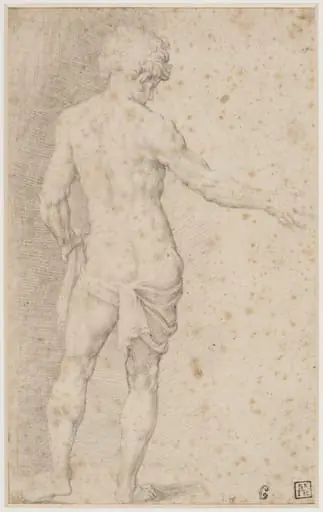
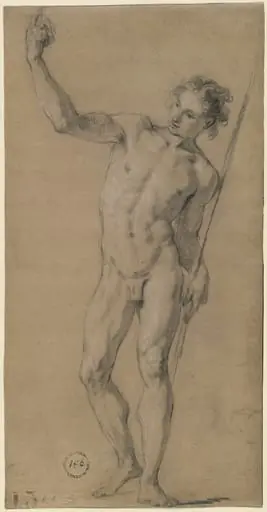
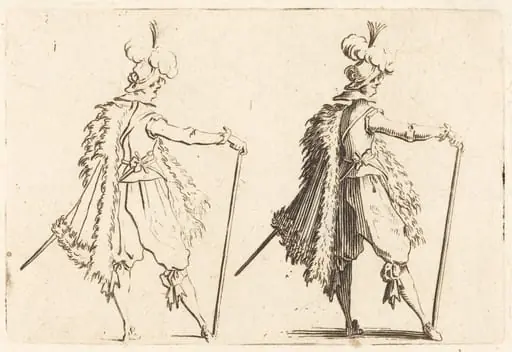
Standing Figure [recto]
![Standing Figure [recto], by Unknown, chalk, 1616](https://artifactworldgallery.com/img/unknown--standing-figure-recto--6a7b9635481c54d6-w1024.webp)
Standing Figure [recto] is a chalk drawing by the Renaissance artist Unknown. It dates from 1616 and is held in the collection of the National Gallery of Art. A standing figure rendered in black chalk on laid paper captures a solitary form viewed from behind.
About this work
Overview
Delicate shading and line work define the contours of clothing and anatomy, while the plain background focuses attention on posture and detail.
A standing figure rendered in black chalk on laid paper captures a solitary form viewed from behind. The composition emphasizes stillness, with no contextual elements beyond the figure’s presence. Delicate shading and line work define the contours of clothing and anatomy, while the plain background focuses attention on posture and detail. The medium’s subtle tonal range enhances the quiet, introspective mood of the scene.
Subject & Meaning
The figure, dressed in a short tunic with puffy sleeves, leggings, and boots, wears a hat that reveals curls beneath. Holding a spear in the right hand and bending the left arm at the elbow, the pose suggests readiness or reflection rather than action. The absence of narrative context invites interpretation as a solitary sentinel, a scholar, or an idealized human form—common in Renaissance studies of the body as a vessel of dignity and restraint.
Technique & Style
Black chalk on laid paper allows for soft gradations and fine linear detail, enabling the artist to model volume with minimal strokes. The texture of the paper subtly interacts with the chalk, enhancing the tactile quality of fabric and hair. The figure’s form is defined through controlled hatching and smudging, avoiding harsh outlines, which contributes to the calm, meditative tone of the drawing.
History & Provenance
The drawing’s origin is not definitively recorded, but its materials and style align with Italian Renaissance practices of the late 15th or early 16th century. It likely served as a study for a larger work or as an independent exercise in figure representation. Its survival suggests it was valued by collectors or artists for its technical refinement and compositional clarity.
Context
During the Renaissance, artists increasingly turned to direct observation of the human form, using chalk drawings to explore posture, drapery, and anatomy. This piece reflects that tradition, where the nude or partially clothed figure was studied not only for realism but as an expression of idealized human presence. Such drawings often circulated among artists as models for composition and gesture.
Legacy
Though unsigned and unattributed, the drawing exemplifies the Renaissance emphasis on disciplined observation and quiet monumentality. Its preservation underscores the period’s reverence for preparatory works, which later generations recognized as vital to understanding artistic process. It remains a quiet testament to the study of form as an end in itself.
Artist & collection

 Domestic Scene
 Giacomo and Cardinal Marco, investing Andrea, Abbot of San Zeno, with his Benefice
 The Nymph of Fontainebleau
 Portrait of a Woman
 Madonna and Child with Saints in the Enclosed Garden
 Venus and Minerva
 Family Group of Four on Sofa
 Wall painting from Room H of the Villa of P. Fannius Synistor at Boscoreale
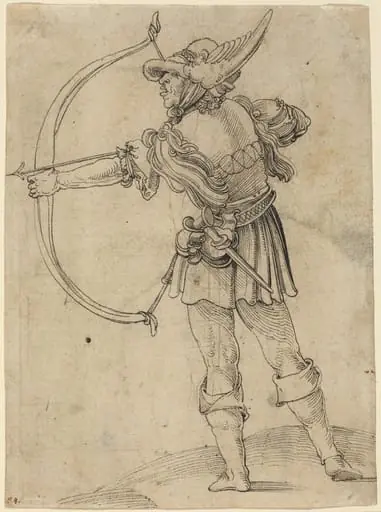
![Figure of an Archer [recto], by Unknown](https://artifactworldgallery.com/img/unknown--figure-of-an-archer-recto--8de8b4fd79de4a46-w320.webp)
![Hercules Leaning on His Club [recto], by Parri Spinelli](https://artifactworldgallery.com/img/parri-spinelli--hercules-leaning-on-his-club-recto--1ed658247dda4bac-w320.webp)