Artwork
Saint John the Baptist
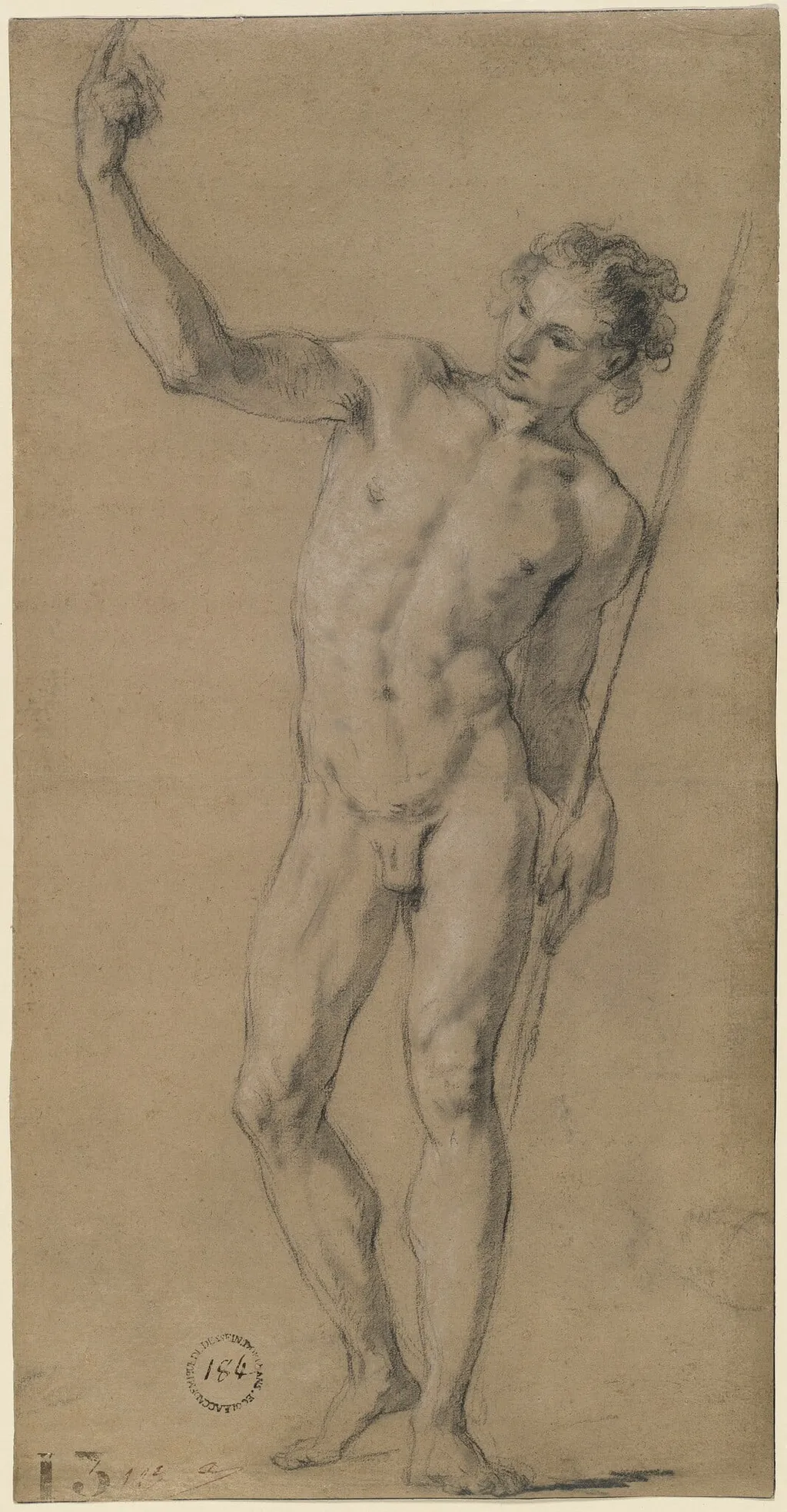
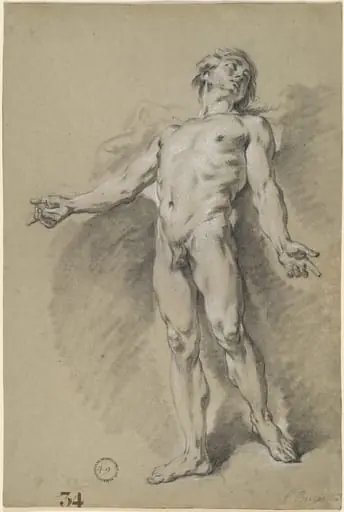
Saint John the Baptist is a chalk drawing by the Baroque artist François Le Moyne. It dates from 1717 and is held in the collection of the National Gallery of Art.
About this work
Overview
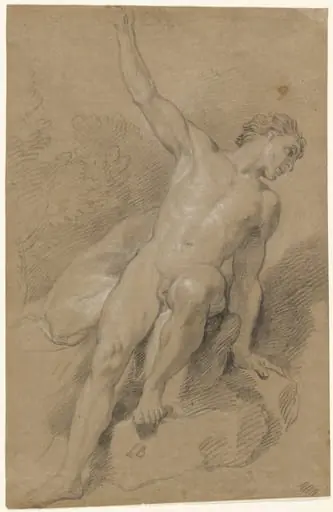
This drawing depicts Saint John the Baptist in penitent solitude, rendered in black chalk with selective white highlights on brown paper.
This drawing depicts Saint John the Baptist in penitent solitude, rendered in black chalk with selective white highlights on brown paper. The work is mounted on a support backing, typical of preservation practices for delicate works on paper. Created around 1717, it reflects the artist’s engagement with religious themes during the early 18th century, though it is not a painting as sometimes misstated.
Subject & Meaning
The figure of John the Baptist is shown as a desert ascetic, clad in rough animal skins, his gaze directed upward in contemplation. His emaciated form and outstretched hand suggest both spiritual yearning and prophetic declaration. The composition emphasizes inner devotion over narrative action, aligning with Counter-Reformation ideals of personal piety and moral reflection.
Technique & Style
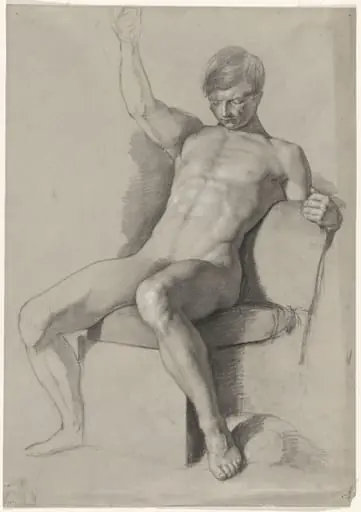
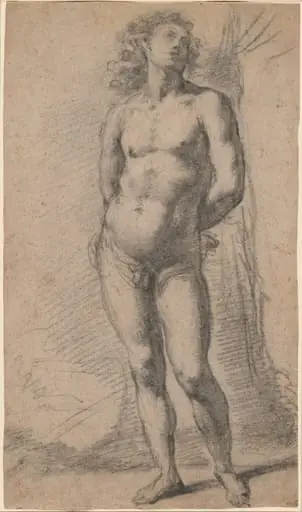
The artist employs subtle gradations of black chalk to model the figure’s anatomy and drapery, while white heightening accentuates light falling on the face, hands, and fabric folds. The use of brown paper provides a warm tonal base, enhancing the chiaroscuro effect. The drawing’s economy of line and focus on texture reveal a mastery of monochromatic draftsmanship characteristic of French academic training.
History & Provenance
The drawing was likely produced as a preparatory study or independent devotional piece during Le Moyne’s early career. It entered a private collection in France by the late 18th century and was later acquired by a public institution, where it was mounted for conservation. Its survival in good condition reflects careful handling and recognition of its artistic merit.
Context
Created during the reign of Louis XIV, the work aligns with a broader French interest in biblical subjects that emphasized emotional restraint and moral gravity. While large-scale altarpieces dominated public commissions, smaller drawings like this served as intimate expressions of faith and artistic exploration within academic circles.
Legacy
Though not widely exhibited, this drawing exemplifies the continued vitality of religious draftsmanship in early 18th-century France. It stands as a testament to Le Moyne’s skill in conveying spiritual intensity through minimal means, influencing later artists who valued expressive line over decorative finish.
Artist & collection


![Seated Satyr Leaning Backward [recto], by Jean-Baptiste Deshays](https://artifactworldgallery.com/img/jean-baptiste-deshays--seated-satyr-leaning-backward-recto--46579a155129856e-w320.webp)