Artwork
The Great Lord Bacon
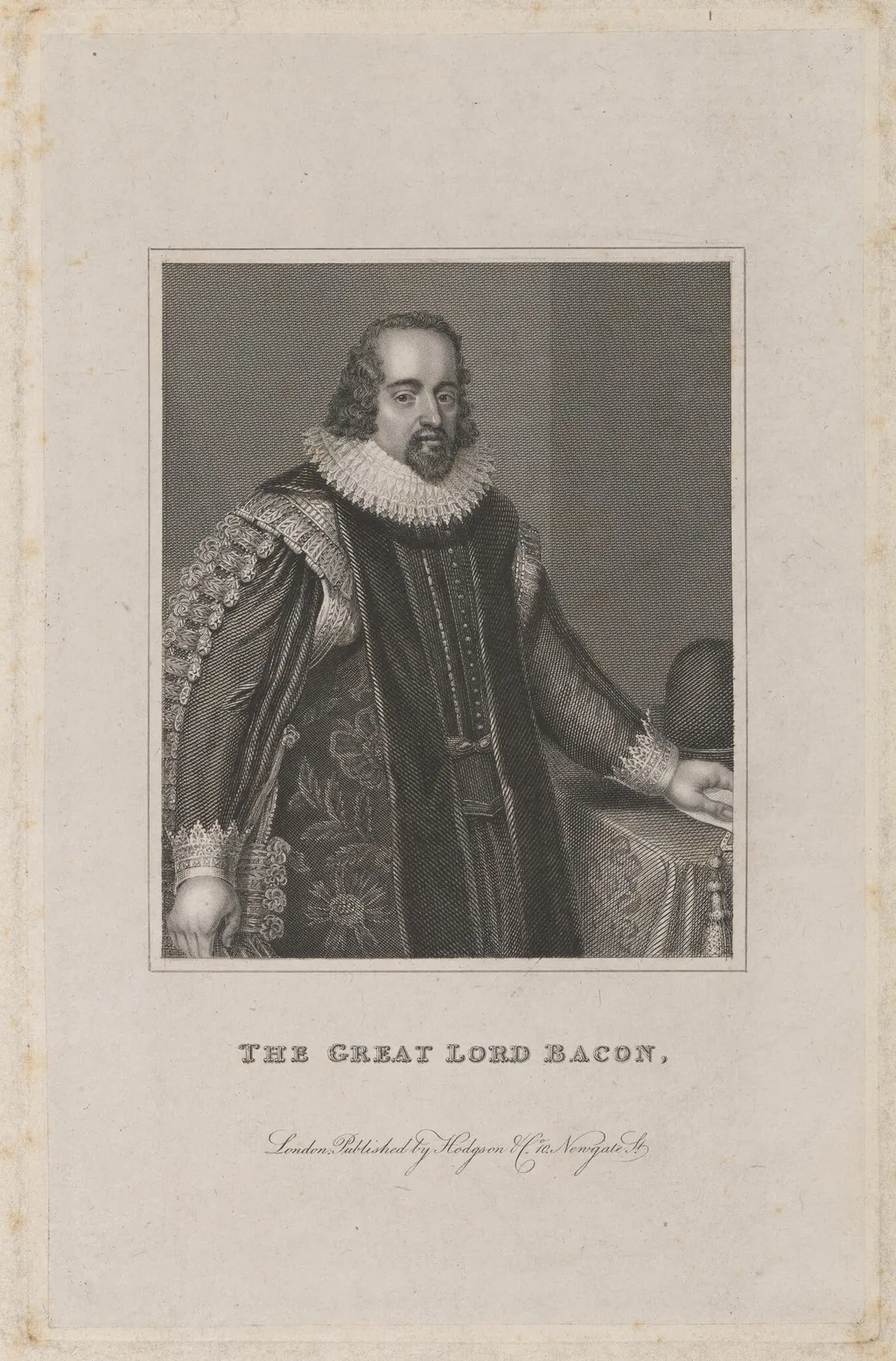
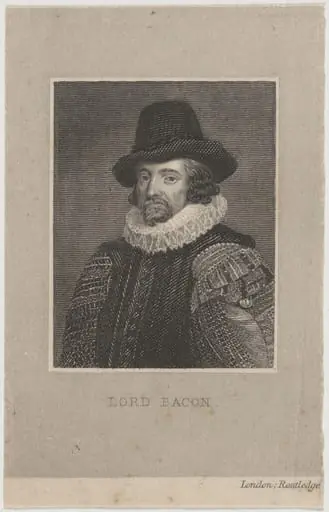
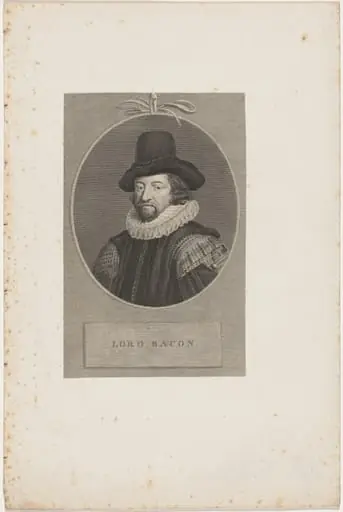
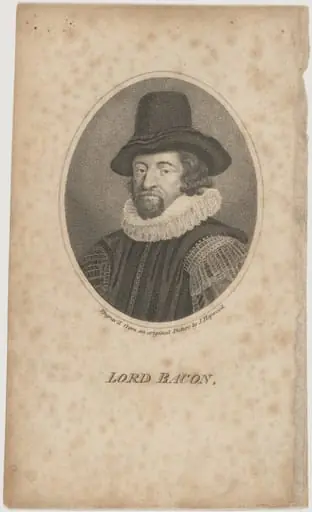
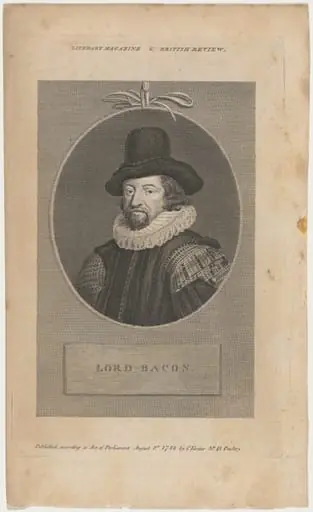
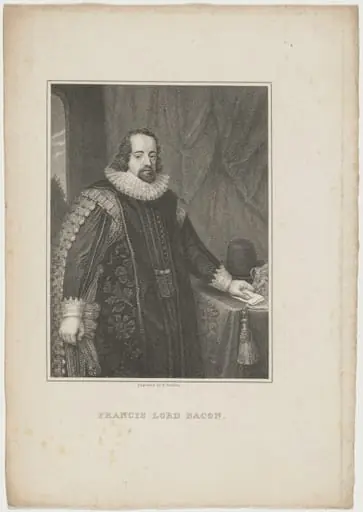
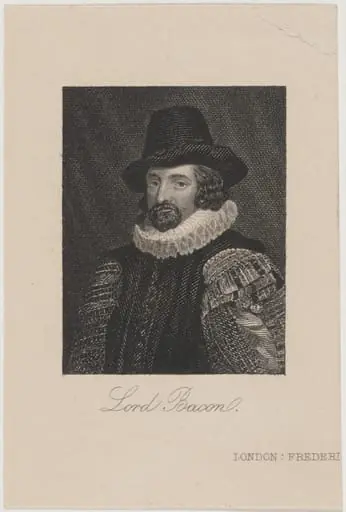
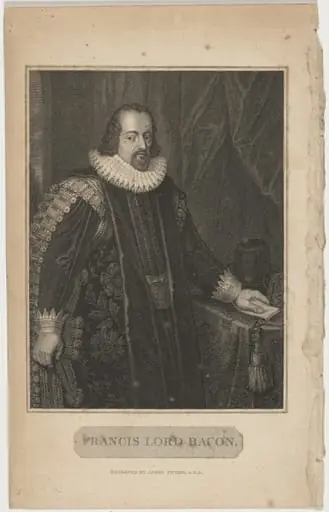
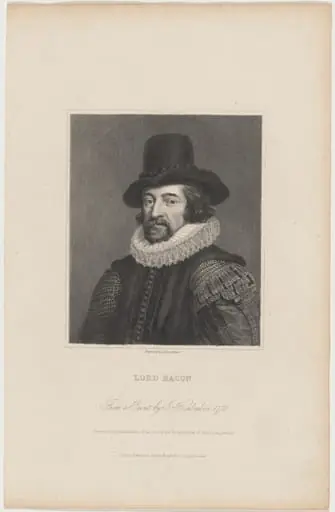
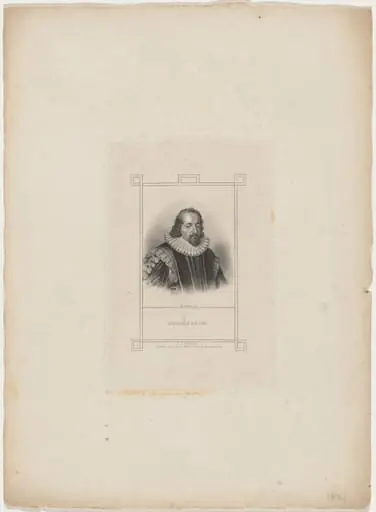
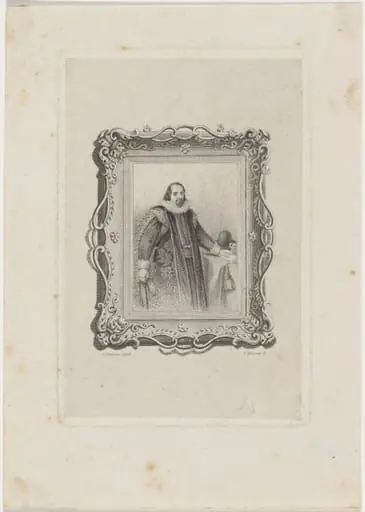
The Great Lord Bacon is an ink print by Unknown. It dates from 1850 and is held in the collection of the National Gallery of Art. This engraving depicts Sir Francis Bacon, the English philosopher and statesman, rendered in fine linear detail.
About this work
Overview
Executed on paper, the portrait presents him in formal attire against a minimalist background, emphasizing his intellectual stature.
This engraving depicts Sir Francis Bacon, the English philosopher and statesman, rendered in fine linear detail. Executed on paper, the portrait presents him in formal attire against a minimalist background, emphasizing his intellectual stature. The medium relies on precise incisions to build tone and texture, characteristic of early modern printmaking techniques that valued clarity and refinement over painterly effects.
Subject & Meaning
The portrait captures Bacon in middle age, his curled hair and beard framing a contemplative expression. His dark robe, adorned with a large white ruff and elaborate lace cuffs, signals his status as a learned nobleman. The hat resting on the table beside him may allude to his public roles or the transient nature of worldly authority, reinforcing his identity as a thinker beyond mere office.
Technique & Style
The artist employed fine cross-hatching to model form and suggest volume, particularly in the folds of fabric and the contours of the face. Lines are tightly controlled, creating subtle gradations of light and shadow without the use of tone or wash. The background remains unadorned, directing focus entirely to the figure and his attire, a hallmark of portrait engravings designed for reproduction and dissemination.
History & Provenance
This print likely dates to the early 17th century, produced shortly after Bacon’s rise to prominence. It may have been made from a lost painting or drawing, as was common for disseminating likenesses of notable figures. Though the engraver’s identity is unconfirmed, the work reflects the demand for authoritative portraits among scholars and patrons seeking to preserve the image of influential thinkers.
Context
During Bacon’s lifetime, engraved portraits served as tools of intellectual legacy, circulating among universities and courts. Unlike painted likenesses, prints could be reproduced and shared widely, making them vital for shaping public perception. This engraving aligns with a broader trend of using print to elevate the status of philosophers and statesmen, bridging the gap between humanist ideals and visual representation.
Legacy
The engraving endures as a visual reference for Bacon’s public persona, influencing later depictions in textbooks and scholarly works. Its restrained aesthetic and technical precision reflect the values of early modern print culture, where clarity and fidelity to the subject outweighed ornamentation. It remains a key example of how portraiture in print contributed to the enduring image of the early modern intellectual.
Artist & collection

 Domestic Scene
 Giacomo and Cardinal Marco, investing Andrea, Abbot of San Zeno, with his Benefice
 The Nymph of Fontainebleau
 Portrait of a Woman
 Madonna and Child with Saints in the Enclosed Garden
 Venus and Minerva
 Family Group of Four on Sofa
 Wall painting from Room H of the Villa of P. Fannius Synistor at Boscoreale