Artwork
Lord Bacon
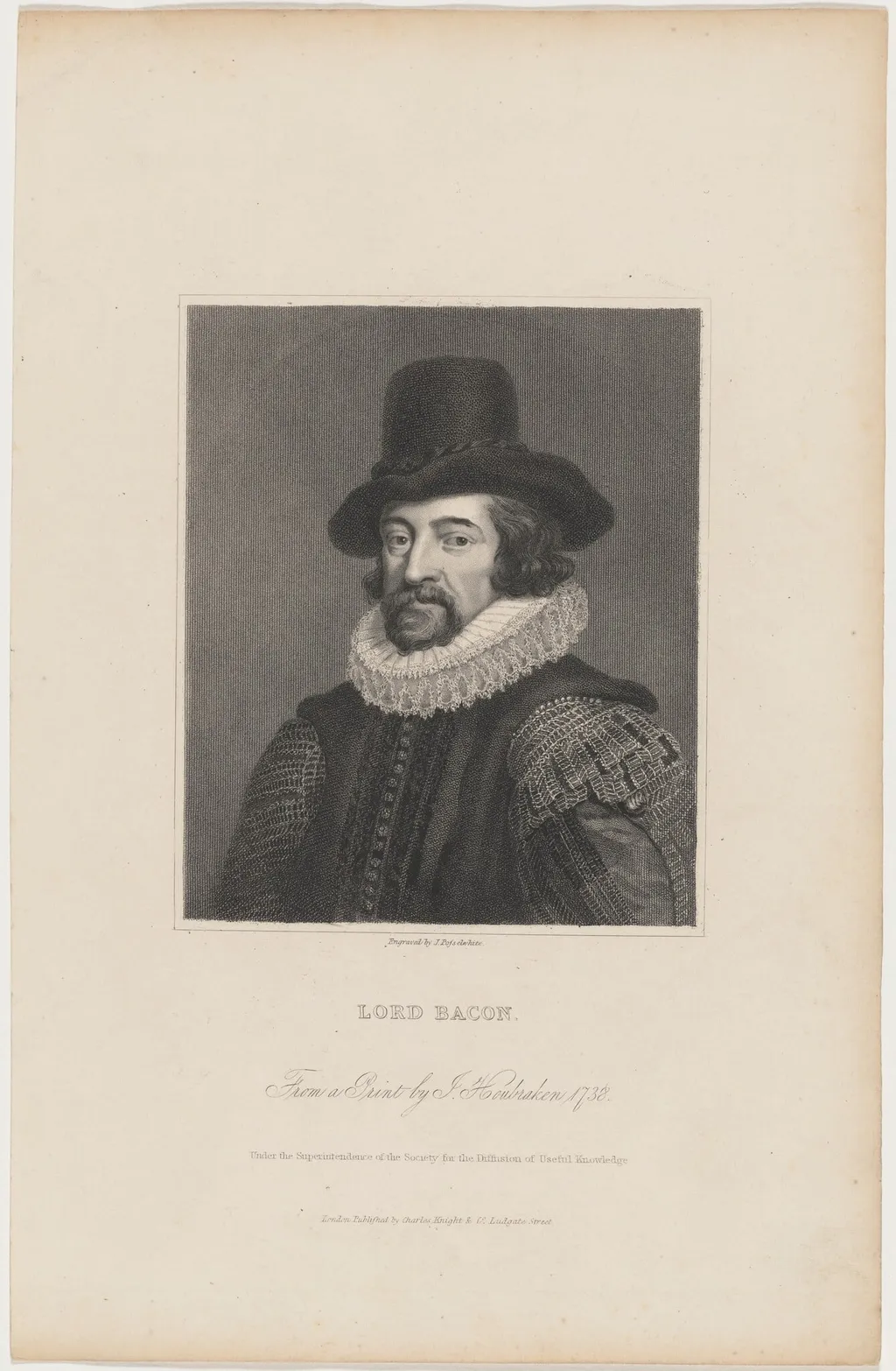
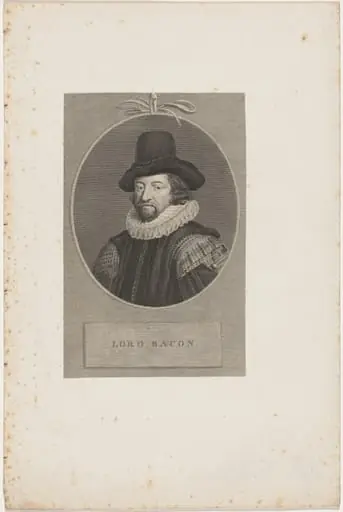
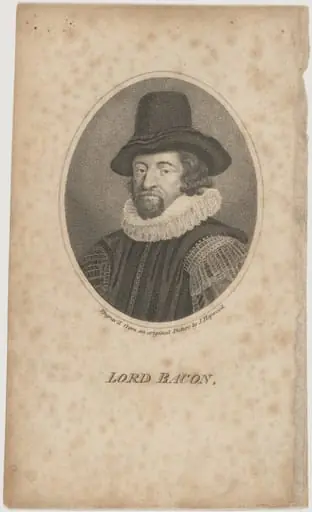
Lord Bacon is an ink print by the Romanticist artist James Posselwhite. It dates from 1841 and is held in the collection of the National Gallery of Art.
About this work
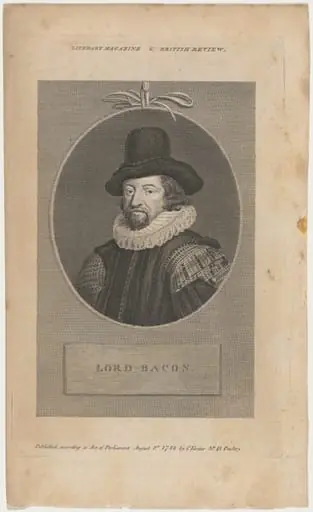
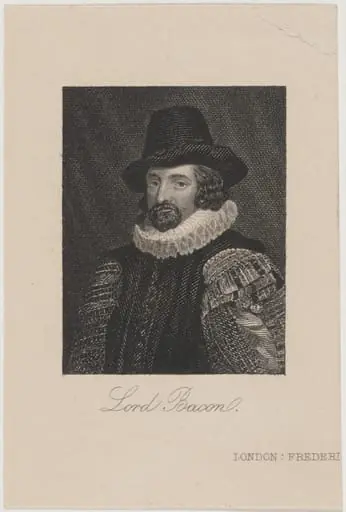
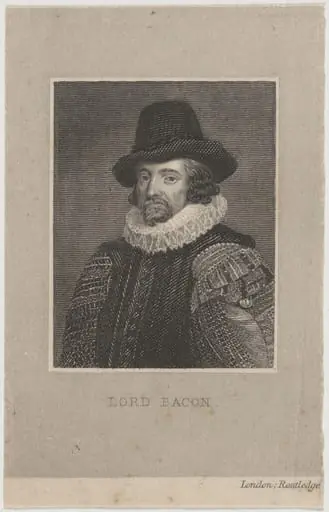
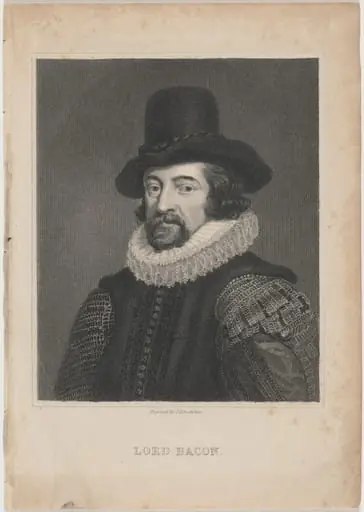
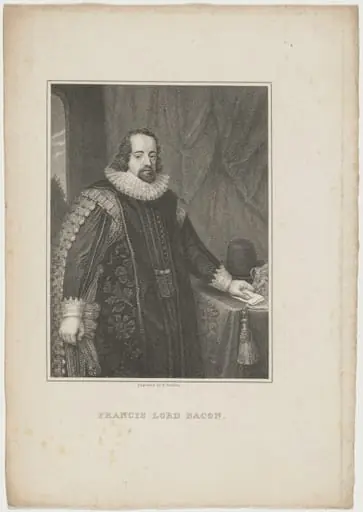
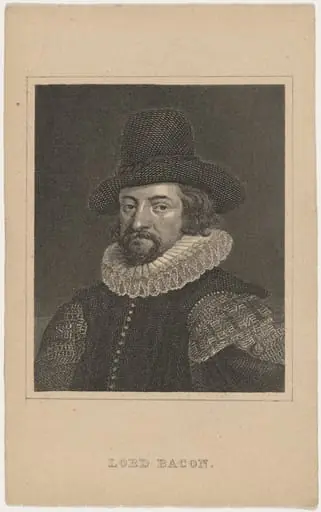
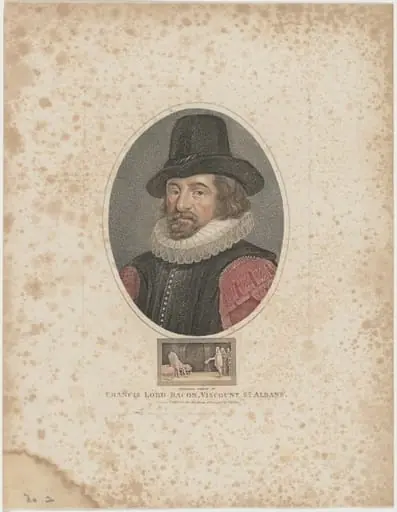
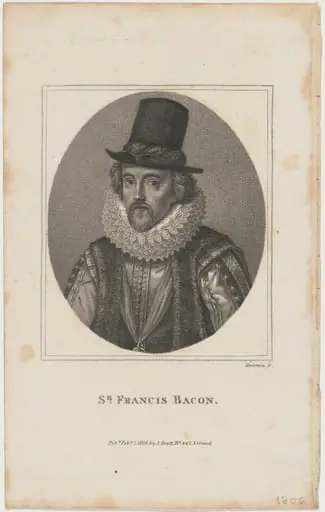
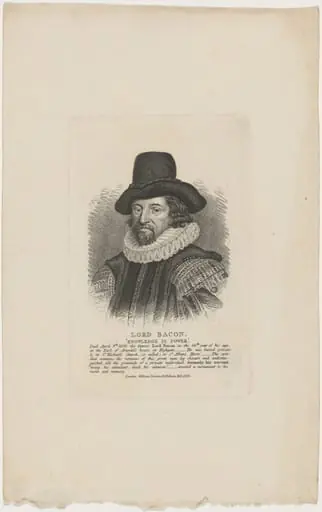
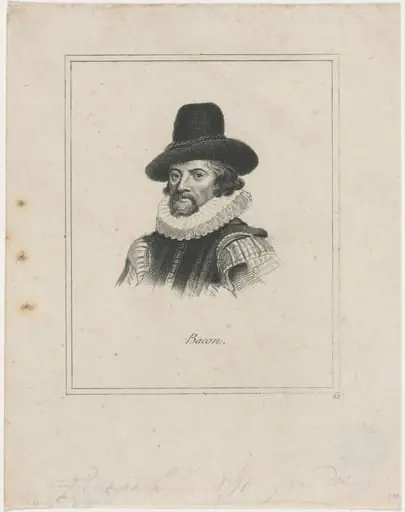
This is a black-and-white portrait of a man in old-fashioned clothes. He wears a wide-brimmed hat, a ruffled collar, and a dark coat with lace cuffs. His face is serious, with a thick beard and mustache.
The print was made from an earlier painting done in 1738. The artist used fine lines to create shadows and texture.
Look up engraving to see how this technique works.
Overview
Lord Bacon is a black-and-white engraving produced in 1841 by James Posselwhite. It reproduces a portrait originally painted in 1738, translating the earlier work into the medium of intaglio printmaking. The image presents a formal, full-face depiction of the philosopher, rendered in precise linear detail characteristic of 19th-century reproductive engraving.
Subject & Meaning
The ruffled collar, lace cuffs, and wide-brimmed hat reflect the fashion of his era, reinforcing his historical identity rather than conveying personal emotion.
The subject is Francis Bacon, 17th-century English philosopher and statesman, known for his contributions to empirical science and the scientific method. The portrait emphasizes his intellectual stature through solemn expression and dignified attire. The ruffled collar, lace cuffs, and wide-brimmed hat reflect the fashion of his era, reinforcing his historical identity rather than conveying personal emotion.
Technique & Style
Posselwhite employed fine, controlled lines to model form and texture, typical of engraving techniques where ink is held in incised grooves. Shading is achieved through density and direction of lines rather than tone, creating depth and volume. The meticulous detail in the beard, collar, and hat brim demonstrates the precision required to translate a painted portrait into a printed image.
History & Provenance
The engraving derives from a 1738 oil painting, likely commissioned during Bacon’s posthumous rise in intellectual prominence. Posselwhite’s version was made over a century later, reflecting 19th-century interest in historical figures and the proliferation of printed portraiture for educational and domestic use. No record indicates a specific original owner, but it was likely circulated as a scholarly or decorative print.
Context
In the early 19th century, engraved portraits of historical thinkers were commonly reproduced to support public education and cultural memory. Bacon’s image, already established in visual tradition, was reissued to align with growing interest in the history of science. This print belongs to a broader trend of using print media to anchor intellectual heritage in the public imagination.
Legacy
The engraving survives as a representative example of reproductive printmaking in the Victorian era. While not an original artistic statement, it played a role in standardizing Bacon’s visual identity for later generations. Its continued presence in institutional collections underscores its function as a historical document rather than a work of artistic innovation.
Artist & collection