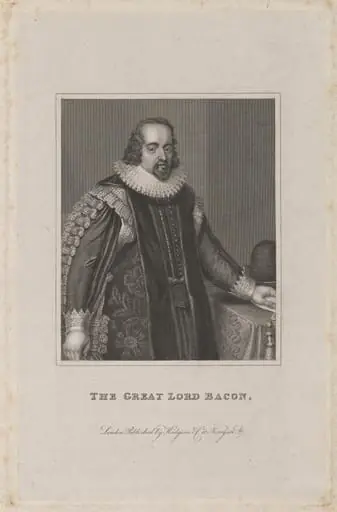
Artwork
Lord Bacon
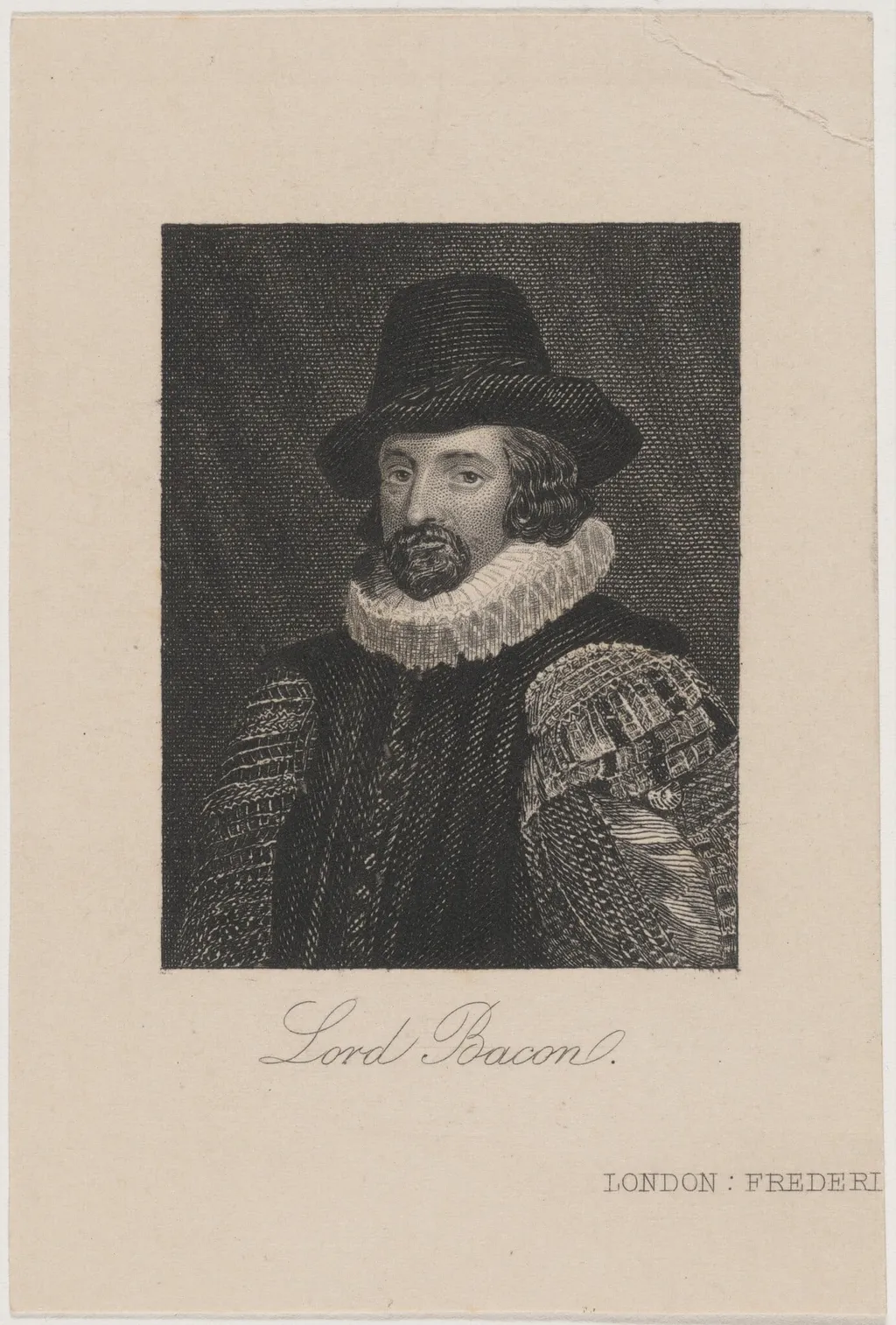
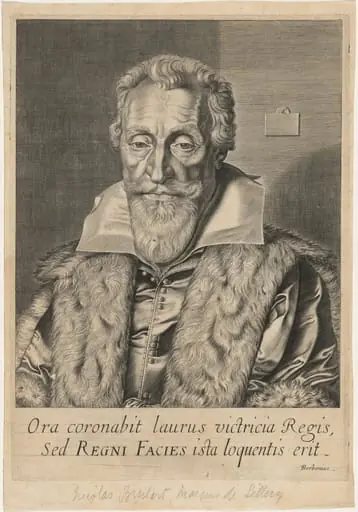
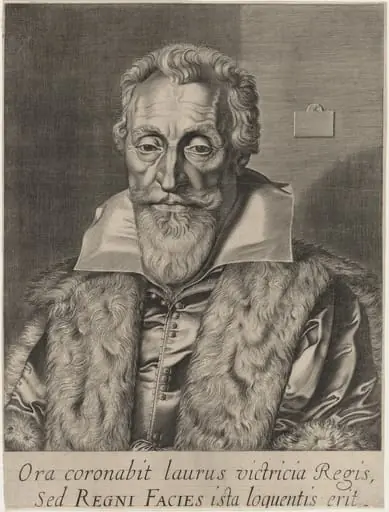
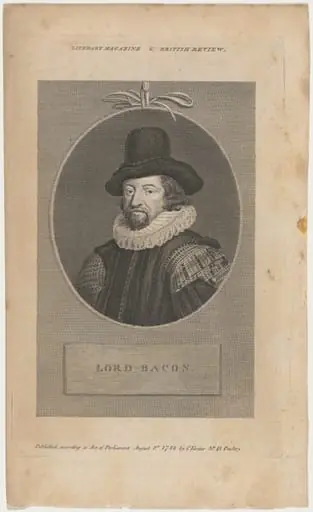
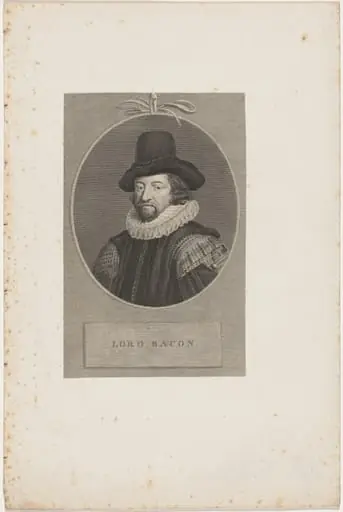
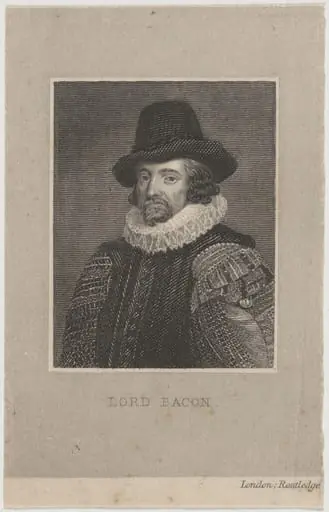
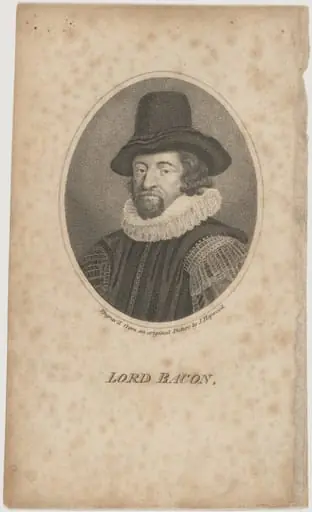
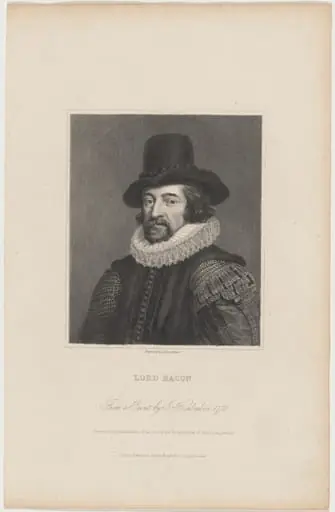
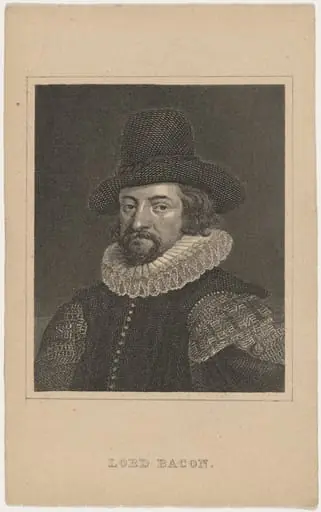
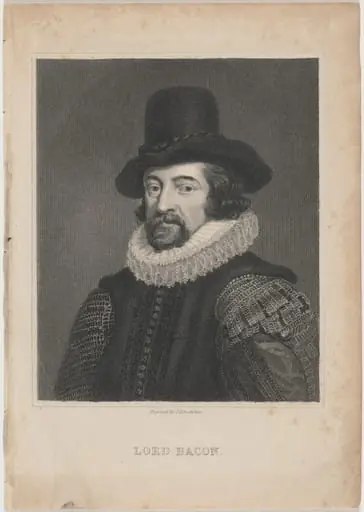
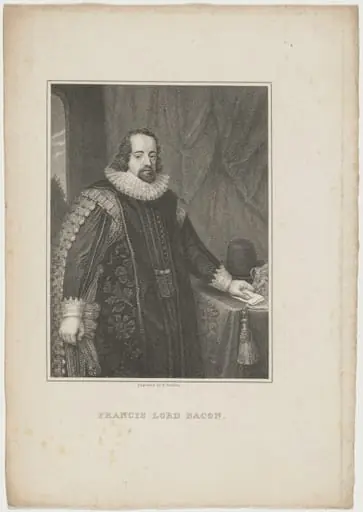
Lord Bacon is an ink print by the Romanticist artist Unknown 19th Century. It dates from 1850 and is held in the collection of the National Gallery of Art. This engraving depicts Francis Bacon, the English philosopher and statesman, rendered in fine linear detail.
About this work
Overview
This engraving depicts Francis Bacon, the English philosopher and statesman, rendered in fine linear detail. The portrait captures him in profile, with a turned head and expressive features, set against a deep, unmodulated background that heightens the focus on his figure. The work exemplifies the precision and tonal subtlety characteristic of 18th-century reproductive engraving.
Subject & Meaning
The subject is Francis Bacon, a foundational figure in empiricism and scientific method. His portrayal—bearded, formally dressed, and contemplative—emphasizes intellectual authority rather than personal emotion. The dignified pose and attire reflect his status as a statesman and thinker, aligning with traditional portraiture of learned men rather than Romantic idealization.
Technique & Style
Executed in fine-line engraving, the image uses closely spaced hatching and cross-hatching to model form and texture. The contrast between the dark background and the illuminated face and ruffled collar enhances three-dimensionality. The meticulous rendering of fabric folds and hair demonstrates technical control typical of professional printmakers of the period.
History & Provenance
The engraving likely derives from an earlier painted portrait, possibly by a contemporary artist, and was produced as a reproductive print for wider dissemination. Such prints were common in the 18th century to circulate images of notable figures among educated audiences. No specific printer or date is documented in available records.
Context
Though labeled as Romantic in the visual note, the work aligns more closely with Enlightenment portraiture, which valued clarity, reason, and social stature. Romanticism’s emphasis on emotion and individual subjectivity is not evident here; instead, the image serves a documentary function, reinforcing Bacon’s public identity as a philosopher.
Legacy
As a reproductive print, this engraving contributed to the visual canon of Bacon’s likeness in later centuries. It reflects the era’s practice of using print media to memorialize intellectual figures, ensuring their public image endured beyond painted originals. Its technical quality preserves a standard of craftsmanship in early modern printmaking.
Artist & collection

Artist