Artwork
The Rest on the Flight into Egypt
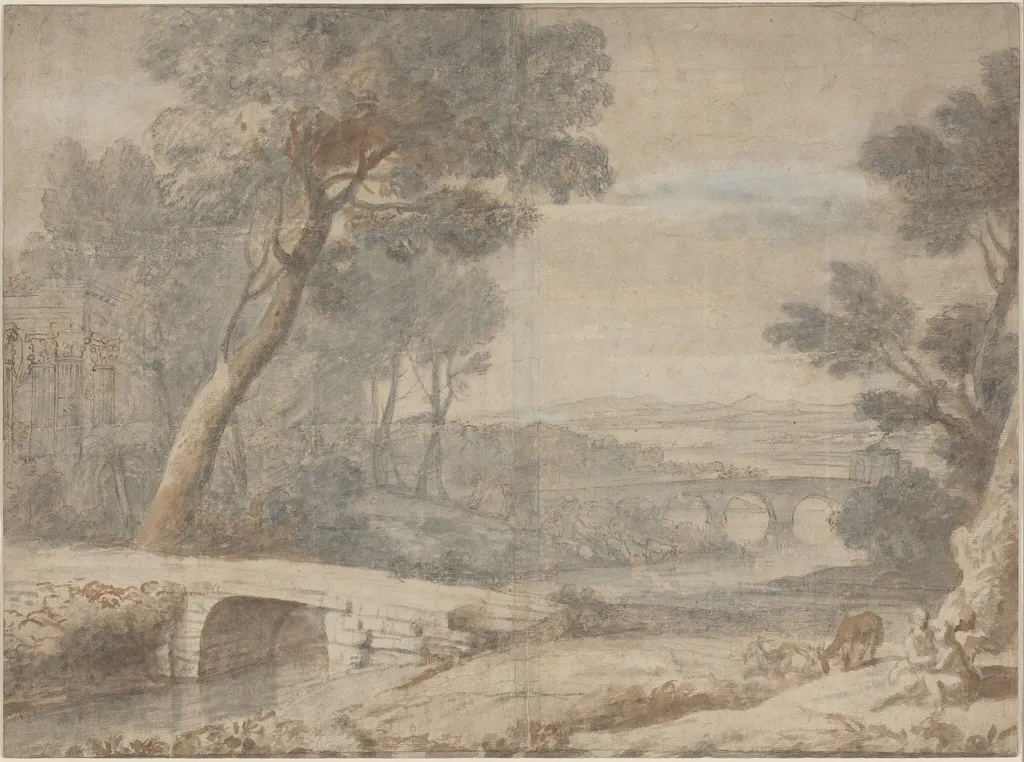
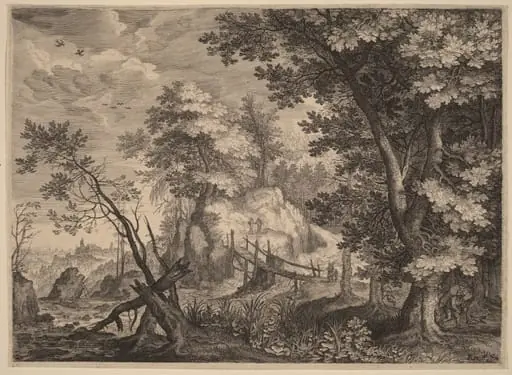
The Rest on the Flight into Egypt is an ink drawing by the Baroque artist Unknown. It dates from 1601 and is held in the collection of the National Gallery of Art. This drawing, executed in pen and brown ink with washes over black chalk, captures a quiet moment from the biblical Flight into Egypt.
About this work
Overview
The use of layered washes and chalk creates subtle tonal gradations, emphasizing stillness and spatial depth without overt narrative detail.
This drawing, executed in pen and brown ink with washes over black chalk, captures a quiet moment from the biblical Flight into Egypt. Rendered on laid paper, it presents a landscape centered on a stone bridge crossing a river, surrounded by foliage and distant hills. The use of layered washes and chalk creates subtle tonal gradations, emphasizing stillness and spatial depth without overt narrative detail.
Subject & Meaning
The scene alludes to the Holy Family’s journey into Egypt, though figures are minimized and placed far in the background. The focus on the bridge and natural surroundings suggests a meditation on rest and refuge rather than dramatic storytelling. The tranquil setting reflects a contemplative interpretation of the biblical episode, prioritizing atmosphere over explicit religious symbolism.
Technique & Style
The artist employs brown ink for precise linear definition, complemented by diluted washes to model form and suggest light. White highlights add luminosity to stone and foliage, while black chalk underdrawing anchors the composition. The layered technique achieves a soft, atmospheric quality, balancing structural clarity with delicate tonal transitions characteristic of early modern landscape drawing.
History & Provenance
The work’s origin is tied to a 16th- or early 17th-century Northern European tradition of landscape drawing, though its specific provenance remains unverified. It entered institutional collection through documented acquisition, likely from a private European collection. No records indicate prior ownership by major collectors or artists, suggesting it was preserved as a study or independent work.
Context
Created during a period when landscape drawing gained autonomy from religious narrative, this piece aligns with emerging interests in naturalism and quiet contemplation. Artists across the Low Countries and Germany were exploring such themes, often using ink and wash to capture rural serenity. The drawing reflects this shift, valuing mood and environment over doctrinal emphasis.
Legacy
Though not widely reproduced or attributed to a major named artist, the drawing exemplifies the quiet evolution of landscape as a subject in its own right. Its preservation in a public collection underscores its value as a representative example of early modern draftsmanship, influencing later studies of natural form and compositional harmony in European art.
Artist & collection

 Domestic Scene
 Giacomo and Cardinal Marco, investing Andrea, Abbot of San Zeno, with his Benefice
 The Nymph of Fontainebleau
 Portrait of a Woman
 Madonna and Child with Saints in the Enclosed Garden
 Venus and Minerva
 Family Group of Four on Sofa
 Wall painting from Room H of the Villa of P. Fannius Synistor at Boscoreale
 Peasants at the Edge of a Wood
 Landscape with Two Washerwomen
 Landscape with Bridge
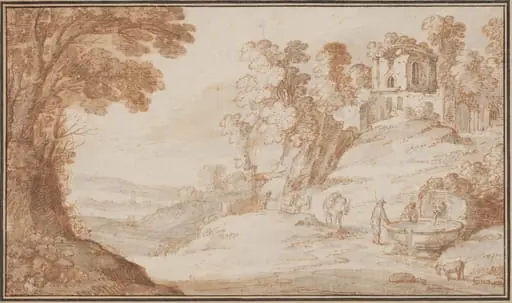 Classical Landscape with a Fountain
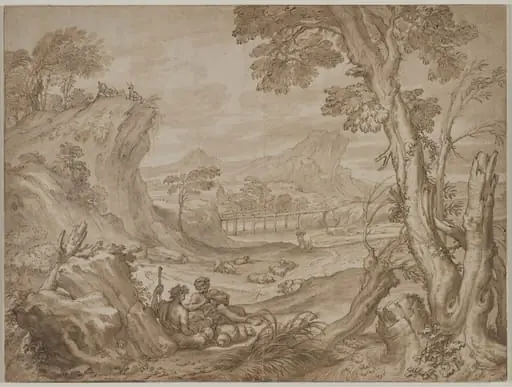 Landscape with Shepherds
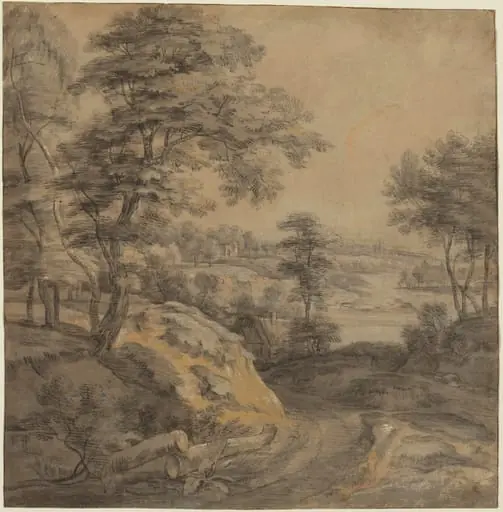 Wooded Landscape with a Road
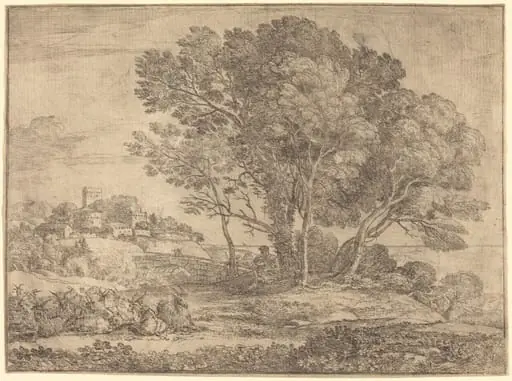 The Goatherd (Le chevrier)
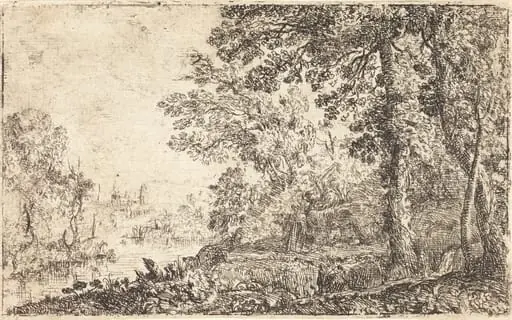 The Vision (L'apparition)
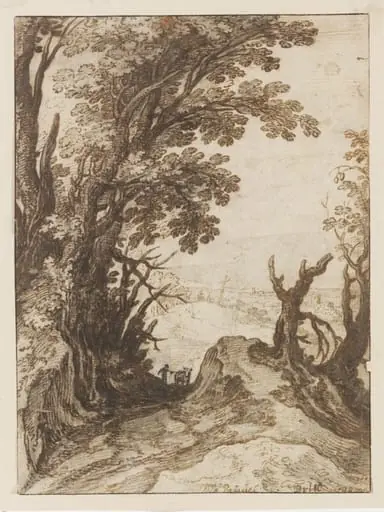 Landscape with a Sunken Road Between Trees Leading Over a Hill
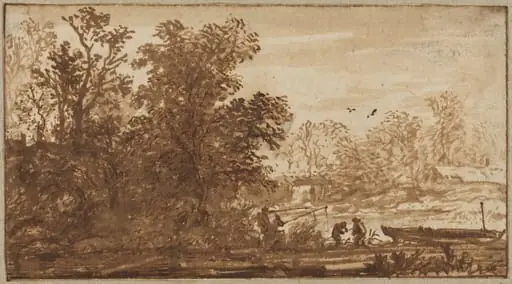 Fisherman in a River Landscape
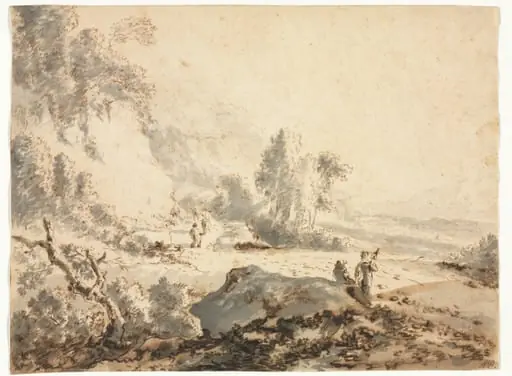 Landscape
 Woodland Scene