Artwork
Parade Horse
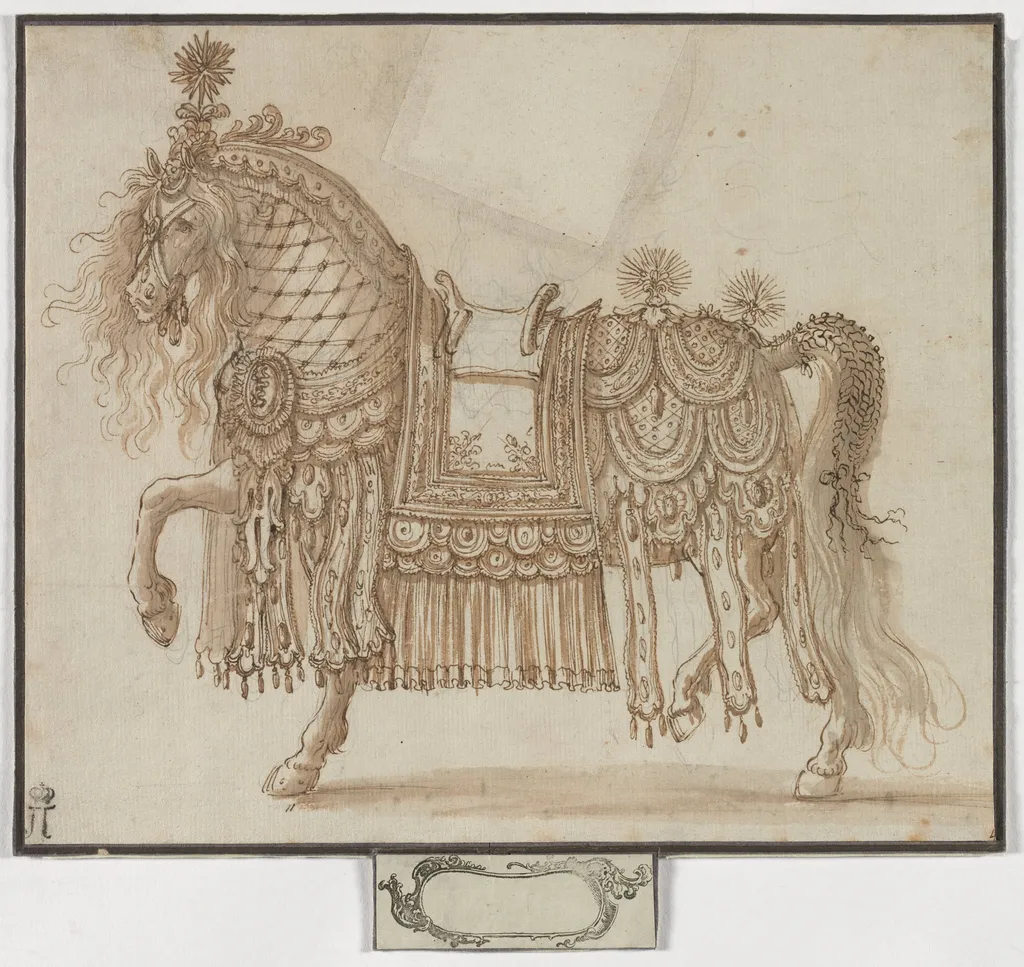
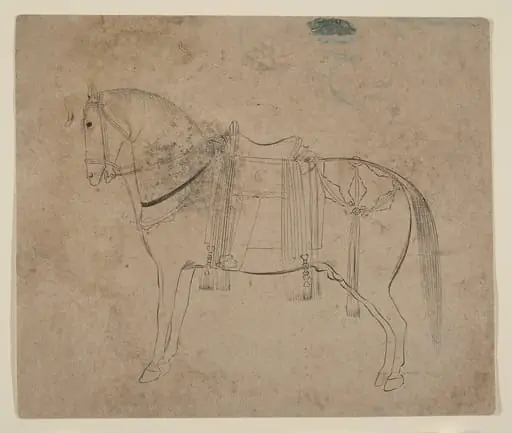
Parade Horse is a drawing by the Baroque artist Unknown. It dates from 1619 and is held in the collection of the Cleveland Museum of Art. This drawing depicts a horse adorned for a ceremonial procession, rendered with careful attention to decorative elements.
About this work
Overview
This drawing depicts a horse adorned for a ceremonial procession, rendered with careful attention to decorative elements. The composition isolates the animal against a minimal background, emphasizing its ornate presentation. The artist prioritized detail in the horse’s embellishments, using fine lines and shading to convey texture and form without relying on color.
Subject & Meaning
The horse is presented as a ceremonial object, its body decorated with feathers and flowers typical of processional traditions. These adornments suggest ritual or public celebration, possibly tied to cultural or military pageantry. The focus on ornamentation, rather than movement or rider, implies the animal itself is the symbol of status or occasion.
Technique & Style
The work employs precise linear draftsmanship and subtle tonal gradations to model the horse’s form. Feathers and petals are rendered with delicate, individual strokes, suggesting observation from life. While sfumato is referenced, the drawing relies more on controlled line and shading than atmospheric blending, indicating a preference for clarity over soft transition.
History & Provenance
No documented history or ownership record is available for this drawing. Its origin, date, and creator remain unverified. The absence of contextual documentation limits its placement within a specific artistic tradition or period, though its style aligns with 19th-century academic drawing practices.
Context
Parade horses adorned with natural materials like feathers and flowers appear in ceremonial traditions across cultures, from military parades to religious festivals. This drawing reflects a broader visual language in which animals are transformed into symbols of power or celebration, often through elaborate decoration that transcends their utilitarian role.
Legacy
As a standalone study, the drawing contributes to the tradition of animal portraiture in decorative contexts. While not widely known, it exemplifies how draftsmanship can elevate ceremonial subjects through precision and restraint, influencing later illustrative approaches to ritualized animals in visual culture.
Artist & collection

 Domestic Scene
 Giacomo and Cardinal Marco, investing Andrea, Abbot of San Zeno, with his Benefice
 The Nymph of Fontainebleau
 Portrait of a Woman
 Madonna and Child with Saints in the Enclosed Garden
 Venus and Minerva
 Family Group of Four on Sofa
 Wall painting from Room H of the Villa of P. Fannius Synistor at Boscoreale
 Floats and Participants
 H Beard Print Collection
 Study of a Stallion
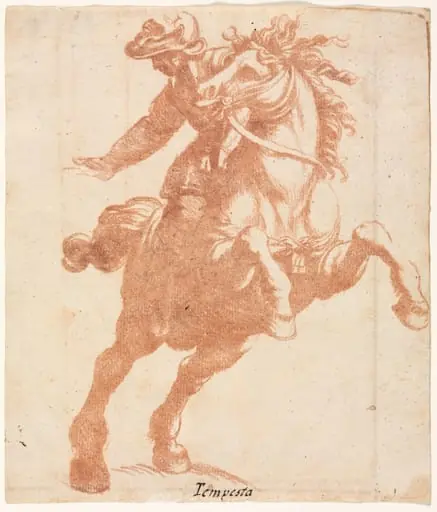 Rearing Horse and Rider
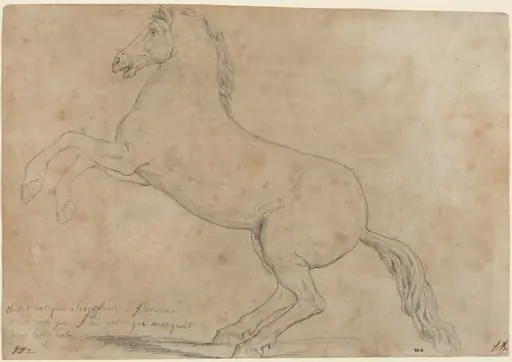 An Antique Sculpture of a Horse
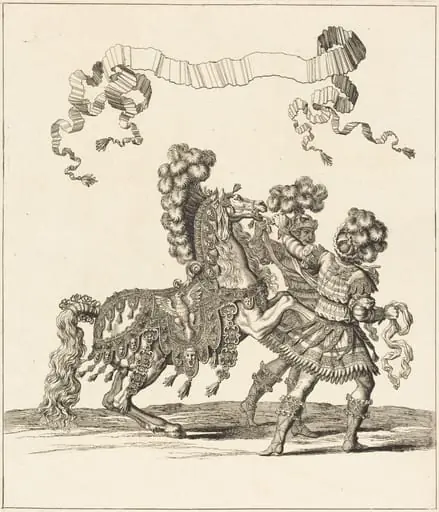 Cheval de Main et Palfreniers Romains
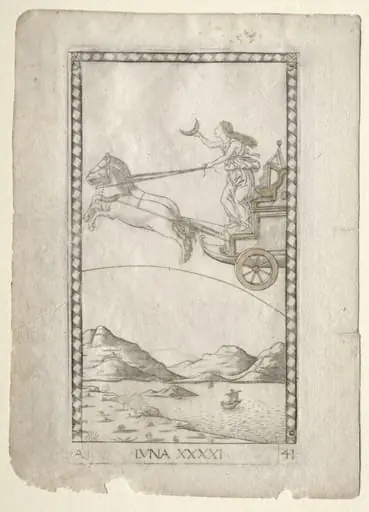 Luna (from the Tarocchi, series A: Firmaments of the Universe, #41)
 Untitled
![Figures on Horseback [verso], by Unknown](https://artifactworldgallery.com/img/unknown--figures-on-horseback-verso--014ce85ac0e4d9d4-w320.webp) Figures on Horseback [verso]
Figures on Horseback [verso] Il Greco in Troia: Plate 4
 Design for a bissona, or a ceremonial gondola
 The Defeat of Sennacherib