Artwork
The Painter in his Studio
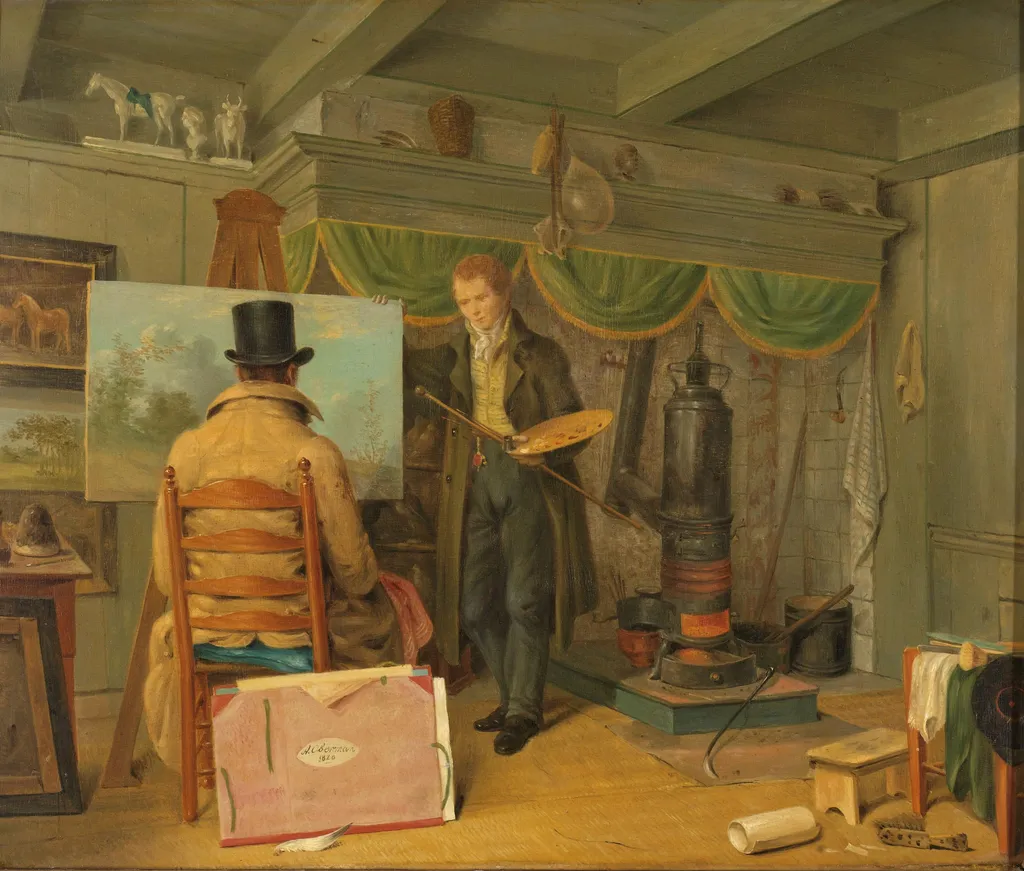
The Painter in his Studio is an oil painting by the Dutch Golden Age artist Anthony Oberman. It dates from 1820 and is held in the collection of the Rijksmuseum.
About this work
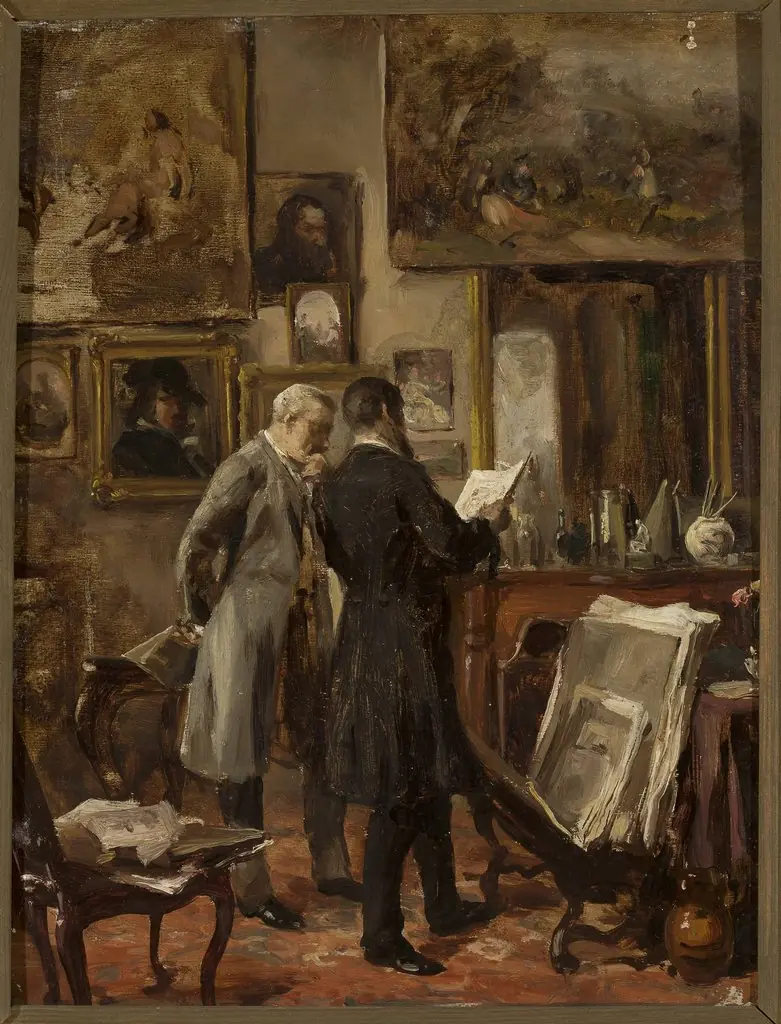
Shelves hold small animal statues, a half-finished landscape painting leans against the wall, and a heater sits on the floor.
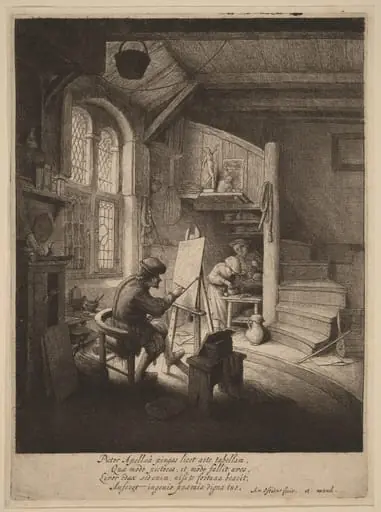
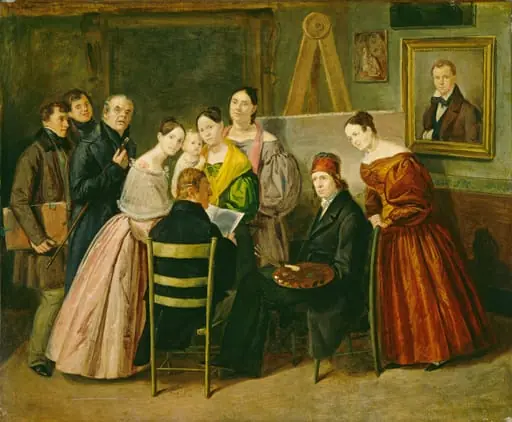
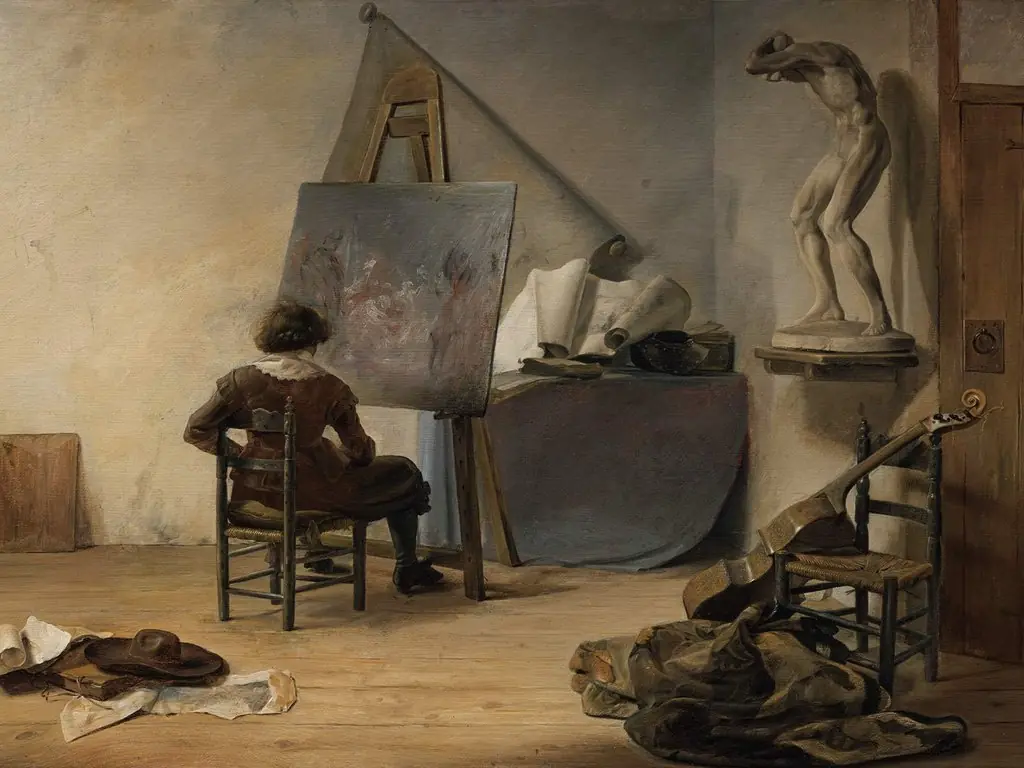
This painting shows two men in a cluttered studio. One man stands holding a paintbrush and palette, wearing a top hat and a light-colored coat. The other sits turned away, wearing a dark coat and hat. Shelves hold small animal statues, a half-finished landscape painting leans against the wall, and a heater sits on the floor.
The signed canvas on the floor reads "A. Oberman 1820," showing this was made early in the 19th century. The room feels lived-in, with tools and supplies scattered around.
Check out the Rijksmuseum to see more works like this in person.
Overview
The Painter in his Studio is a 19th-century genre painting by Anthony Oberman, executed on canvas in 1820.
Subject & Meaning
The scene depicts two men in a cluttered studio, one standing with painting tools, the other seated with his back turned. The setting conveys a sense of a lived-in workspace, with various art supplies and objects on display.
Technique & Style
The painting is characterized by its detailed rendering of the studio's clutter, with items such as small animal statues, a half-finished landscape, and a heater. The artist's signature on the canvas on the floor, 'A. Oberman 1820,' is a notable element.
History & Provenance
The Painter in his Studio is currently held at the Rijksmuseum, indicating its significance within the artist's oeuvre and the museum's collection.
Own this work as a print
Artist & collection

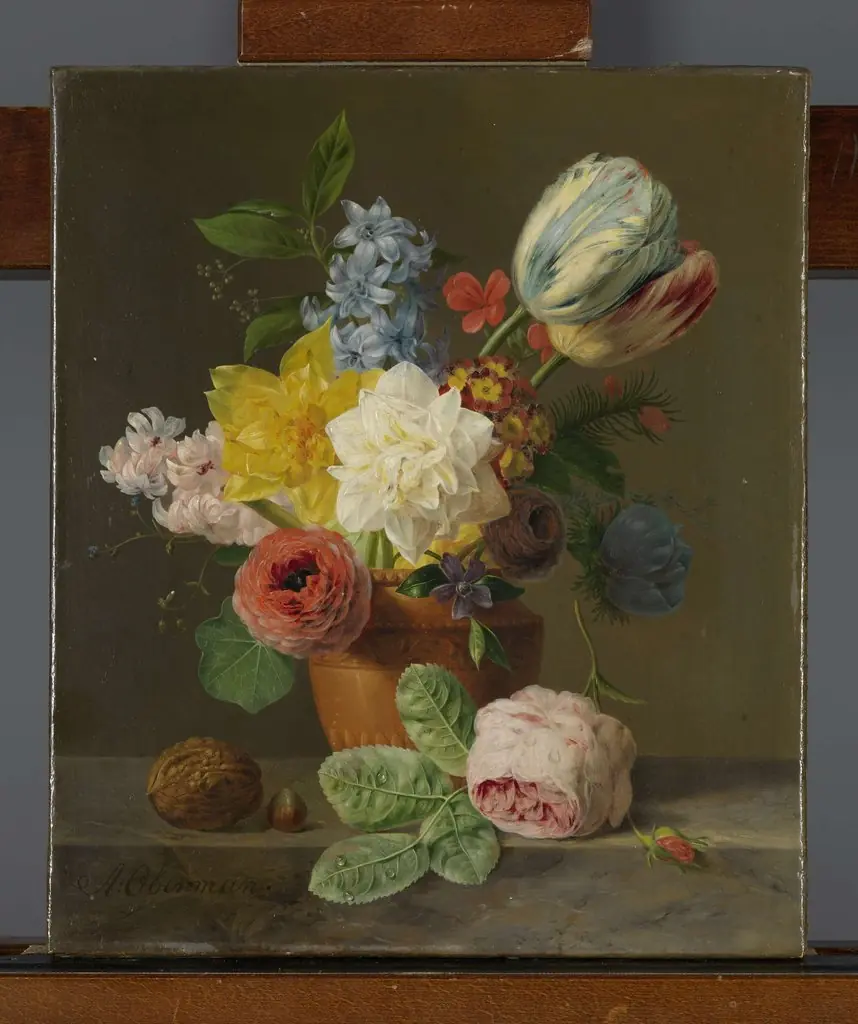 Still Life with Flowers and Nuts
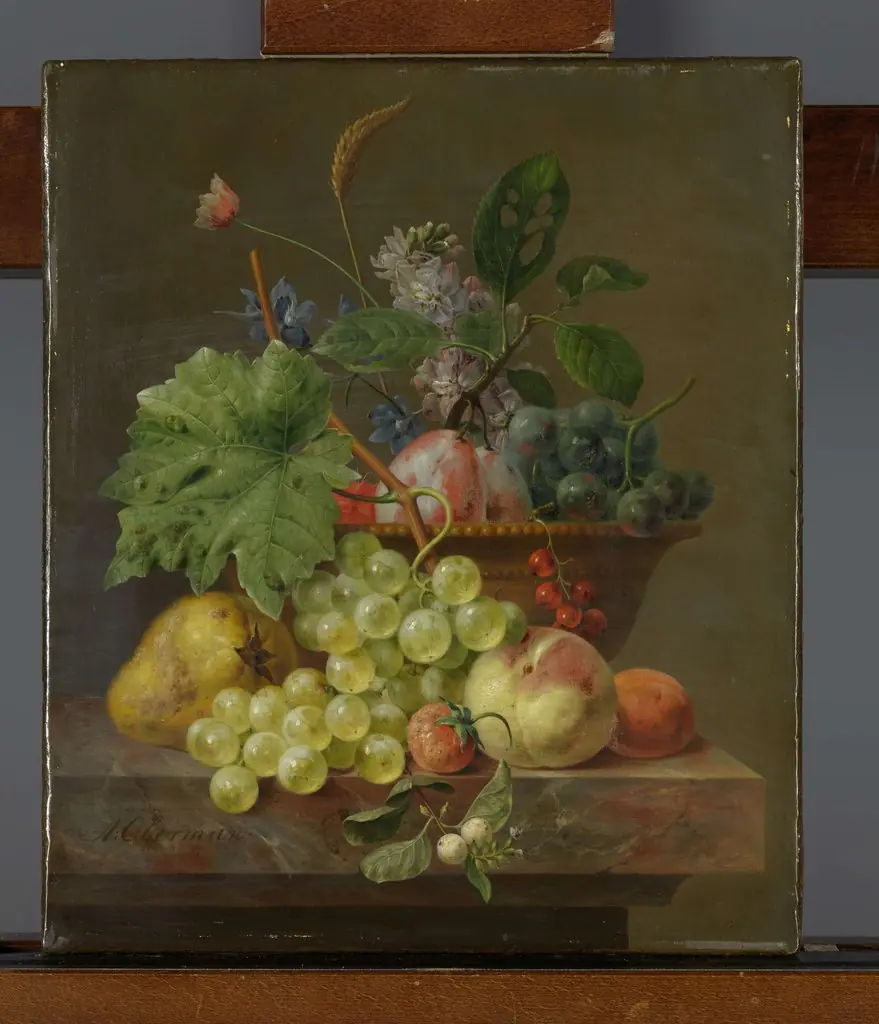 Still Life with Fruit in a Terracotta Dish
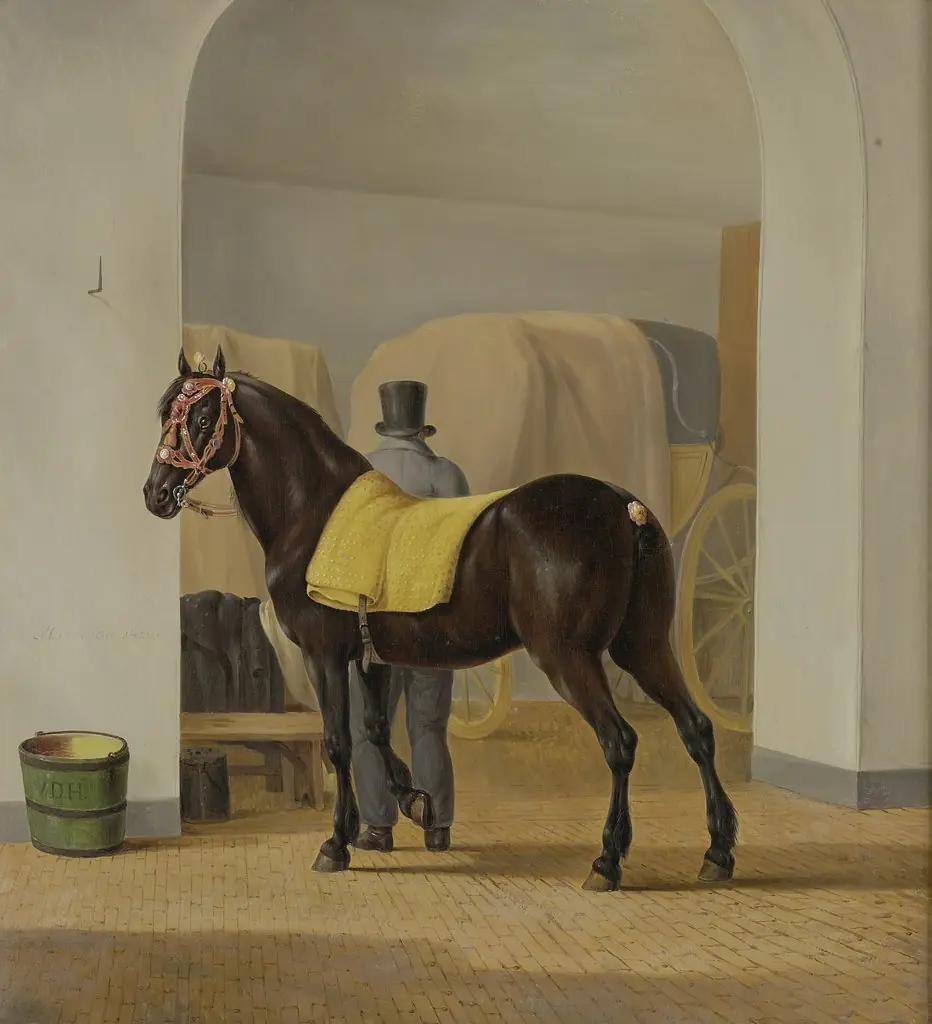 Adriaan van der Hoop’s Trotter ‘De Rot’ at the Coach House
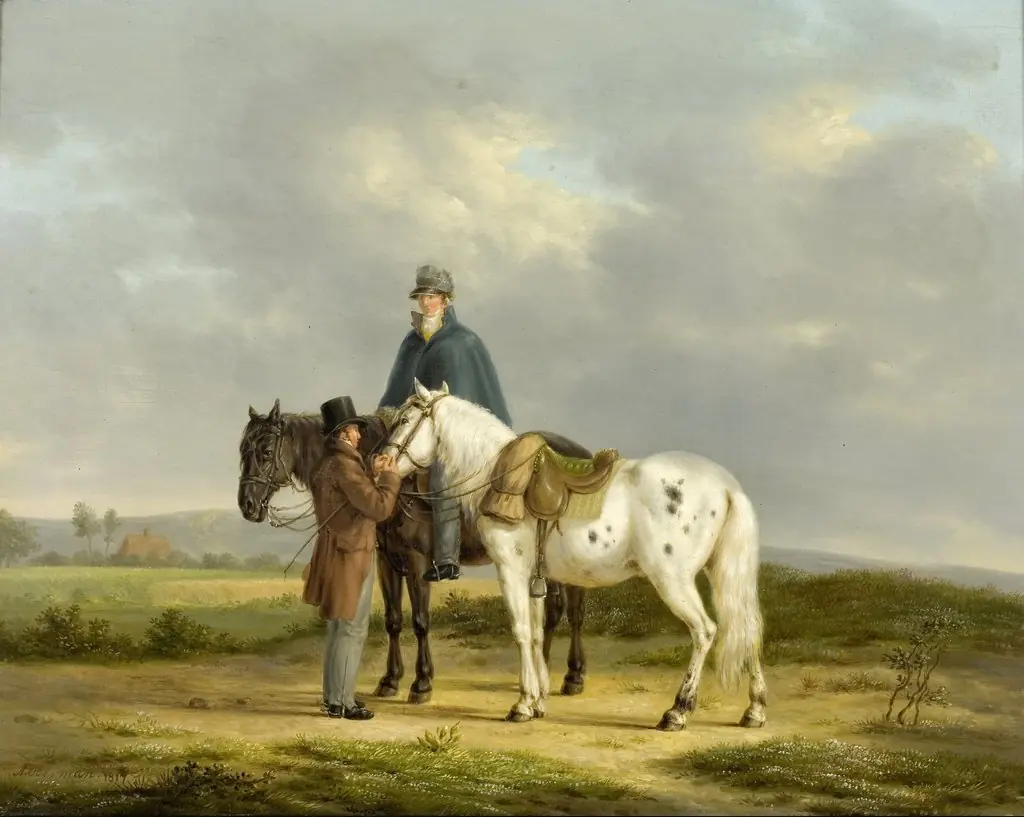 Two Riders in a Landscape
 Adriaan van der Hoop’s Trotter ‘De Vlugge’ (The Fast One) in a Meadow
 Adriaan van der Hoop’s Trotter ‘De Vlugge’ (The Fast One) in a Meadow