Artwork
Deposition
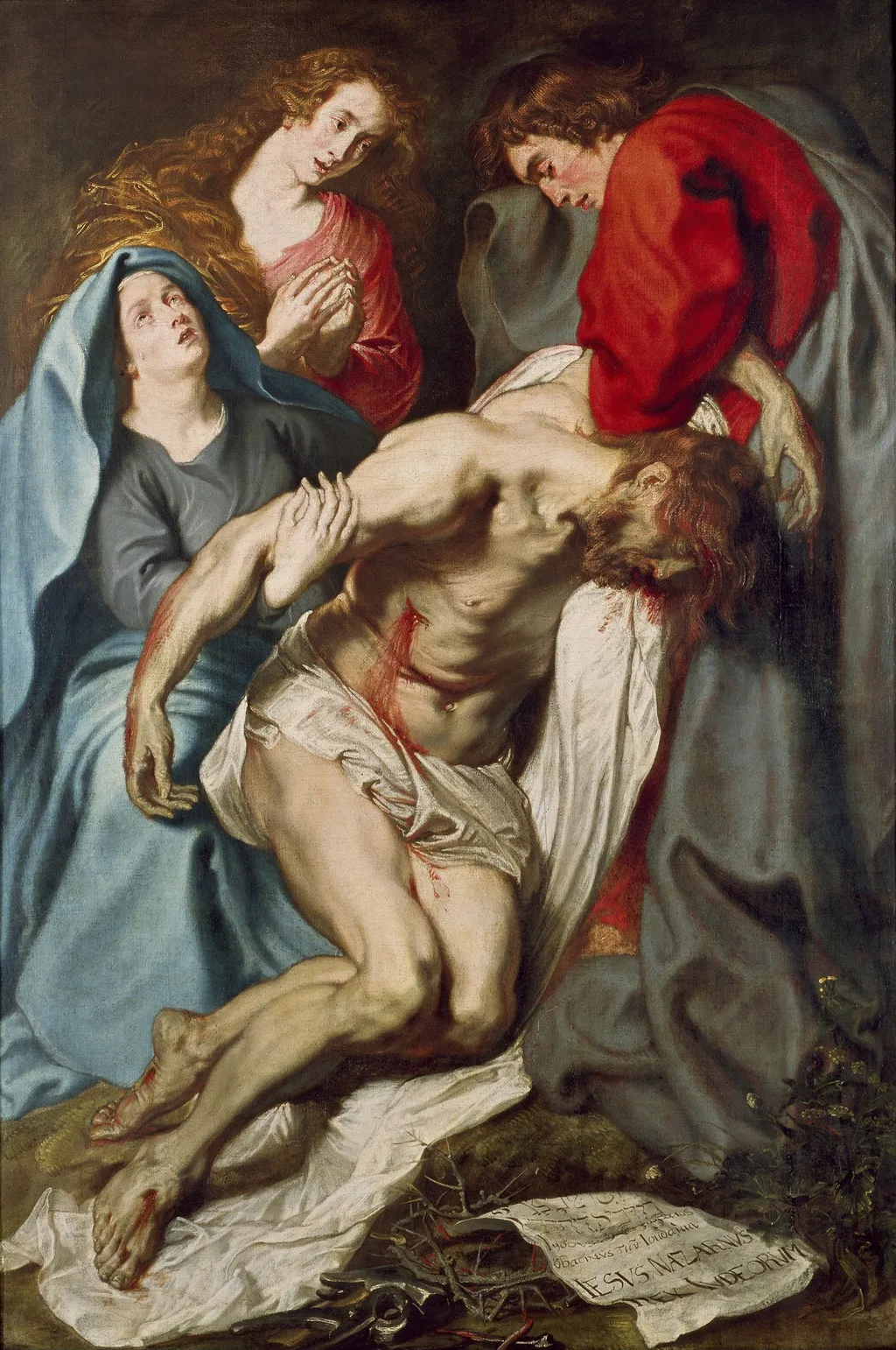
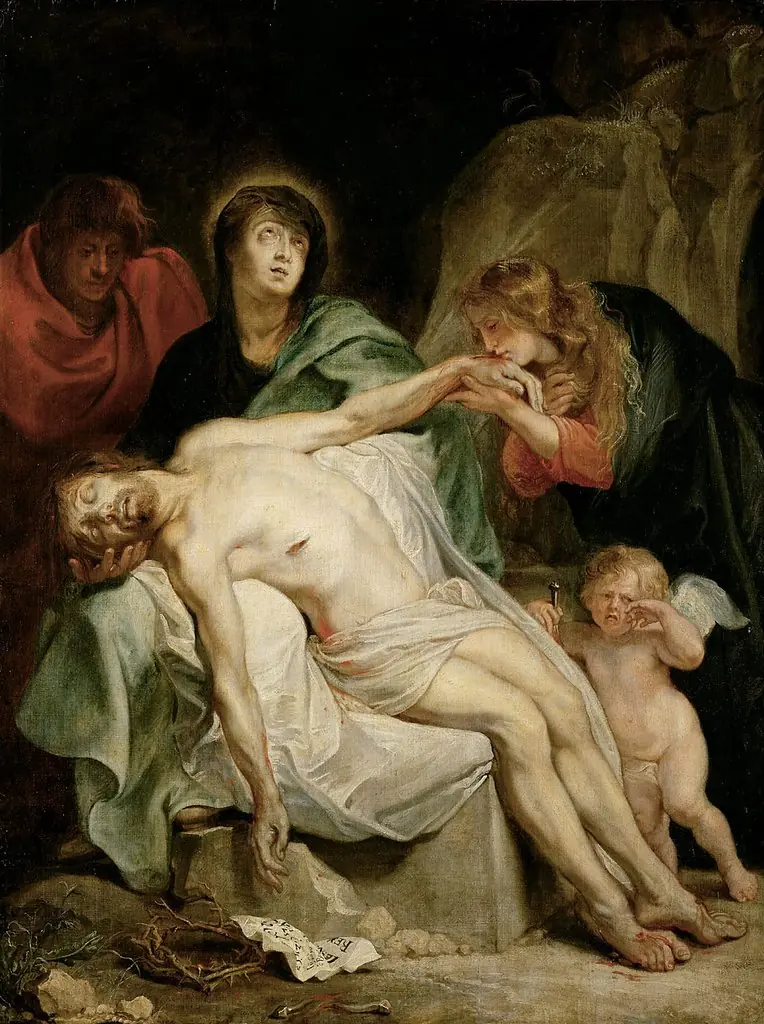
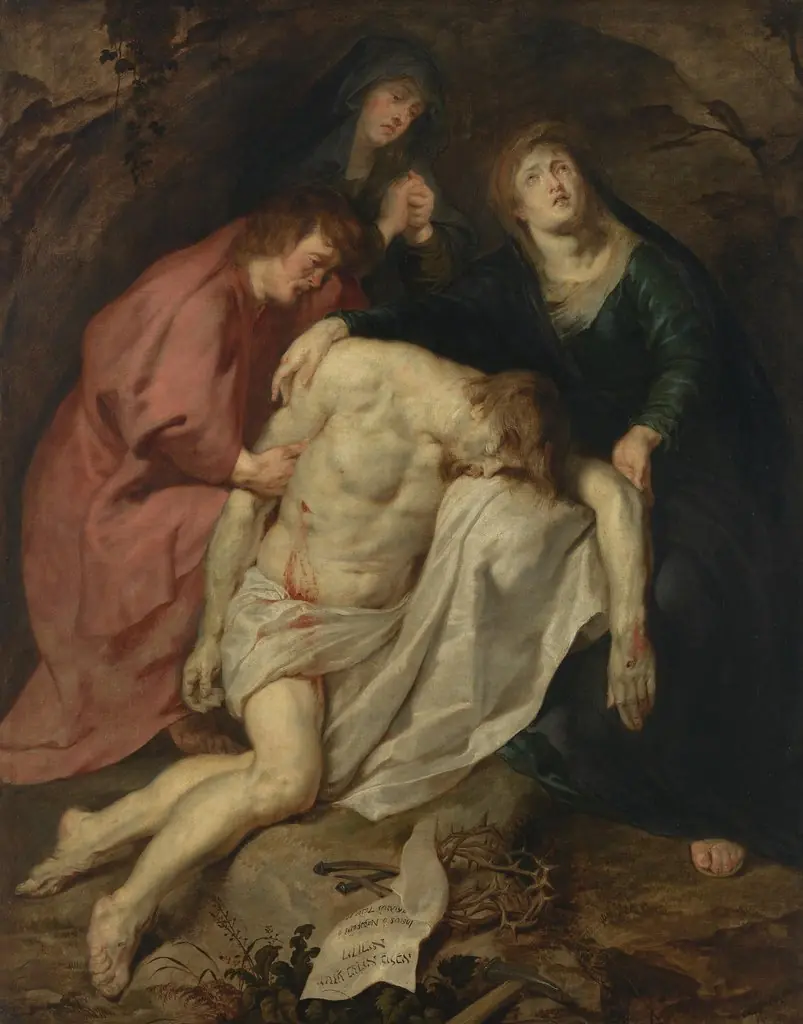
Deposition is an oil painting by the Flemish Baroque painting artist Anthony van Dyck. It dates from 1619 and is held in the collection of the Ashmolean Museum.
About this work
Overview
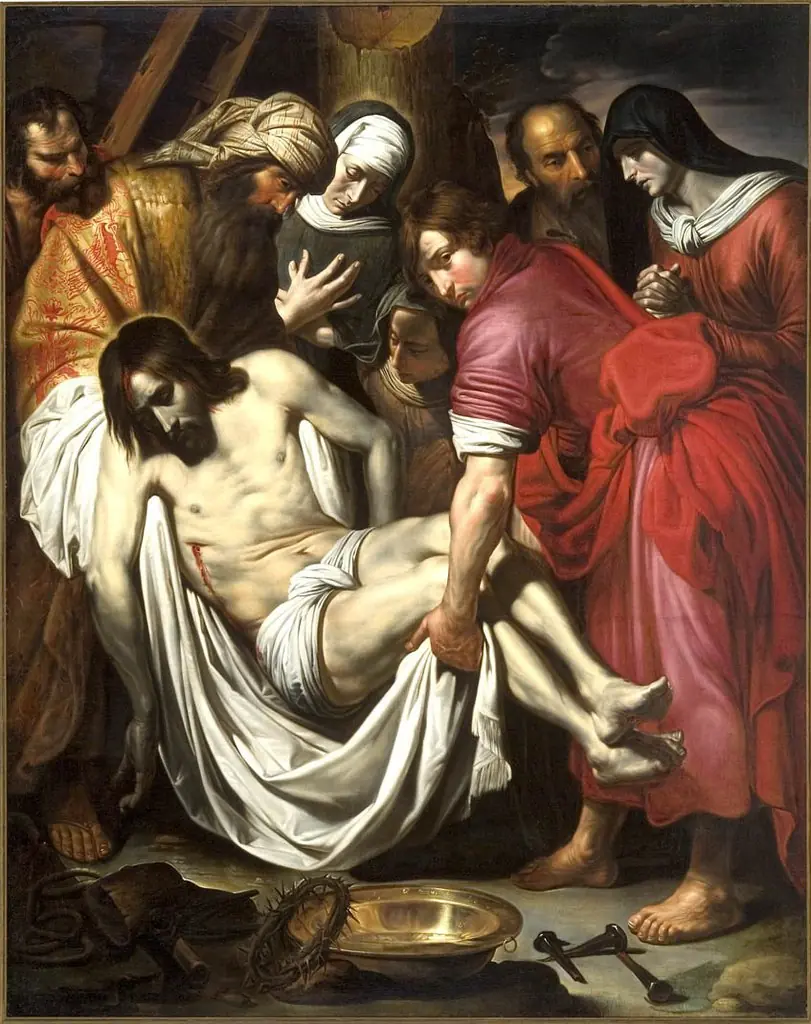
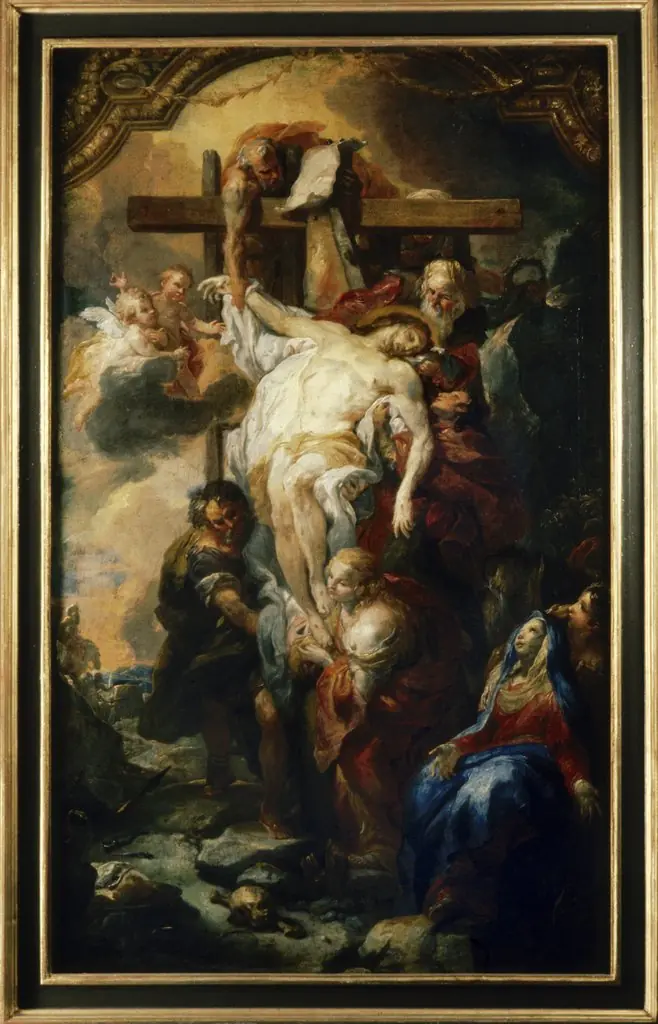
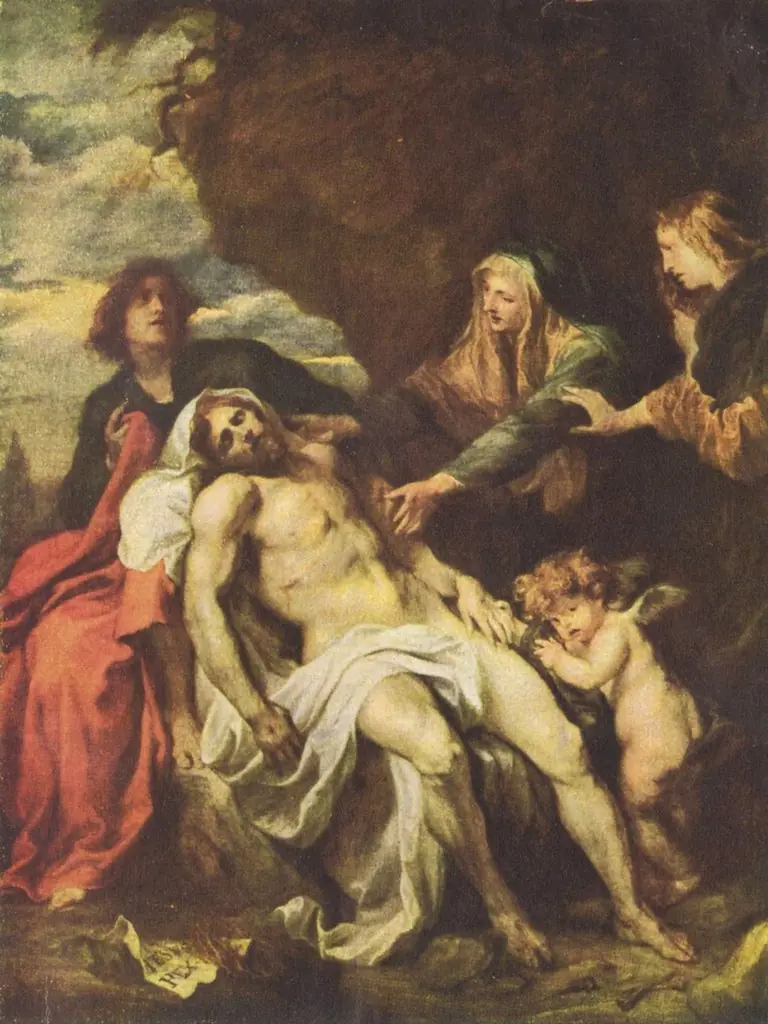
Anthony van Dyck’s Deposition, executed in oil around 1619, portrays the moment Christ’s body is lowered from the cross. The composition centers on the lifeless figure of Jesus, surrounded by mournful attendants in richly colored robes, set against a darkened backdrop that deepens the scene’s solemn atmosphere.
Subject & Meaning
The work illustrates the biblical episode of the Deposition, emphasizing themes of sacrifice and grief. The gestures of the figures—particularly the support offered by a man in a red garment—convey reverence and the collective sorrow of those present at the crucifixion’s aftermath.
Technique & Style
Van Dyck employs a restrained palette of reds, blues, and whites, allowing the central figure to emerge from the surrounding darkness. The subtle gradation of shadow and the delicate handling of the white cloth on the ground demonstrate his early mastery of chiaroscuro and his developing Baroque sensibility.
History & Provenance
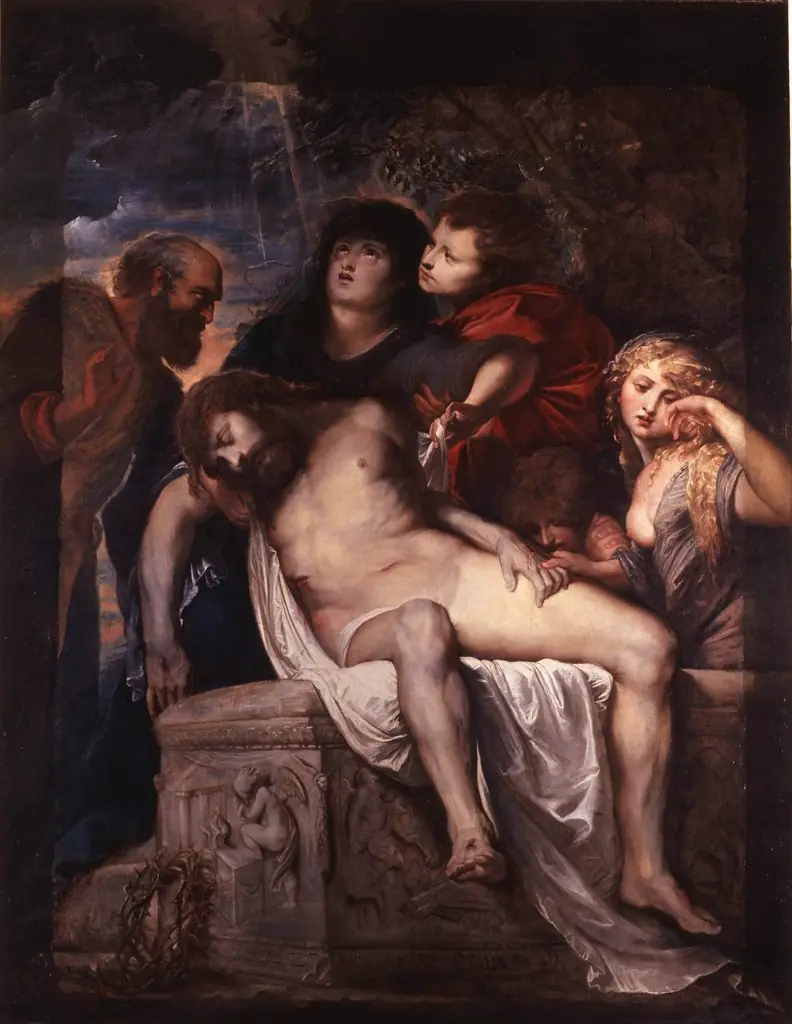
The painting revisits a composition Van Dyck first explored in 1615, refining its emotional impact. It entered the Ashmolean Museum’s collection in Oxford after being bequeathed by Charles T. Maude in 1869, where it remains on public display.
Own this work as a print
Artist & collection
Artist
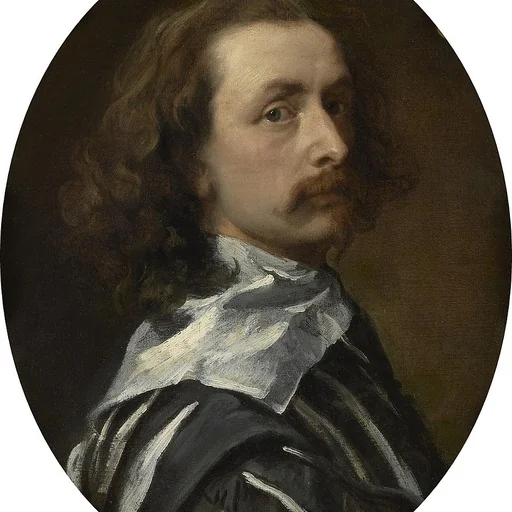
Sir Anthony van Dyck (; Dutch: Antoon van Dijck ; 22 March 1599 – 9 December 1641) was a Flemish Baroque artist, who became the leading court painter in England after success in the Spanish Netherlands and Italy.