Artwork
Diana and a Nymph Surprised by a Satyr
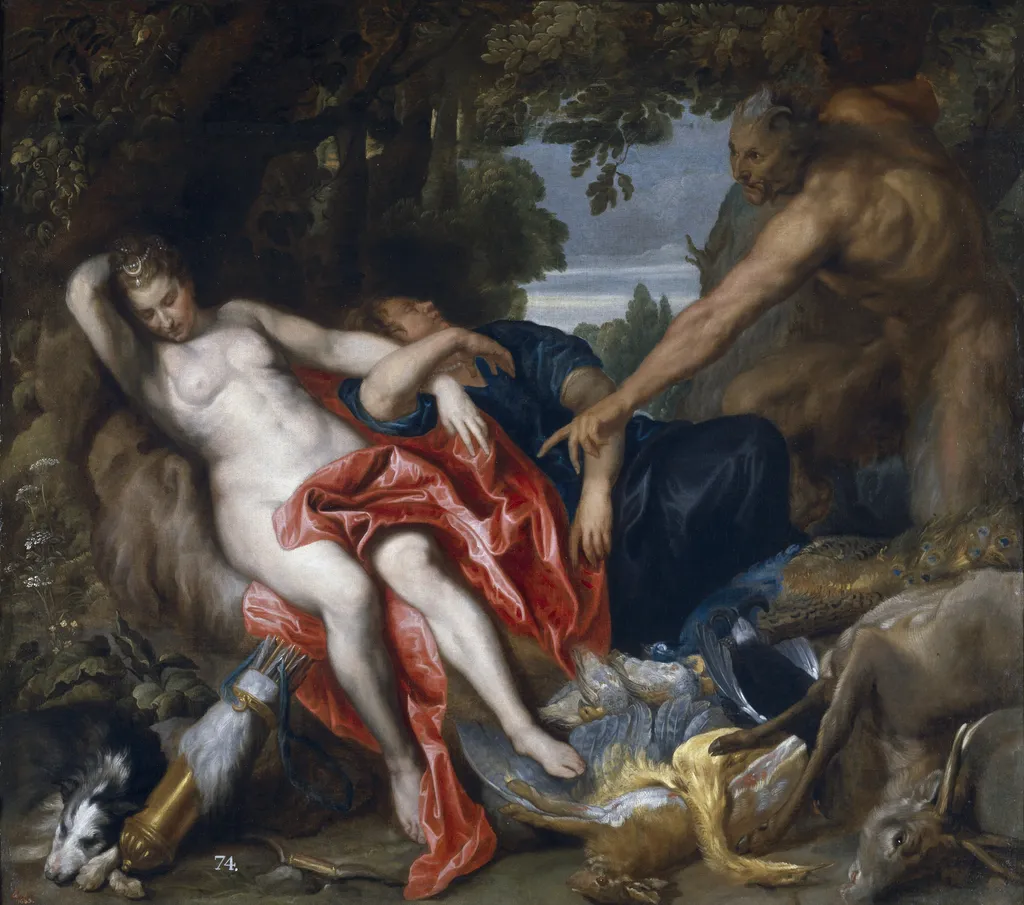
Diana and a Nymph Surprised by a Satyr is an oil painting by the Flemish Baroque painting artist Anthony van Dyck. It dates from 1622 and is held in the collection of the Museo del Prado.
About this work
Overview
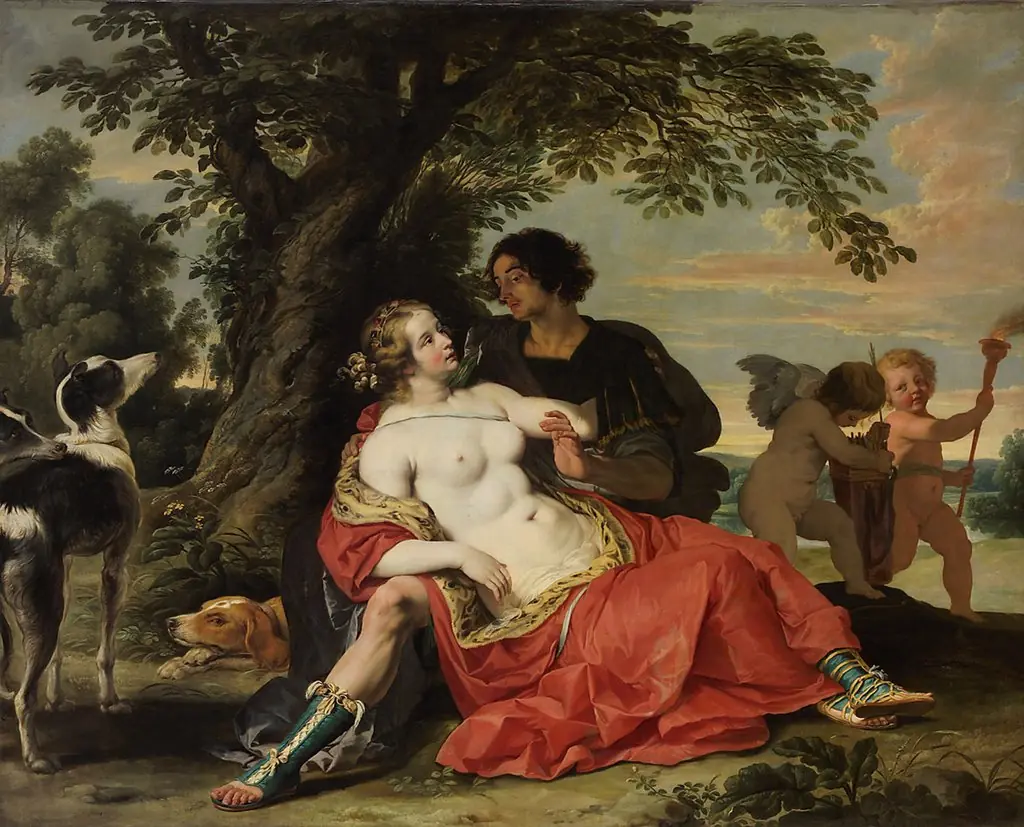
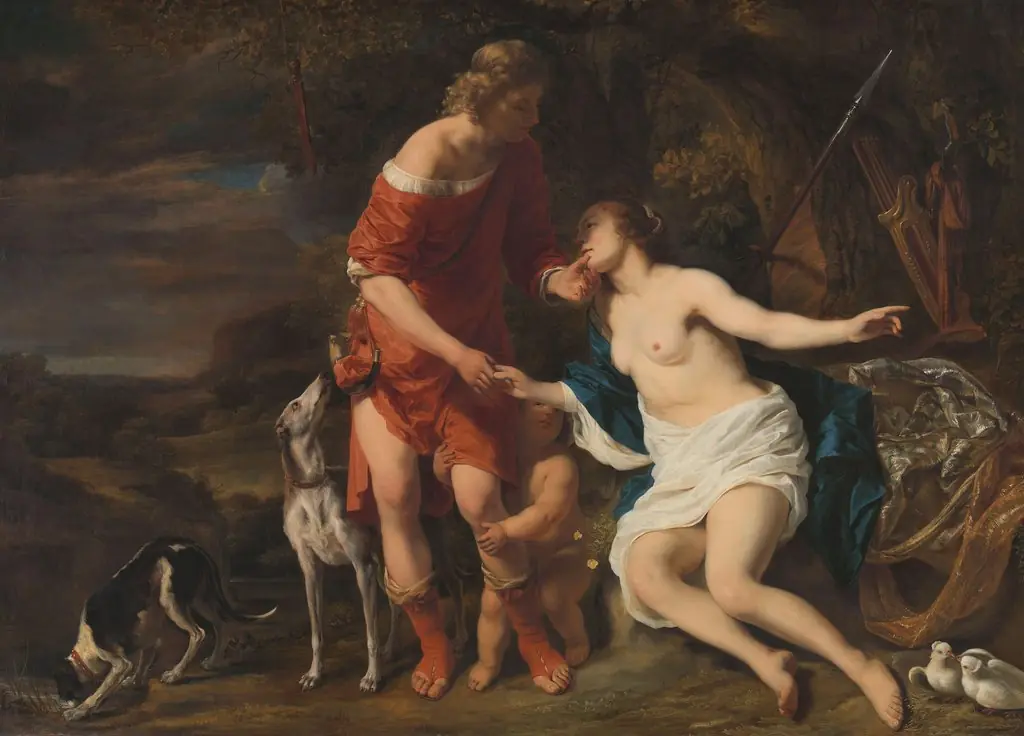
Created between 1622 and 1627, this oil on canvas depicts a woodland scene where a nude female figure reclines, a partially clothed male leans toward her, and a bearded, unclothed satyr points at the pair. The composition is set amid tangled foliage and a scattering of small animals, including birds, a hare and a dog, rendered in a dramatic play of light and shadow.
Subject & Meaning
The work illustrates a moment from classical mythology in which the huntress Diana and a companion are unexpectedly discovered by a satyr. The juxtaposition of the divine figure with the rustic, mischievous creature highlights themes of intrusion and the tension between chastity and desire that recur in Renaissance and Baroque interpretations of mythic narratives.
Technique & Style
The painting employs a strong chiaroscuro effect, with illuminated flesh and the blue cloak of the male figure contrasting against the deep, shadowed forest backdrop. The vivid red of the woman's dress draws the eye, while the loose, dynamic brushwork of the surrounding foliage and animals conveys a sense of immediacy and movement characteristic of early 17th‑century Flemish collaboration.
History & Provenance
Subsequent relocations placed it in the Casón del Buen Retiro in 1772, and finally, in 1794, it entered the Museo del Prado, where it continues to be displayed.
Initially entering the Spanish royal collection, the canvas was first documented in the new Palacio Real de Madrid, positioned beside the Guardajoyas. It remained there until 1747, when it was transferred to Infante Don Luis’s chambers in the Palacio del Buen Retiro. Subsequent relocations placed it in the Casón del Buen Retiro in 1772, and finally, in 1794, it entered the Museo del Prado, where it continues to be displayed.
Context and Identification
Long misidentified as a scene involving Endymion, the painting was listed under that title in an 1857 Prado catalogue. Scholarly re‑examination in 2002 clarified the identity of the figure beside Diana as a female nymph rather than the male shepherd Endymion, correcting the title to reflect the true mythological participants.
Own this work as a print
Artist & collection
Artist
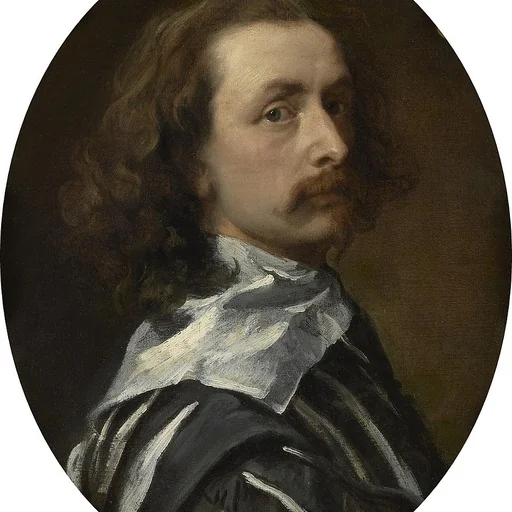
Sir Anthony van Dyck (; Dutch: Antoon van Dijck ; 22 March 1599 – 9 December 1641) was a Flemish Baroque artist, who became the leading court painter in England after success in the Spanish Netherlands and Italy.