Artwork
A Genoese Lady with Her Child
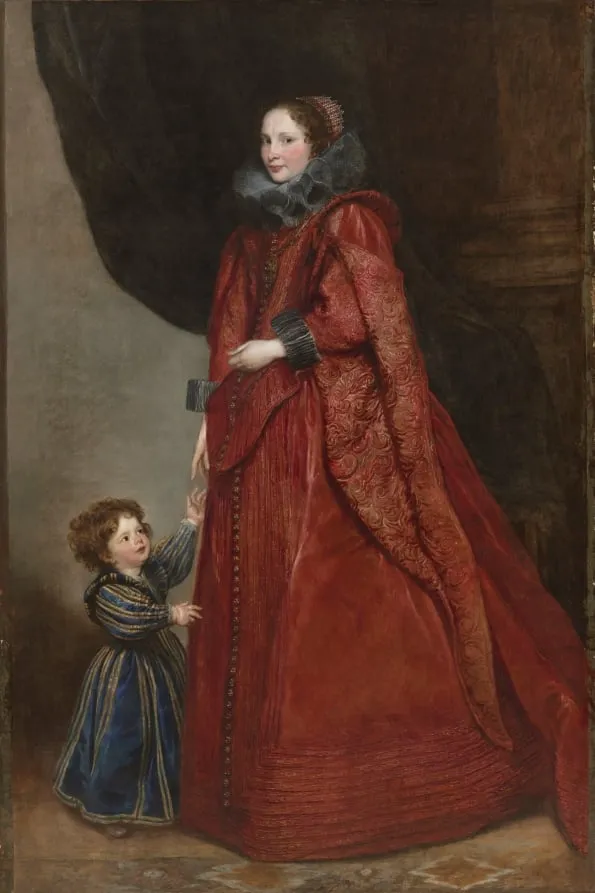
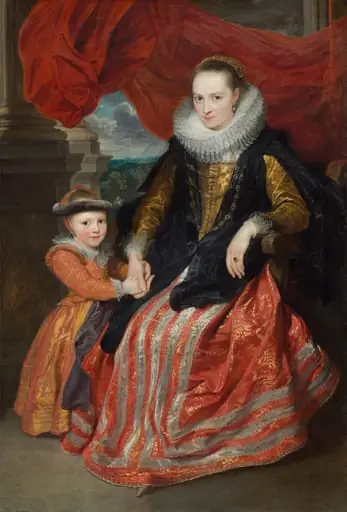
A Genoese Lady with Her Child is an unspecified painting by the Baroque artist Anthony van Dyck. It dates from 1624 and is held in the collection of the Cleveland Museum of Art. This full‑length oil painting depicts an elegantly dressed woman seated with a young child on her lap.
About this work
To see how he did it, look at other portraits by Anthony van Dyck (Flemish, 1599–1641).
A woman in a shimmering silver dress holds a small child on her lap. The child clutches a red coral teething toy while looking away. Light glows on their faces and the woman’s pearls.
Before this, portraits of rich people were stiff and full of props to show off wealth. Van Dyck made them feel alive—like real people, not statues. Genoa’s elite were so impressed they changed how they wanted to be painted.
To see how he did it, look at other portraits by Anthony van Dyck (Flemish, 1599–1641).
Overview
This full‑length oil painting depicts an elegantly dressed woman seated with a young child on her lap. The sitter wears a shimmering silver gown accented with pearls, while the child holds a red coral teething piece and looks away. Soft illumination highlights their faces, creating a gentle contrast with the darker, dramatic backdrop.
Subject & Meaning
The identity of the woman remains unknown, but her attire and the inclusion of a child suggest a portrayal of maternal status and familial wealth. The coral toy, a common protective amulet in the period, underscores the child's infancy and the family's concern for health and prosperity.
Technique & Style
The artist employs a refined handling of light, allowing the silver fabric and pearls to glint against a muted background. The figures are rendered with a naturalistic softness, especially in the facial expressions, which convey warmth and immediacy uncommon in earlier, more formal portraiture.
History & Provenance
Created in the early 17th century, the work reflects the influence of Anthony van Dyck, whose approach to aristocratic portraiture introduced a more lively, personal dimension. The painting entered the Genoese market during a period when local patrons eagerly adopted Van Dyck’s style, reshaping elite portrait conventions in the city.
Context
Prior to this era, Genoese portraits emphasized symbols of rank—opulent clothing, elaborate settings—over individual character. Van Dyck’s method, which blended status with psychological presence, prompted Genoese patrons to commission works that balanced display of wealth with a more intimate portrayal of the sitter.
Legacy
The painting exemplifies the shift toward more naturalistic, emotionally resonant portraiture that spread across Northern Italy in the 17th century. Its combination of luxurious detail and personal warmth continues to inform scholarly understanding of how Flemish influences altered Italian elite visual culture.
Artist & collection
Artist
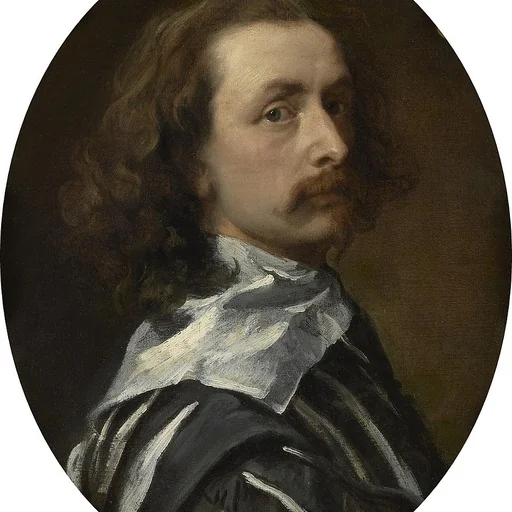
Sir Anthony van Dyck (; Dutch: Antoon van Dijck ; 22 March 1599 – 9 December 1641) was a Flemish Baroque artist, who became the leading court painter in England after success in the Spanish Netherlands and Italy.

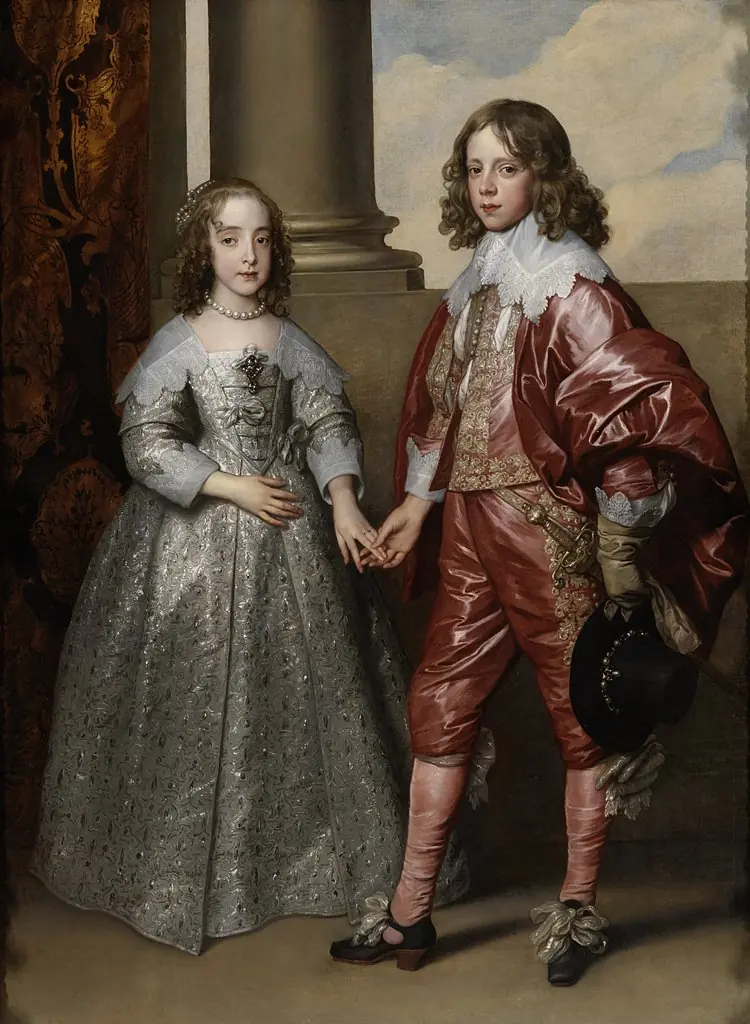
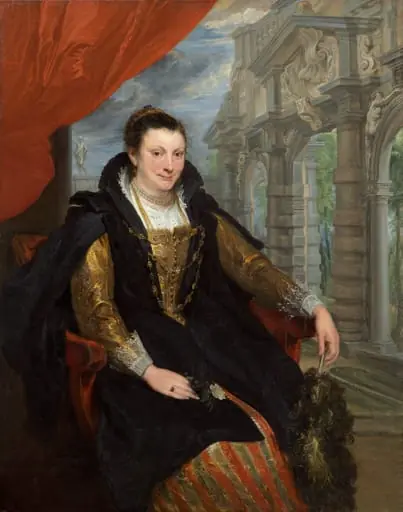
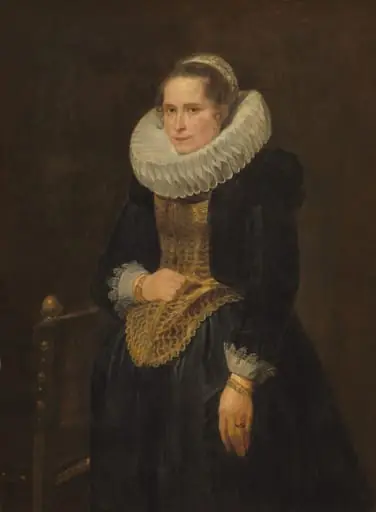
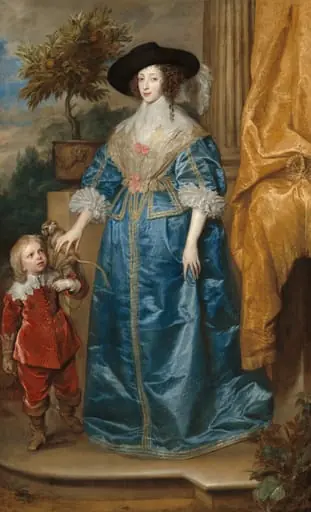
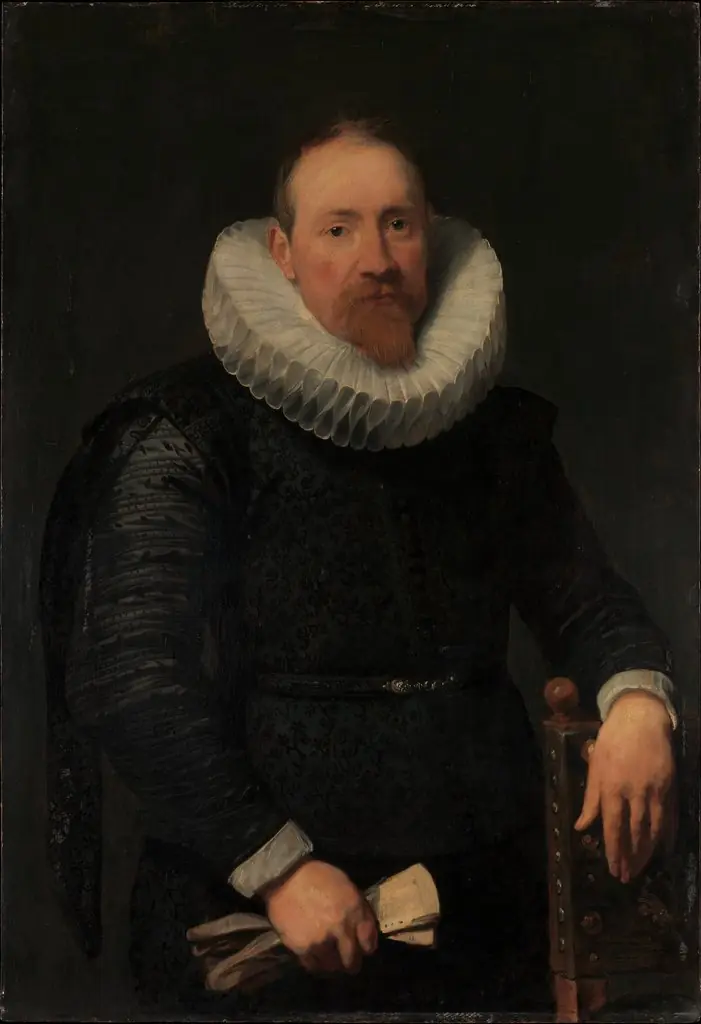
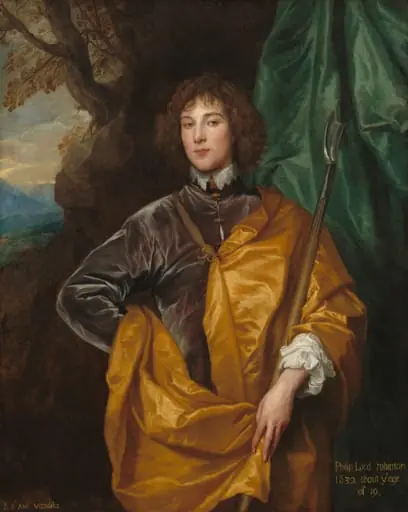
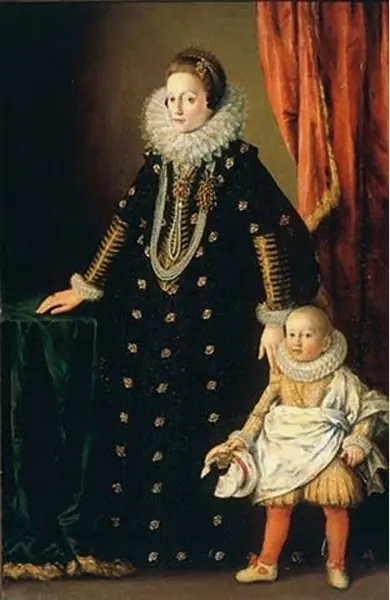 Portrait of Duchess Magdalene of Bavaria (1587–1628) and her son Philip William.
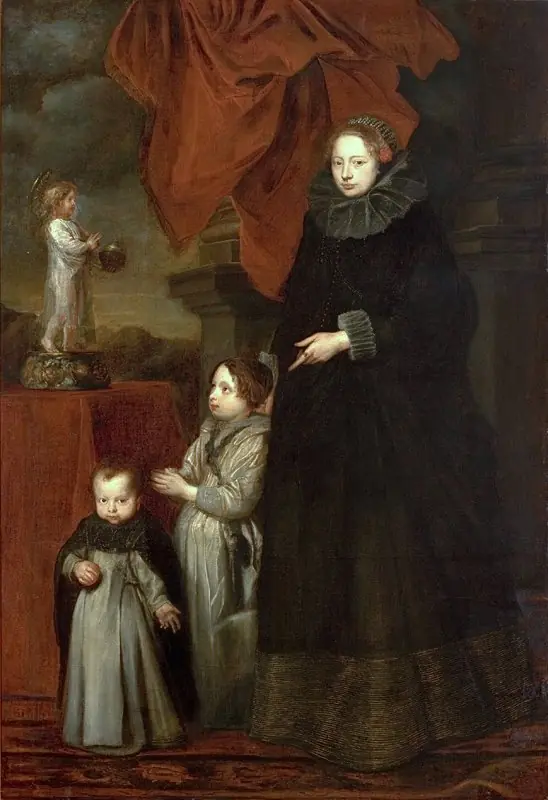 Portrait of Marquise Lomellini, with her children at prayer
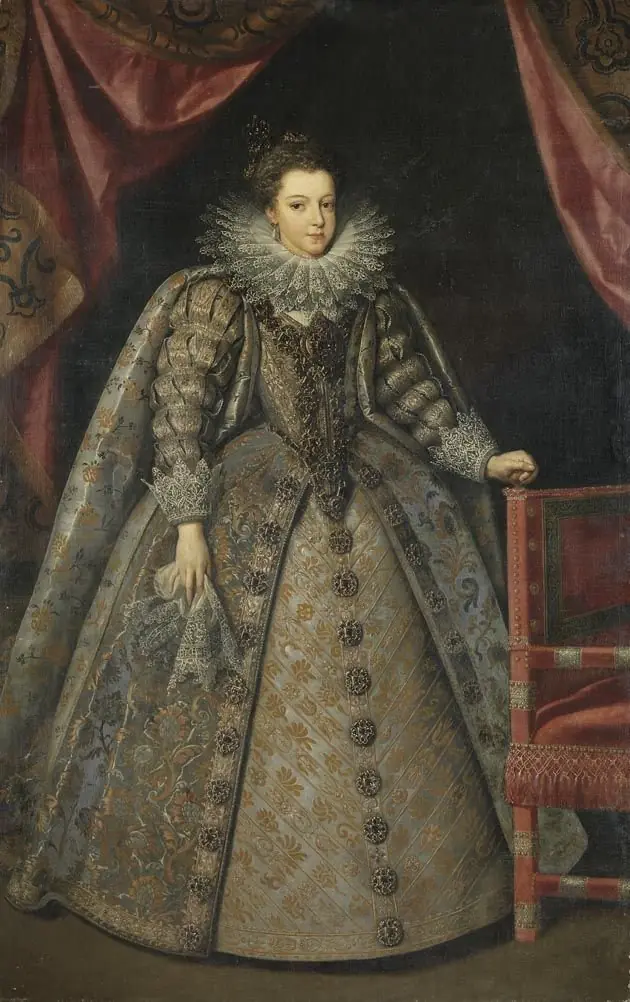 Elisabeth von Bourbon (1602-1644)
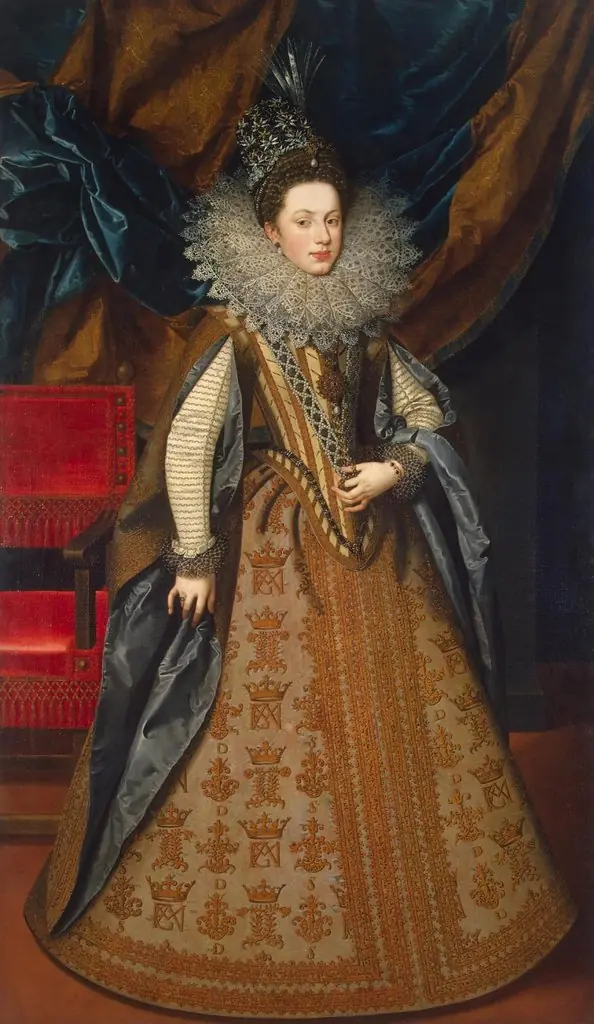 Portrait of Margaret of Savoy, Duchess of Mantua
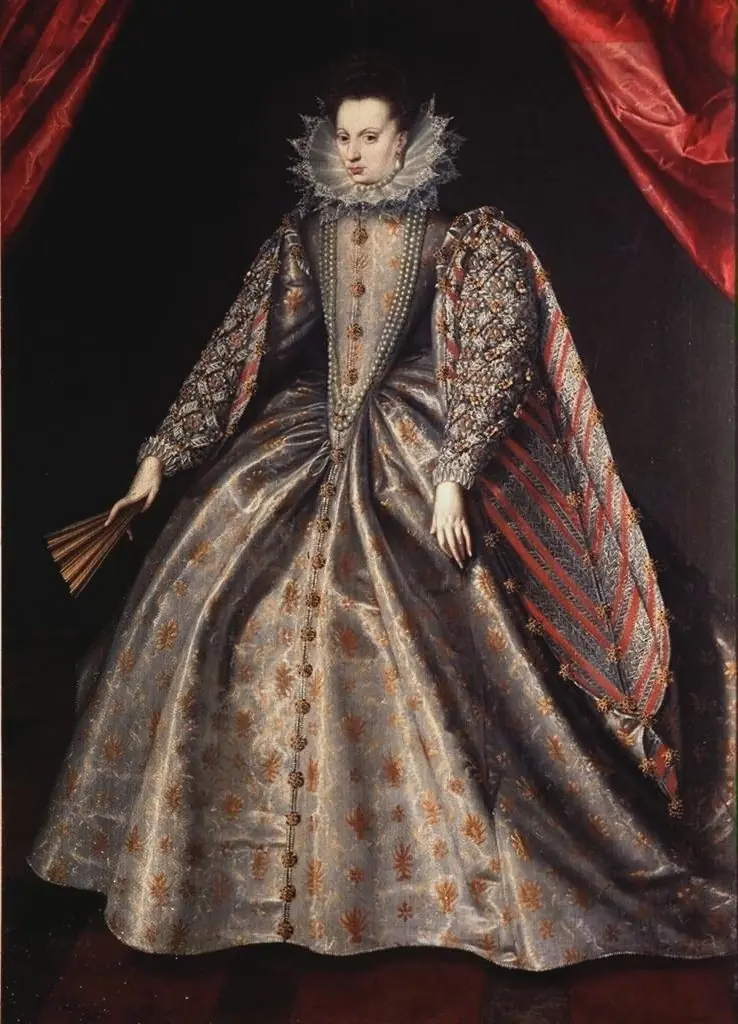 Elisabeth Renata von Lothringen
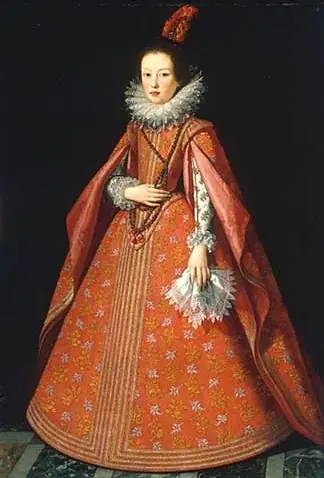 Portrait of Margherita de' Medici
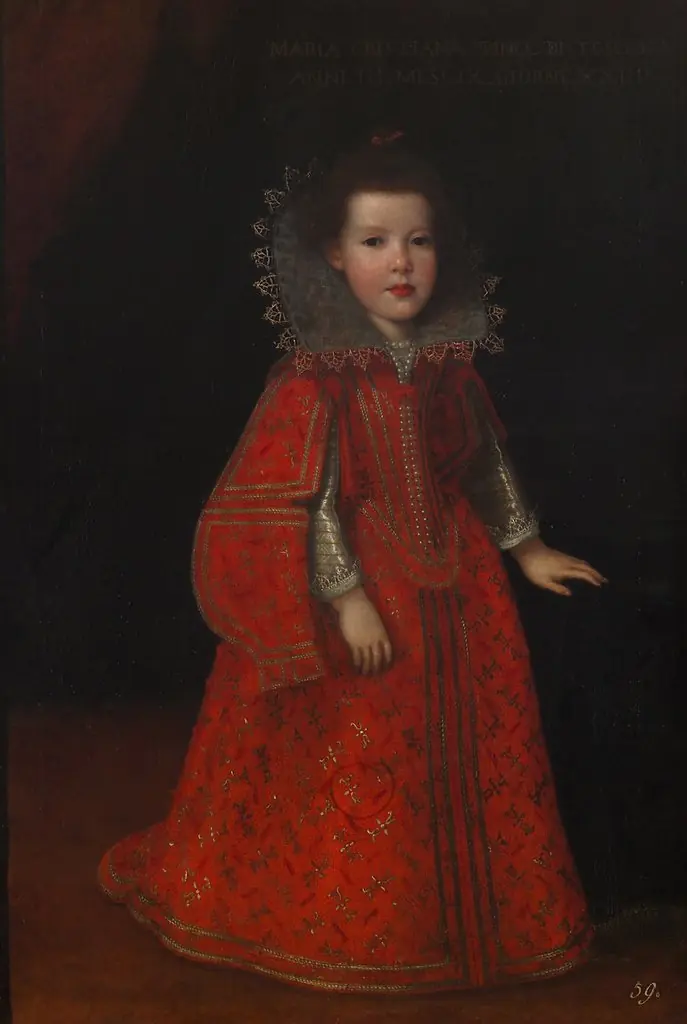 Maria Cristina de' Medici (1609-1632) im Alter von drei Jahren
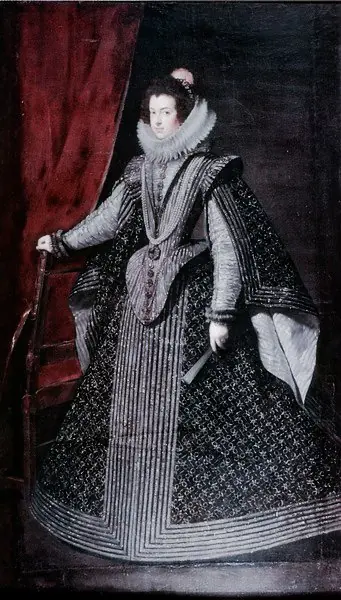 Isabella of Bourbon. First Queen of King Philip IV
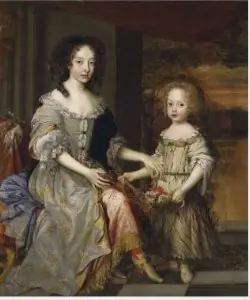 Portrait of Lady Catherine and Lady Charlotte Talbot
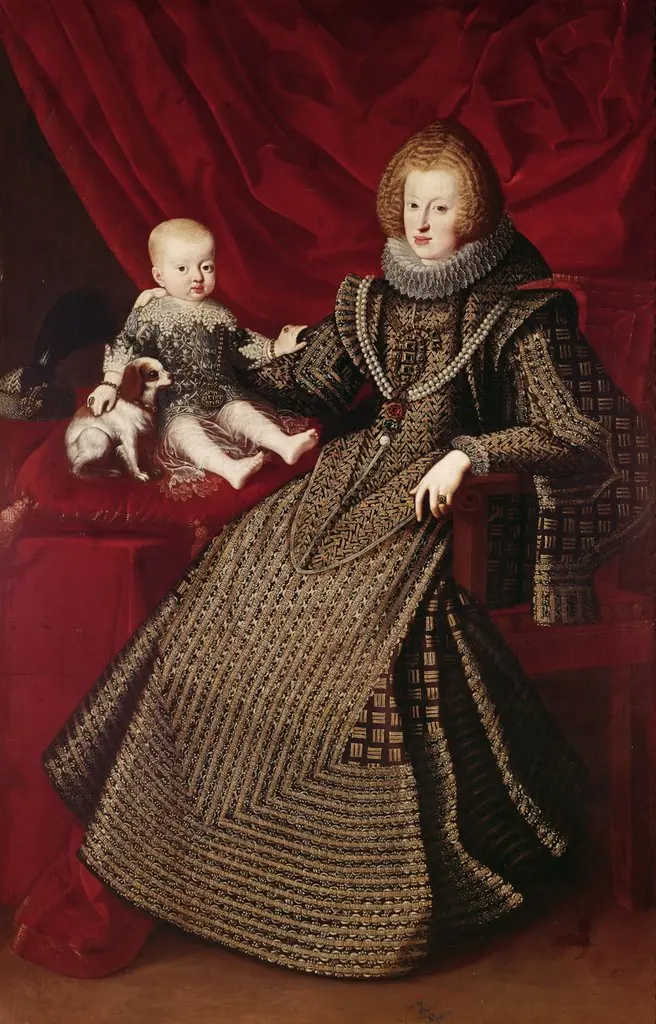 Infantin Maria Anna (1606-1646), Kaiserin, in ganzer Figur mit ihrem erstgeborenen Sohn Ferdinand (1633-1654)