Artwork
The Mystic Marriage of Saint Catherine
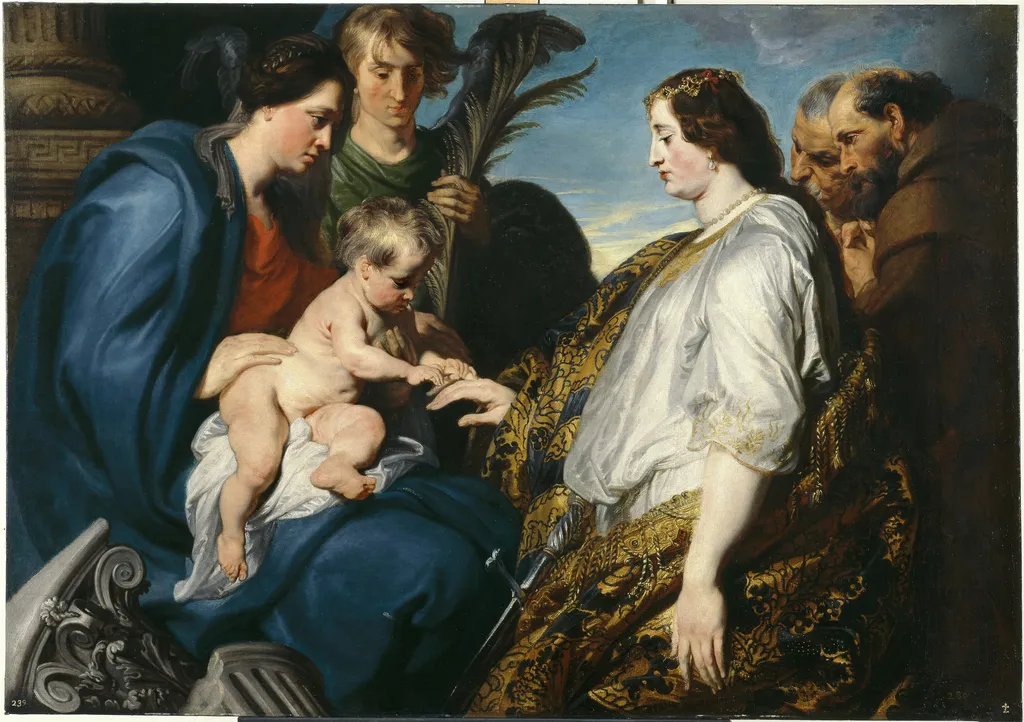
The Mystic Marriage of Saint Catherine is an oil painting by the Flemish Baroque painting artist Anthony van Dyck. It dates from 1618 and is held in the collection of the Museo del Prado. Created in 1618, this oil painting belongs to the Flemish Baroque tradition.
About this work
Overview
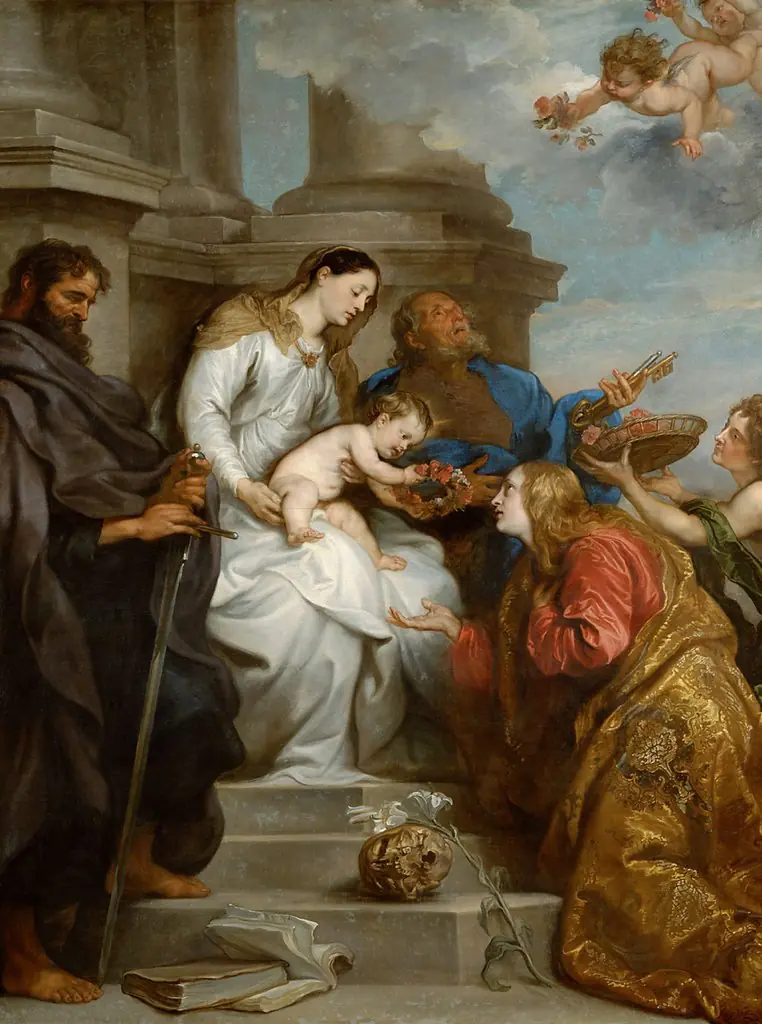
Created in 1618, this oil painting belongs to the Flemish Baroque tradition. It presents a compact group of five figures illuminated by a focused, soft light that separates them from a darkened backdrop of a distant city and a stone railing. The central action shows a woman in a white, gold‑trimmed dress receiving a ring from a child, while other figures observe the scene.
Subject & Meaning
The work visualises the mystical marriage of Saint Catherine, a legend in which the saint is symbolically wed to the Christ Child. The child places a ring on the woman's finger, signifying a spiritual union. A sword—an attribute of Catherine’s martyrdom—appears within the composition, reinforcing her hagiographic identity.
Technique & Style
Van Dyck employs chiaroscuro, using a narrow beam of light to model the figures against deep shadows, a hallmark of Baroque drama. The palette combines muted earth tones with bright accents in the garments, while the architectural framing and the subtle handling of textures convey a sense of depth within a relatively shallow pictorial space.
History & Provenance
The painting was produced shortly after Anthony van Dyck attained master status in the Antwerp Guild of Saint Luke in 1617. As the seventh child of silk merchant Frans van Dyck, he was already active as a young artist. The piece reflects the strong influence of his contemporary, Peter Paul Rubens, under whose workshop van Dyck had trained.
Context
During the early 17th century, devotional images of saints were common in Flemish churches and private collections. Van Dyck’s interpretation aligns with Counter‑Reformation aims, emphasizing personal piety through intimate, emotionally charged scenes. The inclusion of a cityscape and architectural elements situates the miracle within a recognizable, contemporary setting.
Artist & collection
Artist
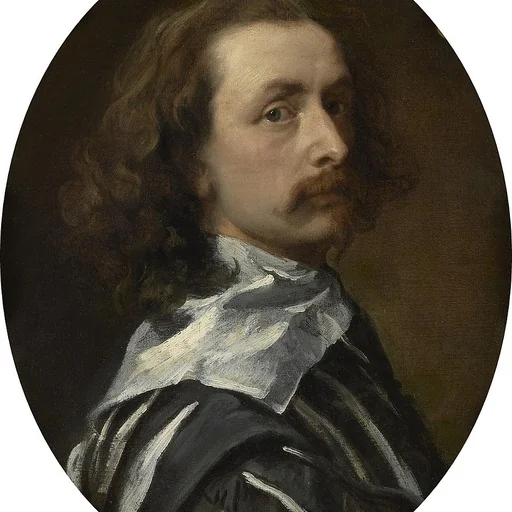
Sir Anthony van Dyck (; Dutch: Antoon van Dijck ; 22 March 1599 – 9 December 1641) was a Flemish Baroque artist, who became the leading court painter in England after success in the Spanish Netherlands and Italy.